Technology and Invention Trivia for Robot Fans and Future Engineers
Technology has transformed nearly every part of modern life, from the smartphones in our pockets to the robots assembling cars, assisting surgeons, and exploring distant planets. Behind every breakthrough is a story of curiosity, experimentation, and invention that has pushed engineers and scientists to solve problems in new ways. Learning these stories through trivia is an entertaining way to discover how today's innovations came to be.
Whether you're fascinated by robotics, dream of becoming an engineer, or simply enjoy surprising facts about famous inventions, technology trivia offers something for every age. Some questions explore ancient mechanical devices, while others focus on artificial intelligence, record-breaking machines, or groundbreaking inventors whose ideas continue to shape the world. The more you learn, the more impressive modern technology becomes.
How Robots Evolved from Steam Pigeons to Factory Floors
The history of robotics stretches back much farther than most people realize. Long before electricity or computer programming existed, inventors imagined machines that could imitate living creatures. Around 400 BC, the Greek mathematician Archytas of Tarentum reportedly created a steam-powered wooden pigeon that could propel itself through the air. Although primitive by modern standards, it demonstrated one of humanity's earliest attempts to build a self-moving mechanical device.
Centuries later, inventors continued expanding those ideas. Leonardo da Vinci designed a mechanical knight capable of performing basic movements, illustrating that engineers were already imagining humanoid machines during the Renaissance. By the Industrial Revolution, automated machinery had become an important part of manufacturing, paving the way for increasingly sophisticated mechanical systems.
Modern robotics entered a new era with machines such as Unimate, the first industrial robot widely used in factories, followed by Shakey, one of the earliest mobile robots capable of making simple decisions using artificial intelligence. Today, robots assemble vehicles, assist surgeons, explore Mars, and help scientists conduct research in environments that would be dangerous for humans.
Famous Inventors Who Changed Technology
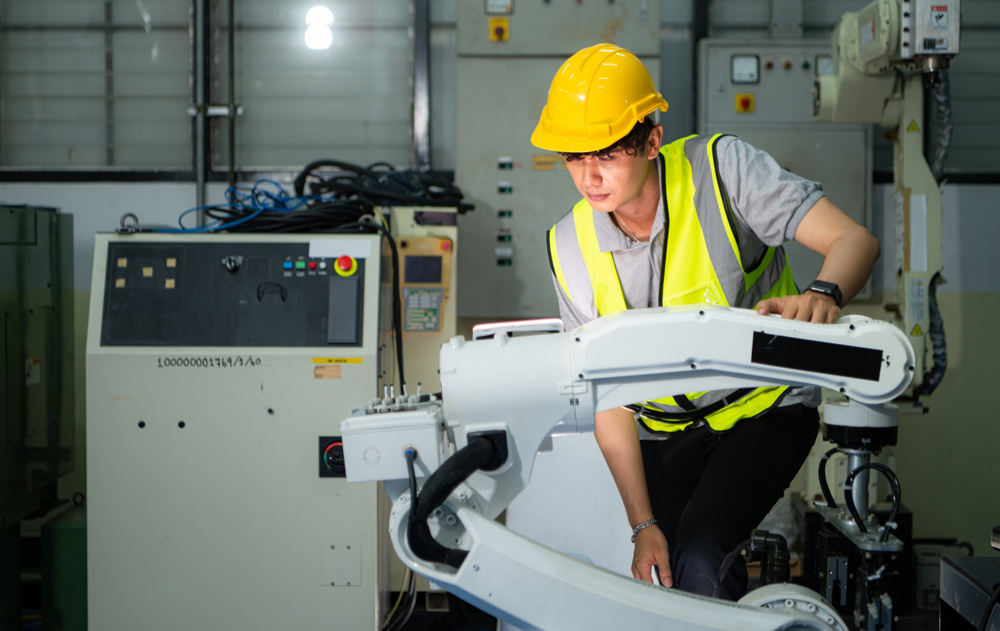
Every major technological breakthrough begins with someone willing to experiment, solve problems, and imagine new possibilities. Throughout history, inventors have introduced ideas that completely transformed communication, transportation, computing, and engineering. Their work laid the foundation for many of the technologies people rely on every day.
Thomas Edison helped popularize practical electric lighting, while Nikola Tesla advanced alternating current electrical systems that remain central to modern power grids. Ada Lovelace is widely recognized as one of the first computer programmers because she described how Charles Babbage's Analytical Engine could process more than mathematical calculations.
Alan Turing's work on computing and artificial intelligence continues to influence computer science decades after his groundbreaking research, while Grace Hopper developed programming innovations that made computers more accessible to future generations of engineers.
Learning about these inventors helps explain how technology has progressed over time. Modern robotics, artificial intelligence, smartphones, and even the internet all build upon discoveries made by earlier innovators. Understanding their contributions gives future engineers valuable insight into how today's breakthroughs often begin with simple ideas and persistent experimentation.
The Most Extreme Robots Ever Built by Size, Strength, and Speed
Robotics has produced machines that challenge expectations of what engineering can accomplish. Some robots are designed to lift enormous loads, while others move with incredible speed or perform tasks requiring extraordinary precision. Engineers constantly push these limits to develop machines capable of working in places where people cannot safely or efficiently operate.
Among the largest humanoid robots ever constructed is Mononofu, which stands more than 27 feet tall and demonstrates just how ambitious modern robotics projects have become. At the opposite extreme are miniature robots only a few inches tall, developed for research into medical technology and confined-space exploration. Size alone isn't the only record engineers pursue. Industrial robotic arms such as Titan can lift well over a ton, making them essential for heavy manufacturing and construction.
Some robots demonstrate remarkable speed and accuracy instead of raw strength. The famous Janken Robot consistently wins games of rock-paper-scissors by using high-speed cameras and rapid image processing to recognize an opponent's hand movement almost instantly. Other robots can solve complex puzzles, sort thousands of packages each hour, or complete delicate assembly work with a level of precision that's difficult for humans to match.
Everyday Jobs Robots Are Already Doing Around You
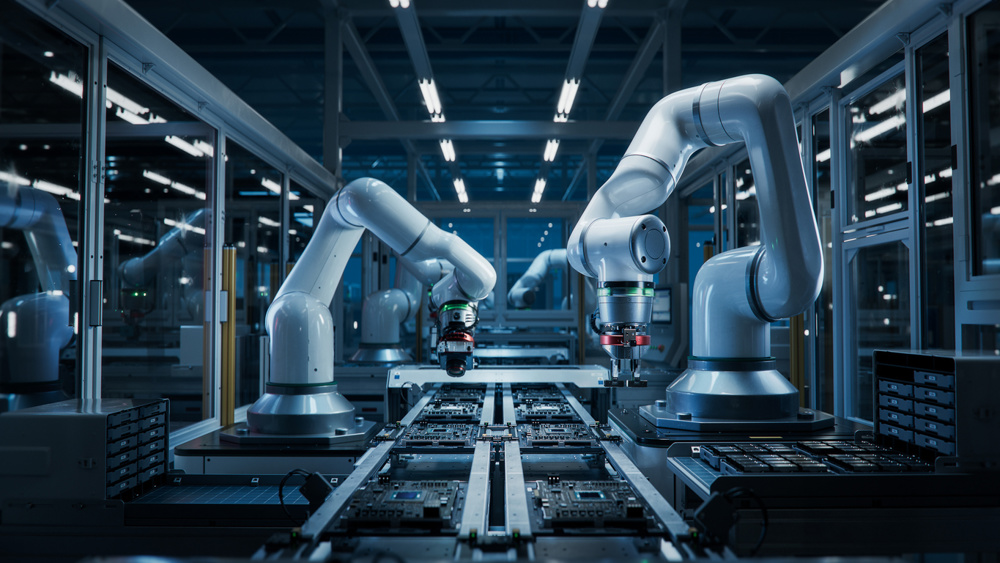
Although humanoid robots often receive the most attention, the majority of robots work quietly behind the scenes performing tasks that keep modern society running. Every day, robots assemble vehicles, package food, sort parcels in warehouses, inspect pipelines, and manufacture electronics with remarkable speed and precision.
Many of these machines repeat the same movements thousands of times without fatigue, allowing people to focus on work that requires creativity, judgment, and communication. Healthcare has become one of the fastest-growing areas for robotics. Surgical systems such as the da Vinci Surgical System help surgeons perform minimally invasive procedures with exceptional precision, while rehabilitation robots assist patients recovering from injuries or strokes.
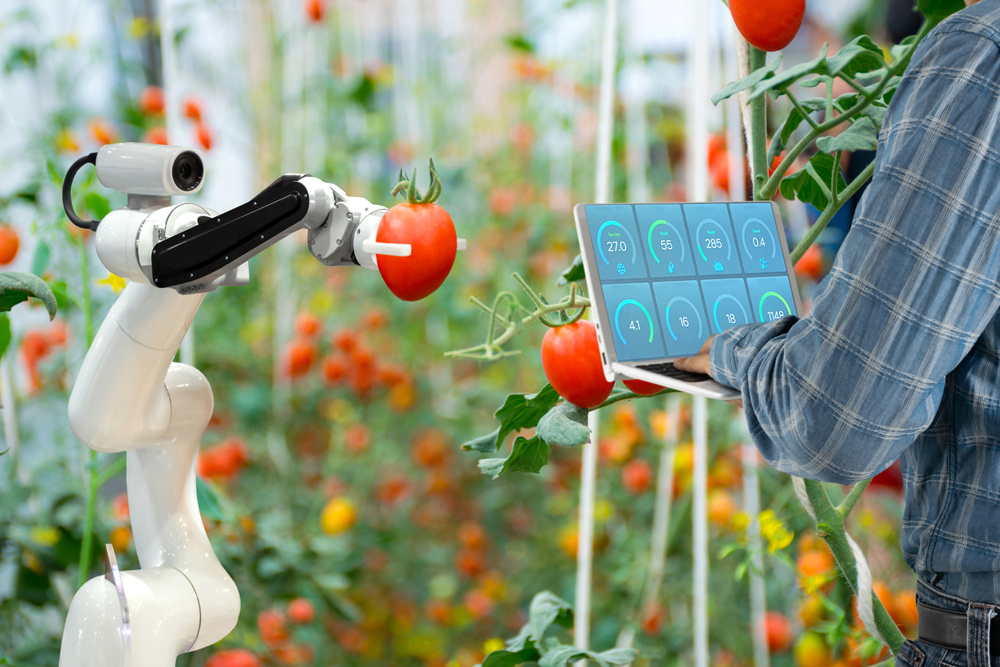
In agriculture, autonomous tractors and robotic harvesters help farmers plant, monitor, and collect crops more efficiently. Warehouses operated by companies like Amazon rely on fleets of mobile robots that transport inventory across massive fulfillment centers, helping speed up deliveries around the world. Robots also perform jobs that are too dangerous for humans.
Bomb-disposal robots protect military personnel and emergency responders by investigating explosive devices from a safe distance. Underwater robots explore shipwrecks, inspect pipelines, and conduct scientific research deep below the ocean's surface, while space agencies use robotic rovers to study distant planets where astronauts cannot yet travel. These examples show that robotics has become an essential tool across countless industries rather than a technology limited to factories alone.
Robot Trivia From Movies and Pop Culture
Robots aren't only changing the real world—they've also become some of the most recognizable characters in movies, television, and popular culture. Fictional robots often reflect society's hopes and concerns about technology, from friendly helpers to powerful artificial intelligences. For many people, these characters provide their first introduction to robotics long before they learn about engineering or computer science.
Science fiction has introduced countless memorable robotic characters. Star Wars features the iconic duo C-3PO and R2-D2, while Pixar's WALL-E imagines a lonely robot cleaning an abandoned Earth centuries into the future. Baymax from Disney's Big Hero 6 shows how healthcare robots might one day assist patients, and Optimus Prime from Transformers has inspired generations of fans with his leadership and courage. Although fictional, these characters have helped spark interest in robotics, engineering, and artificial intelligence among young audiences worldwide.
Pop culture has also influenced how people imagine future technology. Movies and television often inspire real engineers to pursue ambitious ideas, while advances in robotics occasionally make science fiction seem surprisingly realistic. This relationship between entertainment and innovation continues to encourage new generations of inventors to imagine what's possible.
How Modern Robots Are Learning to Make Decisions
Modern robots no longer rely solely on pre-programmed instructions. Advances in artificial intelligence allow many machines to analyze information, recognize patterns, and make decisions based on what they observe. Instead of performing only one repetitive task, some robots can adapt to changing environments, avoid obstacles, and improve their performance through experience.
Machine learning plays an important role in this progress. Engineers train robots using large collections of data, allowing them to recognize objects, understand spoken instructions, and identify the safest or most efficient way to complete a task. Researchers are also teaching robots through demonstration, where machines learn by watching people perform activities instead of receiving detailed programming for every movement.
As robots become more capable, engineers continue developing safeguards that help ensure these systems operate safely and responsibly. Decision-making algorithms are carefully tested before robots are used in hospitals, factories, or public spaces, where reliability is essential. The combination of artificial intelligence and responsible engineering is helping robots become increasingly useful partners rather than simple automated machines.
What the Next Generation of Robots Will Be Able to Do
The next generation of robots is expected to be more adaptable, collaborative, and intelligent than anything available today. Rather than performing only one programmed task, future robots will be capable of learning new skills, working safely alongside people, and responding to changing environments with minimal human intervention.
Healthcare is likely to benefit from many of these advances. Future medical robots may assist with diagnosing illnesses, delivering medication in hospitals, supporting rehabilitation, and helping older adults live independently. In space exploration, robotic systems will continue exploring the Moon, Mars, and beyond, collecting scientific data before astronauts arrive. Engineers are also developing disaster-response robots capable of entering collapsed buildings, wildfire zones, and hazardous industrial sites where human rescue teams face significant risks.
At the same time, these advancements raise important questions about ethics, privacy, and safety. Engineers must design systems that make reliable decisions, protect sensitive information, and work alongside people responsibly. As robotics becomes more integrated into everyday life, future engineers will play an essential role in ensuring technology improves society while remaining safe, transparent, and trustworthy.
Fun Technology Trivia to Challenge Future Engineers
Technology trivia extends far beyond robotics. Many of today's inventions—from computers and satellites to smartphones and renewable energy systems—are the result of decades of engineering breakthroughs. Exploring these innovations helps future engineers understand how different scientific discoveries connect and build upon one another. If you're looking for a tech trivia quiz for students, hobbyists, or robot enthusiasts, it's a great way to reinforce learning while making complex topics more engaging.
Here are some technology trivia questions that cover a variety of engineering topics:
- Who is credited with inventing the World Wide Web? Tim Berners-Lee.
- What does GPS stand for? Global Positioning System.
- Which space agency successfully landed the Perseverance rover on Mars in 2021? NASA.
- What tiny electronic component serves as the "brain" of most modern computers and smartphones? The microprocessor.
- Which renewable energy technology converts sunlight directly into electricity? Solar panels (photovoltaic cells).
Learning facts like these strengthens general technology knowledge while showing how engineering disciplines—from software and electronics to aerospace and renewable energy—work together to solve real-world problems. Every new invention builds upon earlier discoveries, reminding us that innovation is an ongoing process rather than a single breakthrough.
Conclusion
Technology and invention trivia offers more than interesting facts—it tells the story of human creativity, persistence, and problem-solving. From ancient mechanical devices and pioneering inventors to today's intelligent robots and cutting-edge artificial intelligence, every breakthrough reflects generations of engineers pushing the boundaries of what machines can accomplish.
Whether you're fascinated by robotics, inspired by famous inventors, or considering a future career in engineering, learning about these innovations provides valuable perspective on the past and excitement for what's still to come. By combining history, science, real-world applications, and engaging trivia questions, you can better appreciate the remarkable inventions that continue shaping our world.