The Evolution of Humanoid Robots: From WABOT-1 to ASIMO
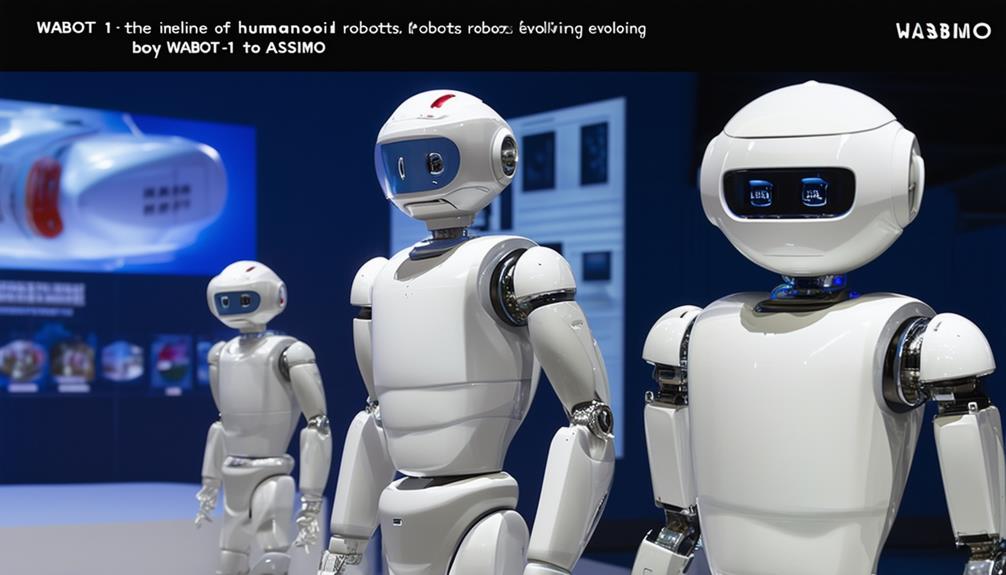
The evolution of humanoid robots from WABOT-1 to ASIMO is a fascinating journey that showcases remarkable technological advancements. Introduced in 1970, WABOT-1 was a pioneering robot with basic movement and communication abilities. By 2000, ASIMO had advanced to recognizing objects and moving autonomously. What specific innovations bridged these milestones, and how did each contribute to the rapid growth in this field? Exploring these questions reveals pivotal moments and technological breakthroughs that have shaped the sophisticated humanoid robots we see today.
Early Innovations in Robotics
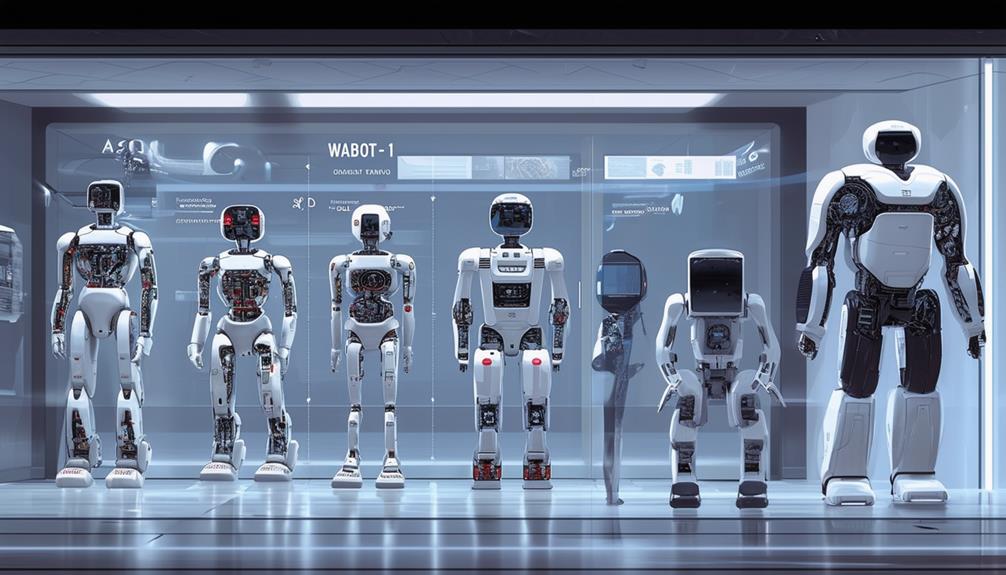
In the realm of early innovations in robotics, WABOT-1 stands out as a pioneering achievement, showcasing the potential of humanoid robots to interact and perform complex tasks. Developed by Ichiro Kato in 1970, WABOT-1 was the world's first full-scale humanoid robot, capable of walking, gripping objects, and even visual recognition. It could communicate in Japanese and assess distances, marking a significant advancement in humanoid robotics.
These early innovations continued with ASIMO, a groundbreaking humanoid robot developed under the leadership of Satoshi Shigemi. ASIMO gained global recognition for its advanced capabilities, including sophisticated walking and running patterns and the ability to interact seamlessly with humans. Both WABOT-1 and ASIMO laid the critical groundwork for modern humanoid robots, demonstrating that machines could mimic human-like movements and communication skills accurately and effectively.
WABOT-1: A Milestone
WABOT-1, developed in 1970 by Ichiro Kato at Waseda University, marked a significant leap forward in humanoid robotics. As the world's first full-scale android, WABOT-1 demonstrated remarkable capabilities that distinguished it from earlier robotic attempts. This humanoid robot could walk, grip objects, and even see using cameras, pioneering advancements in the field.
Notably, WABOT-1 could communicate in Japanese, a groundbreaking feature at the time. It could assess distances, enhancing its ability to interact with its environment in a human-like manner. These abilities showcased early advancements in robot technology, illustrating the potential for robots to perform complex tasks and understand their surroundings.
Ichiro Kato's project aimed not just at creating a robot but at laying the groundwork for future advancements in intelligence and communication for humanoid robots. WABOT-1 marked a milestone in the history of humanoid robotics, proving that robots could be designed to perform tasks previously thought exclusive to humans. This achievement was instrumental in shaping the future of robotics as understood today.
Advancements in Mobility
Humanoid robots have made significant strides in mobility, evolving from basic walking capabilities to advanced navigation and environmental interaction. Early models like WABOT-1 laid the groundwork, demonstrating basic walking, gripping, and visual perception abilities. However, it was with advanced humanoid robots like ASIMO that we witnessed remarkable progress.
Introduced in 2000, ASIMO elevated mobility standards. Beyond walking, ASIMO could climb stairs and adjust its speed for various tasks. This high level of mobility was achieved through sophisticated limb-control systems and tactile sensors, enabling ASIMO to move with precision and stability that earlier robots lacked.
Another key advancement is autonomous navigation. ASIMO could navigate its environment independently, recognizing objects, gestures, sounds, and even faces. This ability to autonomously interact with its surroundings marked a significant leap forward, with tactile sensors playing a crucial role in detecting and responding to environmental changes.
Dynamic Walking and Beyond
Dynamic walking has revolutionized robotic locomotion, bridging the gap between mechanical motion and fluid, human-like strides. This innovation allows humanoid robots to mimic human movement with increasing accuracy. Early milestones, such as WAP-1 in 1969, utilized artificial rubber muscles to lay the groundwork for fluid motion, enabling robots to perform more complex actions and setting the stage for future advancements.
In 1970, the WL-5 demonstrated static walking using a minicomputer, marking significant progress in humanoid robot locomotion. The integration of advanced sensors and actuators has since transformed robotic movement. Modern sensors enable robots to perceive and adapt to their environment in real-time, enhancing their dynamic movement capabilities.
A prime example is DARPA's Atlas, a 6-foot humanoid robot equipped with 28 hydraulically actuated joints. Atlas showcases remarkable dynamic movement abilities, thanks to continuous advancements in control systems and artificial muscles. These improvements have made humanoid robots more agile and capable of traversing diverse terrains.
Dynamic walking has not only increased the efficiency of humanoid robots but also made their movements more human-like. This progress pushes the boundaries of what is possible in robotic locomotion, making it a crucial area of ongoing research and development.
The Rise of ASIMO
Developed by Honda in 2000, ASIMO emerged as a trailblazing figure in humanoid robotics, demonstrating exceptional capabilities in interaction and mobility. Under the leadership of Satoshi Shigemi, ASIMO was crafted to serve as a versatile mobile assistant. This advanced humanoid robot could recognize objects, gestures, sounds, and faces, allowing it to interact meaningfully with humans.
ASIMO's navigation skills were particularly notable. It could autonomously move at variable speeds, navigate complex environments, and even climb stairs, showcasing remarkable human-like mobility.
ASIMO's key features included:
- Recognition and Interaction: Detecting faces, understanding gestures, and responding to sounds.
- Autonomous Navigation: Moving through spaces, avoiding obstacles, and adjusting speed as needed.
- Stair Climbing: Overcoming one of the most challenging aspects of human-like mobility.
- Influencing Public Perception: Shaping how people viewed the future integration of robots in everyday life.
Despite initial setbacks, ASIMO's subsequent upgrades solidified its status as one of the world's most renowned humanoid robots, significantly influencing discussions on robotic integration in society.
Key Technological Breakthroughs
Building on the achievements of ASIMO, several technological breakthroughs have propelled humanoid robotics to new heights. The evolution from WABOT-1, the initial humanoid robot, to more sophisticated models has been marked by significant advancements in design, communication, and functionality.
In the 1970s, WABOT-1 showcased basic abilities like walking, gripping, and seeing. By 2000, ASIMO introduced advanced capabilities such as recognizing objects, gestures, sounds, and faces, setting a new standard for human-robot interaction. This leap forward was crucial in making robots appear more human-like and improving their integration into human environments.
Modern humanoid robots have significantly improved communication abilities, allowing for more natural interactions with humans. Innovations in sensor technology, artificial intelligence, and machine learning have enabled these robots to understand and respond to complex commands, enhancing their efficiency and user-friendliness. Additionally, today's robots perform intricate tasks with precision due to advancements in motor skills and dexterity.
These breakthroughs have not only advanced the field of humanoid robotics but also reshaped our expectations of what robots can achieve in everyday life.
Influential Engineers and Their Robots
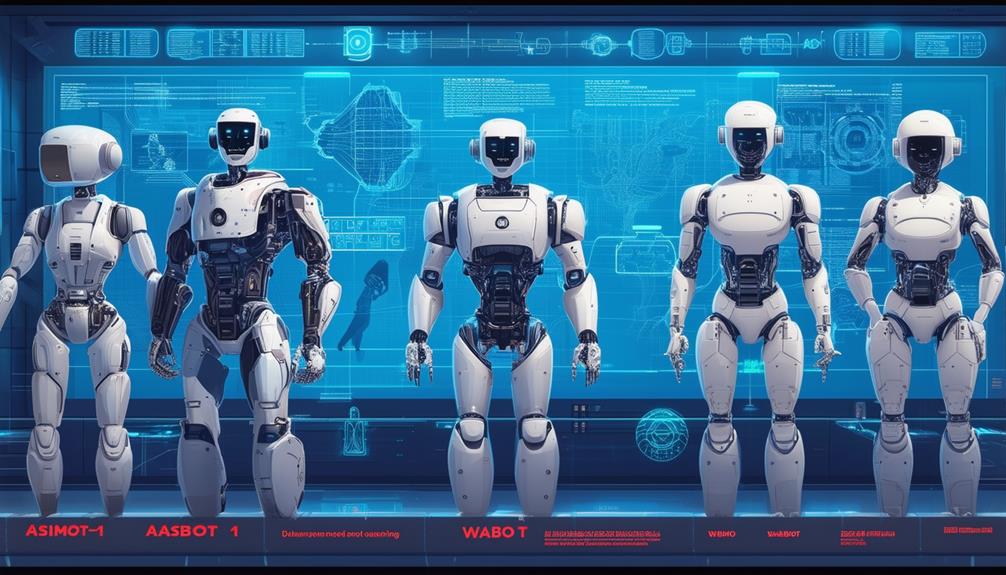
The field of humanoid robotics has been significantly shaped by the contributions of a few pioneering engineers and their groundbreaking robots. These visionaries have made strides in turning science fiction into reality, bringing us closer to a world where humanoid robots are integrated into daily life.
- Ichiro Kato and WABOT-1: At Waseda University in Japan, Ichiro Kato developed WABOT-1, the world's first full-scale android. This innovative humanoid could walk, grip objects, and communicate in Japanese, setting a foundational milestone for future robotics advancements.
- Satoshi Shigemi and ASIMO: Leading the ASIMO project at Honda, Satoshi Shigemi transformed this humanoid robot into an international icon. ASIMO's advanced capabilities in movement and interaction have profoundly influenced the development of humanoid robots and inspired numerous engineers.
- Marc Raibert and Boston Dynamics: Marc Raibert, the founder of Boston Dynamics, is known for creating highly agile and innovative humanoid robots. Robots like Atlas have set new benchmarks in mobility and balance, pushing the boundaries of what robots can achieve.
- Softbank Robotics and Pepper: Softbank Robotics introduced Pepper, a humanoid robot designed for social interaction. Pepper's ability to understand and respond to human emotions has made it a valuable asset in various service industries and a popular participant in RoboCup competitions.
These pioneers have not only advanced the field of humanoid robotics but have also paved the way for future innovations.
Future of Humanoid Robotics
The future of humanoid robotics is set to be even more transformative, driven by rapid advancements in AI, machine learning, and material science. These robots are expected to become increasingly lifelike, featuring enhanced emotional intelligence and biometric systems. By 2030, the market for humanoid robots is projected to grow to $80 billion, with a compound annual growth rate of 62.5%.
| Aspect | Future Developments |
|---|---|
| AI & Machine Learning | Advanced intelligence and autonomy |
| Material Science | Improved mobility and dexterity |
| Societal Impact | Increased integration and utility |
Humanoid robots will exhibit greater autonomy, capable of performing complex tasks with high precision. As they evolve towards mass production, they will become more accessible but also bring challenges related to security and the controversial use of digital twins. The convergence of AI, machine learning, and advanced material science will render these robots more authentic and functional, significantly impacting daily life. With their growing prevalence, society will need to address legal identification requirements and ethical considerations, ensuring a balanced and beneficial integration of humanoid robots into our world.
Conclusion
The evolution of humanoid robots illustrates a remarkable journey from WABOT-1's basic functionality to ASIMO's advanced capabilities. These milestones highlight significant advancements in technology, spearheaded by visionary engineers such as Ichiro Kato and Satoshi Shigemi. Looking ahead, we can anticipate even more sophisticated robots that will integrate seamlessly into our daily lives. The progression from WABOT-1 to ASIMO is just the beginning, with much more innovation on the horizon.
Related posts