The Birth of Cybernetics and Its Influence on Robotics
The origins of modern robotics are deeply rooted in the field of cybernetics, a discipline pioneered by Norbert Wiener and his colleagues in the late 1940s. Cybernetics, which focuses on control and communication within complex systems, bridged the gap between living organisms and machines by emphasizing feedback mechanisms and self-regulation. These foundational principles have significantly shaped the autonomous and adaptive capabilities of today's robots, driving advancements in automation and artificial intelligence. To fully appreciate this influence, one must delve into the core concepts that continue to propel innovation in these fields.
Origins of Cybernetics
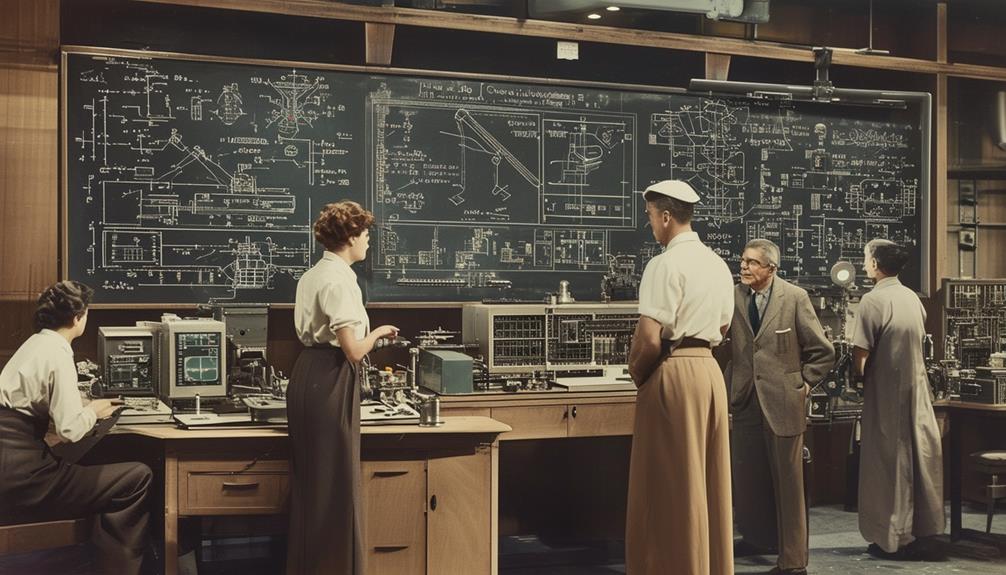
Founded by Norbert Wiener, Arturo Rosenblueth, and Julian Bigelow at MIT in the late 1940s, cybernetics emerged as a revolutionary field focused on control and communication in complex systems. Cybernetics bridges the gap between living organisms and machines, offering groundbreaking insights into how systems manage and regulate themselves. The term itself is derived from the Greek word 'kybernetes,' meaning 'steersman' or 'governor,' capturing its essence of guidance and regulation.
In cybernetics, feedback mechanisms play a crucial role. These processes allow a system to adjust its operations based on the outcomes it generates, ensuring stability and efficiency. This principle of self-regulation is essential for understanding both biological and engineered systems. For instance, your body maintaining its temperature and a thermostat adjusting a room's climate are both examples of feedback loops at work.
Wiener's vision extended to the development of robotics and artificial intelligence, fields that heavily rely on cybernetic principles. By studying how complex systems communicate and control their functions, researchers have laid the groundwork for modern innovations in AI and autonomous machines. The influence of cybernetics is evident in every smart device and automated system today.
Norbert Wiener's Contributions
Norbert Wiener, often hailed as the father of cybernetics, revolutionized the understanding of control and communication in both biological and mechanical systems. He coined the term 'cybernetics' to describe the study of these principles. Wiener's groundbreaking work emphasized feedback mechanisms, which are critical for the self-regulation and stability of complex systems. His ideas highlighted how information flow governs behavior across diverse contexts.
By focusing on feedback loops, Wiener paved the way for the development of modern neural networks and artificial intelligence. He demonstrated that the principles of control and communication could be universally applied, from understanding brain functions to designing sophisticated algorithms. His insights into the importance of information flow and feedback have had enduring impacts, influencing fields as varied as language processing and the legal system.
Wiener's contributions laid the foundational principles for self-regulation mechanisms essential in today's advanced technologies. His work remains significant in shaping the design and functioning of intelligent systems. Through his pioneering efforts, Wiener has left an indelible mark on the fields of cybernetics and robotics, continuing to inspire innovation and progress.
Feedback Mechanisms
Feedback mechanisms, foundational to Norbert Wiener's work in cybernetics, empower systems to self-regulate by continuously adapting based on real-time data. In robotics, these mechanisms enable robots to modify their actions in response to sensor inputs, ensuring they meet desired objectives. This dynamic process is essential for developing robotic systems capable of adapting to varying environments and tasks.
Incorporating feedback loops, cybernetic principles facilitate self-regulation and adaptation in robotic systems. These loops involve receiving data, processing it to evaluate performance, and making necessary adjustments. This continuous cycle enables robots to function autonomously and efficiently. Whether adjusting a robotic arm's grip or navigating an autonomous vehicle through traffic, feedback mechanisms ensure optimal performance.
Understanding and implementing effective feedback mechanisms is crucial for advancing robotic technologies. They enhance robot autonomy, allowing for minimal human intervention while maintaining high efficiency. Feedback mechanisms in cybernetics not only support system self-regulation but also drive continuous improvement and reliability in modern robotics. Through these mechanisms, robotics has evolved into a field where machines can learn, adapt, and excel in complex tasks.
Self-Regulation in Systems
Investigating self-regulation in systems reveals its crucial role in maintaining stability and adapting through feedback mechanisms. Rooted in the principles of cybernetics, this concept underpins homeostasis in machines and adaptive control systems. Mastering these principles is essential for developing autonomous robots capable of independent decision-making and environmental adaptation.
Homeostasis in Machines
Homeostasis in machines ensures robots can self-regulate and maintain stability, akin to living organisms. By employing feedback mechanisms and control systems, robotic systems achieve self-regulation and internal stability. These homeostatic processes involve monitoring variables such as temperature, pressure, and energy levels, then adjusting parameters to maintain balance and ensure optimal performance.
Key steps in machine homeostasis include:
- Monitoring Variables: Robots continuously track internal and external conditions.
- Feedback Mechanisms: Sensors detect deviations from the desired state.
- Adjusting Parameters: Control systems adjust settings to correct any imbalances.
- Maintaining Equilibrium: The system keeps everything stable and functioning smoothly.
Robots with homeostatic capabilities adapt to dynamic conditions more effectively, enhancing performance, efficiency, and resilience. This concept, inspired by biological systems, enables robotic systems to autonomously and reliably adapt to changing environments, reducing the need for constant human intervention. This synergy of biology and technology ensures machines not only function but thrive in varied scenarios.
Adaptive Control Mechanisms
Adaptive control mechanisms are crucial in cybernetics, enabling systems to self-regulate and dynamically adjust their behavior based on real-time feedback. These mechanisms allow robotic systems to emulate natural systems by adapting to changing environments and demands. By incorporating feedback loops, robots can engage in autonomous decision-making, optimizing their performance and responding effectively to external stimuli.
In robotics, self-regulation through adaptive control mechanisms allows robots to learn from their experiences and improve over time. This adaptability is essential for creating efficient, flexible, and responsive robotic systems. For example, a robot equipped with these mechanisms can adjust its movements when encountering an obstacle, ensuring smoother navigation and task completion.
Feedback serves as the backbone of adaptive control mechanisms, providing the necessary information for the system to evaluate its performance and make adjustments. This continuous loop of action and feedback ensures that the robotic system remains aligned with its goals, even in the face of unforeseen challenges.
Autonomy in Robotics
Autonomy in robotics enables machines to independently navigate, make decisions, and adapt to their environments with minimal human intervention. By utilizing advanced sensors and actuators, robots can gather and process environmental data, facilitating precise decision-making and effective self-regulation.
Key aspects of robotic autonomy include:
- Sensors: Acting as the sensory organs of autonomous robots, sensors accurately perceive the environment by collecting data on distance, temperature, and movement. This information is crucial for informed decision-making.
- Actuators: These components translate the robot's decisions into physical actions, such as moving a limb, rotating a wheel, or adjusting a grip. Actuators are essential for executing tasks efficiently.
- Decision-Making: This process involves analyzing sensor data to determine the optimal course of action. Advanced algorithms and control systems enable robots to evaluate various scenarios and make quick, efficient decisions.
- Adaptation: Robots must autonomously adjust to changing conditions, enhancing their efficiency and ability to handle unforeseen challenges. This self-regulation ensures continuous safety and productivity.
Autonomy in robotics drives innovations that enhance the capabilities and versatility of robots, thereby revolutionizing their roles across various industries.
Cybernetics in Early Robotics
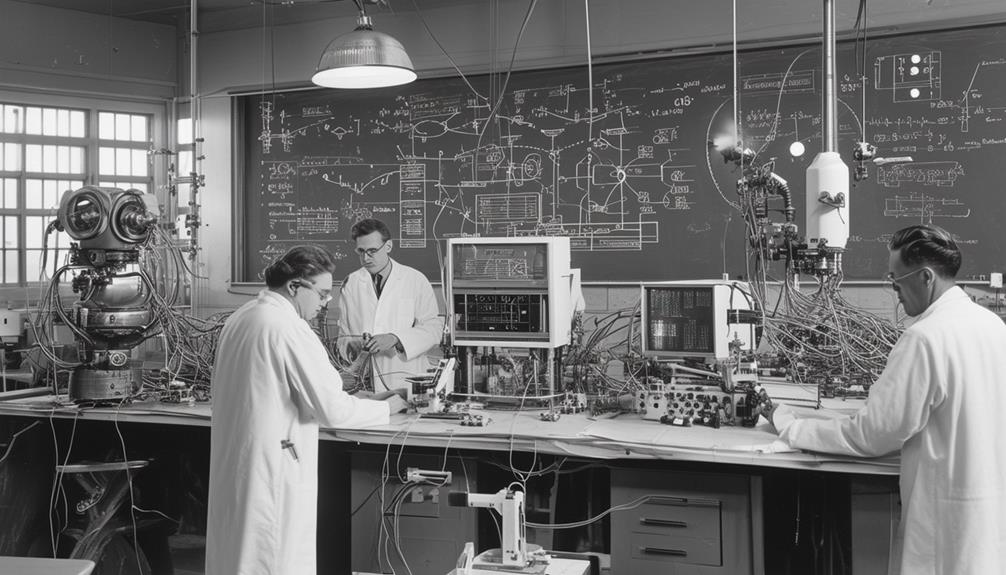
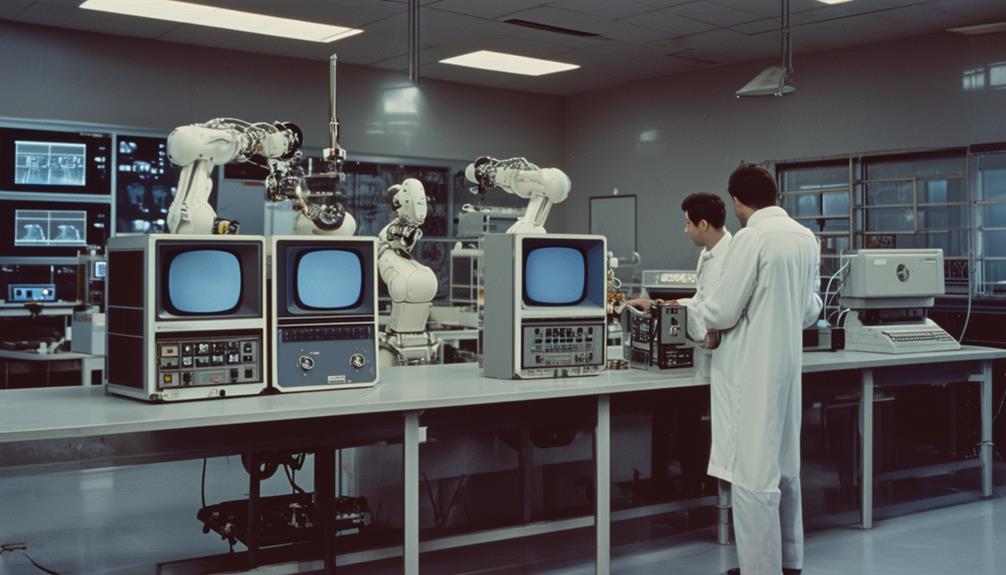
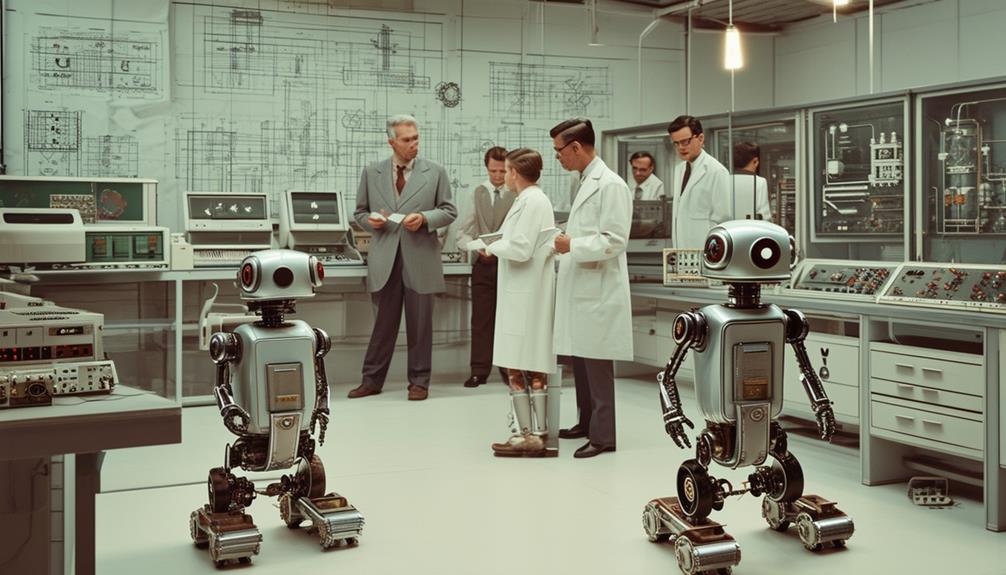
The principles of cybernetics revolutionized early robotics by introducing essential concepts like feedback and self-regulation. Examining the initial artificial robotic systems reveals the foundational role of cybernetic concepts such as control mechanisms and information processing. These early designs relied extensively on feedback loops to maintain self-regulation, enabling robots to perform tasks autonomously and adaptively.
By integrating feedback and self-regulation, early roboticists were able to create machines that responded to environmental changes in real-time. This allowed robots to go beyond merely following initial commands; they could actively adjust their actions based on incoming data. Information processing, grounded in cybernetic theories, empowered these early robots to make intelligent decisions, thereby enhancing their functionality and effectiveness.
Here's a table summarizing the key elements:
| Cybernetic Concept | Role in Early Robotics | Outcome |
|---|---|---|
| Feedback | Real-time response to changes | Improved adaptability |
| Self-regulation | Autonomous task performance | Enhanced autonomy |
| Information Processing | Intelligent decision-making | Advanced control mechanisms |
This concise table highlights the critical role of cybernetic principles in shaping the capabilities of early robotic systems.
Impact on Automation
Cybernetics has fundamentally transformed automation by embedding control and communication principles into machines, significantly enhancing their efficiency and accuracy. In the United States, the integration of cybernetic concepts has revolutionized automated systems through the use of feedback mechanisms and self-regulating capabilities, which are essential for developing advanced robotic systems that can adapt and learn from their environment.
To understand the impact of cybernetics on automation, consider these key points:
- Enhanced Communication and Control: Cybernetics enables machines to communicate and control processes more effectively, resulting in smoother operations.
- Self-Adjusting Capabilities: Modern robotic systems can self-adjust and correct errors in real-time, reducing the need for human intervention.
- Optimized Manufacturing Processes: Factories leverage cybernetic principles to improve production lines, thereby reducing costs and increasing output.
- Adaptive Robotic Systems: Robots designed with cybernetic frameworks can learn from their surroundings, making them more versatile and effective in various applications.
Influence on Artificial Intelligence
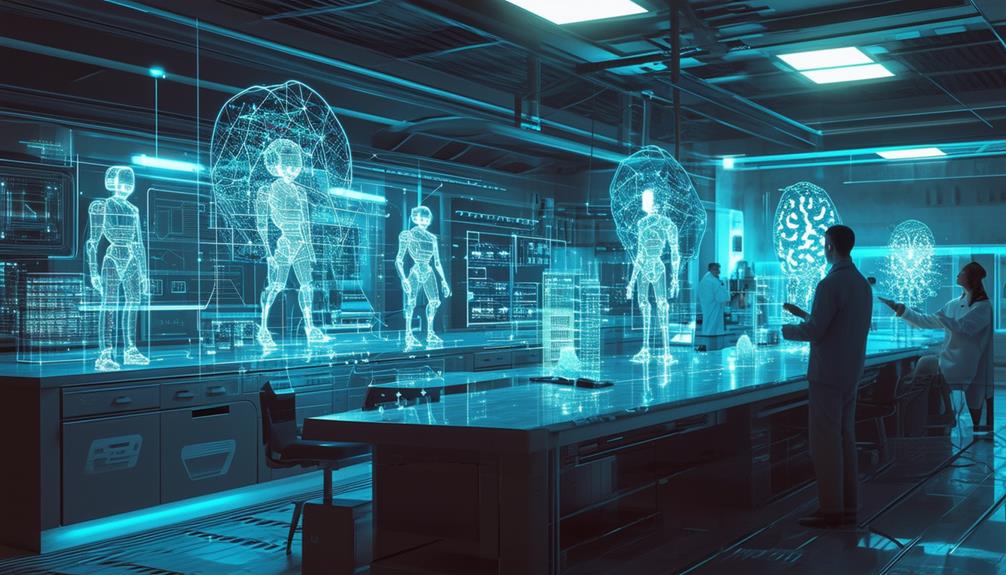
Cybernetics has significantly influenced AI, particularly in the development of neural networks and machine learning. The principles of feedback mechanisms and self-organization are essential for understanding how AI systems learn and adapt. This framework has been crucial in creating intelligent algorithms and autonomous systems.
Neural Network Foundations
Rooted in the principles of cybernetics, neural networks emulate the human brain's neural connections to revolutionize artificial intelligence. By mimicking how neurons transmit signals, neural networks enable machines to process information, learn from data, and make autonomous decisions. This breakthrough is pivotal for AI applications such as image recognition, natural language processing, and autonomous systems.
Neural networks form the backbone of machine learning and deep learning, driving advancements in robotics and AI technologies. These networks are trained with vast amounts of data to achieve remarkable performance in various tasks, from speech recognition to medical diagnosis. Here's how neural networks have impacted AI and robotics:
- Enhanced Learning: Neural networks improve machine learning capabilities, boosting accuracy and efficiency in data analysis.
- Advanced Data Training: Large datasets train these networks to recognize patterns, advancing AI applications like predictive analytics and diagnostics.
- Deep Learning: This subset of machine learning uses neural networks for high-level data abstraction, driving innovations in robotics and AI.
- Autonomous Systems: Neural networks enable the development of self-learning robots, enhancing their decision-making and operational capabilities.
These advancements ensure that neural networks continue to shape the future of artificial intelligence and robotics.
Machine Learning Evolution
Machine learning has fundamentally transformed artificial intelligence by enabling computers to learn from data and make informed decisions. Its impact is evident in diverse applications such as image and speech recognition, recommendation systems, and autonomous vehicles. At the core of machine learning are sophisticated algorithms that evolve with the data they process, continuously enhancing system intelligence.
Deep learning, a specialized subset of machine learning, employs neural networks to emulate the structure and function of the human brain. This approach has revolutionized complex tasks, notably in natural language processing, allowing machines to understand and respond to human language with greater accuracy. This advancement significantly improves AI's interactive capabilities.
The proliferation of data and advancements in computing power have accelerated the development and deployment of these technologies. Leading companies like Google, Facebook, and Amazon leverage machine learning to refine user experiences and optimize operations. For instance, autonomous vehicles rely heavily on machine learning algorithms for navigation and real-time decision-making.
Modern Robotics and Cybernetics
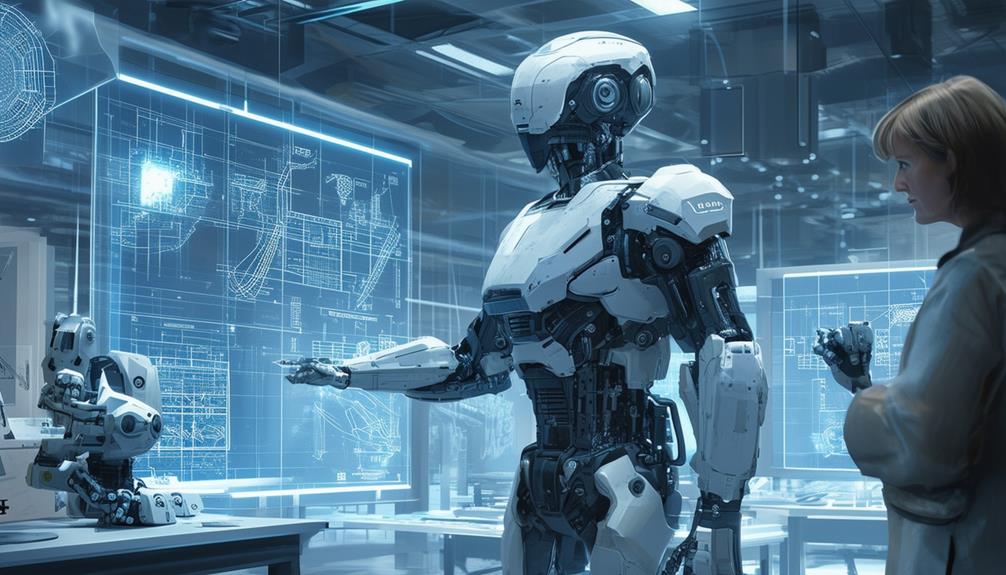
In the contemporary era, cybernetics has become fundamental to the evolution of modern robotics, driving innovation and facilitating robots to achieve unprecedented levels of autonomy and intelligence. By incorporating principles of cybernetics, which focus on feedback, control systems, and communication processes, robotics engineers have created autonomous and intelligent robots capable of self-learning, adapting to dynamic environments, and making independent decisions.
Cybernetics has transformed robotics through several key aspects:
- Critical Systems: Essential for enabling robots to perceive their environment and adjust their actions accordingly.
- Control Mechanisms: Advanced controls allow robots to perform tasks with high precision and reliability.
- Communication Processes: Effective communication enables seamless interaction between robots, other systems, and humans.
- Self-Learning: Robots can now learn from experiences, enhancing their performance over time.
Conclusion
The emergence of cybernetics, spearheaded by visionaries like Norbert Wiener, laid the cornerstone for contemporary robotics. By emphasizing feedback mechanisms and self-regulation, cybernetics created a bridge between biological organisms and machines. This foundation has profoundly influenced robotics, facilitating autonomous adaptation and intelligent decision-making. From early automation to sophisticated artificial intelligence, the impact of cybernetics is evident, shaping the efficient, intelligent robots that are integral to today's technological landscape.
Related posts