Exploring Early Autonomous Robots: The Foundations of Mobile Robotics
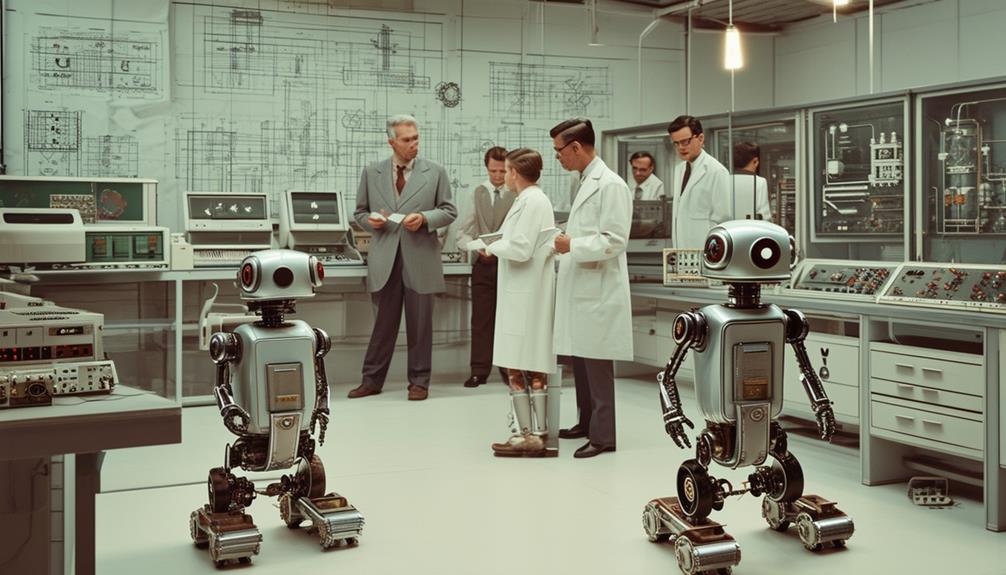
Exploring the early days of autonomous robots reveals groundbreaking developments that shaped mobile robotics. William Grey Walter's pioneering creations in the late 1940s, such as Elmer and Elsie, showcased the potential of light sensors and autonomous behavior. These early machines laid the groundwork for the sophisticated navigation algorithms and decision-making processes in modern autonomous systems. Tracking the evolution from the simple Automated Guided Vehicles (AGVs) of the 1950s to advanced systems like HelpMate in hospitals, you witness a fascinating progression of technological innovation that has transformed entire industries. Curious about how these humble beginnings sparked widespread change?
Early Innovations

William Grey Walter's pioneering work in the late 1940s was foundational for the development of autonomous mobile robots. His creation of Elmer and Elsie, two of the first autonomous robots, marked a significant advancement in the field of robotics. These robots were equipped with light sensors that allowed them to navigate by responding to light, enabling them to move towards or away from light sources. This demonstrated an early form of decision-making and autonomous behavior.
Walter's innovations highlighted the potential for mobile robots to interact with their environment independently, without human intervention. This breakthrough laid the groundwork for future developments in robotics and inspired subsequent generations of engineers and researchers. By the 1950s, the commercial application of autonomous systems became evident with the advent of Autonomous Guided Vehicles (AGVs). These AGVs were able to navigate industrial environments, efficiently transporting materials and performing repetitive tasks.
Sensor Integration
The integration of sensors in early autonomous robots was crucial for enabling them to detect obstacles and navigate their surroundings effectively. By incorporating basic light and bump sensors, early robots like Elmer and Elsie could sense their environment and adjust their paths accordingly. This sensor integration allowed these primitive machines to perform simple navigation tasks, avoiding obstacles and making basic decisions about their movement.
In the late 1940s, the use of sensors marked a significant step in the development of autonomous mobile robots. These early robots used light sensors to detect changes in their environment and bump sensors to identify physical barriers. When encountering an obstacle, the bump sensors triggered a response to change direction, ensuring the robots didn't get stuck or damaged. This ability to sense and react was vital for their autonomous operation.
Sensor integration in these early robots laid the groundwork for the sophisticated sensor technologies we see in modern autonomous mobile robots (AMRs). By mastering the basics of obstacle detection and navigation, these pioneering machines demonstrated the potential of sensor-based autonomy, setting the stage for future advancements in mobile robotics.
Navigation Algorithms

Building on the foundation of sensor integration, early autonomous robots employed simple navigation algorithms to traverse their environments and avoid obstacles. Consider Elmer and Elsie, early robots that used light and bump sensors to detect barriers and navigate around them with basic algorithms. These fundamental techniques were pivotal in shaping the future of autonomous mobile robots.
In the 1950s, Automated Guided Vehicles (AGVs) emerged, utilizing foundational navigation algorithms that laid the groundwork for modern robotics. These AGVs could follow pre-defined paths and avoid obstacles, demonstrating the practical applications of these early algorithms.
Fast forward to the early 1990s, and you'll find HelpMate, a commercially successful autonomous mobile robot used in hospitals. HelpMate's advanced navigation algorithms enabled it to efficiently complete tasks like delivering medications and transporting supplies, highlighting the progression of these systems.
The evolution of navigation algorithms has been crucial for the widespread adoption of autonomous robots across various industries. As algorithms advanced, so did the capabilities of these robots, allowing them to perform increasingly complex tasks with greater precision and reliability. This progression underscores the significance of navigation algorithms in the development of autonomous mobile robots.
Decision-Making Processes
Early autonomous robots like Shakey revolutionized decision-making processes in robotics by employing logical reasoning and planning algorithms. Developed in the 1960s, Shakey demonstrated how robots could make informed decisions based on environmental data. Using these processes, Shakey could navigate rooms, avoid obstacles, and even push objects to achieve its objectives.
As technology progressed, sensors such as cameras, LIDAR, and ultrasonic sensors became integral to autonomous movement. These sensors allowed robots to gather more accurate environmental data, enhancing their decision-making processes. The Stanford Cart exemplified these advancements by successfully maneuvering through dynamic environments using onboard computing power and sophisticated algorithms.
The introduction of behavior-based control architectures marked a significant leap in robot autonomy. Unlike pre-programmed instructions, these architectures enabled robots to exhibit adaptive behaviors by breaking down complex tasks into simpler components. This allowed robots to respond more effectively to unexpected changes in their environment.
Evolution of Systems
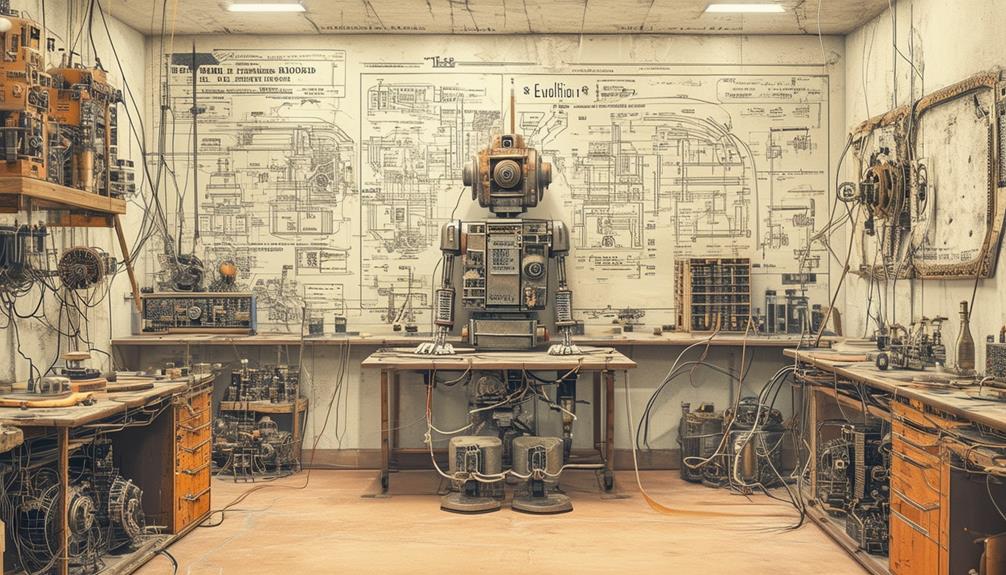
Over the decades, autonomous robot systems have evolved from simple sensor-based machines to complex AI-driven entities. Early models such as Elmer and Elsie, created by William Grey Walter in the late 1940s, relied on basic light and bump sensors for navigation. These foundational control systems laid the groundwork for the development of more sophisticated methodologies.
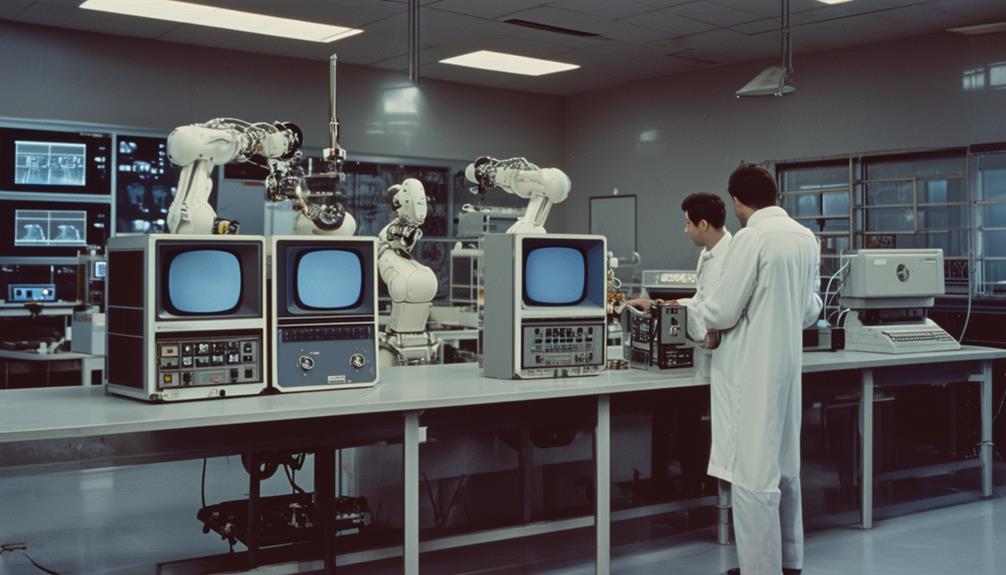
In the 1950s, Autonomous Guided Vehicles (AGVs) marked the commercial debut of autonomous systems in industrial settings. These early systems were pivotal in automating material handling, demonstrating the potential of autonomous robots to boost operational efficiency.
By the early 1990s, the introduction of HelpMate, a commercially viable autonomous mobile robot used in hospitals, showcased the practical applications of advanced control systems in real-world environments. HelpMate performed a range of tasks that reduced the workload of hospital staff, illustrating the utility of autonomous systems in healthcare.
In the past 30 years, the evolution of autonomous systems has accelerated. Modern autonomous mobile robots from companies like inVia and Locus are revolutionizing warehouse operations. Leveraging machine learning and AI, these robots optimize efficiency, handle diverse tasks, and significantly reduce worker load during peak production periods. This shift underscores how advanced autonomous systems can transform industries, pushing the boundaries of what is achievable.
Conclusion
You have journeyed through the pioneering efforts in early autonomous robotics, observing significant advancements in sensor integration, navigation algorithms, and decision-making processes. From William Grey Walter's Elmer and Elsie to Automated Guided Vehicles (AGVs) and HelpMate, these early systems established the essential framework for today's sophisticated autonomous technologies. By understanding these foundational developments, you can better appreciate the remarkable progress in mobile robotics and anticipate the limitless potential that lies ahead. Embrace this knowledge as you look forward to the future of robotics!
Related posts