Understanding the Role of Machine Learning in Modern Robotics

Machine learning plays an essential role in modern robotics, allowing machines to learn from data and adapt to their environments. You'll find different types of learning at work, like supervised learning for accurate predictions and reinforcement learning that helps robots improve through trial and error. Machine learning algorithms elevate capabilities in areas like autonomous vehicles and industrial automation, streamlining operations and increasing efficiency. Innovations in human-robot interaction rely on machine learning for better communication and responsiveness. Understanding these elements helps you grasp how robotics is evolving rapidly; there's so much more to investigate about this exciting field.
Machine Learning Fundamentals
Machine learning is like the brain of a robot, enabling it to learn from data and improve its performance over time. In the domain of machine learning, you'll encounter numerous approaches. Supervised learning is where you train models using labeled data, helping robots make predictions. Reinforcement learning, on the other hand, involves training through trial and error, allowing robots to learn best actions in dynamic environments.
Neural networks play a significant role, mimicking human brain functions to process and learn from vast amounts of data. Before diving into these methods, data preprocessing is fundamental; it guarantees data quality and prepares it for analysis. Feature extraction helps in identifying the most relevant information, which boosts the model's performance.
You might also investigate unsupervised learning, where models uncover patterns in data without labels. This can be particularly useful in clustering similar data points. Transfer learning allows you to utilize knowledge from one task to improve performance in another, saving time and resources. Finally, model evaluation is critical, as it measures how well your model performs and guides further improvements. Each of these fundamentals contributes to the evolving capabilities of robotics.
Historical Context of Robotics
Robotics' expedition dates back centuries, evolving from simple automata to the sophisticated machines we see today. You can trace this voyage through the contributions of robotic pioneers who fueled early experiments. These innovators laid the groundwork for mechanical evolution, experimenting with different designs and functionalities.
As automation milestones were reached, foundational technologies emerged. Control systems became essential for managing mechanical functions, enabling machines to perform tasks with precision. You'd see early robots utilizing basic control systems, gradually advancing to more complex architectures.
Sensor integration played a significant role in enhancing robot capabilities, allowing for interaction with the environment. This integration paved the way for smarter machines that could adapt to diverse conditions. Over time, programming languages evolved, giving engineers the tools to instruct robots in increasingly sophisticated ways.
From the initial mechanical puppets to today's autonomous systems, the historical context reveals a rich tapestry of innovation. Every step along this path has contributed to the robotics landscape we navigate now, showcasing a relentless pursuit of automation and efficiency that continues to inspire modern advancements in the field.
Key Algorithms in Robotics
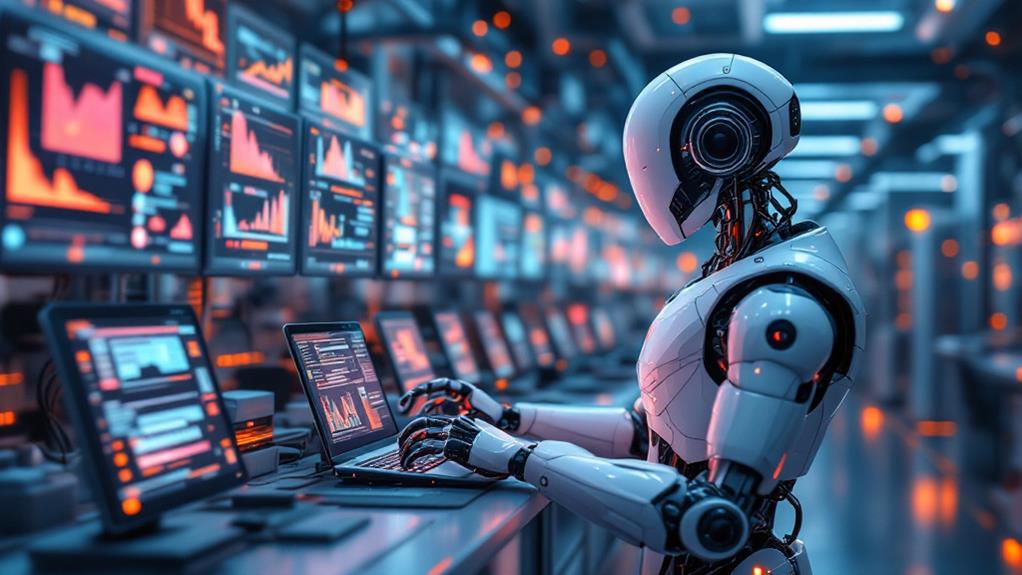
Understanding key algorithms in robotics is essential for developing intelligent systems that can navigate, learn, and make decisions in real-time. Among these algorithms, reinforcement learning allows robots to learn ideal behaviors through trial and error, enhancing their adaptability in dynamic environments. Neural networks, particularly in deep learning, enable these systems to process complex data and recognize patterns, improving their decision-making capabilities.
Supervised learning helps robots learn from labeled data, ensuring accurate predictions and classifications, while unsupervised learning uncovers hidden structures in unlabelled data, aiding in exploratory tasks. Decision trees provide a clear, interpretable structure for making decisions based on different input features, making it easier to understand the reasoning behind a robot's actions.
Algorithm optimization plays an essential role in refining these methods, ensuring that robots operate efficiently and effectively. Moreover, sensor fusion integrates data from multiple sensors, enhancing the robot's perception of its environment and improving its ability to navigate and make informed decisions. By mastering these key algorithms, you can greatly advance the functionality and intelligence of robotic systems, paving the way for creative applications in different fields.
Applications in Autonomous Vehicles
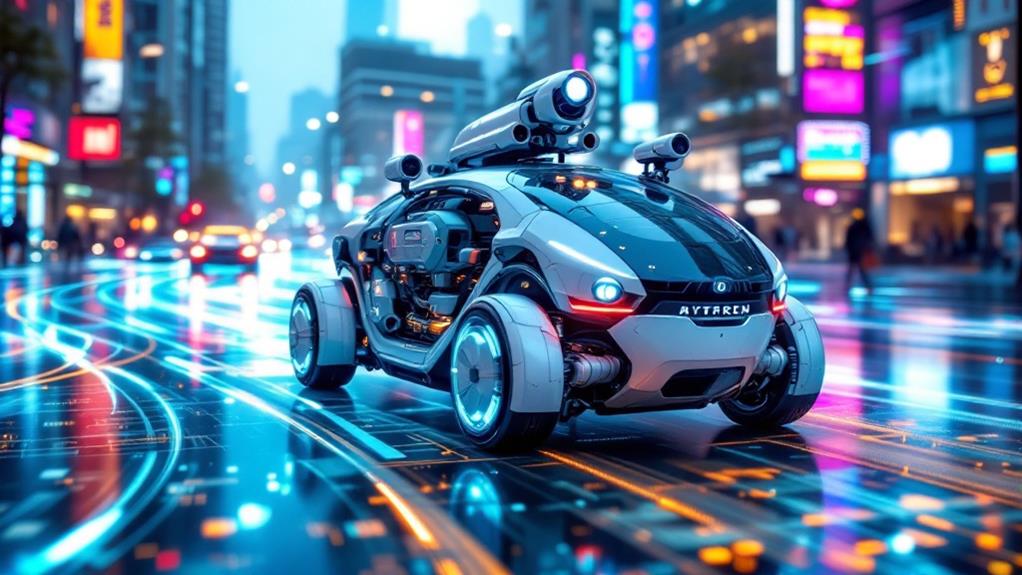
The advancements in key algorithms directly impact the development of autonomous vehicles, where intelligent systems must navigate complex environments safely and efficiently. By harnessing machine learning, these vehicles can adapt to dynamic conditions and improve their driving behavior. Here are four significant applications:
- Sensor Fusion: Combining data from multiple sensors enables accurate environment perception, essential for effective vehicle localization.
- Obstacle Detection: Advanced algorithms identify and classify obstacles, allowing vehicles to react promptly and avoid collisions.
- Path Planning: Machine learning aids in determining ideal routes, factoring in real-time processing and traffic conditions for efficient navigation.
- Decision Making: Intelligent systems analyze diverse scenarios to make quick, informed decisions, boosting safety and reliability.
Adaptive learning plays an important role in improving these processes, as the vehicle learns from its experiences and fine-tunes its algorithms over time. With robust capabilities in obstacle detection, path planning, and real-time decision making, autonomous vehicles are set to redefine transportation, making it safer and more efficient. Embracing these technologies not only transforms driving but paves the way for a smarter, more connected future.
Industrial Automation and Efficiency
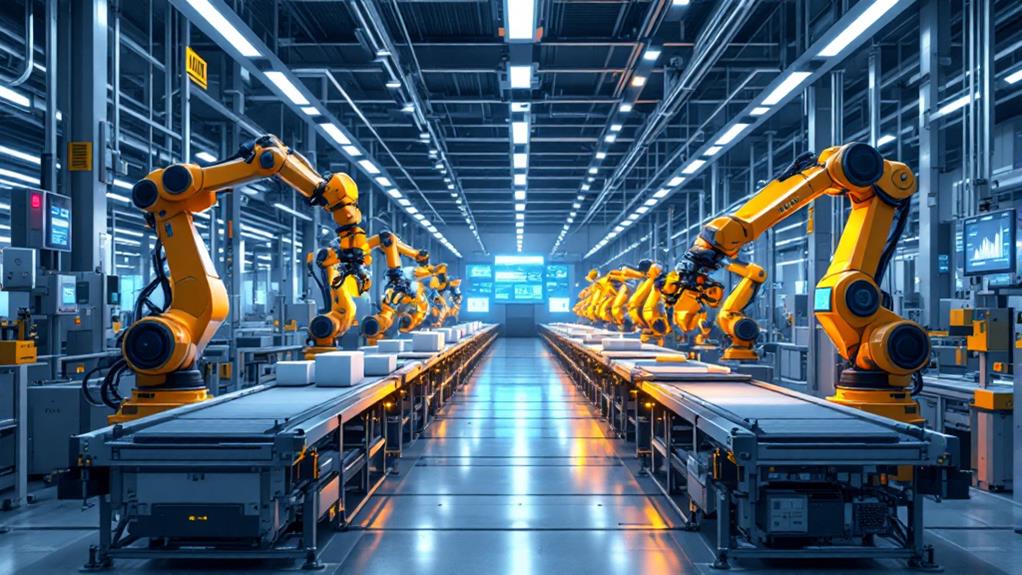
In the current fast-paced manufacturing landscape, companies are increasingly turning to machine learning to improve industrial automation and efficiency. By implementing robotic processes, you can streamline operations and reduce human error, leading to significant improvements in productivity. Smart manufacturing systems utilize machine learning for real-time monitoring, allowing you to gather data on equipment performance and operational flow.
One of the key benefits of this technology is predictive maintenance. By analyzing data trends, you can anticipate equipment failures before they occur, minimizing downtime and keeping your supply chain on track. Workflow optimization becomes more attainable as machine learning algorithms identify bottlenecks and suggest improvements.
Moreover, quality control is improved through automated inspections that use machine learning to detect defects faster and more accurately than manual checks. This capability not only increases product quality but also guarantees compliance with industry standards.
Human-Robot Interaction Enhancements
How can we make interactions with robots more intuitive and effective? By leveraging machine learning, we can improve human-robot interaction in several key ways. Robots can learn to recognize social cues, enhancing their ability to respond appropriately to human emotions. Here are four improvements that stand out:
- Gesture Recognition: Robots can interpret human gestures, allowing for non-verbal communication that feels more natural.
- Emotional Intelligence: By understanding emotional states, robots can adapt their responses, fostering trust and rapport.
- User Feedback: Incorporating user feedback enables robots to refine their interactions, ensuring they meet individual needs better.
- Personalization Techniques: These methods allow robots to tailor their behavior based on users' preferences, making interactions more engaging.
Implementing effective communication protocols is essential for these improvements to work seamlessly. Furthermore, adaptive learning enables robots to continuously improve through experience, solidifying trust-building with users. As you interact with robots, these advancements will create a more intuitive and fulfilling experience, bridging the gap between human and machine.
Ethical Considerations in Robotics

Ethical considerations play a fundamental role in the development and deployment of robotics. As you engage with robotic autonomy, it's imperative to understand the ethical frameworks guiding these technologies. Accountability issues arise when robots make decisions that impact human lives, leading to questions about who's responsible for their actions. You'll also want to be aware of privacy concerns; as robots collect data, safeguarding personal information becomes increasingly significant.
Decision-making transparency is another key factor. You should advocate for systems that allow users to understand how robots arrive at their determinations. This helps build trust and guarantees that ethical guidelines are followed. Furthermore, bias mitigation is crucial. If robots learn from biased data, they may perpetuate harmful stereotypes and practices, which can have significant social implications.
Navigating these challenges is no easy feat. Regulatory challenges must be addressed to create a framework that promotes ethical robotics while fostering innovation. By actively engaging in these discussions, you can contribute to a future where robotics improves human life without compromising ethical standards.
Future Trends and Innovations
As robotics continue to evolve, the integration of machine learning is set to redefine the landscape of modern technology. You'll witness several exciting trends and innovations shaping the future:
- Predictive Maintenance: Using machine learning algorithms, robots can predict failures before they happen, reducing downtime and maintenance costs.
- Swarm Robotics: Inspired by nature, swarm robotics will enable multiple robots to collaborate seamlessly, improving efficiency and task completion rates.
- Adaptive Learning: Robots will learn from their environments in real-time, enhancing their capabilities and decision-making through reinforcement learning techniques.
- Cognitive Computing: Advanced robot perception systems will allow robots to understand and interact with their surroundings more intuitively, making them more effective in numerous applications.
With edge computing, processing data closer to the source will minimize latency, enabling faster decision-making. Collaborative robots will increasingly work alongside humans, enhancing productivity. These innovations promise to make robotics more intelligent, versatile, and user-friendly. As you navigate this evolving landscape, you'll find that the synergy between machine learning and robotics will continue to drive unprecedented advancements.
Related posts