The Role of Delivery Robots During the Global Lockdowns
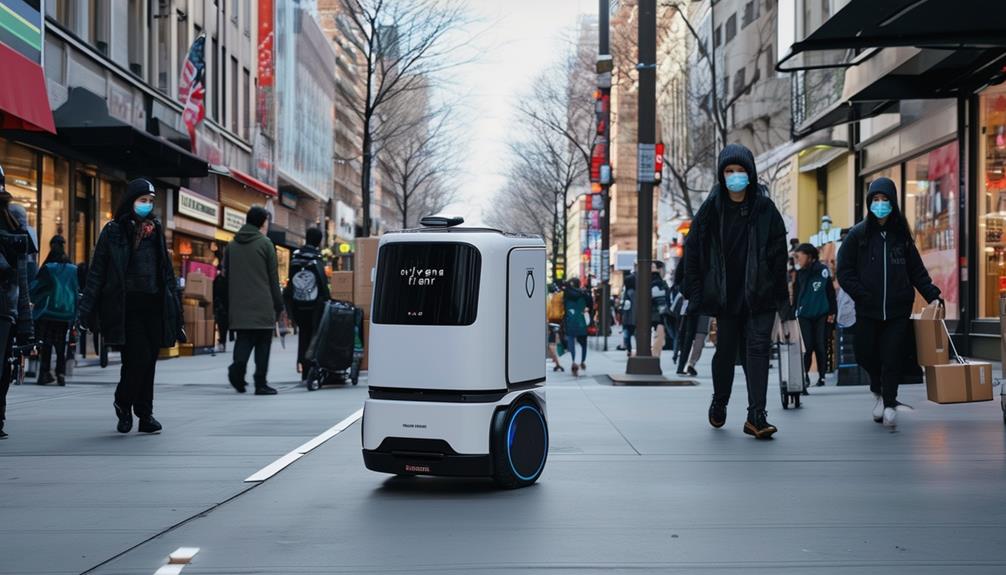
Imagine navigating the uncertainties of a global lockdown when delivery robots start buzzing through your neighborhood, bringing essential items right to your doorstep. These autonomous devices, from companies like Starship Technologies and JD.com, play a crucial role in maintaining social distancing and ensuring timely deliveries. You might wonder how these robots adapt to real-time changes and what technologies power their efficient movement. The broader impact on public health and safety is significant. But have you considered the challenges and future prospects of this rapidly evolving sector?
Evolution of Delivery Robots

Delivery robots have rapidly evolved to meet the challenges posed by global lockdowns. During the COVID-19 pandemic, companies like Starship Technologies and UDI stepped up to provide vital services. These robots were indispensable for contactless food and medical deliveries, enabling people to stay safe at home. For instance, Starship Technologies completed over 100,000 autonomous deliveries and traveled more than 500,000 miles, demonstrating the efficiency and reliability of these systems.
Autonomous delivery robots relied on advanced technologies such as cameras, lidars, and deep-learning algorithms to navigate public spaces. These tools allowed them to operate effectively even in complex urban environments. By using these technologies, robots could safely traverse crowded streets and deliver goods without human intervention.
Chinese company JD.com also accelerated its autonomous delivery systems during the pandemic, focusing on medical deliveries. This rapid adaptation highlighted the flexibility and scalability of robotic delivery solutions. As the pandemic unfolded, the importance of such robots became increasingly apparent. They provided a vital service, ensuring essential items reached those in need while minimizing human contact. The evolution of delivery robots during this time demonstrated their potential for future applications across various sectors.
Contactless Delivery Benefits
Experience the substantial benefits of contactless delivery, starting with enhanced safety measures that significantly reduce virus transmission risks. By minimizing human interaction, these systems help maintain the health and safety of all involved. Additionally, contactless delivery optimizes efficiency, ensuring the timely arrival of essential items such as food and medical supplies.
Enhanced Safety Measures
Contactless delivery robots significantly reduced the risk of virus transmission by autonomously delivering essential items during lockdowns. These robotic systems provided a crucial solution by ensuring contactless delivery of vital goods such as food and medicine. Operating without human drivers, these robots minimized the risk of human interaction and potential virus exposure.
Using these delivery robots, you benefited from enhanced safety protocols designed to protect both you and others. The robots navigated public spaces and sidewalks efficiently, adhering strictly to safety guidelines. This ensured that items were delivered to your doorstep without any direct human contact, thus supporting social distancing efforts.
Incorporating these autonomous robots into the delivery infrastructure allowed communities to maintain essential services even during the strictest lockdowns. The robots not only followed pre-set routes but also adapted to real-time changes in their environment, further ensuring the reliability and safety of their operations.
Reduced Human Interaction
During the global lockdowns, contactless delivery robots significantly enhanced daily life by providing a safe method for food delivery services. These robots minimized direct human contact, thereby upholding social distancing protocols and reducing the risk of virus transmission.
Operating at low speeds, these delivery robots offered a dependable and secure means of delivering essentials. They also prioritized user privacy and data protection, ensuring compliance with privacy policies.
Key benefits of contactless delivery robots during the lockdowns included:
- Improved Safety: Reduced the risk of virus spread by minimizing human interactions.
- Convenience: Enabled doorstep deliveries without face-to-face contact.
- Reliable Service: Despite their low speeds, robots ensured timely and efficient delivery of essential goods.
The increased use of robot deliveries underscored their crucial role in safely delivering food, groceries, and medical supplies. This technology provided peace of mind during uncertain times, demonstrating the effectiveness of contactless solutions in maintaining public health.
Increased Efficiency Rates
Leveraging delivery robots significantly increased efficiency rates by ensuring timely and safe delivery of essential items during global lockdowns. When human interaction posed considerable risks, delivery robots provided a reliable and contactless solution, effectively reducing the chances of virus transmission. This allowed you to receive crucial items without the anxiety of direct human contact.
The unprecedented surge in demand for home deliveries was met effectively by delivery robots, ensuring high efficiency rates. Their capacity to operate without fatigue and maintain consistent performance enabled businesses to keep up with increased orders. With delivery robots, concerns about delayed deliveries or compromised safety measures were mitigated.
Both businesses and customers benefited from the contactless delivery features of these robots. For companies, it meant continuing operations without risking their workforce. For you, it meant safe delivery of groceries, medicines, and other vital items to your doorstep. This dual benefit underscores why delivery robots became a preferred choice during such critical times. The role of delivery robots during global lockdowns extended beyond convenience; it was about maintaining essential services while prioritizing public health and safety.
Key Technologies Involved

The success of delivery robots during lockdowns relies on advanced technologies such as autonomous navigation systems and machine learning algorithms. These technologies enable robots to map their environment accurately and make real-time decisions. Equipped with cameras, lidars, and sensors, these robots can effectively avoid obstacles and ensure safe delivery of items.
Autonomous Navigation Systems
Autonomous navigation systems in delivery robots rely on a combination of cameras, LIDARs, and GPS for precise route planning and efficient deliveries. These technologies are crucial for enabling robots to navigate urban environments, ensuring that packages arrive safely and on time. GPS navigation allows delivery robots to map out optimal routes, avoid obstacles, and traverse complex pathways.
The COVID-19 pandemic highlighted the importance of efficient delivery systems due to labor shortages. Autonomous delivery robots played a significant role in maintaining the flow of essential goods to consumers without human intervention. Here's how these technologies integrate:
- Cameras: Capture real-time images, aiding in obstacle detection and avoidance.
- LIDARs: Emit laser pulses to measure distances and generate detailed environmental maps.
- GPS: Provides precise location data for accurate route planning and navigation.
These components work in unison, enabling delivery robots to function autonomously and reliably. By leveraging these technologies, delivery systems maintained operations during challenging periods and paved the way for future advancements in automated deliveries. This advanced navigation capability addresses immediate logistical needs and supports ongoing innovation in autonomous delivery solutions.
Machine Learning Algorithms
Autonomous navigation systems provide the hardware backbone for delivery robots, but it is machine learning algorithms that equip these robots with the intelligence needed to navigate public spaces effectively. These algorithms process data from sensors and cameras to make real-time decisions and adjustments, enabling delivery robots to navigate complex environments seamlessly.
Machine learning algorithms are crucial for obstacle avoidance. By analyzing incoming data, these robots can detect and circumvent obstacles such as pedestrians, vehicles, and other impediments, ensuring safe and efficient delivery routes even in crowded areas. Additionally, route optimization is another key function of these algorithms. They calculate the most efficient paths by considering factors like traffic conditions, pedestrian density, and other variables. This not only speeds up delivery times but also conserves the robot's energy, making operations more sustainable.
Companies like Starship Technologies and Serve Robotics leverage these advanced algorithms to enhance the efficiency and safety of their delivery robots. During global lockdowns, the use of machine learning algorithms was pivotal in the successful deployment and scalability of these robots. By continuously learning and adapting, these robots have proven to be reliable assets in maintaining essential services during challenging times.
Major Providers and Services
During the global lockdowns, major providers such as Starship Technologies, UDI, JD.com, and Amazon rapidly scaled their delivery robot services to meet increased demand. Starship Technologies deployed over 1,000 delivery robots, focusing on last-mile deliveries for items like food and groceries. These robots became a common sight on sidewalks, efficiently navigating urban areas to deliver essential goods directly to customers' doors.
UDI utilized self-driving vans to deliver food in China, ensuring that people received their meals while adhering to social distancing guidelines. JD.com accelerated its autonomous delivery systems to handle critical medical deliveries, demonstrating the versatility of delivery robots in managing both everyday items and essential healthcare supplies.
Amazon also made significant advancements by testing its Scout autonomous robots for last-mile delivery in select regions. These compact, cooler-sized robots traveled on sidewalks to bring packages directly to customers' doorsteps.
- Starship Technologies: Over 1,000 delivery robots for last-mile deliveries
- UDI: Self-driving vans for food delivery in China
- JD.com: Autonomous systems for medical deliveries
- Amazon: Scout autonomous robots for package delivery
These companies exemplified how delivery robots could be rapidly scaled to meet unprecedented challenges, offering a glimpse into the future of contactless delivery services.
Safety and Hygiene Measures

In response to global lockdowns, companies implemented stringent safety and hygiene measures to facilitate contactless delivery. Leveraging delivery robots, businesses like Starship Technologies ensured the safe delivery of essential items without the risk of virus transmission. These autonomous robots navigated public spaces independently, reducing human interaction and minimizing contact.
Starship Technologies' delivery robots were equipped with advanced technologies such as cameras and sensors to maintain high hygiene standards. The robots were regularly sanitized to remain germ-free, providing a safer alternative for deliveries. These measures enabled companies to adhere to social distancing protocols, safeguarding both customers and delivery personnel.
Safety extended beyond cleanliness; it also encompassed the robots' intelligent navigation systems. Designed to avoid obstacles and human contact, these robots ensured timely and safe deliveries. During the pandemic, autonomous delivery robots played a crucial role in mitigating health risks, allowing individuals to receive necessary items without leaving their homes. This focus on safety and hygiene highlighted how technology adapted to the challenges posed by global lockdowns.
User Experience and Feedback
Users have praised the convenience and efficiency of robot delivery services in various cities, highlighting their positive experiences. In places like Fairfax City, Virginia, and Milton Keynes, demand for these delivery robots surged during the lockdowns, proving their value. Residents have consistently noted how these robots simplify their lives, especially when traditional delivery options are limited.
The Starship app, though basic, is functional and straightforward, enabling seamless ordering of groceries and takeout. Users have particularly appreciated the following:
- Convenience: Delivery robots bring groceries and meals directly to your doorstep, saving time and effort.
- Efficiency: These robots are reliable, ensuring timely deliveries even during peak demand.
- Accessibility: With services expanding to areas like Chevy Chase and Tempe, more people can benefit from this practical solution.
Challenges Faced
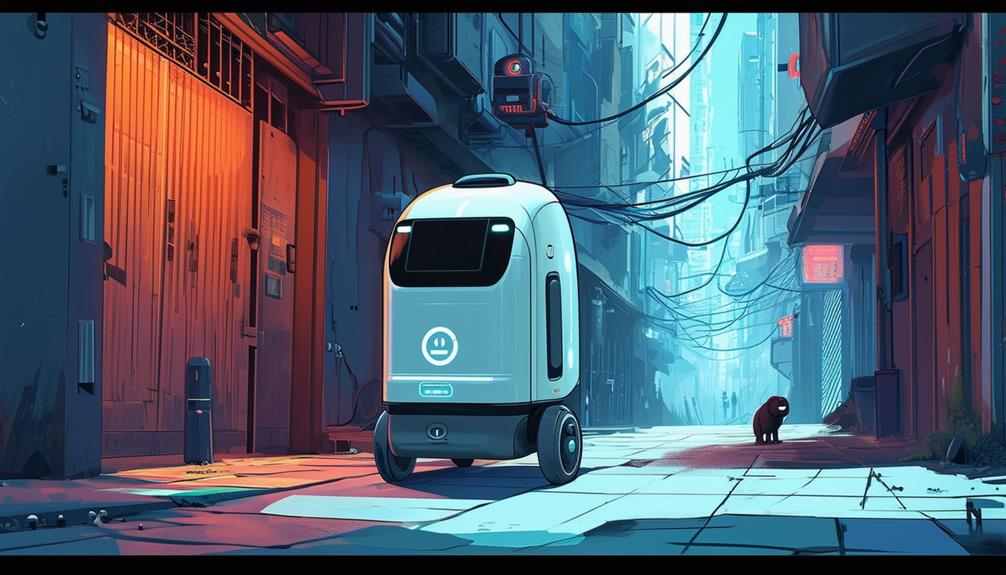
Despite their numerous advantages, delivery robots encountered significant challenges during the global lockdowns, especially with the surge in demand for contactless delivery options. These lockdown restrictions caused an unprecedented spike in the need for delivery services, which in turn placed immense pressure on the capabilities of existing delivery robots. Companies like Starship Technologies had to rapidly adjust, but the sudden increase in demand exposed several limitations.
One major issue was the scalability of delivery robots. The existing fleets struggled to keep pace with the exponential growth in orders, leading to delays and reduced efficiency. Moreover, the robots had to navigate streets that were often blocked or modified due to lockdown restrictions, complicating their routes and further slowing down delivery times.
The emotional and operational impact of these challenges on consumers and businesses can be categorized as follows:
| Challenge | Impact on Consumers | Impact on Businesses |
|---|---|---|
| Increased Demand | Longer wait times | Operational strain |
| Navigational Difficulties | Missed or delayed deliveries | Higher operational costs |
| Scalability Issues | Inconsistent service | Loss of potential revenue |
These challenges underscored the urgent need for more efficient and reliable delivery robot services, highlighting the importance of technological advancements to meet future demands effectively.
Future Prospects
Looking ahead, delivery robots are set to revolutionize the logistics landscape by offering faster, more efficient, and cost-effective solutions. Companies like Starship Technologies are rapidly expanding their services to more cities and countries, indicating the significant growth of this technology. Expect to see more sidewalk robots navigating city streets, ushering in a new era of convenience.
Key points to consider for the future prospects of delivery robots include:
- Rapid Growth: The demand for contactless delivery has accelerated the adoption of delivery robots, a trend that is expected to continue.
- Sidewalk Robots: Small, agile robots are already common in some urban areas, efficiently delivering packages and food.
- Extended Services: Larger robots are being developed for road use, aiming to extend services to suburban and rural areas.
Delivery robots have the potential to transform the food delivery industry, making deliveries quicker and cheaper while reducing human contact, which addresses health and safety concerns. As these robots become more prevalent, anticipate a significant shift in the logistics landscape, enhancing overall efficiency and customer satisfaction.
Conclusion
During global lockdowns, delivery robots played a crucial role by efficiently delivering necessities while minimizing human contact. Companies like Starship Technologies and JD.com utilized advanced technology to support social distancing and meet the heightened demand for home deliveries. Despite facing challenges, these robots had a significant positive impact on public health and safety. Looking forward, we can anticipate further innovation and broader integration of delivery robots into everyday life.
Related posts