The Mechanics of Quadrupedal Robots: Balancing Speed and Stability
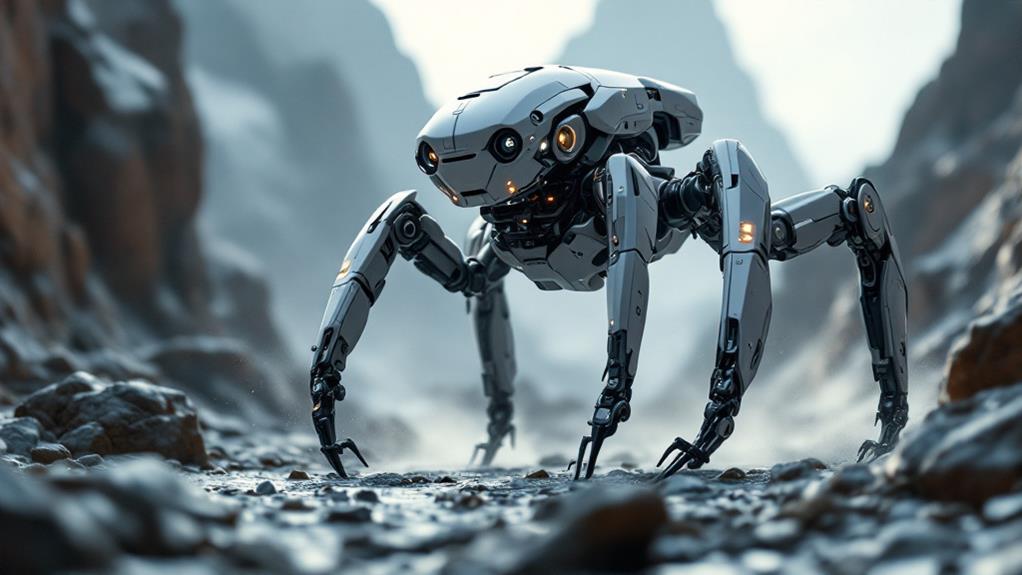
When exploring how quadrupedal robots balance speed and stability, you'll find they incorporate creative design principles and cutting-edge algorithms. Key aspects include selecting lightweight yet robust materials like carbon fiber and ensuring ideal weight distribution to improve performance across diverse terrains. Advanced gait optimization and motion control algorithms allow these robots to navigate obstacles and adjust dynamically to environmental changes. Sensor integration and feedback loops enable real-time adjustments, enhancing balance and minimizing mechanical stress. By understanding these mechanics, you'll realize how these robotic marvels revolutionize fields like disaster response and move toward even more pioneering applications.
Evolution of Quadrupedal Robotics
Quadrupedal robots have come a long way since their inception, thanks to advances in technology and engineering. When you look back at the historical milestones in quadrupedal robotics, you'll see a rich tapestry of innovation and development. It all began with simple mechanical constructs, which laid the groundwork for more sophisticated machines. Early robots focused on basic movements, but they were essential in understanding the fundamentals of robot locomotion.
As technology advanced, so did the complexity and capabilities of these robots. In the late 20th century, significant breakthroughs were made, allowing robots to mimic the gait and movement of four-legged animals more accurately. This period marked a shift where engineers started to focus on creating robots that could traverse varied terrains, improving both speed and stability.
You might find it fascinating that one of the key historical milestones was the introduction of algorithms that enabled robots to adjust their movements in real-time. This advancement transformed them from simple walkers into dynamic machines capable of maneuvering through complex environments. Today, quadrupedal robots are not just engineering marvels; they're potential game-changers in fields like disaster response and exploration, all because of their evolving locomotion capabilities.
Design Principles and Challenges
Designing quadrupedal robots often requires a careful balance between speed and stability. You must select the right structural materials to guarantee the robot is lightweight yet strong enough to withstand varied environments. Materials like carbon fiber or lightweight alloys can provide the necessary strength without compromising weight. Proper weight distribution is essential; it affects the robot's center of gravity and influences both speed and stability. You need to pay attention to how weight is allocated across the robot's frame to maintain balance during movement.
Gait refinement is another significant component. By refining how the robot's feet interact with the ground, you can improve both speed and terrain adaptability. Joint articulation plays a fundamental role in this aspect; flexible joints allow for smoother and more efficient movement. This articulation must be carefully designed to support different gaits that adapt to diverse terrains.
Energy efficiency is an ongoing challenge in robotic design. You want the robot to perform at its best without draining its power quickly. Efficient energy use extends the robot's operational time and reduces the need for frequent recharging. By addressing these design principles and challenges, you can create a quadrupedal robot that excels in both speed and stability.
Algorithms for Motion Control
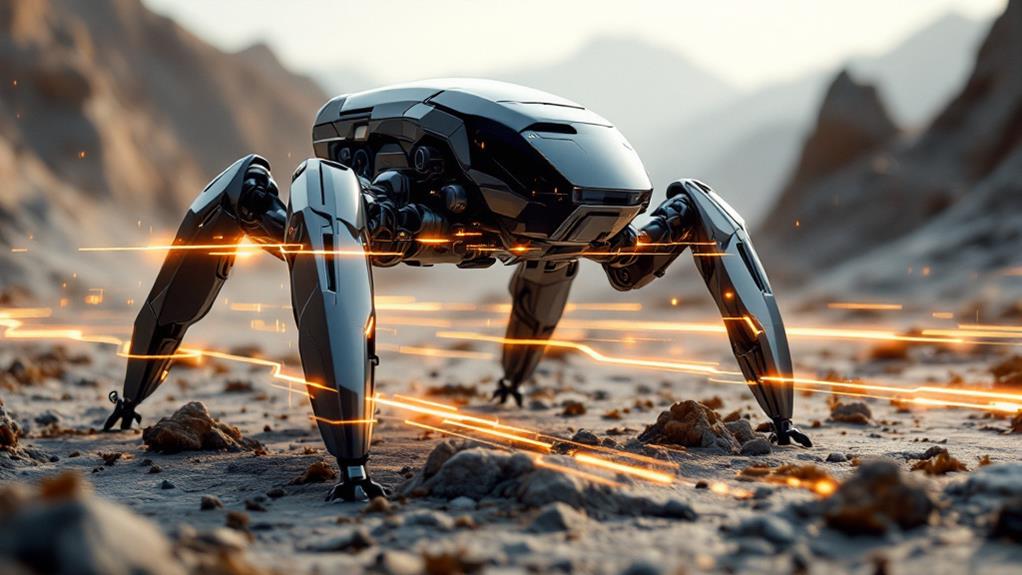
Mastery of motion control algorithms is fundamental for optimizing a quadrupedal robot's performance. When you're developing these robots, it's imperative to focus on several key areas. Initially, gait optimization helps your robot move efficiently and smoothly across different surfaces. By fine-tuning the timing and sequence of leg movements, you can guarantee your robot maintains balance while maximizing speed and energy efficiency.
Next, consider obstacle navigation. Robots must adapt to unexpected changes in their environment, and obstacle navigation algorithms empower them to do so. These algorithms allow your robot to detect and traverse obstacles seamlessly, maintaining stability and minimizing energy consumption.
Lastly, adaptive control is critical for effective trajectory planning and terrain adaptation. By implementing adaptive control strategies, you can ascertain your robot adjusts its movements dynamically based on the terrain it encounters. This adaptability is paramount for maintaining stability and efficiency on varied surfaces.
Here's a quick checklist to verify you're covering all the bases:
- Gait Optimization: Fine-tune leg movements for balance and speed.
- Obstacle Navigation: Implement algorithms for seamless traversal.
- Adaptive Control: Ascertain dynamic adjustments for terrain adaptation.
Sensor Integration and Feedback
Effective sensor integration and feedback systems are vital for improving a quadrupedal robot's performance. You want your robot to navigate complex environments smoothly, and that requires a robust interplay of sensor data and responsive actions. By using sensor fusion, you can combine information from different sensors to create a thorough view of the robot's surroundings. This technique allows you to overcome the limitations of individual sensors and provides more accurate data for decision-making.
Feedback loops play an important role in real-time adjustments, making certain your robot maintains its balance and trajectory. When a robot encounters unexpected obstacles or terrain changes, rapid processing of sensor data through feedback loops enables it to adapt quickly. These loops constantly assess the robot's current state against its target state, making necessary corrections to maintain stability and speed.
Incorporating sensor fusion and feedback loops effectively allows you to improve the robot's ability to predict and respond to environmental changes. This integration not only boosts navigation capabilities but also extends the robot's operational lifespan by minimizing the risk of mechanical stress or damage. By prioritizing these systems, you'll guarantee your quadrupedal robot performs at its best in dynamic settings.
Case Studies of Current Models

Investigate the world of quadrupedal robots by examining some of today's most advanced models. These robotic marvels demonstrate impressive feats in agility testing and terrain navigation. Among the leaders in this field, Boston Dynamics' Spot Robot stands out for its versatile locomotion strategies. It's become synonymous with robotic dogs due to its ability to handle diverse environments, from urban landscapes to rugged outdoor terrains.
- Boston Dynamics' Spot Robot: Spot is a prime example of a robotic dog excelling in agility testing. It navigates complex environments using advanced sensors and dynamic locomotion, making it ideal for inspection tasks and search-and-rescue missions.
- MIT Cheetah: The MIT Cheetah is another remarkable model, renowned for its speed and efficiency. It utilizes state-of-the-art locomotion strategies to mimic the swift movements of a cheetah, achieving remarkable speeds. Its design focuses on balancing speed and stability, making it a leader in agility tests.
- Cheetah Robot: Developed by MIT, this model showcases groundbreaking terrain navigation techniques. It can jump over obstacles and run efficiently, pushing the boundaries of what's possible in robotic motion.
These models illustrate the incredible advancements in quadrupedal robotics, blending speed and stability with precision.
Future Innovations and Applications
As you reflect on the impressive capabilities of current quadrupedal robots, consider the exciting innovations and applications that lie ahead. Future advancements, driven by biomimetic inspiration, will improve these robots' ability to mimic animal movements more closely, boosting their efficiency and adaptability. Terrain adaptability will become a focal point, allowing these robots to navigate complex environments with ease, regardless of whether they're traversing rough rural landscapes or urban settings.
In emergency response situations, quadrupedal robots could become invaluable assets. Their ability to reach inaccessible areas swiftly and safely will revolutionize search and rescue operations, offering timely assistance and potentially saving lives. In agriculture, these robots could transform how you manage crops and livestock, performing tasks ranging from planting to monitoring plant health, thereby optimizing productivity and reducing labor costs.
Entertainment robotics is another promising domain. Imagine robots performing at live events or theme parks, providing interactive and dynamic experiences that captivate audiences. By incorporating these innovations, quadrupedal robots will not only improve practicality in diverse industries but also enrich our daily lives with their adaptability and versatility. Keep an eye on these developments—they're set to redefine the future of robotics.
Related posts