The Mechanics Behind Robot Prosthetics: How Robotics Is Changing Healthcare
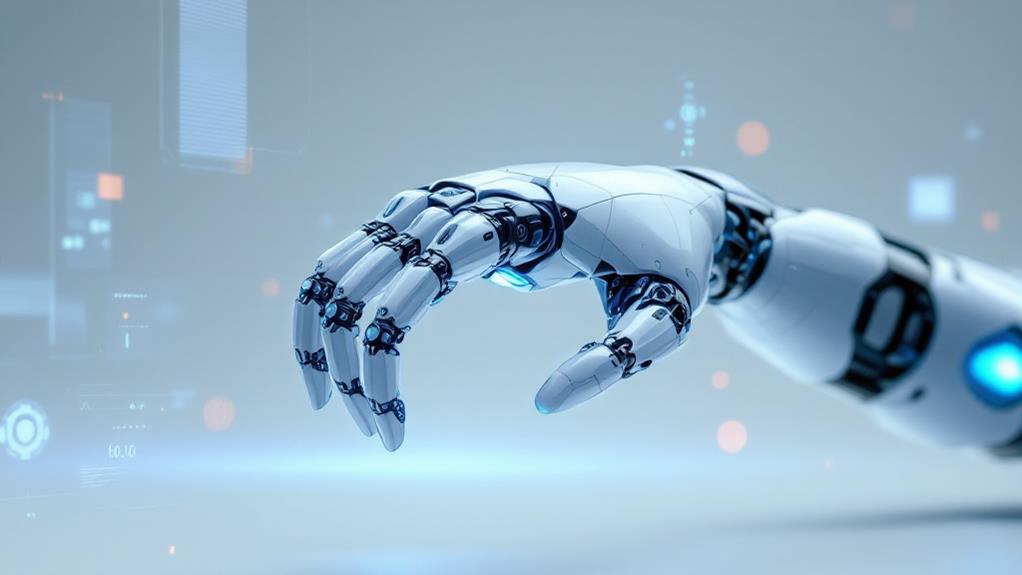
Robotic prosthetics are transforming healthcare by enhancing mobility for individuals with limb loss. These advanced devices blend cutting-edge technology, like sensors and artificial intelligence, to mimic natural movements and provide real-time adjustments. As you control your prosthetic, features like grip strength adaptation and intuitive user interfaces give you seamless functionality. Innovation in materials and designs cater to your unique needs, ensuring comfort and user-friendliness. With ongoing advancements, robotic prosthetics are continuously improving, promoting independence and a better quality of life. Want to find out how these technologies are evolving further? You'll uncover fascinating insights as you investigate this topic.
Overview of Robotic Prosthetics
The evolution of robotic prosthetics represents a remarkable advancement in medical technology, enhancing the quality of life for many individuals. These devices not only replace lost limbs but also integrate with the user's body through biomechanical integration, allowing for more natural movement. By utilizing sensors and algorithms, robotic prosthetics can adapt to different terrains and tasks, providing users with greater freedom and autonomy.
However, the process to effective use isn't without rehabilitation challenges. You might find that adjusting to a robotic prosthetic requires patience and dedication. The process often involves intensive training to develop muscle memory and coordination with the device. This can be particularly intimidating, as it's crucial to overcome any psychological barriers while also mastering physical skills.
Moreover, the connection between the prosthetic and your body needs continual refinement. It's significant to work closely with healthcare professionals to confirm the device fits well and functions as intended. As you navigate these challenges, keep in mind that advancements in robotic technology are continuously improving, promising even greater support and functionality in the future. Embracing this process can lead to significant improvements in your daily life and general well-being.
Key Components of Prosthetic Devices
What makes up a robotic prosthetic device? Understanding its key components helps you appreciate the intricate design and functionality that goes into these life-changing tools. Each piece plays a critical role in guaranteeing biomechanical integration, allowing the prosthetic to mimic natural movement and provide a sense of normalcy.
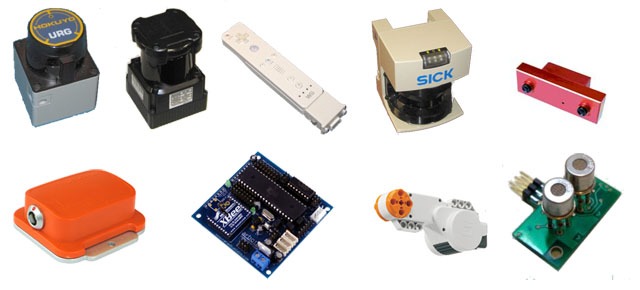
- Sensors: Detect motion and adjust accordingly for smooth operation.
- Actuators: Use motors to create movement, powering the limb's functionality.
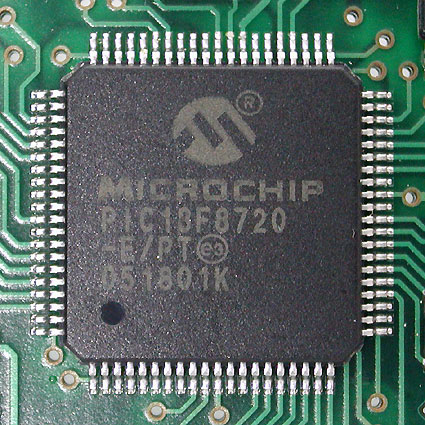
- Control Systems: Process data from sensors and manage the prosthetic's actions.
- Materials: Advanced materials engineering guarantees strength, flexibility, and lightweight design.
- User Interface: Connects the user with the device, enabling intuitive control and feedback.
Together, these components work harmoniously, creating a seamless experience for the user. The advancements in materials engineering have drastically improved the durability and comfort of prosthetics, while biomechanical integration guarantees that the device functions closely to a natural limb. By understanding these key components, you can better appreciate the technology that's transforming healthcare and enhancing the lives of those with limb loss.
How Sensors Enhance Functionality
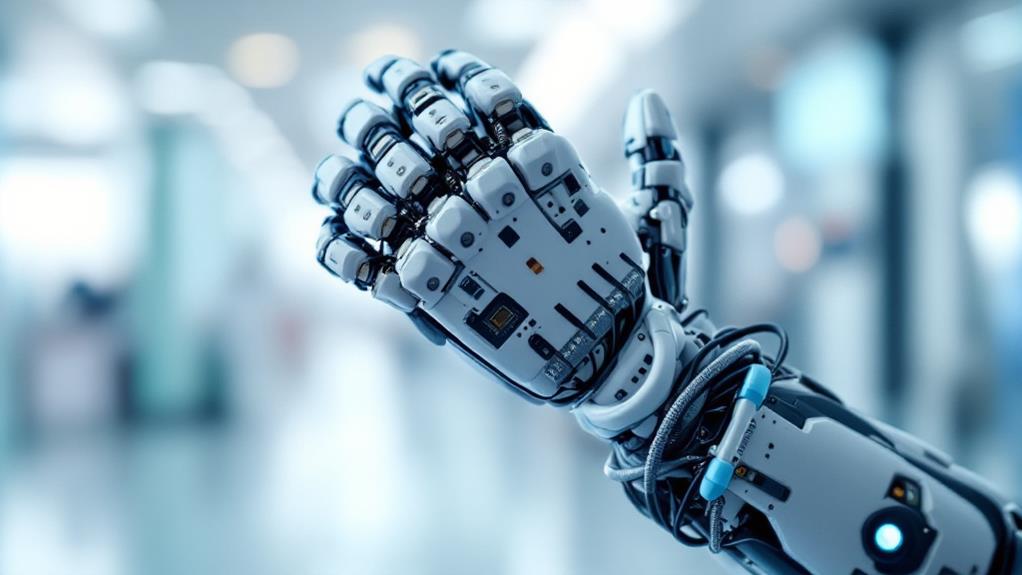
In recent years, sensors have transformed the functionality of robotic prosthetics, making them smarter and more responsive. You'll find that different sensor types, including pressure, motion, and tactile sensors, play an essential role in this evolution. These components gather real-time data about your environment and your movements, enabling the prosthetic to adapt accordingly.
For instance, pressure sensors detect how much force you're applying, allowing the prosthetic to adjust grip strength when holding objects. Motion sensors track your limb movements, facilitating smoother and more natural motion. Tactile sensors can even replicate the sense of touch, providing feedback that improves your interaction with the world.
The functional integration of these sensors leads to a more intuitive user experience. As you wear a robotic prosthetic equipped with advanced sensors, it becomes increasingly responsive to your needs, offering greater control and comfort. This integration not only elevates the prosthetic's effectiveness but also improves your general quality of life. You're no longer just using a tool; you're engaging with a sophisticated device that understands and reacts to your actions, ultimately reshaping how you navigate daily challenges.
The Role of Artificial Intelligence
As you engage with robotic prosthetics improved by advanced sensors, artificial intelligence (AI) takes this interaction to the next level. AI integrates machine learning and neural interfaces to create a seamless experience that adapts to your movements and intentions. With these advancements, you can expect:
- Real-time adjustments that respond to your movements, enhancing stability.
- Enhanced grip strength that adapts to different objects, from delicate glass to heavy tools.
- Predictive algorithms that learn your daily activities, anticipating your needs.
- Intuitive control through brain-computer interfaces, allowing you to operate the prosthetic with thought alone.
- Feedback mechanisms that provide sensory input, helping you feel textures and temperatures.
These features exemplify how AI transforms robotic prosthetics, making them more responsive and user-friendly. As you move, the prosthetic learns and evolves, ensuring that it feels like an extension of yourself rather than a separate device. This integration of technology not only improves functionality but also empowers you, enhancing your quality of life. With AI at the forefront, the future of robotic prosthetics promises a more natural and intuitive way to interact with the world around you.
Patient-Centric Design Innovations
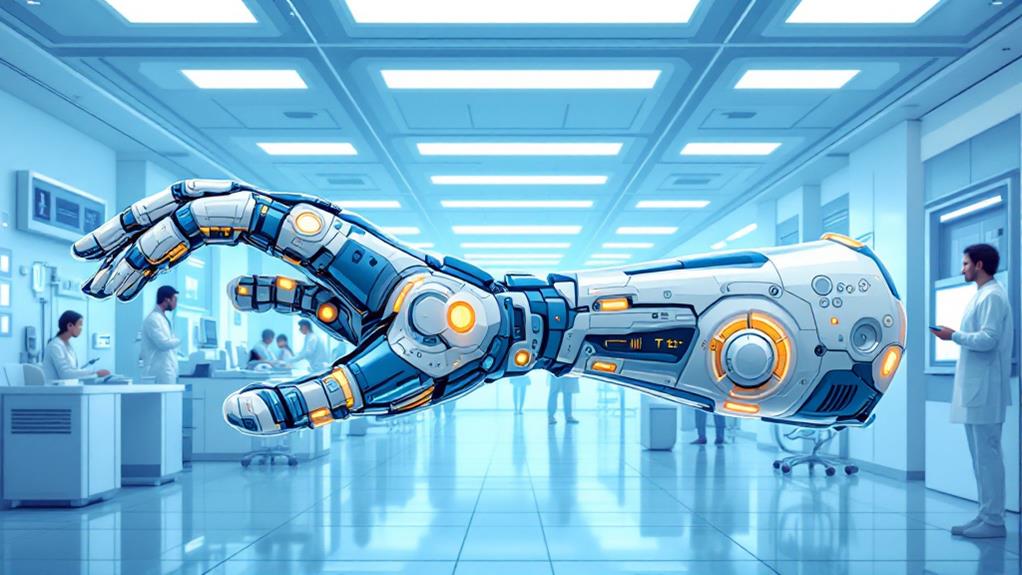
Patient-centric design innovations are transforming the way robotic prosthetics are developed, guaranteeing that the user's needs and preferences take center stage. By focusing on user experience, designers can create prosthetics that not only perform well but also feel comfortable and intuitive to use. Design flexibility allows for tailoring devices to individual users, accommodating varying lifestyles and preferences.
User feedback plays a significant role in this process. It's essential for manufacturers to listen to the experiences of patients to identify areas for improvement. Incorporating accessibility features guarantees that prosthetics are usable by a broad range of individuals, regardless of their physical capabilities. Customization options provide users with the ability to adapt their prosthetics to suit personal tastes and functional needs.
Patient involvement throughout the development cycle boosts the emotional impact of prosthetics. When users feel a sense of ownership over their devices, it can considerably enhance their confidence and total satisfaction. Ergonomic considerations are also vital, as a well-designed prosthetic can reduce discomfort and promote natural movement. Ultimately, these innovations make robotic prosthetics more effective, empowering users to lead fulfilling lives.
Future Trends in Robotic Prosthetics
The landscape of robotic prosthetics is rapidly evolving, with exciting trends poised to redefine user experiences. As technology advances, you'll likely see incredible innovations that improve both functionality and comfort. Here's what you can expect in the near future:
- Biomechanical advancements that mimic natural movement, allowing for smoother, more intuitive motions.
- Neuroprosthetic integration that connects your nervous system with the prosthetic, boosting control and responsiveness.
- Smart sensors that adapt to different terrains, providing stability regardless of whether you're walking on grass or climbing stairs.
- Lightweight materials that make prosthetics more comfortable for all-day wear, reducing fatigue.
- Personalized fitting technologies that guarantee your prosthetic is tailored specifically to your unique anatomy.
These trends indicate a shift toward creating prosthetics that not only restore mobility but also enhance your general quality of life. Imagine a world where your robotic limb feels like a natural extension of yourself, providing seamless interaction with your environment. The integration of advanced technology will empower you to reclaim independence and enjoy activities you once thought were lost. The future of robotic prosthetics is bright, and it's just around the corner!