The History of AI in Personal Assistants: From Clippy to Siri
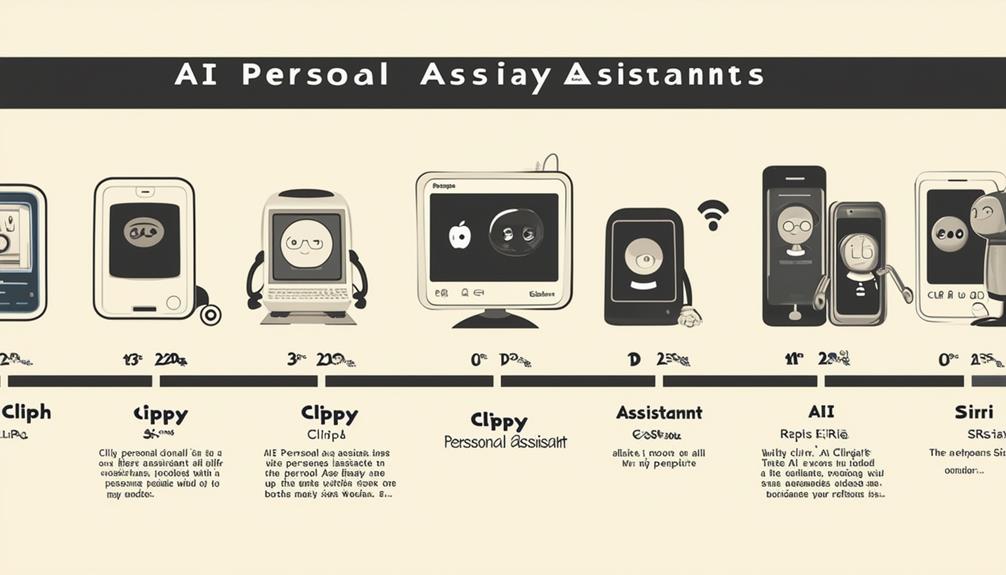
You might remember Clippy, Microsoft's animated paperclip assistant from the late 1990s. Although it aimed to simplify tasks, it often ended up being more of a nuisance. Despite its shortcomings, Clippy represented a significant milestone in the development of AI-powered personal assistants. Fast forward to 2011, and Apple's Siri revolutionized how we interact with our devices, thanks to its ability to understand natural language and context. How did we progress from an intrusive paperclip to a sophisticated virtual assistant? Let's explore the key moments and innovations that have shaped this remarkable journey.
Early AI in Personal Assistants
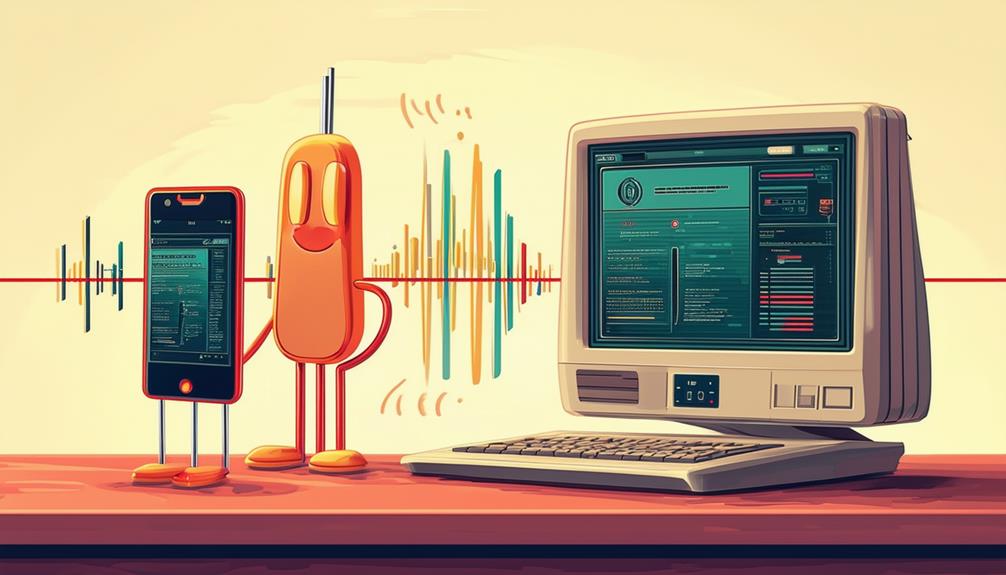
Microsoft's early experiments with virtual assistants, such as Clippy and Rover, laid the groundwork for the advanced AI personal assistants we use today. In the late 1990s, Microsoft introduced Clippy for Microsoft Office, a pioneering attempt to offer users interactive help. Although often remembered for its quirky and sometimes intrusive nature, Clippy was a pivotal step in AI development. Alongside Clippy, Rover the dog and Microsoft BOB were other early virtual assistants designed to make user interactions more intuitive and engaging, setting the stage for future advancements in AI.
Fast forward to 2009, Microsoft began developing Cortana, focusing on learning user habits and providing personalized assistance. This marked a significant leap from the earlier, more rudimentary virtual assistants. When Cortana was launched in 2014, it quickly gained popularity for its natural language understanding and ability to perform a range of tasks efficiently.
Microsoft continued to innovate with the launch of Azure Cognitive Services in 2016, further enhancing the capabilities of virtual assistants by leveraging advanced AI. These services allowed for more sophisticated interactions and responses, solidifying Microsoft's role as a trailblazer in the field of AI-powered virtual assistants.
The Rise of Clippy
Introduced in 1996, Clippy aimed to revolutionize the user experience in Microsoft Office by providing context-specific assistance through its animated paperclip persona. As a virtual assistant, Clippy was designed to help users navigate the complexities of Office applications by offering tips and guidance tailored to their tasks. Its cheerful animations and expressions were intended to make interactions more engaging and less intimidating, much like modern chatbots and virtual assistants do today.
Clippy's role was to serve as a helpful companion, appearing whenever users seemed to need assistance, such as when formatting a document or creating a spreadsheet. This context-specific help was groundbreaking for its time, as it aimed to provide direct, immediate solutions, reducing the need to search through help menus or manuals.
However, while Clippy's design was pioneering, it faced challenges. Many users found the assistant intrusive and distracting, as it often appeared uninvited, disrupting their workflow. Despite these issues, Clippy set the stage for future developments in AI-driven assistance, contributing to the evolution of more sophisticated and less intrusive virtual assistants and chatbots that we use today.
Clippy's Impact and Limitations
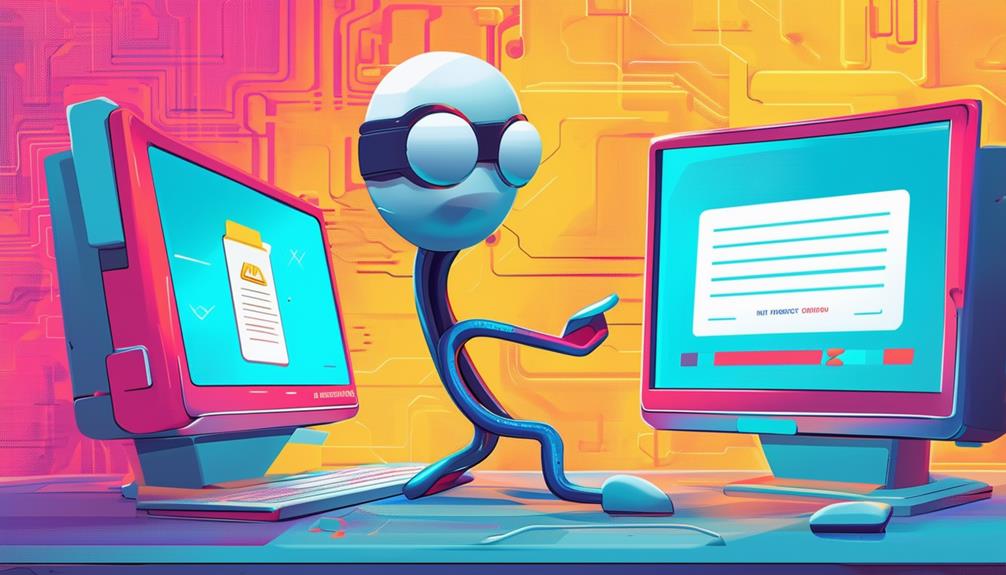
Clippy's introduction in the late 1990s marked a significant milestone in the development of virtual assistants, particularly within Microsoft Office applications. Aimed at providing tips and suggestions, Clippy's interactive nature showcased early AI capabilities. However, the reception was mixed, primarily due to its intrusive and often distracting behavior.
One of Clippy's major drawbacks was its limited functionality. It could only offer basic assistance and often fell short when addressing more complex tasks. Additionally, Clippy lacked contextual understanding, which meant it frequently misinterpreted user needs, resulting in irrelevant or untimely suggestions. This deficiency in contextual awareness often rendered Clippy more of an annoyance than a helpful tool for many users.
Despite these shortcomings, Clippy played a crucial role in the evolution of virtual assistants. It underscored the importance of user-friendly interfaces and highlighted the necessity for more advanced AI capabilities. Clippy's limitations emphasized that for virtual assistants to be truly effective, they must understand the context in which they operate, paving the way for future advancements in AI technology.
Transition to Smarter Assistants
The evolution of personal assistants took a groundbreaking turn with Apple's acquisition of Siri in 2010, marking the dawn of AI-powered natural language understanding technology. This shift introduced advanced AI and NLP capabilities, transforming user-device interactions. Siri's introduction set the stage for other tech giants to follow, leading to the development of Google Now and Microsoft's Cortana.
These assistants utilized advanced AI and speech recognition to provide more intuitive user experiences, understanding complex commands and offering contextual awareness. This change didn't stop there. Amazon's launch of Alexa and Echo in 2014 brought smart speakers into the mainstream, further integrating AI assistants into daily life.
| Personal Assistant | Key Features |
|---|---|
| Siri | Natural language understanding, integrated with iOS devices |
| Google Now | Contextual awareness, cross-platform integration |
| Cortana | Advanced AI, productivity-focused features |
| Alexa | Smart speaker functionality, extensive third-party integrations |
The move to smarter assistants emphasized not just basic task automation but a more seamless, user-friendly experience. Speech recognition became more accurate, and AI systems could better understand and predict user needs. This shift marked a significant leap from early attempts like Clippy, setting the course for even more sophisticated personal assistants in the future.
The Birth of Siri
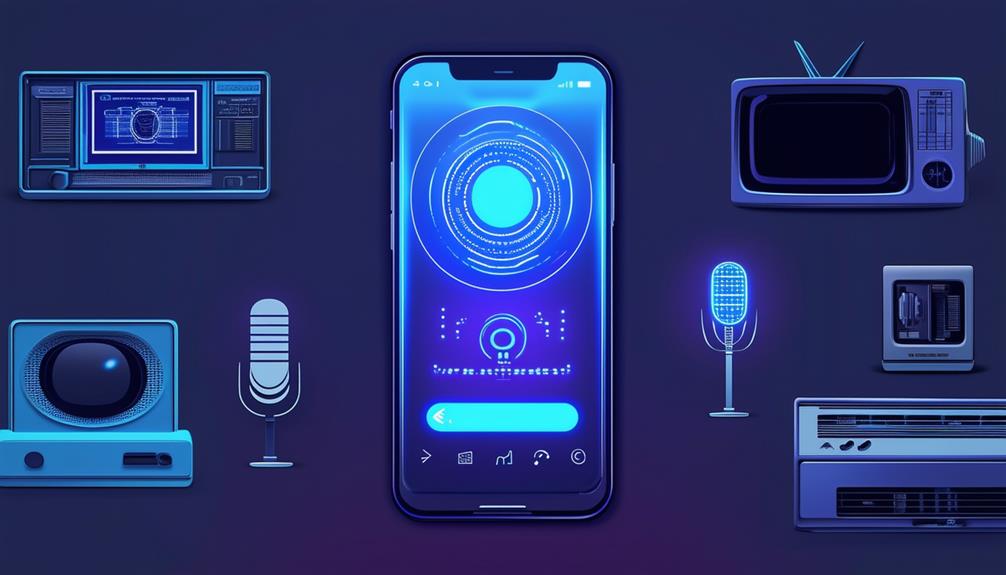
Siri's journey began with its creation by SRI International in 2007. Apple acquired Siri in 2010 and integrated it into the iPhone 4S in 2011, marking a significant advancement in voice recognition technology. This innovation revolutionized user interaction with devices, setting a new standard for AI-driven personal assistants.
Siri's Development Journey
Born from a DARPA-funded project at SRI International, Siri emerged as a groundbreaking personal assistant that Apple would soon integrate into the iPhone. Initially a spin-off project, Siri utilized generative AI, natural language processing (NLP), and machine learning to create a voice assistant capable of understanding and responding to user queries in a conversational manner. Apple saw the potential and acquired Siri Inc. in 2010, setting the stage for its integration into the iOS ecosystem.
When Siri was officially introduced with the iPhone 4S in October 2011, it revolutionized how users interacted with their devices. Siri wasn't just a voice assistant; it was designed to understand context and provide personalized responses, making it a standout feature. The name 'Siri,' which means 'beautiful woman who leads you to victory' in Norwegian, reflected its ambitious goal of guiding and assisting users effectively.
Here are some key points in Siri's evolution:
- Developed at SRI International: Originated from a DARPA-funded AI project.
- Acquired by Apple: Purchased in 2010 and integrated into iOS.
- Debut with iPhone 4S: Officially launched in October 2011.
- Focus Areas: NLP, generative AI, and personalized user interactions.
Siri's transformation from a research project to a household name underscores the impactful power of AI in everyday technology.
Voice Recognition Breakthroughs
In 2011, the introduction of Siri marked a pivotal moment in voice recognition technology. Acquired by Apple from Siri Inc. in 2010, Siri leveraged advanced Natural Language Processing (NLP) to enable users to interact with their devices using natural speech. This wasn't merely an upgrade; it was a revolution in human-computer interaction.
Siri's voice recognition capabilities distinguished it from previous technologies. Users no longer needed to rely on rigid, specific commands. They could ask Siri to send a text, check the weather, or set reminders effortlessly. The personal assistant understood follow-up questions and adapted responses based on context, creating more natural and intuitive interactions.
This breakthrough in voice recognition wasn't just about understanding words; it was about grasping meaning and intent. Siri's contextual awareness allowed for a personalized and efficient user experience, as the assistant remembered previous interactions to provide more relevant responses. Siri's launch in 2011 was a milestone for Apple and the broader evolution of AI-powered personal assistants, demonstrating the potential of seamless, voice-driven technology.
Integration With Ios
With the launch of the iPhone 4s in October 2011, Siri became deeply integrated into iOS, fundamentally altering how users interacted with their devices. Apple's acquisition of Siri in 2010 laid the groundwork for this transformative shift. Siri leveraged advanced Natural Language Processing (NLP) and speech recognition technologies, enabling users to control their iPhones with voice commands.
The integration of Siri into iOS marked a significant evolution in user experience. Users no longer needed to navigate through multiple screens and menus. Instead, they could simply ask Siri to carry out tasks like sending texts, setting reminders, or searching the web. This hands-free interaction was groundbreaking, especially for accessibility.
Apple's iOS ecosystem allowed Siri to expand its capabilities across other devices like the iPad and Apple Watch. This seamless integration meant that your personalized assistant was always within reach, regardless of which Apple device you were using.
Key benefits of Siri's integration with iOS include:
- Convenience: Perform tasks without needing to touch your device.
- Accessibility: Improved usability for individuals with disabilities.
- Efficiency: Swiftly access information and carry out actions.
- Ecosystem Integration: Sync seamlessly across all Apple devices.
With Siri, Apple established a new standard for personal assistants, making voice-activated technology an indispensable part of daily life.
Siri's Key Features
With Siri, you can easily perform tasks using simple voice commands, making interactions more intuitive. Siri integrates seamlessly with various apps and Apple devices, allowing you to access information and complete actions hands-free. These features enhance convenience and personalize your experience based on your usage patterns.
Voice Command Capabilities
Siri's advanced features, including speech recognition and context awareness, provide seamless interaction with Apple devices. Utilizing sophisticated AI models and natural language processing (NLP), Siri can accurately interpret and respond to voice commands, allowing users to perform tasks or receive answers efficiently through natural speech.
Here are some of Siri's key voice command capabilities:
- Setting Reminders and Alarms: Siri can set reminders or alarms, ensuring you never miss important events or deadlines.
- Sending Messages and Making Calls: Siri facilitates hands-free communication by sending texts and making calls.
- Providing Directions and Traffic Updates: Integrated with Apple Maps, Siri provides turn-by-turn directions and real-time traffic information.
- Answering Questions and Providing Information: Siri can answer questions on a wide range of topics, from weather forecasts to sports scores.
Siri's context awareness allows it to understand your preferences and deliver personalized responses, making interactions more intuitive. With continuous learning mechanisms, Siri adapts to your behavior over time, enhancing its effectiveness as a virtual assistant.
Integration With Apps
Apple's Siri seamlessly integrates with multiple apps, making your interactions more efficient and intuitive. Leveraging advanced AI tools and natural language processing (NLP), Siri enables task execution via voice commands, enhancing daily routines. Whether setting reminders, sending messages, or making calls, Siri's integration with Apple's ecosystem ensures effortless day management.
A standout feature of Siri is its proactive suggestions based on user behavior. If you frequently text certain contacts or use specific apps at set times, Siri offers timely shortcuts, streamlining your experience. This intelligent anticipation illustrates how AI adapts to habits for increased convenience.
Siri's capabilities extend through integration with third-party apps. Need to order food or book a ride? Just ask Siri, and it will communicate with compatible apps to complete the task. This integration showcases Siri's versatility and effective use of NLP to understand and execute voice commands.
Competitors: Alexa and Google Assistant
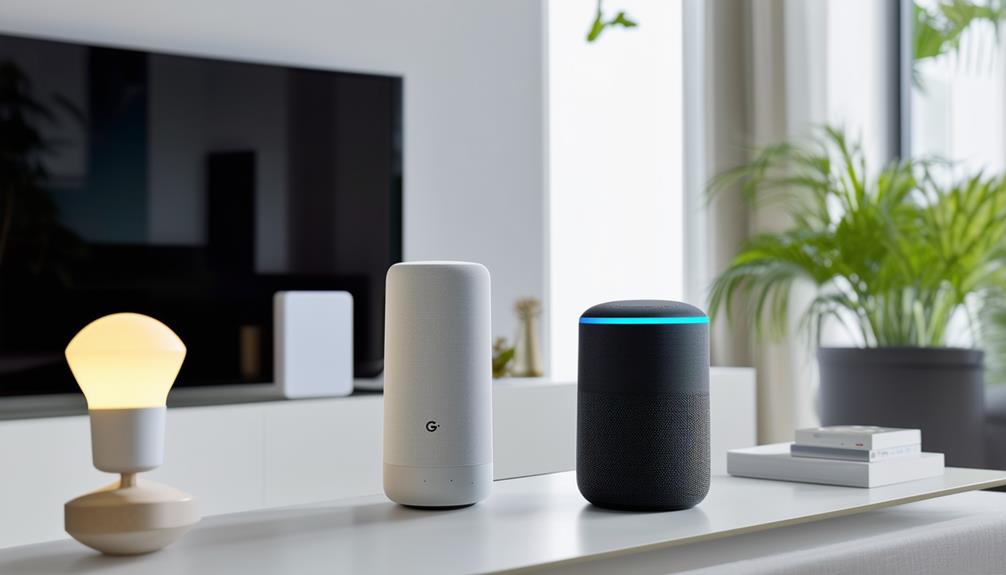
Since their introductions, Alexa and Google Assistant have become fierce competitors in the virtual assistant market. Alexa, launched by Amazon in 2014, and Google Assistant, debuting in 2016, have both leveraged advancements in generative AI, chatbots, and virtual assistants to offer unique experiences. Alexa, with its extensive library of over 100,000 skills, can control a wide range of smart home devices, while Google Assistant utilizes Google's vast knowledge graph to provide highly accurate and personalized responses.
Both virtual assistants employ advanced Natural Language Processing (NLP) to understand and respond to user commands effectively. Alexa's integration with Amazon's ecosystem allows for seamless shopping experiences and versatile functionalities, ranging from playing music to providing weather updates. In contrast, Google Assistant excels in search capabilities and is integrated across multiple Google platforms, including Android devices and smart displays.
Key Features:
- Generative AI: Both assistants use AI to generate human-like responses.
- Chatbots and Virtual Assistants: They function as sophisticated chatbots.
- NLP: Both utilize NLP to comprehend and respond to user commands.
- Smart Home Control: They can manage numerous smart home devices.
As the competition between Alexa and Google Assistant intensifies, users benefit from continuous improvements and innovative features.
Future Trends in AI Assistants
As Alexa and Google Assistant continue to innovate, future trends in AI assistants promise more advanced and intuitive interactions. One major development is improved natural language processing (NLP), making conversations feel increasingly human-like. Imagine asking complex questions or giving nuanced commands and receiving precise, context-aware responses. This leap in NLP is powered by sophisticated machine learning algorithms that continuously refine as they process more data.
Anticipate integration with emerging technologies like augmented reality (AR) and virtual reality (VR). Your AI assistant could overlay digital information onto your physical environment through AR glasses or guide you through virtual spaces. This would revolutionize your interaction with technology, making it more immersive and intuitive.
Significant advancements are also expected in personalization and prediction. Your assistant will become better at predicting your needs and preferences through continuous learning, offering tailored suggestions for your daily schedule or entertainment options, thereby enhancing efficiency and convenience.
However, these advancements come with ethical considerations and privacy measures. Developers must prioritize user trust by ensuring data security and transparent practices. The future of AI assistants is set to transform interactions with technology, offering seamless and personalized experiences like never before.
Conclusion
The evolution of AI in personal assistants has progressed significantly, transitioning from Clippy's cheerful yet often intrusive animations to Siri's sophisticated, context-aware responses. Today, you can interact seamlessly with AI through platforms like Siri, Alexa, and Google Assistant, simplifying everyday tasks. The future promises even greater advancements, with smarter and more intuitive assistants on the horizon. Stay tuned—AI is just getting started, and the innovations to come will surely amaze you!
Related posts