The History of AI in Music and Sound Generation
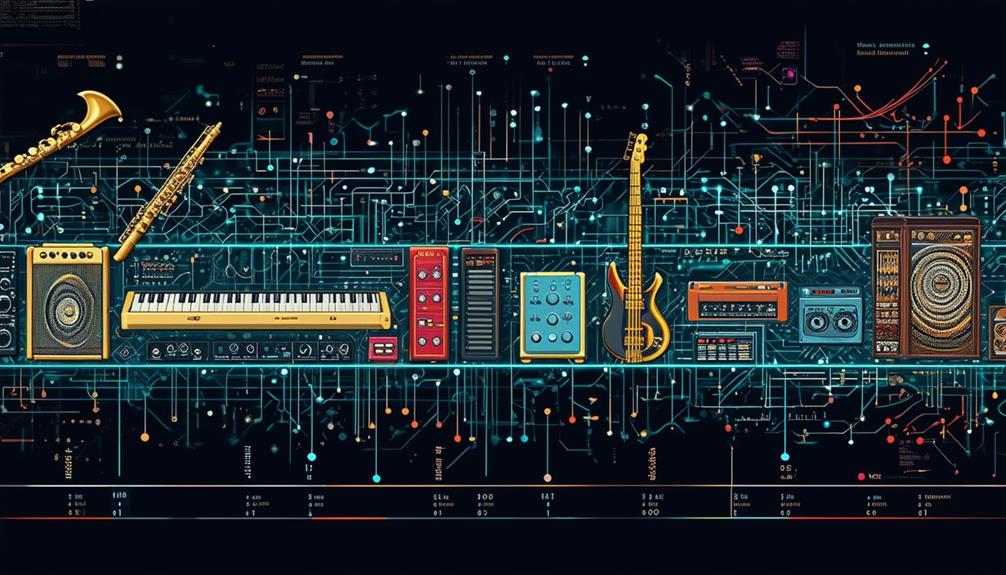
The intersection of artificial intelligence and music may evoke images of futuristic compositions and robotic performances, but its origins trace back to the 1950s. The journey began with the Illiac Suite for String Quartet, one of the earliest examples of algorithmic composition. Since then, AI has progressively integrated into music creation, from David Cope's seminal EMI program in the 1980s to contemporary initiatives like Google's Magenta project. These technological advancements have significantly influenced the music industry, enhancing both the creative process and the listener experience. But what has driven these innovations, and how have they reshaped today's musical landscape?
Early Computer-Generated Music
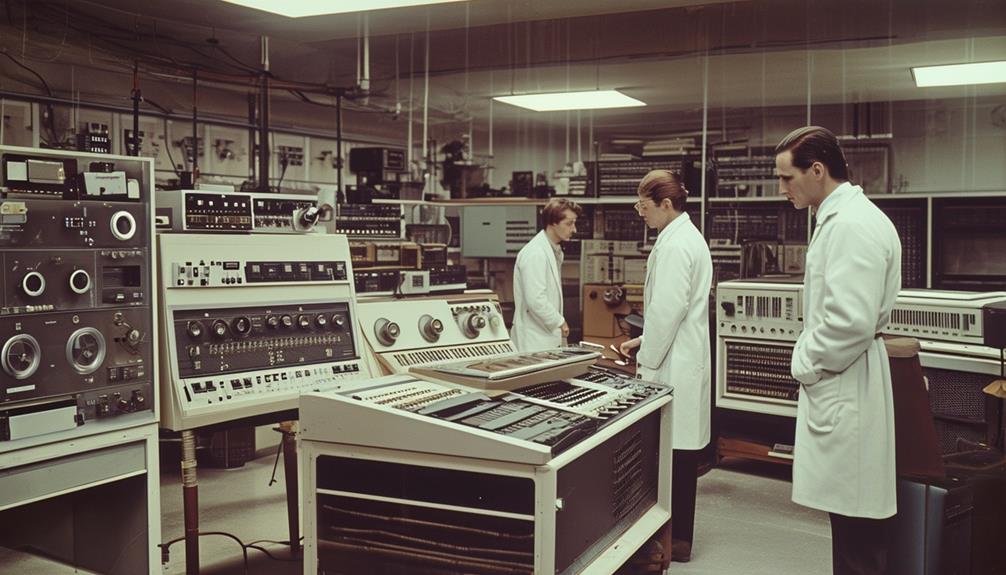
In the 1950s, early pioneers like the team behind Illiac I conducted initial experiments in computer-generated music, significantly impacting the landscape of musical composition. One groundbreaking achievement from this period was the creation of the Illiac Suite for String Quartet, composed using the ILLIAC I computer. This suite marked a pivotal moment in music technology by demonstrating that machines could be programmed to generate music.
The Illiac Suite was not just a technical marvel but also a bold artistic experiment. It showcased the potential for computers to understand and replicate musical elements, a concept that would eventually evolve into more sophisticated AI systems. By the 1980s, David Cope's Experiments in Musical Intelligence (EMI) program emerged, further advancing the field. Cope's work aimed to emulate the styles of classical composers, pushing the boundaries of what AI could achieve in music.
These early endeavors laid the foundation for modern AI in music, where machines now play an integral role in composition and sound generation. By examining these pioneering efforts, it becomes clear how far we've come and the potential that still lies ahead in AI-driven music.
Pioneering AI Composers
Pioneering AI composers have dramatically reshaped the musical landscape by creating sophisticated, original compositions that challenge traditional notions of creativity. One of the earliest examples is the Illiac Suite for String Quartet, composed by the Illiac I computer in 1956. This groundbreaking piece demonstrated that computers could indeed generate music, setting the stage for future advancements.
In the 1980s, David Cope's Experiments in Musical Intelligence (EMI) program further pushed the boundaries. Cope's program emulated the styles of classical composers like Bach and Beethoven, producing music that was often indistinguishable from human-created compositions. This pivotal moment showcased AI's potential in the realm of high art.
By 2012, Iamus, an AI composer developed by the University of Malaga, created a full album of original classical compositions, underscoring the advancing capabilities of AI in music. Google's Magenta project continued this trend in 2016 by releasing an AI-generated piano melody. Subsequent projects like MuseNet and Jukedeck have further revolutionized the field by enabling AI to create entire music albums, thus transforming our understanding of composition and creativity.
Generative Music Models
You'll begin by exploring early algorithmic techniques that laid the foundation for modern generative music models. Next, you'll examine how advancements in neural networks have transformed these models into potent tools for music creation. Finally, you'll understand how real-time sound synthesis is enabling dynamic, on-the-fly music generation.
Early Algorithmic Techniques
The 1950s marked the advent of algorithmic music generation, notably with the Illiac Suite for String Quartet, a pioneering project using the Illiac I computer. This initiative represented one of the first instances of employing algorithms for music composition, laying the groundwork for subsequent advancements in AI-driven music.
In the 1980s, David Cope's Experiments in Musical Intelligence program significantly advanced these techniques. Cope's work focused on emulating classical composers' styles by analyzing existing works and generating new compositions that mirrored their characteristics. This demonstrated how algorithms could innovate within established musical frameworks.
By the 1990s, generative modeling techniques emerged, enabling systems to infer musical elements such as melody, harmony, and rhythm. These systems could produce increasingly intricate and nuanced compositions, moving beyond mere emulation to original creation.
Through the 2000s, AI's role in music composition continued to evolve, leading to even more sophisticated methods. The foundational techniques developed in the mid-20th century remain crucial for understanding AI's ongoing impact on music and sound generation.
Neural Network Advancements
Harnessing the power of neural networks, AI-generated music has reached unprecedented levels of complexity and creativity. These advancements have revolutionized how machines learn and produce music, allowing for intricate and compelling compositions. Generative music models, such as Google's Magenta, are at the forefront of this transformation. By analyzing vast amounts of musical data, these models can identify and replicate the complex patterns and structures that define various genres of music.
Neural networks have enabled these generative music models to exceed the limitations of traditional music creation. Rather than merely mimicking existing styles, they generate entirely new compositions that often challenge and expand our understanding of music itself. These AI-driven advances have initiated a period where the distinction between human and machine creativity becomes increasingly ambiguous.
As these models continue to evolve, the potential for creating unique and diverse musical compositions grows exponentially. Progress in neural network technology promises even more groundbreaking and boundary-pushing music in the future. With each advancement, generative music models provide new tools and opportunities for artists and musicians to explore uncharted musical landscapes.
Real-time Sound Synthesis
Real-time sound synthesis, driven by advancements in neural networks, leverages AI to generate music and sounds instantaneously, unlocking new realms of creativity and innovation. By employing sophisticated AI algorithms, generative music models can create novel sonic landscapes on the fly. A notable example is Magenta's NSynth, which employs neural networks to model timbres and produce unique sounds.
In real-time sound synthesis, you can input audio data, and the AI will analyze and generate fresh sounds based on that information. This rapidly advancing technology equips musicians with tools to explore new sound design territories. For instance, NSynth allows users to blend different instrument sounds, creating entirely new auditory experiences and expanding their creative horizons.
AI-powered systems are redefining the possibilities in music creation. The capability to generate sounds in real time facilitates quick experimentation and iteration, revealing new sonic possibilities beyond the constraints of traditional instruments. As AI algorithms and neural networks continue to advance, the potential for real-time sound synthesis will only increase, fostering groundbreaking innovations in music and sound generation.
Neural Networks in Music
Neural networks in music leverage deep learning algorithms to analyze and recreate the complex patterns found in musical compositions. These advanced algorithms enable AI to learn from extensive datasets of existing music, capturing the subtleties of melodies, harmonies, and rhythms. Consequently, neural networks can generate new, original pieces of music that emulate various styles and genres with high fidelity.
Tools like Google's Magenta and OpenAI's MuseNet exemplify this technology in action. These platforms utilize neural networks to create compositions spanning from classical symphonies to contemporary pop songs. The deep learning algorithms underpinning these tools have revolutionized music creation, enabling AI systems to understand and replicate musical elements with remarkable precision.
The impact of neural networks in music is profound. They have opened new avenues for creativity, allowing musicians and composers to explore innovative directions in their work. Whether generating a catchy tune or experimenting with intricate harmonies, neural networks provide a robust foundation for creative musical expression. By pushing the boundaries of traditional composition, these AI-driven tools are transforming the music industry, offering fresh perspectives and expanding the possibilities of musical creation.
AI in Music Production
Neural networks are revolutionizing music creation, and AI in music production is further advancing this field by assisting in composing, producing, and enhancing musical works. These AI-driven tools are not merely automating mundane tasks; they are enabling new creative possibilities. With tools like Empress AI, you can utilize chord and lyric generators that streamline the music production process, making it faster and easier to bring your musical ideas to life.
AI technology has evolved to analyze audio specifics, automating complex mixing processes and enhancing sound design. This allows you to focus more on the creative aspects rather than technical details. For example, AI tools like Aiva use deep learning algorithms to generate music across various genres, blurring the lines between human and AI compositions. This integration of AI in music production is not just a trend; it is transforming the music industry landscape, offering innovative solutions that push artistic boundaries.
AI Tools for Musicians
With a variety of AI tools available, musicians can now significantly enhance their creativity and streamline the composition process. Tools like Orb Composer and Amadeus Code are revolutionizing music composition by suggesting chord sequences and arrangements tailored to your preferences. This personalization facilitates the generation of new musical ideas with reduced time and effort.
Playbeat 3 by Audiomodern offers a versatile beat-making toolkit powered by AI technology, ideal for creating unique and complex rhythms. These tools not only aid in technical aspects but also open up new avenues for inspiration. Leveraging AI allows musicians to explore musical ideas that might not have been considered otherwise.
Incorporating AI tools into your workflow enables you to focus more on the creative aspects of music. By automating repetitive tasks, AI frees you to innovate and experiment. AI in music composition is transforming how musicians create, offering endless possibilities for musical exploration.
Popular AI-Generated Tracks
AI-generated tracks like Taryn Southern's 'I AM AI' and Flow Machines' 'Daddy's Car' have captivated audiences worldwide. Songs such as AIVA's 'Genesis' and SKYGGE's 'Break Free' further demonstrate AI's impressive ability to create music that resonates with listeners. These viral hits are reshaping the music industry, showcasing how AI can innovate and contribute meaningfully to music creation.
Viral AI Music Hits
AI-generated music has revolutionized the music industry, with viral hits like 'Daddy's Car' and 'Break Free' illustrating the technology's creative potential. Composed by Flow Machines and inspired by The Beatles, 'Daddy's Car' showcases AI's ability to replicate iconic music styles, blending the essence of legendary bands with novel elements. Its release by a major record label marked a significant milestone, highlighting the increasing acceptance and integration of AI in mainstream music.
Similarly, Taryn Southern's 'Break Free,' created in collaboration with Amper Music, exemplifies the fusion of AI technology and human creativity. Southern's album 'I AM AI,' which features songs composed entirely using AI algorithms, underscores the immense potential of AI in crafting compelling music.
Additionally, 'Hello World' by Sony's Flow Machines project demonstrates AI's capability to produce commercially appealing music. By merging sophisticated algorithms with creative input, these viral AI music hits are shaping the future of music production, offering a glimpse into the evolving landscape of sound generation.
Chart-Topping AI Songs
Building on the success of viral AI music hits, chart-topping AI-generated songs like 'Daddy's Car' and 'Break Free' are redefining what's possible in the music industry. 'Daddy's Car,' created by Flow Machines, mimics The Beatles' style, showcasing how AI can recreate iconic music genres. Meanwhile, 'Break Free' by Taryn Southern, from the album 'I AM AI,' demonstrates AI's potential to produce commercial music hits that resonate with audiences.
Here are four standout AI-generated tracks that have made a significant impact:
- 'Hello World' by Skygge: Created with Sony's Flow Machines, this song blends AI-composed melodies with human vocals, highlighting the collaboration between AI and artists.
- '2AM' by Amper Music: This track showcases the versatility of AI in generating music across different styles and genres, pushing creative boundaries.
- 'The Ballad of Mr. Shadow' by Aiva: This emotional and expressive composition exemplifies AI's capability to produce deeply moving music.
- 'Break Free' by Taryn Southern: From the album 'I AM AI,' this track illustrates the commercial viability of AI-generated music.
These chart-topping AI-generated songs are not just novelties; they're shaping the future of commercial music.
AI's Role in Sound Design
AI is revolutionizing sound design by automating processes such as generating new sounds, enhancing audio quality, and balancing instrument levels. This advancement has made music production more creative and efficient. Tools like LANDR and iZotope's Ozone utilize AI algorithms to optimize sound design and mixing, helping your music stand out.
Envision a neural network at your disposal, capable of producing unique and complex sounds for your projects. AI-driven sound design not only saves time but also introduces new creative possibilities, enabling experiments with previously unexplored techniques and offering personalized audio experiences tailored to specific needs.
Moreover, AI advancements are transforming the music industry by offering high-quality solutions for various audio production challenges. These technologies elevate the overall quality of your work, simplifying the process of achieving professional results without extensive manual effort. Whether you're aiming to produce a polished track or explore new sonic landscapes, AI's role in sound design is crucial.
AI Impact on Composition
AI's influence on music composition is significant and multifaceted. Tools such as OpenAI's MuseNet and Google's Magenta Studio leverage deep learning algorithms to analyze musical patterns and generate new compositions, marking an exciting development in the field.
Here are four key ways AI is transforming the music creation process:
- Speed and Efficiency: AI can rapidly generate music, allowing composers to dedicate more time to refining and perfecting their work.
- Diverse Styles: AI can compose in various genres, from classical to electronic, expanding the possibilities of traditional music creation.
- Commercial Use: AI-generated music is making inroads in commercial settings, exemplified by Taryn Southern's album 'I AM AI'.
- Collaborative Role: AI acts as a creative partner, providing suggestions and generating ideas that human composers might not have considered.
However, the integration of AI in music composition raises important questions. Is AI-generated music genuinely original? Can it convey the emotional depth of human-created pieces? These are critical considerations as AI continues to influence the future of music composition.
Future of AI in Music
Looking ahead, AI's role in music will revolutionize creative collaboration by enabling real-time composition tools that adapt to individual styles and preferences. It will also necessitate addressing ethical and legal implications, such as ownership and copyright issues. These advancements promise to reshape how music is created, experienced, and shared.
Creative Collaboration Potential
Imagine a world where musicians and cutting-edge technology join forces to create entirely new genres of music. This is the exciting reality that AI in music brings, offering immense creative collaboration potential. By integrating AI tools, artists can explore groundbreaking sounds and compositions that were once unimaginable. Taryn Southern's album, co-produced by Amper Music, is a prime example of how AI can work alongside artists to revolutionize music creation.
The potential for creative collaboration between musicians and AI is vast. Here are four ways AI is transforming the music industry:
- Enhanced Creativity: AI can generate melodies, harmonies, and rhythms, giving artists new sounds to experiment with.
- Efficient Production: AI streamlines the production process, allowing musicians to focus on their artistic vision rather than technical details.
- Personalized Music: AI algorithms can tailor music to individual preferences, creating a more personalized listening experience.
- Innovative Collaborations: AI enables unique partnerships between human creativity and machine intelligence, leading to groundbreaking musical projects.
Real-time Composition Tools
Harnessing the potential for creative collaboration between musicians and AI, real-time composition tools like Google's Magenta Studio are revolutionizing the art of music creation. These tools leverage deep learning algorithms to analyze extensive music datasets, generating chord progressions and melodies on the fly. This technology offers musicians immediate creative suggestions, facilitating a more fluid and dynamic composition process.
The table below outlines key real-time composition tools and their features:
| Tool Name | Developer | Key Features | Styles/Genres Supported |
|---|---|---|---|
| Magenta Studio | Chord progressions, melodies | Various | |
| MuseNet | OpenAI | Multi-instrument compositions | Wide range |
| Amper Music | Amper | AI-generated music beds | Multiple genres |
| AIVA | AIVA | Orchestral compositions | Classical, cinematic |
These tools are not just about convenience; they open new creative avenues. For instance, OpenAI's MuseNet supports a wide array of musical styles and genres, encouraging musicians to explore diverse soundscapes. These tools facilitate real-time collaboration between humans and AI, enriching the creative process and expanding musical possibilities. As AI technology continues to advance, these tools are set to transform the music creation and production landscape, making it more inventive and accessible than ever before.
Ethical and Legal Implications
Exploring the ethical and legal implications of AI-generated music demands a comprehensive understanding of originality, ownership, and artistic integrity. Several key factors influence the future of AI in music:
- Ethical Concerns: AI-generated music raises questions about originality and emotional depth. Can a machine authentically capture human creativity, or does it simply emulate it?
- Legal Implications: The complexities of copyright and ownership are significant. Who holds the rights to an AI-generated piece of music: the programmer, the user, or the AI itself? These questions are pivotal in determining recognition and rights for AI-generated compositions.
- Human Creativity: It's crucial to balance human creativity with AI-generated music. While AI can assist in music creation, it shouldn't overshadow or diminish the human element that imbues art with genuine emotion and authenticity.
- Future Considerations: For AI in music to flourish, addressing both ethical and legal concerns is essential. Ensuring fair practices and maintaining artistic integrity will help AI complement, rather than compete with, human musicians.
Conclusion
AI's progression in music and sound generation has evolved significantly from the early days of the Illiac I to today's sophisticated neural networks. By examining pioneering composers, generative models, and AI's impact on production and sound design, it's clear that AI is reshaping the musical landscape. As technology advances, we can anticipate even more imaginative and creative possibilities, making the future of AI in music incredibly exciting and transformative.
Related posts