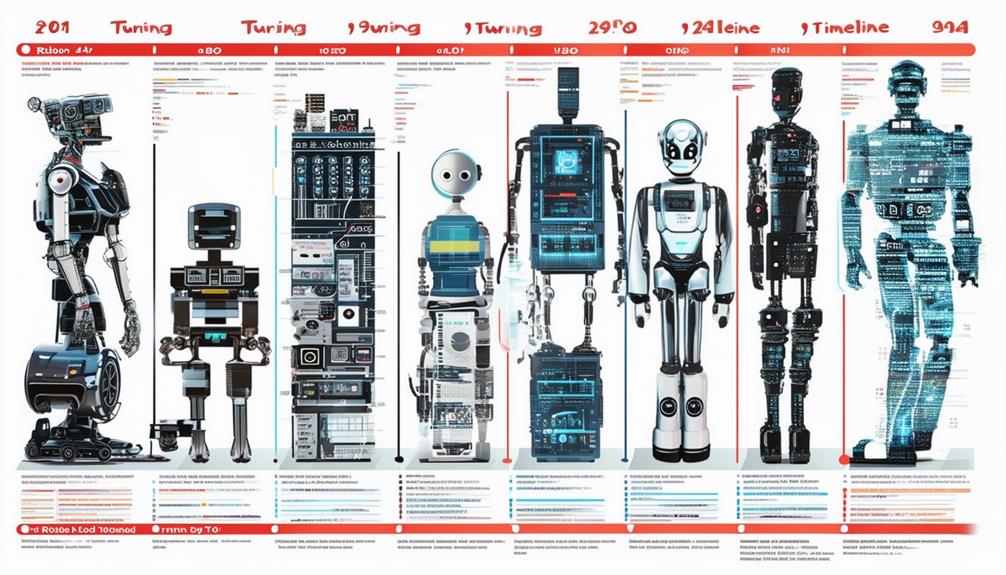
The History of AI in Medical Diagnostics and Treatment
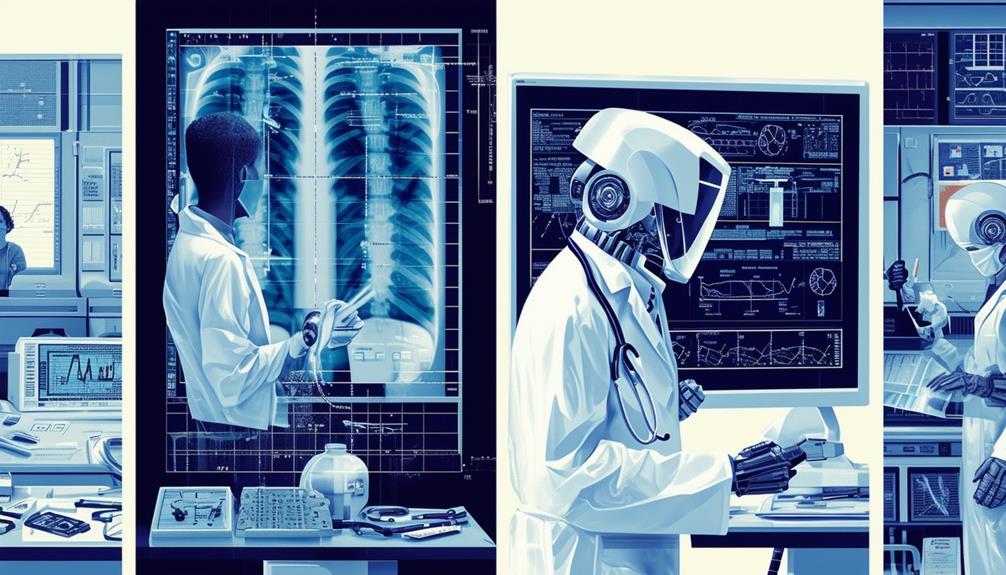
AI's journey in medical diagnostics and treatment began in the 1950s with Alan Turing's groundbreaking ideas. By the 1970s, pioneering projects like INTERNIST-1 and MYCIN demonstrated AI's potential to revolutionize medical diagnostics. These early innovations laid the groundwork for the sophisticated tools we see in healthcare today. Exploring these milestones reveals pivotal moments that have shaped AI's role in medicine, continually transforming patient care.
Early Developments

Early developments in AI for medical diagnostics and treatment began with Alan Turing introducing the Turing test in 1950. This test set the foundation for machines to exhibit intelligent behavior indistinguishable from humans, sparking interest in AI's potential in healthcare. In 1956, John McCarthy coined the term 'artificial intelligence,' formalizing a concept that would soon revolutionize medical diagnostics.
In 1966, the Stanford Research Institute unveiled Shakey, the first robot capable of interpreting instructions. Shakey's ability to navigate and make decisions based on its surroundings showcased the early potential of AI in healthcare, suggesting future applications in medical robotics and diagnostics.
By 1971, scientists made a significant leap with the creation of INTERNIST-1, a system that used a ranking algorithm to diagnose complex medical conditions. INTERNIST-1 demonstrated how AI could assist doctors by providing accurate, data-driven diagnostic support, reducing human error, and improving patient outcomes.
The early development phase of AI in medical diagnostics and treatment was foundational. From Turing and McCarthy's seminal concepts to innovations like Shakey and INTERNIST-1, these milestones set the stage for AI's transformative potential in healthcare.
Pioneering Projects
Pioneering projects have been crucial in establishing AI's role in medical diagnostics and treatment. Early systems like MYCIN and DXplain highlighted AI's potential, while modern algorithms have significantly enhanced disease screening accuracy. Ongoing clinical trials continue to validate these technologies, underscoring their positive impact on patient care.
Early AI Innovations
Pioneering projects like Alan Turing's AI concept in 1950 and Stanford's Shakey robot in 1966 laid the groundwork for modern medical diagnostics and treatment. Turing's ideas sparked early innovations that would eventually transform healthcare. At the Stanford Research Institute, Shakey, the initial robot capable of interpreting instructions, showcased AI's potential in various fields, including medical diagnostics.
In 1971, the development of INTERNIST-1 marked a significant leap forward. This system used a ranking algorithm to assist in medical diagnoses, demonstrating practical applications of AI in healthcare. By simulating the decision-making process of a human doctor, INTERNIST-1 provided early proof that AI could improve diagnostic accuracy and efficiency.
The momentum didn't stop there. In 1975, the National Institutes of Health sponsored the first AI in Medicine workshop, fostering collaboration among experts and accelerating progress in the field. The following year, MYCIN emerged as a groundbreaking AI system, revolutionizing antibiotic treatment suggestions. By analyzing symptoms and medical history, MYCIN could recommend appropriate treatments, highlighting AI's potential in medical decision-making. These early innovations laid a solid foundation, demonstrating how AI could be harnessed to improve medical diagnostics and treatment.
Breakthrough Algorithms
Building on earlier innovations, breakthrough algorithms in AI have continued to redefine medical diagnostics and treatment, pushing the boundaries of what's possible in healthcare. These pioneering projects have utilized new AI applications to improve diagnostic accuracy and treatment effectiveness. For instance, deep-learning applications in 2017 exhibited remarkable accuracy in screening for diabetic retinopathy and skin cancer, signifying the continuous evolution of AI in medical diagnostics.
To illustrate the progression of breakthrough algorithms, consider the following milestones:
| Year | Breakthrough Algorithm | Impact on Medical Diagnostics |
|---|---|---|
| 1976 | MYCIN | Suggested antibiotic treatments based on patient data. |
| 1991 | Pathology Expert Interpretative Reporting System | Achieved nearly 95% diagnostic accuracy. |
| 2017 | Deep-learning applications | High accuracy in disease screening like diabetic retinopathy and skin cancer. |
These examples highlight how each breakthrough has built on its predecessor, advancing the field of medical diagnostics. The MYCIN system in 1976 set the stage by recommending treatments based on patient data. By 1991, the Pathology Expert Interpretative Reporting System had achieved nearly flawless diagnostic accuracy. Fast forward to 2017, and deep-learning applications brought unprecedented precision to disease screening. These strides show that the evolution of AI applications continues to shape a future where medical diagnostics are faster, more accurate, and more personalized than ever before.
Clinical Trial Success
The integration of breakthrough AI algorithms in the realm of diagnostics has significantly enhanced the success and efficiency of clinical trials. AI-driven clinical trials demonstrate approximately 30% higher success rates compared to traditional methods. This improvement is attributed to advanced AI capabilities in analyzing vast datasets to identify patterns and predict outcomes with greater accuracy.
AI expedites participant recruitment by swiftly matching eligible candidates based on detailed criteria, thereby reducing the time and resources typically consumed during this phase. Furthermore, AI excels in patient monitoring, ensuring adherence to trial protocols and enhancing the reliability of the results.
The data analysis capabilities of AI in clinical trials are transformative. AI algorithms can process and interpret complex datasets more efficiently than traditional methods, leading to quicker and more accurate insights. This capability facilitates the development of personalized treatment plans tailored to individual patient data, thereby optimizing therapeutic outcomes.
Incorporating AI into clinical trials not only streamlines the entire process but also improves the precision and quality of medical research, paving the way for more effective and targeted treatments. This integration ensures that the clinical trials are more robust, reliable, and ultimately more successful in delivering viable medical solutions.
Imaging and Diagnosis
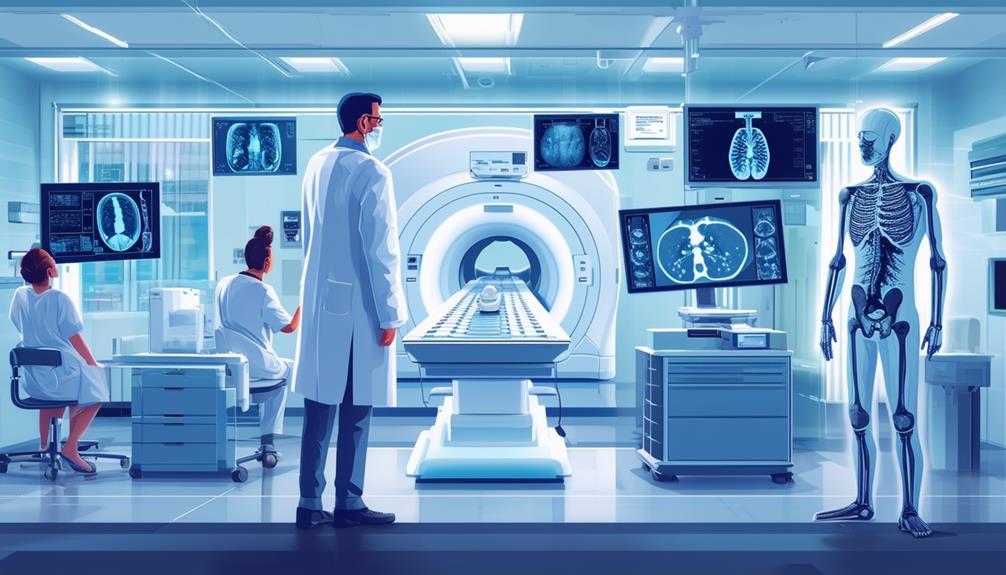
In the domain of Imaging and Diagnosis, AI has evolved from early imaging techniques to sophisticated machine learning applications, significantly enhancing the speed and accuracy of disease identification. Presently, AI is instrumental in diagnosing various conditions more precisely. Looking forward, future diagnostic innovations are expected to yield even greater precision and efficiency, further revolutionizing the field.
Early Imaging Techniques
Imagine a time when doctors couldn't peer inside the human body without performing an incision; early imaging techniques changed that dramatically. Starting in the late 19th century, the discovery of X-rays by Wilhelm Röntgen in 1895 revolutionized medical diagnosis. For the first time, doctors could detect bone fractures and other abnormalities without invasive surgery.
Early imaging techniques continued to evolve. Fast forward to the 1970s, when Computed Tomography (CT) scanning emerged. CT scans offered detailed cross-sectional images of the body, vastly improving diagnostic capabilities. By the 1980s, Magnetic Resonance Imaging (MRI) advanced the field even further, using magnetic fields and radio waves to create highly detailed images of soft tissues and organs.
Ultrasonography also became a game-changer. Utilizing sound waves to produce real-time images, this technique has been pivotal in fields like obstetrics and cardiology. Early imaging techniques laid the groundwork for the advanced diagnostic capabilities we rely on today.
Key milestones include:
- X-rays (1895): Non-invasive detection of bone fractures and abnormalities.
- CT Scans (1970s): Detailed cross-sectional images, enhancing diagnostics.
- MRI (1980s): Detailed images of soft tissues and organs using magnetic fields.
These advancements have fundamentally transformed medical diagnosis, paving the way for the sophisticated imaging technologies we use today.
Machine Learning Applications
Leveraging AI, machine learning applications in medical imaging are revolutionizing the way doctors detect and diagnose diseases. Advanced algorithms analyze images to identify patterns and abnormalities that may be overlooked by the human eye, significantly enhancing diagnostic accuracy and enabling faster, more precise disease detection.
Machine learning algorithms excel at processing vast amounts of data, making them ideal for medical imaging tasks. They can analyze thousands of images much quicker than a human, identifying early signs of conditions such as cancer, cardiovascular diseases, and neurological disorders. This efficiency speeds up the diagnostic process and allows healthcare providers to focus more on patient care.
AI-powered imaging systems provide tools that assist in making accurate diagnoses by detecting even the subtlest changes in medical images. This capability is crucial for early disease detection. Integrating machine learning into medical imaging paves the way for improved diagnostic accuracy and better patient outcomes.
Future Diagnostic Innovations
Future diagnostic innovations will leverage advancements in machine learning to enhance imaging accuracy and disease detection, fundamentally transforming healthcare. These innovations will focus on three main areas:
- Personalized Treatment Planning: AI will analyze extensive datasets to create individualized treatment plans, ensuring you receive the most appropriate care at the optimal time.
- Diagnostic Speed and Accuracy: AI algorithms will significantly reduce diagnosis times while increasing accuracy, enabling faster interventions and better patient outcomes.
- Treatment Outcomes Prediction: AI will predict your response to treatments, allowing for adjustments that optimize your care.
These AI-driven tools will propel precision medicine forward, resulting in more effective and efficient patient care strategies. As these technologies develop, you will benefit from more accurate diagnoses and personalized treatments, ultimately enhancing your health and quality of life.
Personalized Treatments
AI's capability to analyze extensive patient data has revolutionized personalized treatments in modern medicine. By delving into medical history, genetic information, and previous treatment responses, AI can suggest customized healthcare plans. These personalized treatments aim to optimize therapeutic strategies and predict treatment outcomes, ensuring you receive the most effective care possible.
AI significantly enhances precision medicine by enabling targeted healthcare interventions. By predicting individual responses to various treatment options, AI assists doctors in selecting the best course of action, thereby improving overall health outcomes and patient satisfaction. This approach not only customizes your care but also makes it more efficient and effective.
Imagine a treatment plan specifically designed for you, addressing your unique health needs. With AI at the forefront, your healthcare team can develop a strategy that maximizes benefits while minimizing risks. From recommending the right medication to identifying the most effective therapies, AI's role in personalized treatments is transforming healthcare delivery. Consequently, you receive a treatment plan tailored to your unique profile, rather than one based on general guidelines.
Integration With EHRS
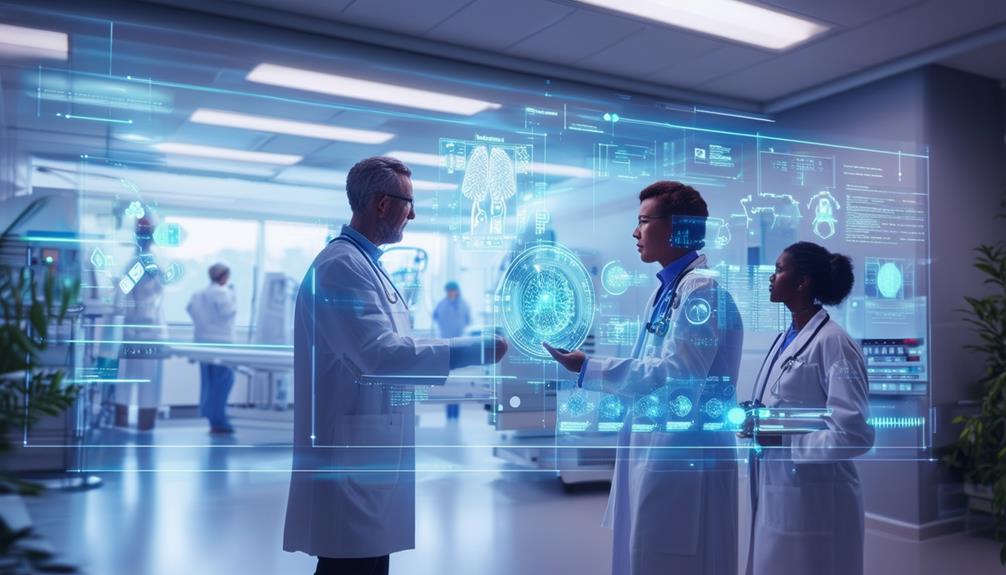
Integrating AI with Electronic Health Records (EHRs) transforms healthcare by enabling seamless data sharing and enhancing diagnostic accuracy. AI-enhanced EHRs can analyze large volumes of patient data swiftly, leading to precise diagnoses and efficient treatment planning, which supports the shift towards personalized medicine tailored to individual patient profiles.
AI-powered EHRs not only boost diagnostic accuracy but also streamline workflow efficiency, making clinical decision-making faster and more reliable. Here's how:
- Advanced Data Analysis: AI algorithms examine patient records, uncovering patterns and correlations that might be overlooked by human clinicians, resulting in more accurate and timely diagnoses.
- Personalized Treatment Plans: By incorporating patients' unique medical histories and genetic information, AI in EHRs helps develop customized treatment plans, enhancing the effectiveness of medical interventions.
- Optimized Workflow: AI integration automates routine tasks, reducing administrative burdens on healthcare providers, thus allowing them to dedicate more time to patient care.
Ultimately, the integration of AI with EHRs improves healthcare accessibility and patient outcomes, making the medical process more efficient and precise. This technological advancement is a significant breakthrough in modern medicine, offering tangible benefits to both healthcare professionals and patients.
AI in Surgery
How is AI revolutionizing the field of surgery with robotic systems that assist surgeons in performing intricate procedures? AI in surgery is transforming the medical landscape, particularly through robotic systems like the da Vinci Surgical System. These systems enable surgeons to execute precise, minimally invasive surgeries, significantly enhancing surgical accuracy. By employing robotic arms equipped with cameras and instruments, a level of precision is achieved that surpasses what human hands can accomplish alone.
The da Vinci Surgical System exemplifies the impact of AI in surgery. Surgeons operate the robotic arms from a console, facilitating intricate movements that would be challenging in traditional surgery. This not only improves surgical outcomes but also reduces recovery time for patients and minimizes the risk of complications.
Robotic-assisted procedures are now utilized across various specialties, including urology and cardiac surgery, showcasing the versatility and effectiveness of AI-powered systems. With AI in surgery, medical procedures are becoming more efficient, safer, and less invasive, ultimately benefiting both surgeons and patients.
Future Trends
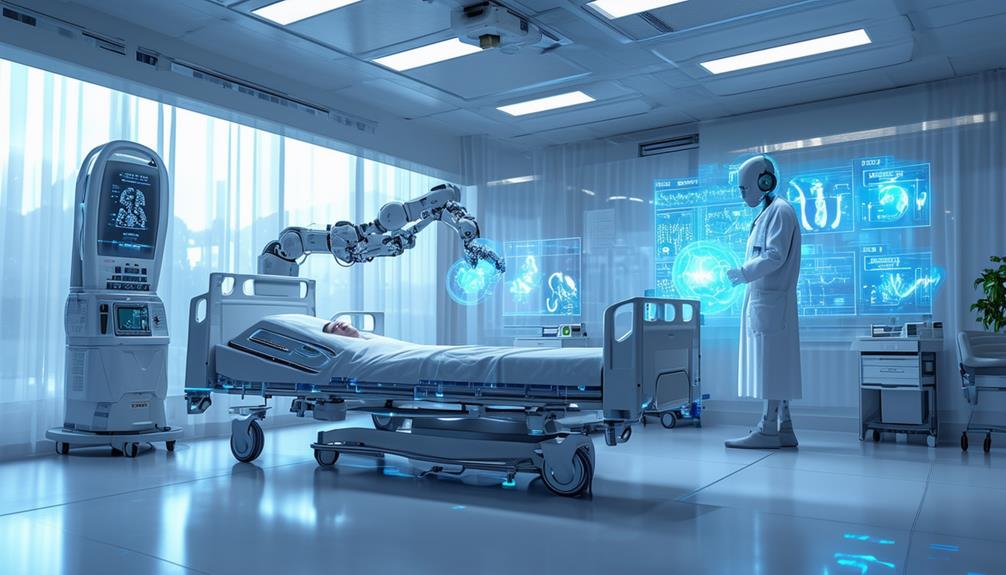
Looking ahead, AI is set to revolutionize medical diagnostics and treatment, driving significant advancements in healthcare technology. Here are several key areas where major improvements are expected:
- Precision Medicine: AI will tailor treatments based on individual patient characteristics, ensuring optimal outcomes. By analyzing vast datasets, AI can identify the most effective therapies for each patient, significantly enhancing care quality.
- Healthcare Accessibility: Advanced AI technologies will improve healthcare access, particularly for underserved populations. Remote diagnostics and telemedicine will bridge gaps, providing high-quality care regardless of geographical limitations.
- Patient Monitoring: AI will transform patient monitoring through real-time data analysis and timely interventions. Continuous monitoring will enable early detection of complications, improving patient outcomes and alleviating pressure on healthcare systems.
AI's integration into diagnostic processes will become indispensable, enabling faster and more accurate disease detection. This will facilitate earlier treatment planning and better management of chronic conditions. Additionally, AI will drive innovation in medical research, expediting the discovery of new treatments and therapies.
Future trends suggest that AI will not only enhance individual patient care but also optimize the overall healthcare system. Embracing these advancements will lead to a more efficient, effective, and equitable healthcare landscape for all.
Conclusion
AI has revolutionized medical diagnostics and treatment from its inception with Turing's theories to today's advanced technologies. Early pioneering projects laid the groundwork, leading to significant advancements in imaging, personalized treatments, and surgical applications. As AI continues to integrate with Electronic Health Records (EHRs) and push technological boundaries, healthcare is becoming more accurate, efficient, and personalized. The evolution of AI in medicine is just beginning, and its potential to enhance patient care is immense.
Related posts