The Evolution of Robot Hardware: From Simple Mechanisms to Complex Systems
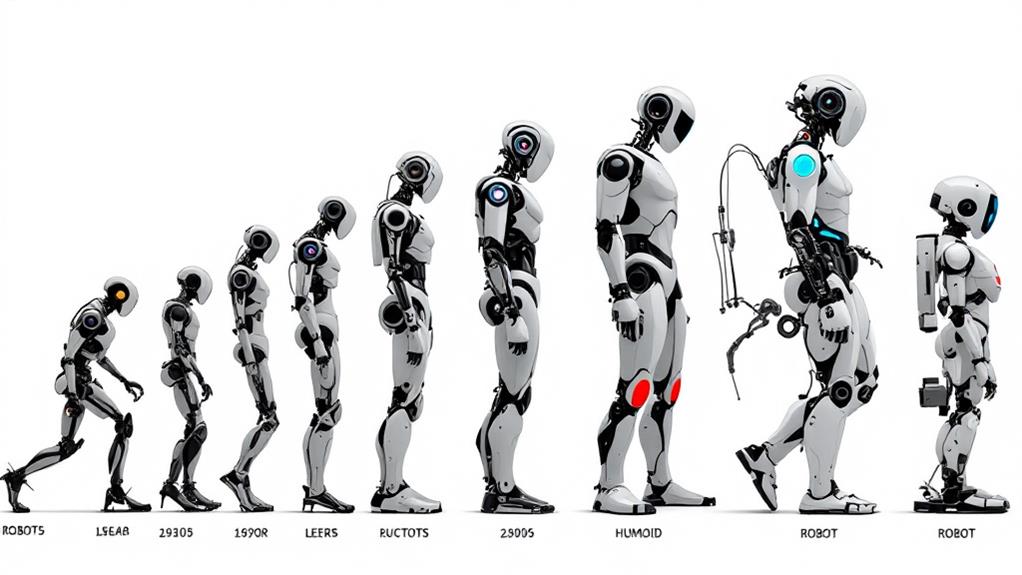
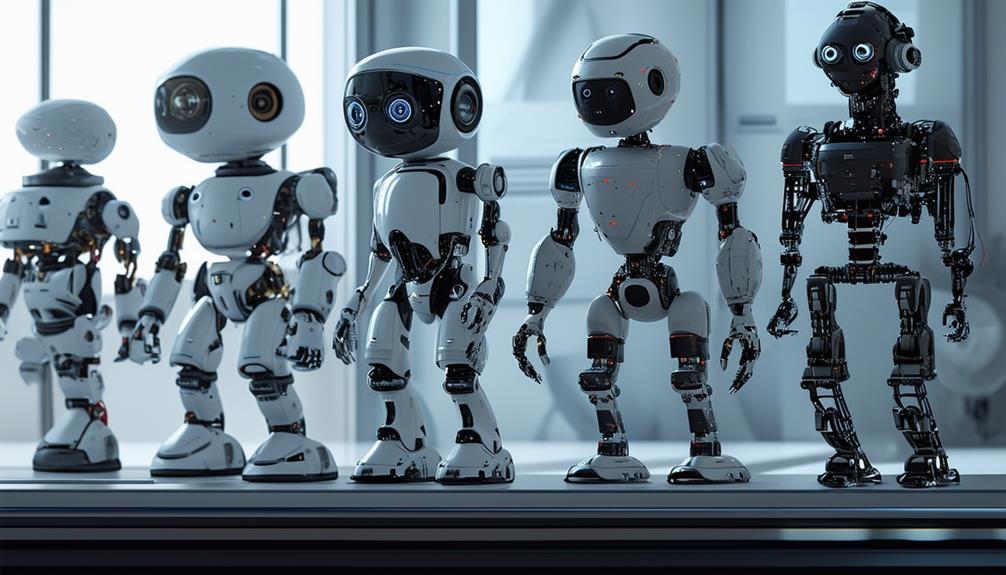
You'll find that robot hardware has transformed remarkably, moving from simple gears and pulleys in early mechanical automatons to complex systems infused with AI. Initially, automatons were cultural marvels, but as industrial robots emerged, they changed the landscape of manufacturing. Advances in sensor technology enhanced robots' perceptiveness, while microprocessors enabled complex tasks. AI further altered robots into intelligent entities, capable of learning and adapting. Hardware innovations like actuator design and miniaturization have expanded robots' capabilities into everyday life. Looking ahead, the evolution continues, promising improvements and exciting possibilities that you won't want to miss.
Early Mechanical Automatons
Imagine the intricate gears and pulleys of early mechanical automatons. You've just stepped into a world where ancient inventions laid the groundwork for modern robotics. Mechanical puppets, driven by clockwork devices, fascinated societies, weaving themselves into the fabric of automaton history. They served not only as technological marvels but also as philosophical provocations, questioning the essence of life and consciousness. These early robotics examples were more than mere curiosities; they were artistic expressions that held significant cultural importance.
In examining historical timelines, you see the progression from simple mechanisms to more complex systems. Each creation presented unique engineering challenges. Craftsmen had to carefully design and build components that worked in harmony to simulate lifelike movements. These early automatons weren't just toys; they were masterpieces of innovation and skill that pushed the boundaries of what was possible at the time.
Every piece reflected the cultural significance attached to them, serving as symbols of power and intellect. As you investigate these ancient inventions, you'll appreciate how they set the stage for the sophisticated machines we encounter today. Each automaton was a stepping stone in the evolution of technology, marking humanity's fascination with mimicking life through mechanical means.
The Rise of Industrial Robots
As the 20th century unfolded, industrial robots emerged as transformative forces in manufacturing. You began noticing the shift as companies adopted a robotic workforce to improve manufacturing efficiency. Automation benefits became apparent with tasks being executed faster and more accurately than humans could manage. This shift led to significant cost reduction and production scalability, allowing companies to produce more at lower prices.
However, with these advancements, labor displacement became a concern. Many feared that robots would lead to job losses, but they also created new opportunities in robot maintenance and programming. You saw job creation in sectors focusing on technological adoption, proving that while some roles vanished, others evolved.
Safety improvements were another critical advantage. Robots took over dangerous tasks, reducing workplace accidents and improving general safety. Meanwhile, the impacts on the supply chain were profound. With robots ensuring consistent quality and speed, supply chains became more reliable and efficient.
You witnessed a transformation in how industries operated, acknowledging the crucial role of industrial robots. Their rise wasn't just about replacing human labor but reshaping the workforce and setting new standards for productivity and safety.
Advances in Sensor Technology
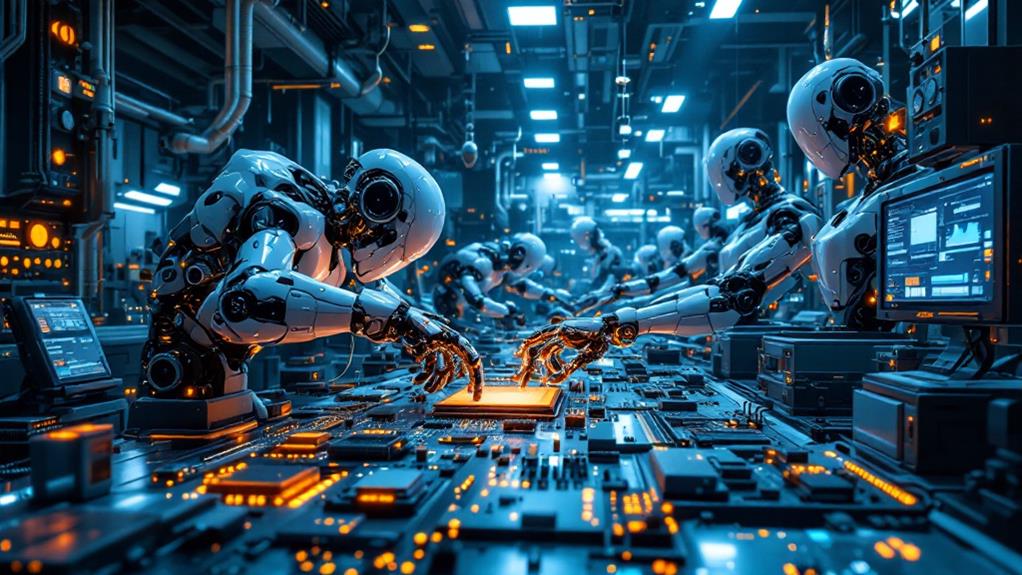
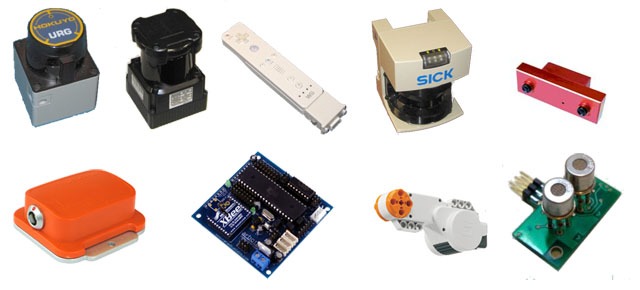
In recent years, advances in sensor technology have dramatically improved the capabilities of robots, making them more perceptive and adaptable. You can now find robots equipped with sophisticated sensor fusion systems that combine data from multiple sources, augmenting environmental perception and spatial awareness. This multi-modal sensing approach allows robots to better interpret their surroundings and adjust their actions accordingly.
Haptic feedback has also become a significant development, enabling robots to 'feel' their environment. This sensory integration allows for more precise object manipulation and handling, giving robots an edge in tasks requiring delicate touch. Advances in wireless communication facilitate seamless data exchange between sensors and robots, ensuring that sensory data is processed in real-time.
Object recognition has seen significant improvement, allowing robots to identify and interact with diverse items more efficiently. Adaptive sensing technologies enable robots to adjust their sensory input based on the task at hand, optimizing their performance in dynamic environments. The integration of these technologies means that robots can now perform complex tasks with ease, thanks to enhanced data processing capabilities. As sensor technology continues to evolve, you'll witness even more sophisticated robotic systems emerging.
Integration of Microprocessors
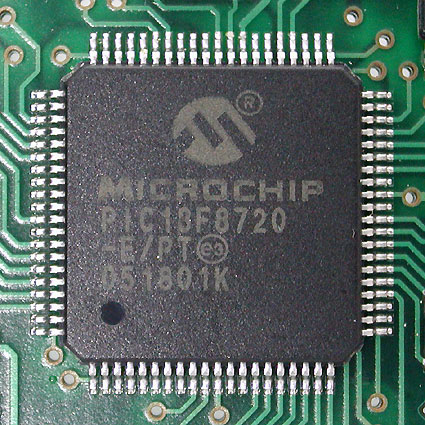
Building on the advancements in sensor technology, the integration of microprocessors has transformed robotic capabilities even further. You now have robots that can perform complex tasks with remarkable efficiency. Microprocessor architecture is essential in determining how these robotic systems process information. By selecting the right architecture, you guarantee your robot can handle multiple tasks simultaneously, increasing its versatility and performance.
Incorporating microprocessors into embedded systems allows you to create robots with specialized functions. These systems are designed to manage specific operations within a robot, making them more efficient and dependable. You benefit from the compact size and reduced power consumption of embedded systems, which are crucial for mobile and autonomous robots. With the right microprocessor, you can optimize your robot's performance, adapting it to specific environments or tasks.
Microprocessors enable real-time processing, which is critical for applications requiring immediate responses. You can program these processors to make instantaneous decisions, enhancing the robot's ability to interact with its surroundings. As you integrate microprocessors into robotic systems, you're not just improving their hardware; you're transforming their potential, making them smarter, faster, and more capable of handling complex tasks autonomously.
Emergence of Artificial Intelligence
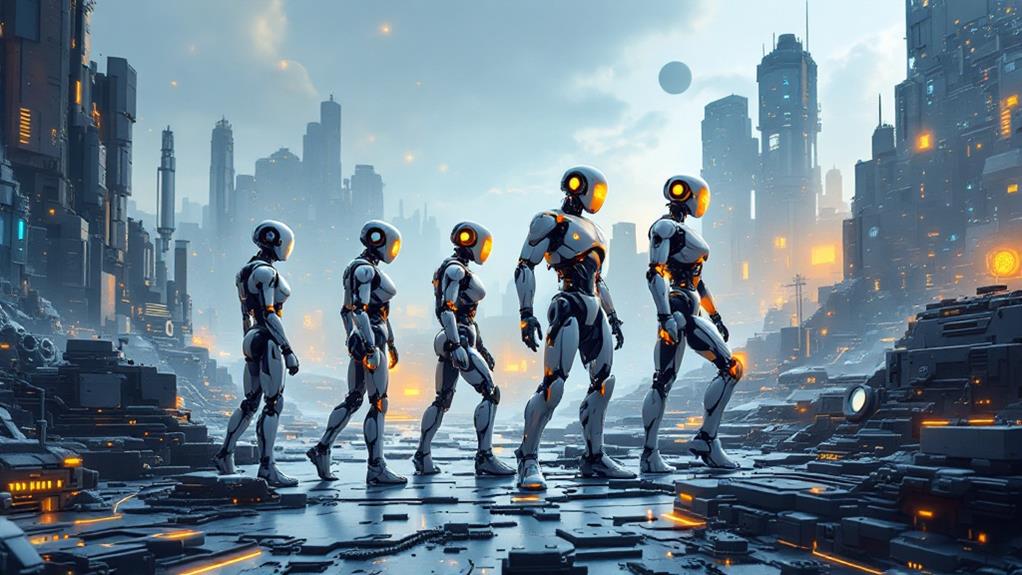
With the rise of artificial intelligence, robots are becoming not just efficient machines but intelligent entities capable of learning and adapting. This transformation is driven by advances in machine learning and cognitive computing. You see robots equipped with neural networks that allow them to process complex data and perform tasks previously unimaginable. They're learning through reinforcement learning techniques, which help them improve decision making abilities over time.
Imagine interacting with a robot that understands your natural language commands, processes them, and responds accurately. It's all made possible through sophisticated perception systems that enable robots to interpret and engage with their environment effectively. These systems allow for smoother human-robot interaction, making robots valuable companions in diverse settings.
Here's what AI brings to robot hardware:
- Adaptive Learning: Robots can learn from experiences and refine their actions.
- Enhanced Perception: They interpret sensory data for better environmental understanding.
- Natural Communication: They comprehend and respond to human language more naturally.
- Improved Decision Making: Algorithms allow for smarter, context-aware choices.
Development of Autonomous Systems
Autonomous systems are transforming the way robots operate by granting them unprecedented independence in performing tasks. You'll notice how sensor fusion plays an essential role in enhancing perception systems, allowing robots to interpret their environment more accurately. This capability is vital for navigation algorithms, which help robots move efficiently and safely. As you investigate deeper, you'll see that swarm intelligence enables groups of robots to work collaboratively, improving task automation and problem-solving efficiency.
Autonomous decision making is another cornerstone, giving robots the ability to make informed choices without human intervention. However, this brings up important discussions about robot ethics. How do you guarantee these systems make ethical decisions? It's a significant consideration as robots become more integrated into daily life.
Human robot interaction is also evolving, focusing on creating seamless communication between people and machines. This interaction must prioritize safety protocols to prevent accidents and establish trust. Furthermore, robots need environmental adaptability to function effectively in diverse settings, from homes to factories.
As you examine the development of autonomous systems, you'll understand that achieving balance in these areas is key to releasing robots' full potential while guaranteeing they act responsibly and effectively.
Innovations in Actuator Design
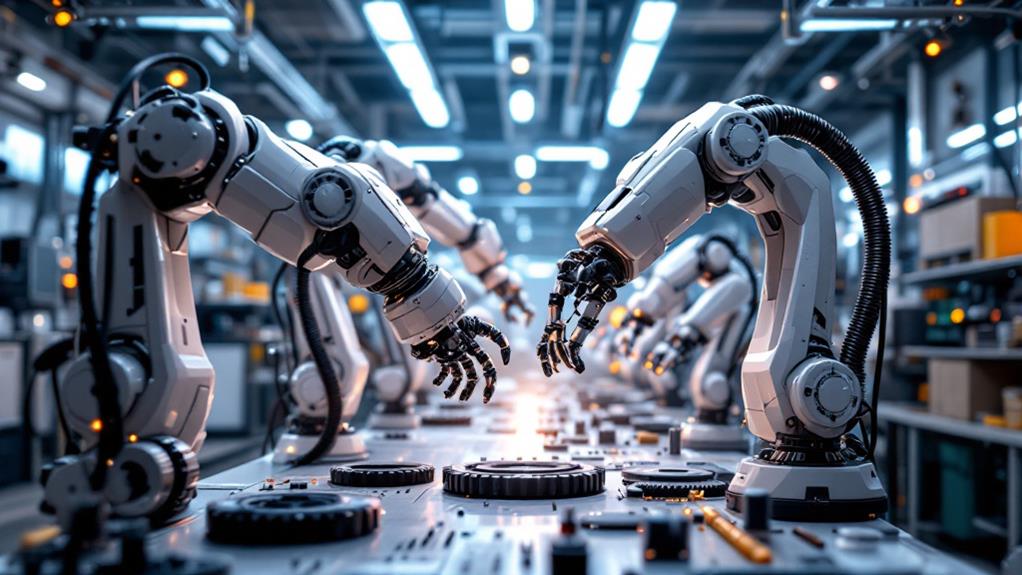
In relation to innovations in actuator design, you'll find that these developments have markedly advanced robotic movement and efficiency. Actuators are like muscles for robots, and recent advances make them more adaptable and efficient. Soft actuators, for example, use materials that mimic biological tissues, allowing for smoother and safer interactions with humans. This is vital in applications where robots need to handle delicate objects or work alongside people. By incorporating bio-inspired designs, you can create robots that move more naturally and precisely.
Some key innovations include:
- Modular actuators: These allow you to easily modify and customize robots, enhancing versatility and reducing development time.
- Energy efficiency: New designs focus on minimizing power consumption, which extends the operational life of robots and reduces environmental impact.
- Shape memory and smart materials: These materials can change form or properties in response to stimuli, enabling more dynamic and adaptable robotic functions.
- Fluidic actuators: Utilizing fluid power, these actuators provide precise control and tactile feedback, essential for tasks requiring fine motor skills.
Miniaturization and Nanotechnology
As robotic movement becomes more advanced through cutting-edge actuator designs, the focus now shifts to making robots even smaller and more efficient through miniaturization and nanotechnology. You're entering an exciting phase where nanofabrication techniques are pushing the boundaries of what's possible. By using these techniques, you can create incredibly small components, allowing robots to perform tasks on a microscopic scale. This opens up new possibilities in fields like medicine, where tiny robots could navigate your bloodstream to deliver drugs or perform delicate surgeries with unprecedented precision.
Molecular robotics is another groundbreaking development. By manipulating individual molecules, you can design robots that mimic natural processes at the cellular level. Imagine robots that can enter human cells to repair damage or fight diseases more effectively than current treatments. This isn't science fiction—it's becoming a reality as researchers make strides in understanding how to control molecular interactions.
Robotics in Everyday Life
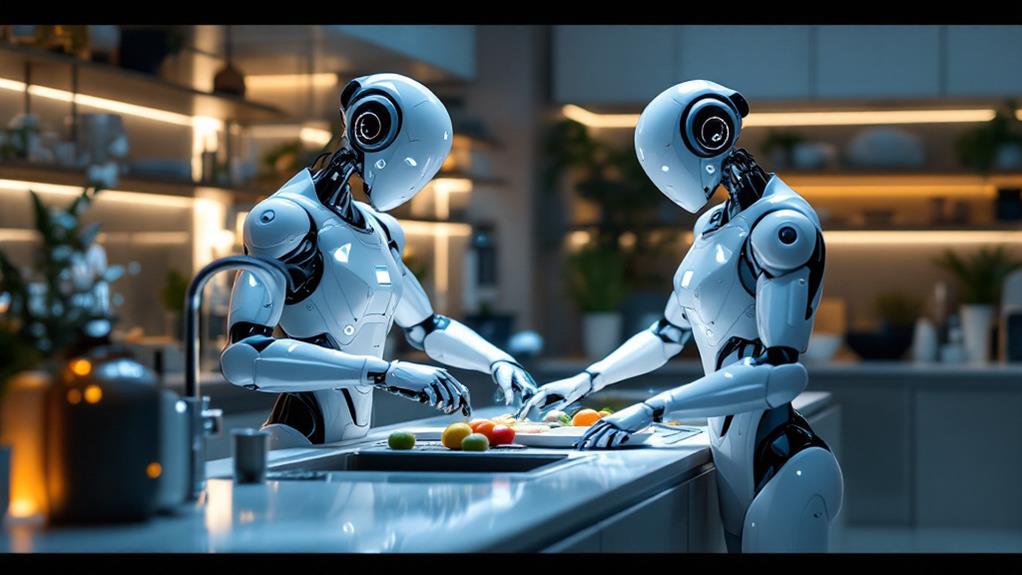
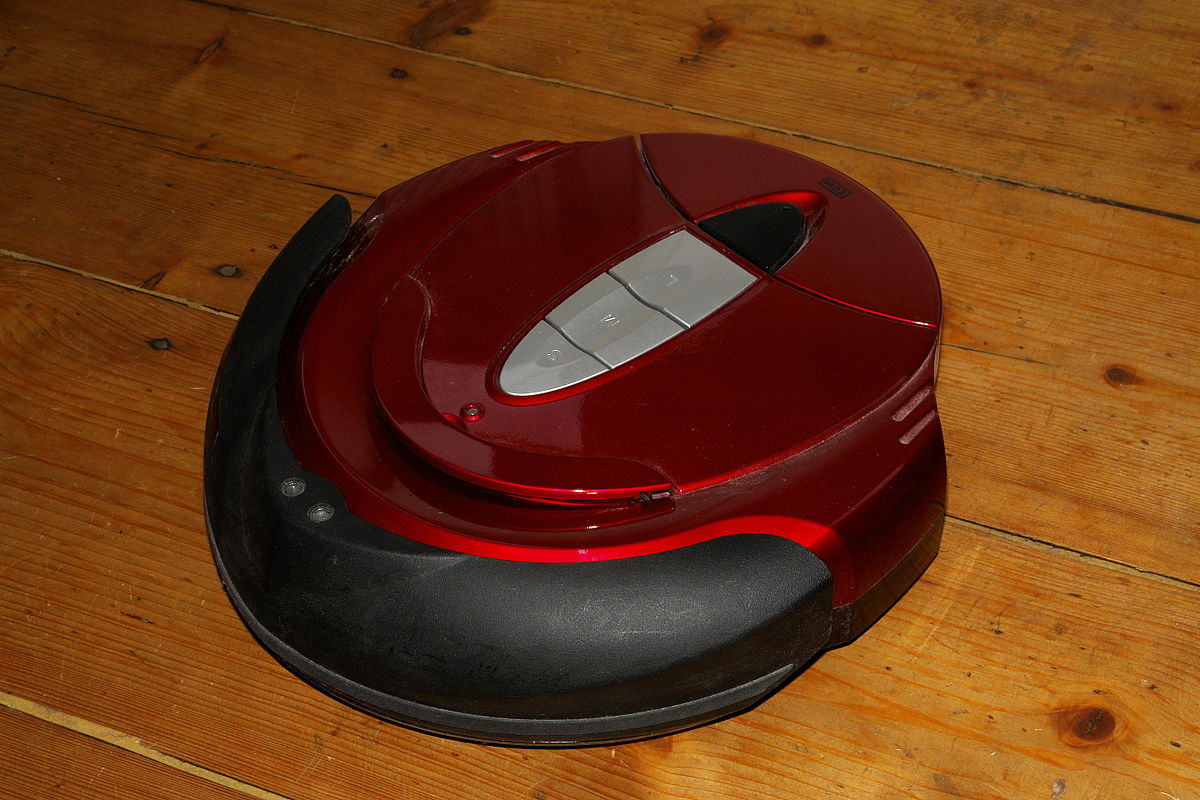
Thanks to rapid advancements in technology, robots are becoming an integral part of everyday life, seamlessly blending into different aspects of your daily routine. Imagine waking up to a world where home robotics take care of mundane tasks. Robotic cleaners guarantee your floors are spotless while smart appliances make your morning coffee just right. In education, educational robots engage children, making learning interactive and fun.
At work, robotic assistants help streamline tasks, allowing you to focus on more critical responsibilities. Meanwhile, healthcare robots support medical professionals, enhancing patient care and efficiency. If you're concerned about security, security robots patrol premises, offering peace of mind. Even your furry friends have robotic counterparts, with robotic pets providing companionship without the upkeep.
Consider this list of robotics in action:
- Home convenience: Robotic cleaners and smart appliances simplify daily chores.
- Education engagement: Educational robots captivate and educate students.
- Healthcare support: Healthcare robots assist in medical environments.
- Security assurance: Security robots monitor and protect your surroundings.
Outdoors, delivery drones guarantee packages reach you swiftly, transforming how goods are distributed. With assistive technology, those with disabilities gain independence, making life more accessible. Welcome the robotic transformation shaping your world today.
Future Trends in Robot Hardware
Imagine a world where robots don't just assist but anticipate your needs, thanks to groundbreaking advancements in robot hardware. Future trends point towards the development of robotic materials that mimic biological functions, improving bio-inspired robotics. These materials will allow robots to adapt in real-time, making them more intuitive and responsive to human needs.
Energy efficiency will be at the forefront, ensuring robots consume less power while delivering peak performance. With modular design, you'll be able to customize and upgrade robots easily, tailoring them to specific tasks. Picture collaborative robots working seamlessly alongside humans, boosting productivity and safety through advanced human-robot interaction.
Soft robotics will play a significant role in environments requiring delicate handling, offering flexibility and adaptability. These robots will be invaluable in medical applications and other fields where precision is vital. Sustainable robotics will also emerge as a priority, focusing on environmentally friendly materials and processes to minimize ecological impact.
As these technologies evolve, you'll witness robots becoming more integrated into daily life, not just as tools but as partners that improve your everyday experiences, all while being kind to our planet. The future of robot hardware promises a smarter, more sustainable world.