The Ethical and Societal Implications of Increasing Robot Integration

As robots increasingly become part of everyday life, it's crucial to consider the ethical and societal implications of their integration. Key concerns include data privacy, job displacement, and ethical decision-making. Are we equipped to balance technological advancements with the protection of individual rights and employment stability? How can we ensure that robots make ethical decisions that reflect societal values? Addressing these questions necessitates a thoughtful approach to responsible development. What measures can be taken to navigate these challenges effectively? The solutions are more complex than they might initially appear.
Historical Context and Evolution
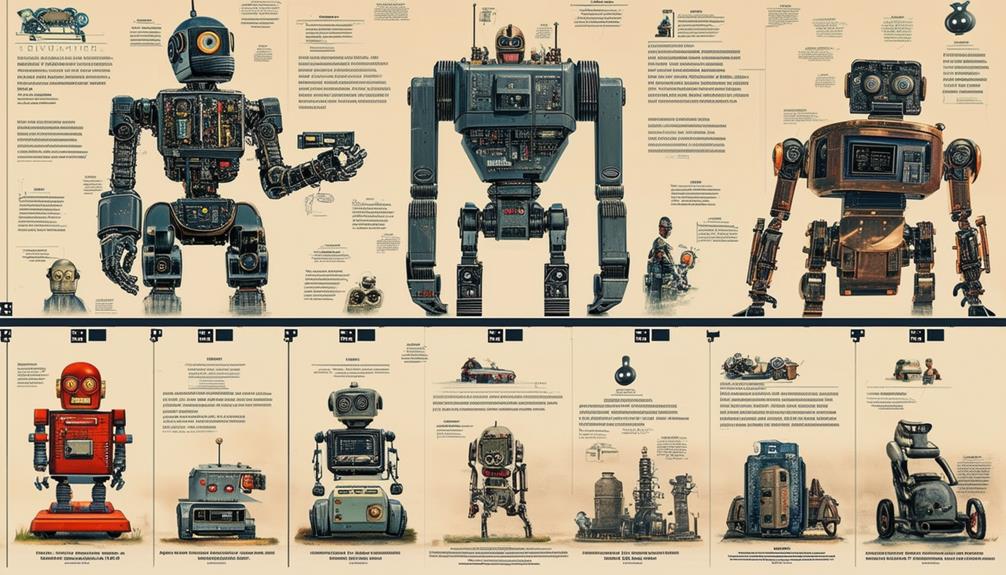
From humble beginnings, robotics has rapidly evolved into a transformative technological force. The journey began with Karel Čapek's 1920 play *Rossum's Universal Robots* (R.U.R.), which introduced the concept of artificial beings performing tasks for humans. Čapek's vision highlighted early ethical dilemmas and societal implications that continue to resonate today.
Initially, robots were confined to automating manufacturing processes, greatly enhancing efficiency but also leading to job displacement. This shift underscored the need for regulatory frameworks to manage the impact on human workers.
By the mid-20th century, automation in manufacturing had become widespread, and the ethical concerns articulated by Čapek began to materialize. Questions about societal implications, such as job displacement and economic inequality, demanded attention. Regulatory frameworks began to form, aiming to balance technological advancement with social welfare.
This progression underscores the complexities of integrating robots into various sectors. It involves not only technological capabilities but also addressing the ethical dilemmas and societal implications that arise from such profound changes.
Current Technological Capabilities
Harnessing advanced AI and machine learning, modern robots now perform complex tasks with remarkable precision and autonomy. AI integration has significantly enhanced robotic capabilities, enabling them to navigate and interpret their environments with unprecedented accuracy. This technological innovation is evident in applications such as autonomous vehicles and robotic surgery. Autonomous vehicles utilize machine learning to analyze vast amounts of data in real time, ensuring safer and more efficient transportation. Similarly, robotic surgery employs advanced technology to perform delicate procedures with a level of precision that surpasses human abilities.
Robotics has evolved beyond traditional industrial applications, impacting a wide range of sectors. In healthcare, robots assist in surgeries, rehabilitation, and patient care. Environmental tasks, such as monitoring and cleaning, benefit from robots' ability to operate in hazardous conditions. Space exploration and personal robotics further showcase the versatility of current robotic technology. Improved human-robot interactions are central to these advancements, enabling more intuitive and effective collaborations.
The societal impact of these developments is profound, as robots increasingly integrate into daily life. However, with such rapid technological progress, it is crucial to consider the ethical implications and potential consequences of widespread robot adoption.
Ethical Considerations

As robots become more integrated into daily life, it is crucial to address the ethical challenges that arise from their widespread use. Key ethical considerations include data use, privacy, security, job displacement, societal impact, and ethical decision-making. Automation technologies often collect and process vast amounts of data, raising significant concerns about how this data is used and protected. Additionally, the societal impact of job displacement needs to be carefully considered as robots take over tasks traditionally performed by humans.
| Ethical Issue | Description |
|---|---|
| Data Use | How data collected by robots is stored, used, and protected. |
| Privacy | Ensuring individual privacy amidst widespread data collection. |
| Job Displacement | Impact of robots on employment and the workforce. |
| Societal Impact | Broader effects on societal values and norms. |
| Ethical Decision-Making | Incorporating ethics from design to deployment. |
Responsible development is vital to ensure that robotic technologies advance in ways that align with societal values. This involves not only considering the ethical use of robots but also integrating ethical considerations into their design and development. Ethical decision-making should be a foundational part of the process to ensure that robots contribute positively to society. Addressing these ethical challenges is essential for fostering trust and acceptance of robots in various aspects of daily life.
Future Applications
The future applications of robotics promise to revolutionize sectors such as healthcare, environmental conservation, space exploration, and personal living. In healthcare, advancements in precision surgeries, elderly care, and assistive robotics are poised to make a significant impact. Imagine robots performing intricate surgeries with unparalleled accuracy or providing continuous care for the elderly, thereby enhancing their quality of life.
Environmental tasks like ocean cleaning and wildlife monitoring are increasingly being undertaken by robots. These applications not only aid in preserving our planet but also raise important ethical questions regarding the extent of robot integration in critical areas. Space exploration is another frontier where robotics are indispensable. Robots enable deeper planetary exploration and undertake missions too risky for humans, thereby expanding our understanding of the universe.
In personal living, the growth of the personal robotics industry is evident. Robots can handle household chores and offer companionship, transforming daily life. However, these advancements bring significant ethical considerations about the use of automation and robotics in our homes and personal spaces. Through these diverse applications, robotics holds the potential to significantly enhance human capabilities and improve quality of life, albeit with careful consideration of ethical implications.
Balancing Innovation and Ethics

With the rapid advancements in robotics across various sectors, addressing the ethical considerations accompanying these innovations is crucial. As robots integrate into different aspects of society, several key issues must be managed proactively to balance innovation and ethics effectively.
- Job Displacement: While robots can enhance productivity, they may also cause significant job losses. Developing strategies to mitigate job displacement and support workforce transitions is essential.
- Privacy: The integration of robots often involves extensive data collection. Ensuring robust privacy protections to safeguard personal information is crucial.
- Societal Impact: Robots can significantly alter social structures. Evaluating their societal impact and aligning their deployment with societal values and norms is important.
- Regulations: Establishing comprehensive regulations for responsible development, safety, and accountability ensures that robotic innovations are beneficial and secure.
Aligning robotic technologies with societal values requires ongoing dialogue and international cooperation. Setting standards for robot safety, data security, and accountability will help regulate the industry effectively. The responsible development of robots should prioritize ethical considerations to foster trust and ensure these innovations contribute positively to society.
Conclusion
Robots have evolved significantly, offering vast potential for various applications. However, it is crucial to balance innovation with ethical considerations. Safeguarding individual privacy, ensuring data security, and addressing the potential for job displacement are essential aspects that need thoughtful attention. By integrating ethics from the design stage, responsible development and societal acceptance can be promoted. Embrace the future of robotics while remaining vigilant about its impact, ensuring that technology serves humanity ethically and responsibly.