The Development of Autonomous Vehicles: From Concept to Reality
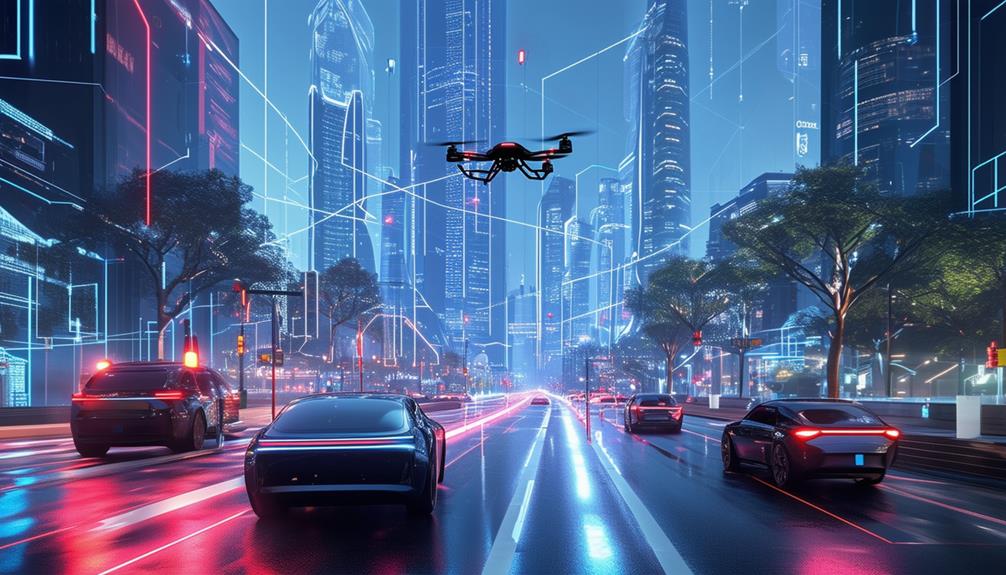
Imagine you're driving down the highway and realize you haven't touched the steering wheel in miles. Autonomous vehicles, once a concept confined to science fiction, have evolved from early radio-controlled experiments in the 1920s to today's advanced AI-driven machines. Companies like Waymo and Tesla are at the forefront of this innovation. But what lies ahead for this transformative technology? How will these vehicles integrate seamlessly into our daily lives, and what societal shifts should we expect? The journey from concept to reality is just beginning to unfold.
Early Innovations
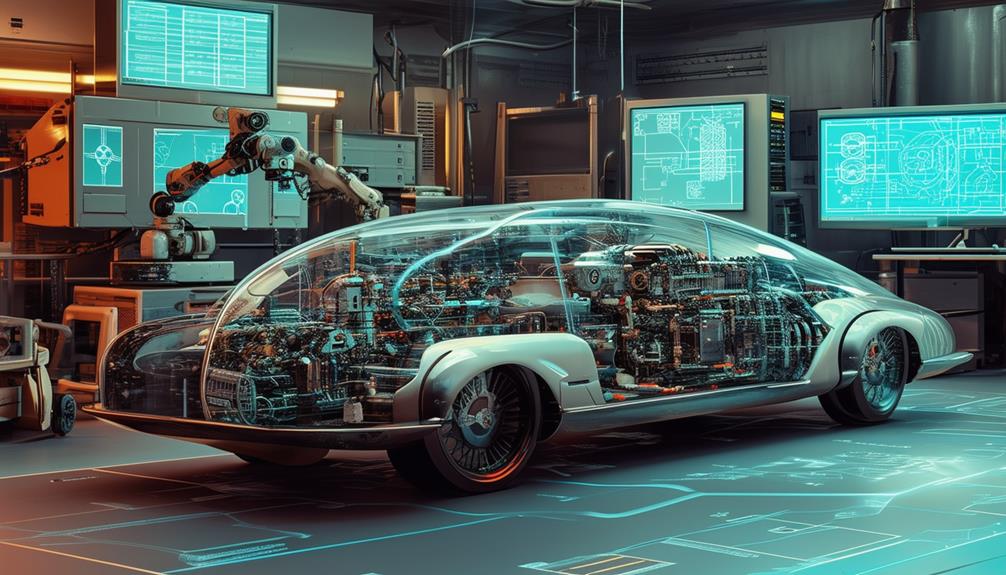
The evolution of autonomous vehicles began in the 1920s with Houdina Radio Control's groundbreaking development of a radio-controlled driverless car. This innovation introduced the concept of a vehicle that could operate without human intervention, laying the foundation for modern self-driving technology.
In the 1930s, General Motors showcased self-driving vehicle concepts at the 1939 World's Fair, featuring radio-controlled electric cars that used electromagnetic fields for navigation. This demonstration highlighted the potential of autonomous vehicle technology and captivated the public's imagination, marking a significant step toward realizing driverless cars.
The 1950s saw further advancements when RCA Labs constructed a special highway stretch in Nebraska embedded with detector circuits to communicate with self-driving vehicles. This development underscored the importance of infrastructure in the progression of autonomous technology.
In the 1960s, the US Bureau of Public Roads investigated intelligent logic systems for autonomous vehicle operation, signifying a pivotal moment in driverless car technology. By the 1970s, Japan's Tsukuba Mechanical Engineering Lab developed the first stand-alone self-driving car prototype, showcasing remarkable advancements in autonomous vehicle concepts.
Radio-Controlled Cars
The evolution toward autonomous vehicles can be traced back to the 1920s with the advent of radio-controlled cars. Innovators like Francis Houdina demonstrated the feasibility of driverless technology, laying the foundation for future advancements. These early efforts marked the transition from manual to autonomous driving, paving the way for the sophisticated systems we have today.
Early Technological Innovations
While autonomous vehicles might seem like a modern marvel, their origins actually date back to the 1920s with the advent of radio-controlled cars. Houdina Radio Control, led by Francis Houdina, was at the forefront of this innovation. Houdina's early experiments with driverless cars included radio-controlled electric vehicles that navigated the bustling streets of New York City. This period was groundbreaking for autonomous driving, demonstrating the feasibility of the self-driving car concept long before today's technological advancements.
These early radio-controlled cars were more than just a novelty; they were a crucial step toward modern autonomous vehicle technology. Houdina's driverless car illustrated that remote control of a vehicle was possible, setting the stage for further innovations. These electric cars showcased the potential of early technological advancements, hinting at a future where vehicles could navigate without human intervention.
Transition to Autonomy
In the 1920s, pioneering efforts by Houdina Radio Control marked the initial steps toward autonomous driving with radio-controlled cars navigating city streets. One notable early experiment was the American Wonder car, which demonstrated its autonomous capabilities by traversing New York City streets without a human driver. This groundbreaking demonstration was orchestrated by Francis Houdina, credited with developing one of the earliest driverless cars.
These early experiments laid the foundation for modern autonomous vehicle development. The concept of driverless cars was actively being explored and tested in the early 1900s. By the 1920s, significant progress had been made, with practical demonstrations capturing the public's imagination and setting the stage for future advancements.
Houdina Radio Control's work, particularly with the American Wonder car, showcased the potential of radio-controlled technology to achieve vehicle autonomy. These efforts not only proved the feasibility of the concept but also ignited a century-long progression toward perfecting driverless cars. Thus, the early 20th century was a pivotal period in the history of autonomous vehicle development.
The DARPA Challenges
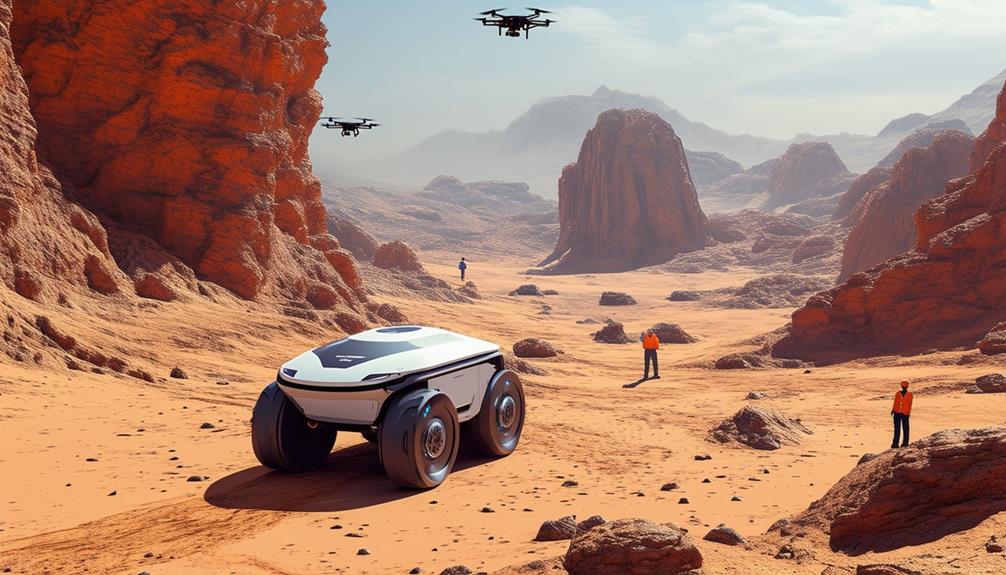
The DARPA Grand Challenge, initiated in 2004, marked significant milestones in the development of autonomous vehicles. These competitions spurred technological advancements by pushing teams to navigate complex terrains and obstacles autonomously. As a result, they played a crucial role in advancing the commercialization of autonomous vehicle technology.
Early Competition Milestones
The DARPA Grand Challenges marked the initial significant milestones in the journey toward autonomous vehicles, starting in 2004. These competitions set the stage for modern autonomous driving technology. The inaugural DARPA Grand Challenge saw no vehicle successfully complete the course, highlighting the early hurdles in autonomous vehicle development. However, this initial setback didn't deter innovation; instead, it inspired global teams to intensify their research and development efforts.
Subsequent DARPA Grand Challenges demonstrated remarkable progress, with vehicles beginning to navigate complex terrains and obstacles autonomously. These early competitions underscored the dedication and creativity of teams from around the world.
Key aspects of the DARPA Challenges included:
- Promoting global innovation and pushing technological boundaries
- Sparking commercial interest and investment in autonomous vehicle technology
- Proving the capability to navigate obstacles autonomously
The DARPA Challenges played a pivotal role in advancing the field, transitioning autonomous vehicles from a conceptual idea to a tangible reality. The obstacles faced and the progress made during these competitions laid the groundwork for future advancements in autonomous driving.
Technological Breakthroughs Achieved
Autonomous vehicle technology experienced a pivotal leap forward due to the groundbreaking innovations achieved during the DARPA Grand Challenges. The Defense Advanced Research Projects Agency (DARPA) initiated these competitions in 2004 to accelerate the development of autonomous vehicles. Although the inaugural DARPA Grand Challenge had no winners, as no team completed the course, it set the stage for remarkable progress in the field.
Subsequent DARPA Grand Challenges showcased significant technological advancements. These competitions required autonomous vehicles to navigate complex terrains and obstacles without human intervention, pushing the boundaries of what was previously considered possible. Each challenge highlighted advancements in sensor technology, machine learning, and real-time data processing, contributing substantially to the development of autonomous vehicles.
The DARPA initiatives were crucial in advancing autonomous vehicle research. They provided a platform for innovators to test and refine their technologies under real-world conditions. Consequently, these competitions accelerated progress in autonomous vehicle technology, leading to more sophisticated and reliable systems. The achievements during these challenges laid the groundwork for contemporary autonomous vehicle development, proving that with the right incentives, rapid technological advancements are achievable.
Technological Advancements
With the integration of forward-facing cameras, radar, and LiDAR sensors, self-driving cars can accurately perceive their surroundings. This sophisticated sensor technology represents significant progress in the evolution of autonomous vehicles, allowing onboard systems to interpret real-time data for safe navigation and decision-making.
Consider these key points:
- Artificial Intelligence (AI): AI algorithms enable self-driving vehicles to learn from data, improving their capacity to handle complex driving scenarios.
- Specialized Maps: Advanced maps designed specifically for autonomous vehicles aid in navigation and optimize route planning.
- Driving Policies: New policies facilitate safe interactions between autonomous vehicles and human drivers.
The automotive industry has heavily invested in research and development to refine these technologies. Continuous advancements in sensors and control systems are crucial for the progress of self-driving vehicles. Additionally, road updates tailored for autonomous driving enhance these systems' reliability and efficiency.
Technological advancements in AI and sensor integration have made autonomous vehicles a tangible reality, transitioning from driver-assist features to fully autonomous systems. This shift marks significant progress in the field.
Commercial Deployments
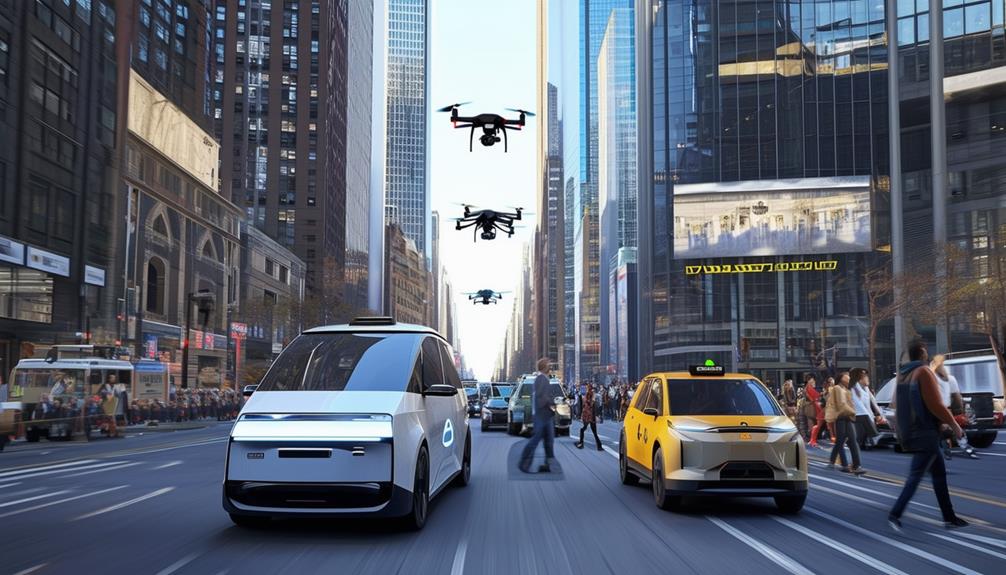
Building on recent technological advancements, companies are now advancing toward commercial deployments of autonomous vehicles. Waymo spearheaded this movement by launching Waymo One, the world's first commercial driverless taxi service, in Arizona in 2018. This milestone marked a significant step in the autonomous ride-hailing industry, offering a practical glimpse into the future of transportation.
Tesla has also made notable progress with its Full Self-Driving (FSD) package, which includes advanced driver-assist features for specific models. Although it is not yet a fully autonomous system, it represents a critical phase in the journey toward commercial autonomous vehicles.
Not all attempts have been without challenges. Uber's commercial autonomous vehicle program faced a major setback following a fatal accident in 2018, leading to a temporary suspension of its efforts. Despite this, the pursuit of commercial deployments continues in other regions. Baidu's Apollo Go service operates in multiple Chinese cities, delivering a functional autonomous ride-hailing experience.
GM's Cruise aimed to launch a commercial autonomous ride-hailing service in San Francisco but has encountered delays. These examples illustrate the varied progress and obstacles in the race to make autonomous vehicles a commercial reality.
Future Prospects
As we look ahead, achieving levels 4 and 5 autonomy will be pivotal for the true realization of fully self-driving vehicles. These levels of autonomy mean that vehicles can handle all driving tasks without human intervention, transforming our transportation landscape.
To reach this milestone, several key areas need focus:
- Integration: Seamlessly incorporating autonomous vehicles into existing transportation infrastructure.
- Advanced Infrastructure: Developing real-time communication systems between vehicles and road networks.
- Business Models: Innovating new mobility services to adapt to autonomous technology.
- Societal Impacts: Addressing the effects on job markets and planning for workforce transitions.
The integration of autonomous vehicles into our current transportation infrastructure is vital. Cities will need to upgrade roads and traffic systems to support these advanced vehicles. Real-time communication between vehicles and infrastructure will enhance safety and efficiency, reducing traffic congestion and accidents.
Moreover, the evolution of business models for mobility services will be significant. Companies are exploring ride-sharing and on-demand transport options that operate without human drivers. Addressing societal impacts is also crucial. The shift to autonomous vehicles will affect job markets, particularly for human drivers, necessitating thoughtful planning to manage these changes effectively.
Conclusion
Autonomous vehicles have evolved remarkably, shifting from early radio-controlled prototypes to today's sophisticated self-driving cars. With technological advancements and commercial deployments by companies such as Waymo and Tesla, autonomous driving has become a reality. Looking ahead, achieving higher levels of autonomy and better integration with existing infrastructure will be essential. Embrace this evolution, as it promises a seamless and exciting transition to a driverless world.
Related posts