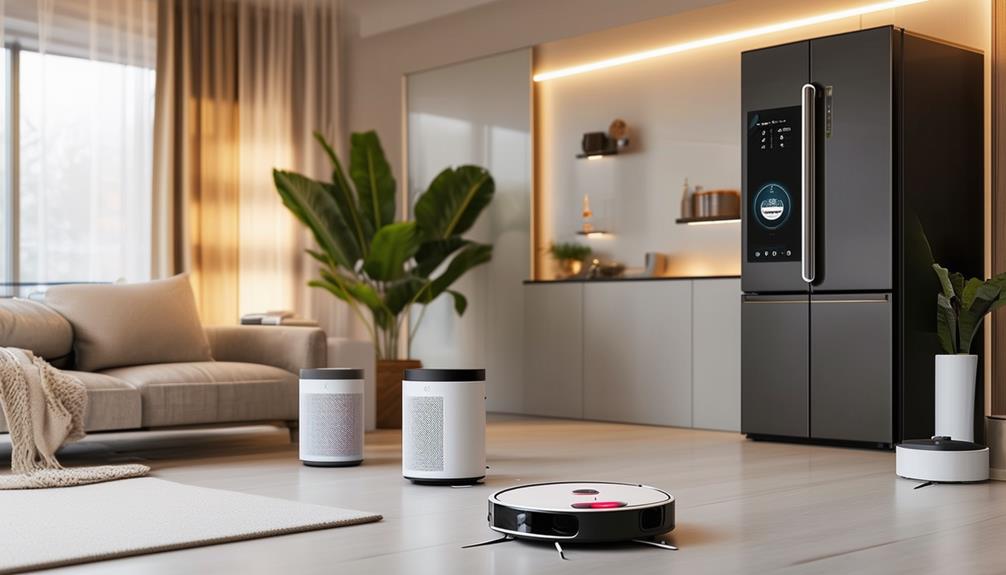
The Development of AI in Smart Home Technologies
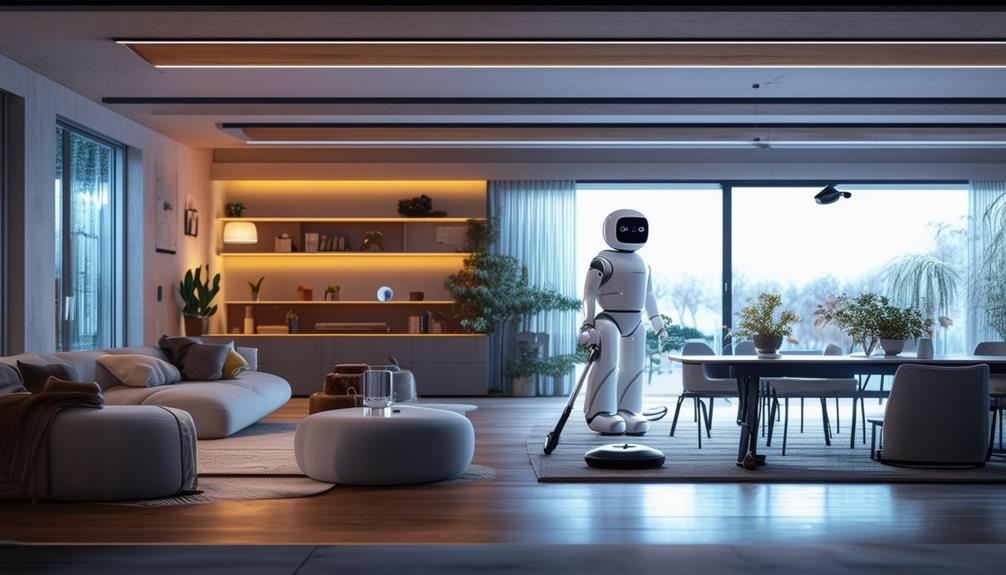
Imagine walking into your home and having it intuitively adapt to your preferences—lights dimming to your preferred setting, the thermostat adjusting to the ideal temperature, and your favorite music playing softly in the background. AI in smart home technologies has made this a reality, learning your habits and optimizing your living environment in ways you might not have considered. But how exactly does this technology work, and what are the implications for future developments in home automation?
Evolution of AI in Smart Homes
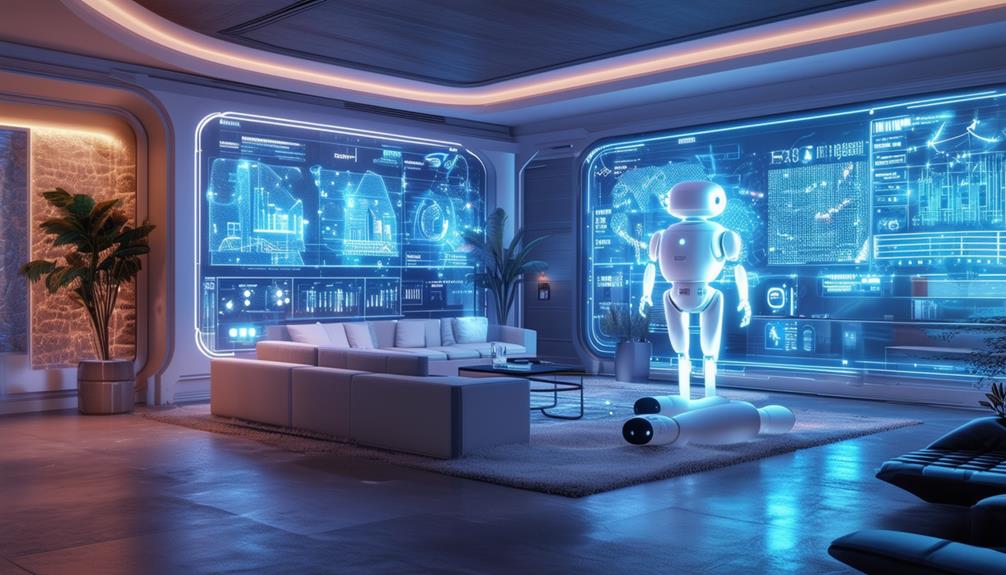
The evolution of AI in smart homes has revolutionized our interaction with living spaces, making them more intuitive and efficient. Imagine entering a room where the lights automatically adjust to your preferred brightness, the thermostat sets itself to your ideal temperature, and your favorite music starts playing—all without any manual intervention. This vision of the future is becoming a reality, thanks to advancements in Artificial Intelligence (AI).
Modern smart devices leverage sophisticated AI algorithms to learn your habits and preferences. These devices can anticipate your needs and adjust settings accordingly, enhancing both convenience and comfort. Voice technology, powered by AI, enables effortless control over various aspects of your home. Simply issue a command, and your home responds, whether you're asking for a weather update or dimming the lights.
AI's integration in home technology also leads to significant improvements in energy efficiency and security. Smart home systems can optimize energy usage by learning your schedule and adjusting power consumption, thereby saving you money and reducing your carbon footprint. Furthermore, AI-enhanced security systems offer real-time monitoring and alerts, ensuring that your home remains protected from potential threats.
The future of smart homes, driven by AI, promises a seamless, efficient, and secure living environment, transforming not just how we live, but also contributing to more sustainable and safer communities.
Enhancing Personalization
Imagine walking into your home and everything adjusts perfectly to your unique preferences, all thanks to AI-driven personalization. This is the transformative power of AI in smart home technologies, offering highly tailored user experiences. AI algorithms analyze your behavior, learning your habits and needs to seamlessly customize settings. Whether it's adjusting the thermostat, dimming the lights, or playing your favorite music, smart home devices adapt to create a truly personalized environment.
AI's capacity to learn from user behavior is crucial for enhancing personalization. By continuously analyzing user patterns, these devices can make proactive adjustments, ensuring your home always feels just right. For example, if you prefer a cool bedroom at night, the AI will automatically adjust the temperature without any manual intervention.
Additionally, AI facilitates predictive maintenance, identifying potential issues before they escalate into significant problems. This not only enhances convenience but also prolongs the lifespan of your devices. By integrating AI, smart home technologies offer customized settings that evolve with your preferences, leading to increased efficiency and satisfaction. Embrace a future where individual preferences are standard, and your home truly understands you.
Energy Management and Efficiency
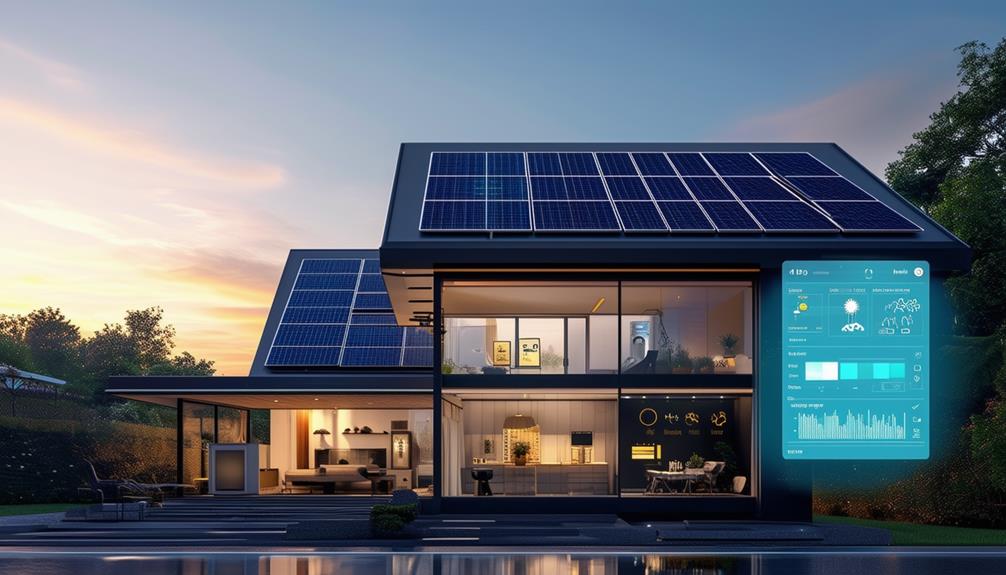
AI-driven smart home technologies play a pivotal role in improving energy management and enhancing efficiency. By leveraging AI in smart home systems, you can significantly reduce energy waste and cut costs. For example, smart lighting systems adjust brightness based on natural light levels, ensuring you only use what you need. These systems analyze energy consumption patterns to make real-time adjustments that optimize energy usage.
AI-powered HVAC systems take this a step further by regulating temperature efficiently, keeping your home comfortable while maximizing energy efficiency. Through advanced predictive analytics, these systems can even anticipate your needs, adjusting settings before you realize it's necessary. This proactive approach helps maintain ideal conditions with minimal energy use.
Energy monitoring systems are another critical component, tracking your usage to provide insights and promote sustainable living practices. These systems use AI technology to offer personalized energy-saving tips tailored to your specific consumption habits. By following these recommendations, you can cultivate eco-friendly habits and achieve greater energy efficiency in your daily life.
Incorporating AI in smart home solutions not only makes your life more convenient but also contributes significantly to a greener planet. Adopting these technologies optimizes energy consumption, leading to both environmental benefits and cost savings.
Predictive Maintenance
Building on efficiency gains in energy management, predictive maintenance employs AI to foresee and prevent potential issues in your smart home devices. By analyzing device performance data, AI algorithms can predict when maintenance is needed, ensuring your devices consistently operate at their best. This proactive approach reduces downtime and extends the lifespan of your smart home systems.
When AI analyzes the performance data of your devices, it identifies patterns and anomalies that may indicate underlying problems. This means you can avoid unexpected breakdowns, saving both time and money. Predictive maintenance ensures your devices always perform at their peak, enhancing the reliability and efficiency of your entire smart home setup.
Moreover, by addressing maintenance needs before they escalate, AI-driven predictive maintenance helps you avoid costly repairs or replacements. It ensures your smart home runs smoothly and efficiently. With AI's ability to anticipate and prevent potential issues, you can have peace of mind knowing your smart home devices are well-maintained and less likely to fail unexpectedly.
Advanced Security Measures
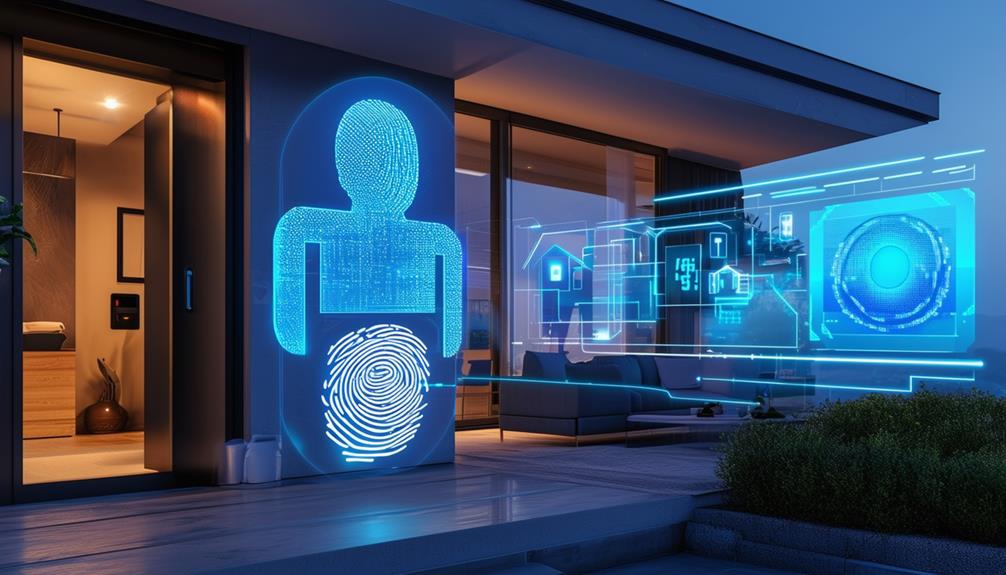
Smart home security has advanced significantly with the integration of AI technologies, ensuring unparalleled safety for your home. These AI-powered systems incorporate state-of-the-art features to robustly defend against potential threats. For example, AI-enabled smart locks equipped with facial recognition improve access control, making unauthorized entry nearly impossible.
Real-time monitoring is a cornerstone of these advanced security measures. AI-driven cameras employ pattern recognition and anomaly detection to identify and alert you to suspicious activities instantly. This enables immediate notification of unusual events, allowing for quicker responses and enhanced protection.
Integrating AI with alarm systems further fortifies your home's security. These systems learn your behavior patterns, reducing false alarms by differentiating between normal and abnormal activities. For instance, if an unfamiliar face is detected, the AI can instantly notify you, adding an extra layer of security.
Biometric authentication methods, such as retinal scans and voice recognition, also play a crucial role. These technologies ensure that only authorized individuals can access your home, enhancing overall security. Collectively, these AI-powered solutions form a comprehensive and intelligent security network, keeping your home safe and secure.
AI-Driven Product Development
In AI-driven product development, predictive maintenance algorithms can save time and money by identifying potential issues before they occur. Personalized user experiences enable smart homes to adapt to individual preferences, enhancing daily convenience. Additionally, energy efficiency optimization reduces carbon footprints and lowers costs, promoting sustainable living.
Predictive Maintenance Algorithms
Predictive maintenance algorithms in AI-driven smart home technologies leverage data analysis to anticipate device malfunctions before they disrupt your daily life. By examining usage patterns, these algorithms can extend the lifespan of your smart home devices. They proactively address issues, allowing devices to self-diagnose and automatically schedule maintenance tasks.
Imagine your smart thermostat predicting when it's about to fail and scheduling a maintenance check before you even notice a problem. Predictive maintenance algorithms enable this by continuously monitoring performance and usage. They ensure your smart home devices are always operating optimally, minimizing downtime and reducing repair costs.
Here's how these algorithms enhance your smart home experience:
- Prevent Breakdowns: By anticipating malfunctions, devices can address issues before they escalate.
- Optimize Performance: Continuous data analysis helps keep devices running efficiently, extending their lifespan.
- Automatic Maintenance: Smart devices can self-diagnose and schedule necessary maintenance without user intervention.
Incorporating predictive maintenance algorithms into your smart home setup boosts efficiency and significantly improves your overall user experience. This proactive approach to home management makes your life smoother and more convenient.
Personalized User Experience
AI-driven product development is transforming smart home technologies by delivering highly personalized experiences tailored to your unique preferences. With AI-enabled devices, your smart home learns your habits and behaviors, enabling it to provide customized settings that fit your lifestyle. AI algorithms analyze data from your daily activities to create personalized interactions, enhancing your comfort and satisfaction.
Imagine waking up to your favorite music softly playing, lights adjusting to your preferred brightness, and the thermostat setting the perfect temperature—all without you lifting a finger. This is the power of AI in delivering seamless experiences designed just for you. The more you use these AI-driven devices, the better they understand your individual preferences, leading to even more refined and intuitive smart home interactions.
These personalized experiences increase user engagement, making you more likely to interact with your smart home system regularly. Consequently, your smart home evolves from just a collection of gadgets into an intuitive assistant that anticipates your needs and enriches your daily life. Through AI-driven product development, smart homes are becoming increasingly skilled at creating environments that are not only efficient but also deeply personalized.
Energy Efficiency Optimization
Smart home technologies not only enhance your personalized experience but also play a pivotal role in optimizing energy efficiency through advanced AI systems. These systems reduce energy consumption by analyzing your home's usage patterns and adjusting settings accordingly. For instance, AI-powered smart lighting systems can adapt brightness based on natural light conditions, thereby minimizing energy waste.
AI-driven HVAC systems are another significant innovation, efficiently regulating temperature to ensure your home remains comfortable while promoting energy efficiency and cost savings. Energy monitoring systems track your usage data, providing insights that help you optimize energy consumption. By understanding these patterns, you can make informed decisions about when to use certain appliances and how to adjust settings for maximum efficiency.
Moreover, AI algorithms in smart home devices offer personalized energy-saving tips, encouraging sustainable living practices. Implementing these suggestions can significantly reduce your energy footprint, contributing to a more sustainable environment.
Future Prospects
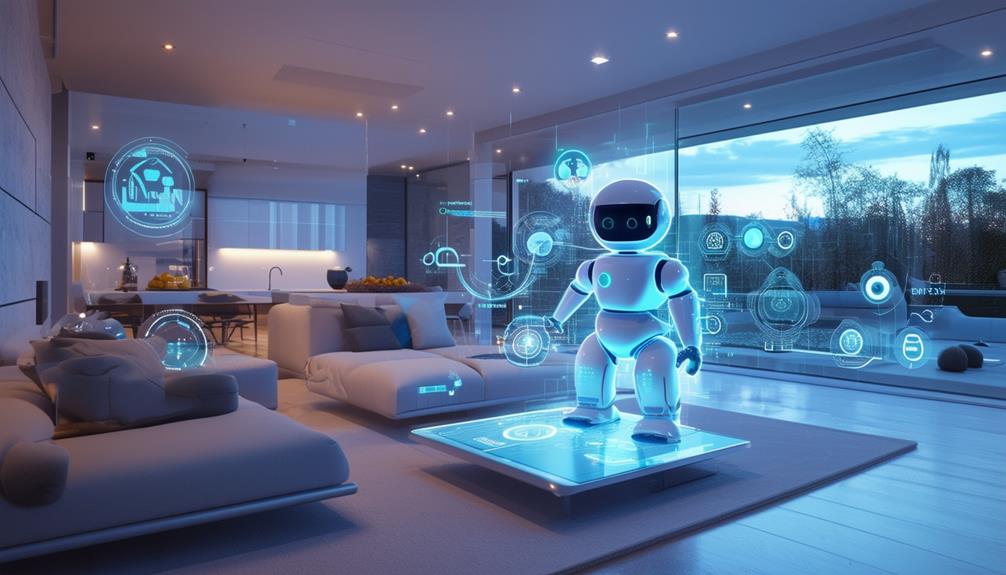
In the coming years, the integration of AI in smart home technologies is set to revolutionize how we live, offering unparalleled levels of convenience, security, and efficiency. As AI continues to evolve, smart home products will become more intuitive and responsive, allowing you to control your home with simple voice commands and enriching your daily life. This ongoing evolution opens up new possibilities for smart living and continually enhances smart home experiences.
The smart home market is projected to grow at a CAGR of 27.01%, reaching $537 billion by 2030. This growth underscores the increasing demand for AI-enabled smart home products that provide enhanced security, energy savings, and functionality. AI integration in smart homes reflects industry trends and the strategic moves of tech giants aiming to dominate this space. Through advanced monitoring and threat detection, AI significantly enhances overall security and safety in your home.
Moreover, AI's role in improving energy efficiency cannot be overstated. It leads to substantial cost savings, making your home not just smarter but also more economical and eco-friendly. The future of AI in smart homes is indeed promising.
Conclusion
By integrating AI into your smart home, you've stepped into a new era of convenience and efficiency. These advanced technologies learn your habits, optimize energy consumption, and enhance security, all while anticipating your needs. As AI continues to advance, your home will become even smarter and more responsive. You're not just residing in a house—you're experiencing a seamlessly integrated, future-ready environment tailored specifically for you. Welcome to the future of living!