Rodney Brooks: Revolutionizing Robotics With Behavior-Based AI
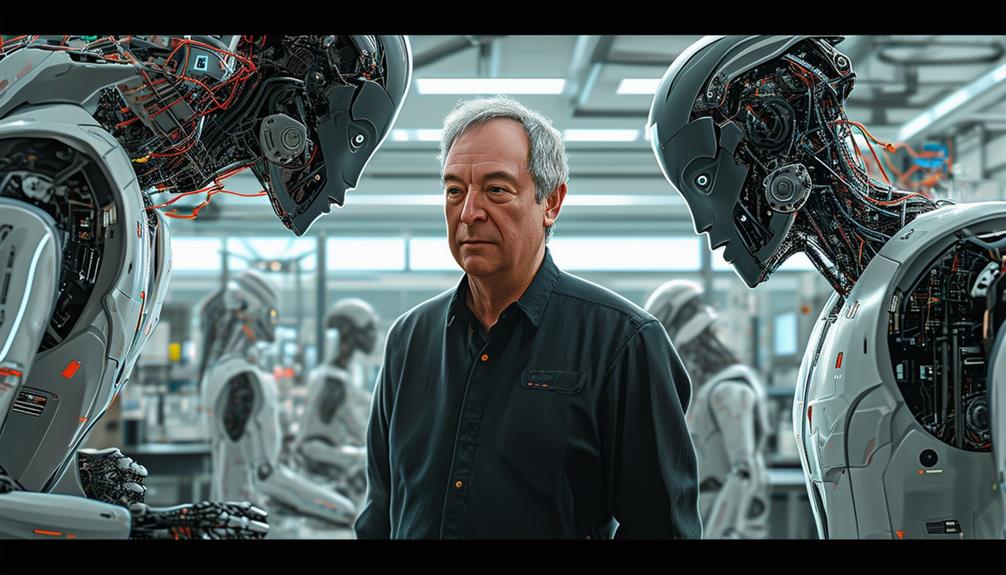
When considering the innovators transforming robotics, Rodney Brooks is a key figure due to his groundbreaking work in Behavior-Based AI. His novel approach enables robots to interact with their environments in real-time, adapting quickly and effectively. By developing the subsumption architecture, Brooks introduced a new way for robots to navigate dynamic settings, enhancing their reliability and versatility. Products like the Roomba and collaborative robots such as Baxter and Sawyer exemplify Brooks' vision and methodologies, which have fundamentally changed how we interact with machines. Let's explore the depth of his impact.
Rodney Brooks' Early Life

Rodney Brooks was born in Adelaide, Australia, in 1954. His fascination with robotics began at an early age, where he often engrossed himself in books about electricity and robots, laying the groundwork for his lifelong passion. As a child, Brooks built circuits and explored binary systems, foundational skills that would later underpin his pursuit of computer science.
These early interests were more than just hobbies; they were the initial steps toward a future in robotics that would revolutionize the field. Brooks earned a Bachelor of Science from Flinders University, followed by a Master of Science and a Ph.D. in computer science from Stanford University.
These academic achievements equipped Brooks with the technical expertise to make significant contributions to robotics. His early life blended hands-on experimentation with rigorous academic training, setting the stage for his future involvement in pioneering robotics companies. This early fascination evolved into groundbreaking advancements in behavior-based AI.
Founding Irobot and Rethink Robotics
Rodney Brooks co-founded iRobot Corporation in 1990, transforming home cleaning with the introduction of the Roomba vacuum cleaner. This AI-driven system automated household cleaning tasks, making iRobot a globally recognized name. Brooks' innovative spirit continued to flourish, leading him to establish Rethink Robotics in 2009 with a focus on industrial automation.
Rethink Robotics aimed to develop collaborative robots, such as Baxter and Sawyer, designed to work alongside humans in manufacturing environments. These robots enhanced productivity and flexibility, showcasing Brooks' vision for human-robot collaboration across various sectors.
| Company | Founded | Focus | Notable Product |
|---|---|---|---|
| iRobot Corporation | 1990 | Home cleaning automation | Roomba vacuum cleaner |
| Rethink Robotics | 2009 | Collaborative robots in manufacturing | Baxter and Sawyer |
Under Brooks' leadership, Rethink Robotics produced pioneering collaborative robots capable of performing diverse tasks and integrating seamlessly into existing workflows. This innovative approach to industrial automation highlighted the transformative potential of collaborative robots, making workplaces more efficient and adaptive.
Behavior-Based Robotics
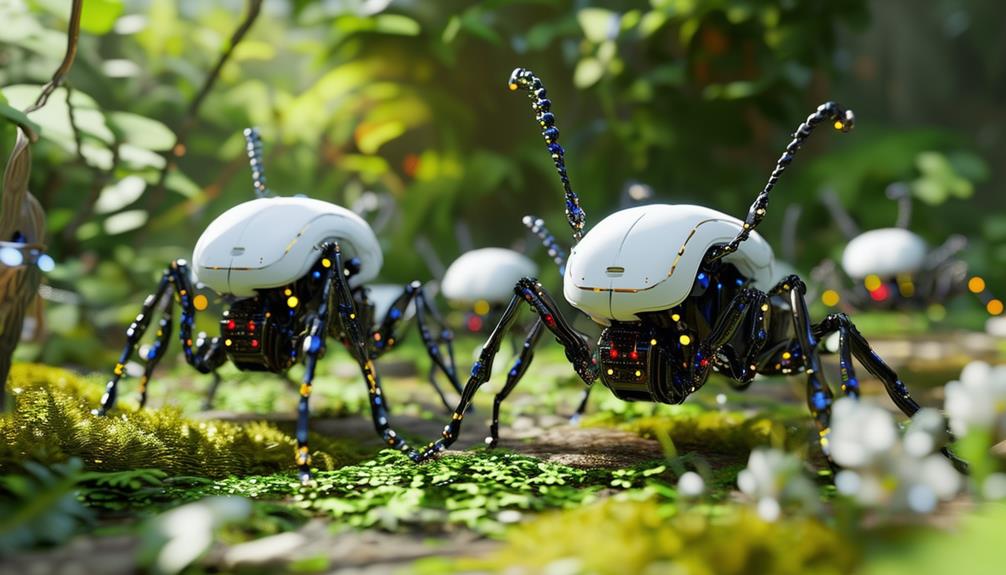
Behavior-based robotics emphasizes real-time interactions and adaptability over complex pre-planning. This approach has yielded practical applications in autonomous vehicles and household robots. Looking ahead, robotics is expected to become even more integrated into daily life, with advanced behavior-based AI driving further innovation.
Principles of Behavior-Based AI
In the field of robotics, Behavior-Based AI emphasizes robots' immediate reactions to stimuli, allowing them to adapt swiftly and effectively to their environments. Unlike traditional AI, which relies on complex reasoning and high-level cognitive capabilities, Behavior-Based AI employs a set of rules to manage robots' interactions. These rules prioritize real-time responsiveness, ensuring that robots can navigate dynamic and unpredictable situations efficiently.
Rodney Brooks pioneered this approach with the subsumption architecture, which layers simple behaviors so that higher levels can inhibit or modify lower-level actions. This hierarchical but decentralized structure enables robots to perform tasks efficiently without requiring a centralized control system or extensive computational power.
Key principles of Behavior-Based AI include:
- Real-time responsiveness: Robots react instantaneously to environmental changes, enhancing their adaptability.
- Physical interaction: Focus on tangible interaction with the environment rather than abstract reasoning.
- Robustness: Designed to be resilient, allowing continuous operation despite unexpected challenges.
Real-World Applications
Building on these principles, behavior-based robotics have found impactful real-world applications across diverse industries. By utilizing simple, reactive behaviors, these robots excel in dynamic environments. In manufacturing, autonomous robots efficiently handle tasks such as assembly and quality control. They adapt quickly to changes on the production line, enhancing productivity and minimizing downtime.
In healthcare, behavior-based robots assist in patient care by supporting routine tasks and ensuring consistent, reliable service. Their ability to navigate and interact with their surroundings makes them invaluable in hospitals and care facilities. Additionally, these robots enhance safety by reducing the need for human workers in hazardous conditions.
The agriculture sector also benefits from behavior-based robotics. Autonomous machines perform precision farming tasks like planting, weeding, and harvesting. Their adaptability to varying field conditions boosts crop yield and lowers labor costs.
Behavior-based robotics are transforming the logistics industry as well. Warehouse robots streamline inventory management and order fulfillment by efficiently navigating complex storage areas. Their adaptive behaviors enable them to respond to real-time demands, improving overall efficiency.
Future of Robotics
As behavior-based robotics continues to evolve, future advancements promise to bring even more intelligent and adaptable machines into everyday life. Rodney Brooks' revolutionary approach has set the stage for a new era of truly intelligent machines that can sense, act, and adapt to their surroundings. The future of artificial intelligence in robotics is poised to transform numerous aspects of society, from industry to daily living.
Imagine a world where robots not only perform human-like tasks but also seamlessly integrate into our environments. Here are some exciting possibilities:
- Collaborative Robots (Cobots): These machines will work alongside humans, enhancing productivity and safety in sectors such as manufacturing and healthcare.
- Swarm Robotics: Inspired by nature, these robots will function collectively to accomplish complex tasks, such as search and rescue missions.
- Integrated Perception and Action: Robots will be equipped with advanced sensory systems that enable them to autonomously understand and react to their surroundings.
These advancements will lead to robots capable of performing tasks with a level of sophistication and efficiency previously thought impossible. As behavior-based AI continues to develop, we can anticipate a future where intelligent machines become indispensable partners in our daily lives.
Subsumption Architecture
Subsumption architecture employs a hierarchical control system where simple behaviors are layered to create complex, adaptive responses in real time. This decentralized approach enables robots to navigate and interact with their environment efficiently using basic rules. The architecture ensures seamless operation without the need for centralized control, enhancing the robot's ability to respond dynamically to changing conditions.
Layered Control Mechanisms
Subsumption architecture, pioneered by Rodney Brooks, revolutionizes robot programming by enabling immediate, reactive behaviors through layered control mechanisms. This approach emphasizes real-time interactions and physical embodiment over complex decision-making. By organizing robot behaviors into hierarchical layers, subsumption architecture allows higher-level behaviors to override simpler, lower-level ones, resulting in a more adaptive and responsive robot.
Layered control mechanisms form the core of this architecture. These mechanisms stack different behavior modules, with each layer handling specific tasks. For example, low-level behaviors might include basic obstacle avoidance, while higher layers manage navigation or task-specific actions. This modularity offers several advantages:
- Modularity: Easily integrate new behaviors without disrupting existing ones.
- Immediate Reactions: Prioritize quick responses based on sensor inputs.
- Scalability: Incrementally add complexity, enhancing robot capabilities over time.
Real-time Adaptive Responses
Real-time adaptive responses in robotics are achieved by allowing higher-level behaviors to swiftly override simpler, lower-level ones to react to changing environments. Rodney Brooks' subsumption architecture exemplifies this approach, forming the foundation of behavior-based AI. This architecture consists of multiple layers of behavior, each dedicated to specific tasks. Higher-level behaviors can suppress the lower-level ones, leading to quick and efficient reactions to dynamic stimuli.
The elegance of subsumption architecture lies in its simplicity and effectiveness. Rather than relying on complex computations, it employs reactive mechanisms that enable robots to exhibit sophisticated behaviors. For instance, a robot can seamlessly transition from simple obstacle avoidance to complex navigation when it encounters an unexpected barrier. This layered control ensures that the robot remains adaptable and responsive in real-time.
Overview of Subsumption Architecture:
| Behavior Level | Function |
|---|---|
| Level 1 | Basic motor control |
| Level 2 | Obstacle avoidance |
| Level 3 | Path planning |
| Level 4 | Task-specific behaviors (e.g., object pickup) |
This structure ensures semantic accuracy, completeness, and consistency, offering a concise yet comprehensive understanding of subsumption architecture's role in real-time adaptive responses.
Innovations in Robotics
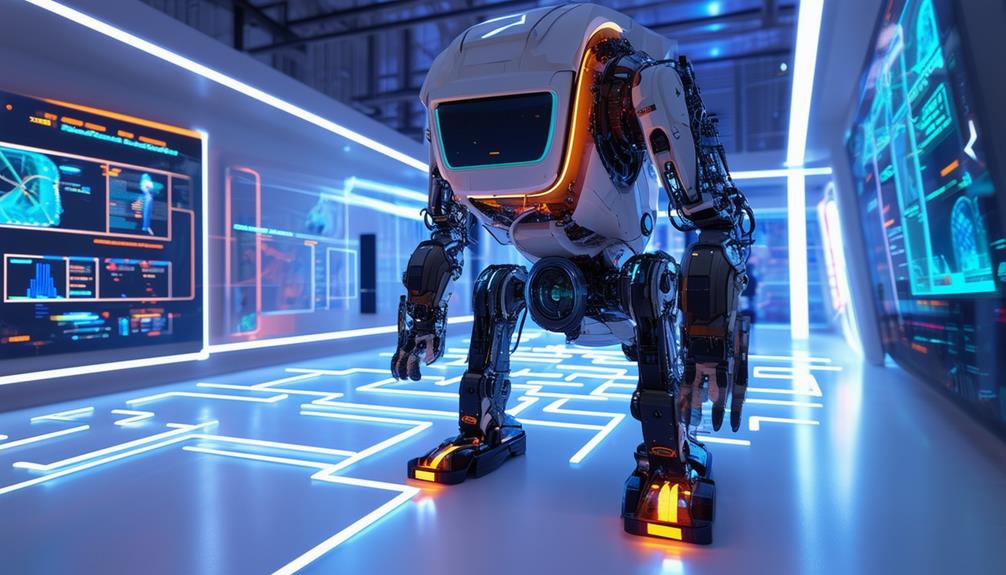
In your exploration of robotics, you'll discover that Rodney Brooks' behavior-based AI has led to groundbreaking innovations in how robots interact with their environment. By emphasizing physical interaction and autonomy, Brooks developed a set of principles that enabled robots to operate independently and efficiently. This revolutionary approach resulted in the creation of iconic robotic systems that have transformed both domestic and industrial applications.
Consider these pivotal innovations:
- Roomba: An autonomous vacuum cleaner that navigates your home efficiently, adapting to obstacles in real-time.
- Baxter and Sawyer: Collaborative robots designed for industrial use, known for their ability to work safely and flexibly alongside humans.
- Swarm Robotics: Drawing inspiration from social insects, this innovation enables robots to work collectively, enhancing adaptability and scalability.
The introduction of subsumption architecture in robot programming allowed for layered behaviors and real-time responses, making robotic systems more efficient and robust. Brooks' focus on behavior-based AI has not only increased productivity but also significantly enhanced safety and flexibility across various industries. As you delve deeper into the field, you'll see how these innovations continue to influence robotics, integrating autonomous machines more seamlessly into everyday life.
Impact on AI and Robotics
Rodney Brooks' behavior-based AI has fundamentally transformed the development of intelligent robotic systems by emphasizing physical interaction over abstract thinking. This paradigm shift in behavior-based robotics has led to more adaptive and collaborative machines, directly influencing the design of robots like Baxter and Sawyer, which are renowned for their ability to work safely and efficiently alongside humans.
Brooks' influence extends to the broader field of robotics. He popularized swarm robotics, where multiple robots collaborate to achieve a common goal, thereby challenging traditional AI paradigms that favored centralized control systems. This has inspired a new generation of researchers to explore decentralized, resilient AI solutions.
Furthermore, Brooks co-founded iRobot Corporation, leading to the creation of the Roomba, which revolutionized home cleaning automation and made AI-driven robotics accessible to everyday consumers. Beyond technical achievements, Brooks has been a strong advocate for ethical considerations in AI and robotics, emphasizing the importance of transparent and fair systems. His commitment to responsible development ensures that these technologies benefit society as a whole.
Future Prospects in AI
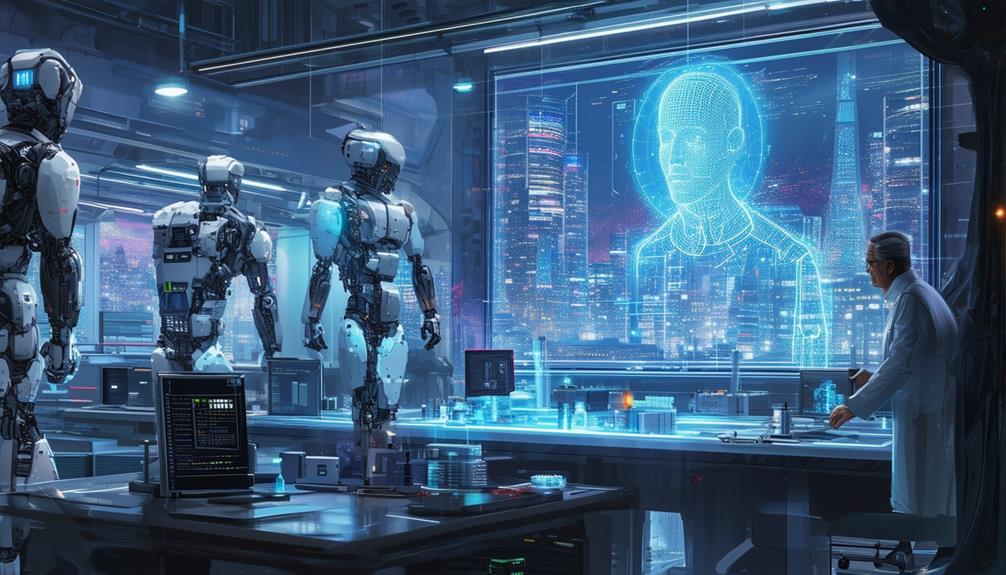
Building on the transformative impact of behavior-based AI, the future of AI promises groundbreaking advancements across healthcare, transportation, climate change solutions, and ethical frameworks. AI is becoming sophisticated enough to handle complex tasks that traditionally required human intelligence.
In healthcare, AI is set to revolutionize the field through:
- Robotic surgery: Enhancing precision and reducing recovery times.
- Personalized medicine: Tailoring treatments to individual genetic profiles.
- Remote patient monitoring: Providing real-time health data to doctors and patients.
In transportation, AI's role is equally impactful. Autonomous vehicles are on the horizon, promising safer roads. Traffic optimization will reduce congestion, and smart infrastructure will make mobility more efficient. Imagine a world where your car autonomously drives you to work while you catch up on emails.
When it comes to climate change, AI can help monitor environmental conditions, manage resources more efficiently, and optimize renewable energy usage. Developing ethical frameworks is essential to ensure that AI respects privacy, addresses biases, and is deployed responsibly. As AI continues to evolve, new job opportunities in research, data science, and machine learning engineering will emerge, fostering innovation and growth across multiple industries.
Conclusion
Rodney Brooks has revolutionized the robotics industry with his Behavior-Based AI. By founding companies like iRobot and Rethink Robotics, he has made robots more adaptable and efficient. His subsumption architecture enables robots to navigate complex environments seamlessly. Innovations such as the Roomba and collaborative robots like Baxter and Sawyer have transformed human-robot interactions. Brooks' pioneering work continues to shape the future of AI and robotics, ensuring ongoing advancements in the field.