Introduction to AI-Driven Automation

AI-driven automation is transforming business operations by streamlining tasks, enhancing data-driven decision-making, and boosting efficiency. These systems learn from data and predict outcomes through advanced algorithms and machine learning techniques. Key components of AI include machine learning, natural language processing, and robotics, which find practical applications in both front and back office environments. As we explore these topics, we'll uncover how AI can significantly improve employee experiences and operational workflows. However, it's crucial to address the real challenges and future trends in this field to fully understand its impact and potential.
Understanding AI Automation

AI-driven automation is transforming business operations by handling tasks that previously required human intervention. Utilizing advanced technologies such as Machine Learning, it streamlines process automation, enabling the efficient and error-minimized execution of repetitive tasks. By adopting AI automation, businesses can quickly process large volumes of data, facilitating data-driven decisions that enhance overall productivity.
Consider automating routine tasks like data entry, customer inquiries, and basic troubleshooting. AI automation can execute these tasks at scale, allowing your team to concentrate on more strategic initiatives. This not only optimizes workflows but also significantly boosts operational efficiency.
Furthermore, AI automation empowers smarter decision-making through real-time data analysis. Machine Learning algorithms can predict trends, identify inefficiencies, and recommend improvements, contributing to a more agile and responsive business model. As you increasingly rely on data-driven insights, your ability to adapt and innovate will expand.
Key Components of AI
When exploring the key components of AI, you'll discover that machine learning algorithms are essential for enabling systems to learn from data and make autonomous decisions. These algorithms are the backbone of AI-driven automation, allowing systems to adapt and improve without explicit programming.
Natural Language Processing (NLP) is another crucial element. NLP enables machines to understand, interpret, and generate human language, facilitating seamless interactions between AI systems and users. This capability is vital for applications like chatbots, virtual assistants, and automated customer service.
Deep learning, a subset of machine learning, is integral to AI automation by recognizing complex patterns and making sophisticated decisions. Through deep learning, AI systems can analyze vast amounts of data, identify trends, and make highly accurate predictions. This is particularly useful in tasks such as image and speech recognition, where data complexity demands robust computational power.
Reinforcement learning is employed to train AI agents to take specific actions within an environment to optimize rewards. This component is crucial for developing intelligent systems that can learn effective strategies and make decisions to achieve predefined goals.
How AI Automation Works

Understanding how AI automation works involves examining the integration of machine learning algorithms, natural language processing (NLP), deep learning, and reinforcement learning in practical applications. These systems are designed to perform tasks autonomously by leveraging advanced technologies.
AI automation primarily relies on data analysis. By collecting and analyzing large volumes of data, these systems can make informed decisions and take appropriate actions. Machine learning algorithms play a crucial role in this process by recognizing patterns, predicting outcomes, and adapting to new information.
AI automation systems are dynamic and continuously improve. As they process more data, the algorithms enhance their accuracy and efficiency, enabling the handling of increasingly complex tasks. This perpetual learning cycle optimizes processes and boosts overall performance.
A significant advantage is the reduction of human intervention. By automating routine and repetitive tasks, AI systems free up human resources for more strategic activities, thereby increasing productivity. Organizations benefit from streamlined operations, reduced errors, and the ability to deliver personalized experiences to customers.
Front Office Applications
Front office applications of automation encompass customer interactions, sales, and marketing processes. By leveraging AI automation tools, customer service becomes more efficient and personalized. AI-driven chatbots, for instance, handle basic inquiries and interactions, freeing up human agents to address more complex issues.
In sales, AI automation tools enhance lead generation, customer segmentation, and targeted marketing campaigns. These tools analyze data, create predictive models, and offer valuable customer insights, allowing for tailored strategies. Personalizing your approach results in better customer engagement and higher conversion rates.
Here's a quick comparison of traditional vs. AI-driven front office operations:
| Aspect | Traditional Approach | AI-Driven Approach |
|---|---|---|
| Customer Service | Human agents handle queries | AI chatbots streamline support |
| Lead Generation | Manual processes | Automated, data-driven |
| Customer Segmentation | Generalized groups | Highly targeted and specific |
| Marketing Campaigns | Broad and less personalized | Data-driven and personalized |
Back Office Applications
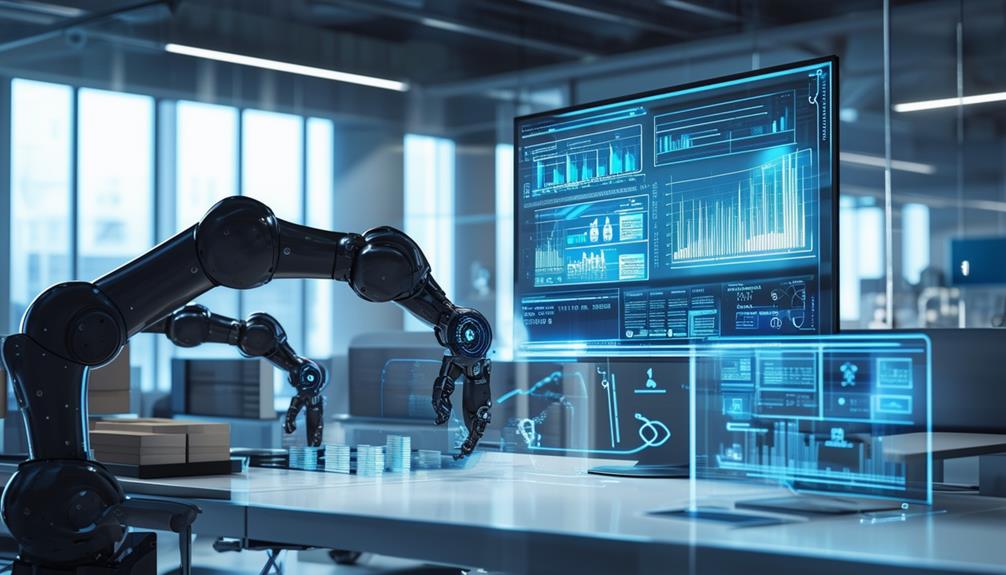
AI-driven automation is revolutionizing not only front office operations but also back office tasks such as data entry, invoice processing, and report generation. By leveraging AI-powered automation, organizations can streamline administrative processes and significantly reduce errors. These back office applications not only enhance operational efficiency but also free up valuable time and resources.
AI automates repetitive tasks, ensuring your back office operates more smoothly and efficiently. For example, AI can quickly and accurately input data, process invoices, and generate detailed reports, guaranteeing data accuracy and compliance while supporting better decision-making.
Implementing AI-powered automation in your back office can lead to substantial cost savings. It reduces manual labor costs and minimizes the risk of costly errors. Moreover, the productivity gains from AI automation are immense. With AI handling routine tasks, your team can focus on more strategic activities that drive business growth, thereby maximizing organizational effectiveness.
Enhancing Customer Experience
Enhancing customer experience through AI-driven automation can revolutionize client interactions. Personalized service delivery, real-time assistance, and predictive analytics that anticipate customer needs significantly improve satisfaction, foster loyalty, and streamline operations.
Personalized Service Delivery
By harnessing AI-driven automation, businesses can tailor services to meet individual customer preferences, significantly enhancing satisfaction and loyalty. By analyzing customer data, AI automation provides personalized recommendations and suggestions, creating a superior customer experience. This tailored approach not only engages customers but also fosters strong relationships and brand loyalty.
Here's a comparison of traditional service delivery versus AI-driven personalized service delivery:
| Aspect | Traditional Service Delivery | AI-Driven Personalized Service Delivery |
|---|---|---|
| Customer Engagement | Generalized | Personalized |
| Service Adjustments | Static | Real-Time |
| Customer Satisfaction | Variable | High |
AI automation allows businesses to make real-time adjustments to services based on customer behavior and feedback. This dynamic approach results in higher customer engagement and satisfaction. For example, if a customer frequently purchases a certain type of product, AI can suggest complementary items, enhancing their shopping experience.
Moreover, seamless and personalized interactions are possible through AI-driven automation, making customers feel valued and understood. This, in turn, leads to increased loyalty and retention rates, which are crucial for long-term business success. By adopting AI-driven automation, businesses are not just offering a service; they are creating an experience that aligns with each customer's unique preferences and needs.
Real-Time Assistance
Leveraging AI-driven automation, businesses can enhance customer experiences through real-time assistance tools like chatbots. AI chatbots are capable of handling multiple queries simultaneously, significantly boosting operational efficiency. Designed with natural language processing (NLP), these chatbots offer interactions that feel more human-like and engaging.
Real-time assistance revolutionizes customer experience by reducing wait times, ensuring instant support, and leading to higher satisfaction levels. Immediate support is crucial, as customers expect quick resolutions. AI chatbots are available 24/7, providing uninterrupted service regardless of time or day.
Furthermore, real-time assistance through AI chatbots not only resolves issues swiftly but also enriches customer engagement. Prompt and accurate responses increase customer retention and conversion rates. In an era of rising customer expectations, offering real-time assistance distinguishes your brand from competitors. By integrating AI-driven automation and NLP, you provide a seamless and efficient customer experience that encourages repeat engagement.
Predictive Analytics Benefits
Predictive analytics in AI-driven automation revolutionizes customer experience by leveraging data analysis to anticipate needs and preferences. By examining extensive customer data, businesses can forecast future behaviors and trends, enabling highly personalized interactions. For instance, product recommendations that align perfectly with your interests or timely offers tailored just for you exemplify the power of predictive analytics.
Predictive insights allow companies to proactively address customer needs, enhancing satisfaction and loyalty. When businesses anticipate your desires, they can offer intuitive and seamless solutions, strengthening your connection to the brand.
Additionally, predictive analytics optimizes marketing strategies and product offerings. By identifying patterns and trends, companies can tailor their communications and promotions to resonate more with you. This targeted approach ensures you receive relevant information, making your interactions with the brand more engaging and valuable.
Improving Employee Experience

Enhancing your team's morale can be achieved by leveraging AI-driven automation to streamline daily tasks. These tools also improve workplace communication, facilitating better collaboration and keeping employees well-informed. Consequently, employees can concentrate more on strategic initiatives rather than repetitive tasks.
Streamlining Daily Tasks
AI-driven automation significantly reduces manual efforts and repetitive tasks, greatly enhancing the employee experience. By streamlining daily activities, your workload becomes more manageable, allowing you to focus on what truly matters. Automation tools like Workato ensure seamless integration of systems and workflows, thereby boosting operational efficiency.
Automating routine tasks such as data entry or scheduling frees up your time for more strategic and creative activities. This shift not only increases productivity but also improves job satisfaction. Employees can dedicate more energy to high-value tasks that require critical thinking and innovation, rather than being bogged down by monotonous chores.
Here's how AI-driven automation can streamline your daily tasks:
| Task Type | Benefit of Automation |
|---|---|
| Data Entry | Reduces errors and saves time |
| Email Management | Automates sorting and responses |
| Scheduling | Simplifies calendar management |
Implementing AI-driven automation in your workflow reduces burnout and increases engagement. Operational efficiency improves as manual tasks are automated, leading to a more productive and satisfied workforce. Utilize these tools to optimize your daily operations and enhance your workplace experience.
Enhancing Workplace Communication
Automating workplace communication can significantly enhance the employee experience by streamlining collaboration and information sharing. Implementing AI automation not only saves time but also improves how your team interacts and collaborates. Tools like chatbots and virtual assistants are pivotal in this transformation.
Here are four key benefits:
- Seamless Information Sharing: AI-powered tools quickly provide employees with the information they need, reducing search time and boosting productivity.
- Enhanced Engagement: Personalized communication via AI fosters a more engaging environment, making employees feel valued and understood.
- Efficient Collaboration: AI simplifies internal communication processes, enabling teams to coordinate more effectively and reducing manual tasks.
- Increased Satisfaction: Personalized AI communication can significantly enhance employee satisfaction and motivation, leading to a more connected and efficient workforce.
Operational Efficiency Gains
By leveraging AI-driven automation, organizations can significantly enhance operational efficiency and streamline processes. AI automation can yield up to a 40% increase in efficiency by reducing manual intervention and optimizing workflows, resulting in a 25% boost in productivity and fewer errors.
Reducing manual intervention with AI-driven solutions not only cuts operational costs by 50% but also enhances overall efficiency, allowing valuable human resources to focus on strategic, high-value activities. AI-enabled real-time monitoring reduces response times for operational tasks by 30%, enabling quicker, more informed decision-making.
Efficient resource allocation is another key benefit. Implementing AI automation can improve resource allocation by 35%, maximizing operational output. By optimizing these critical aspects of your business, you can ensure smooth and effective operations, leading to better performance and a competitive edge.
Overcoming Implementation Challenges
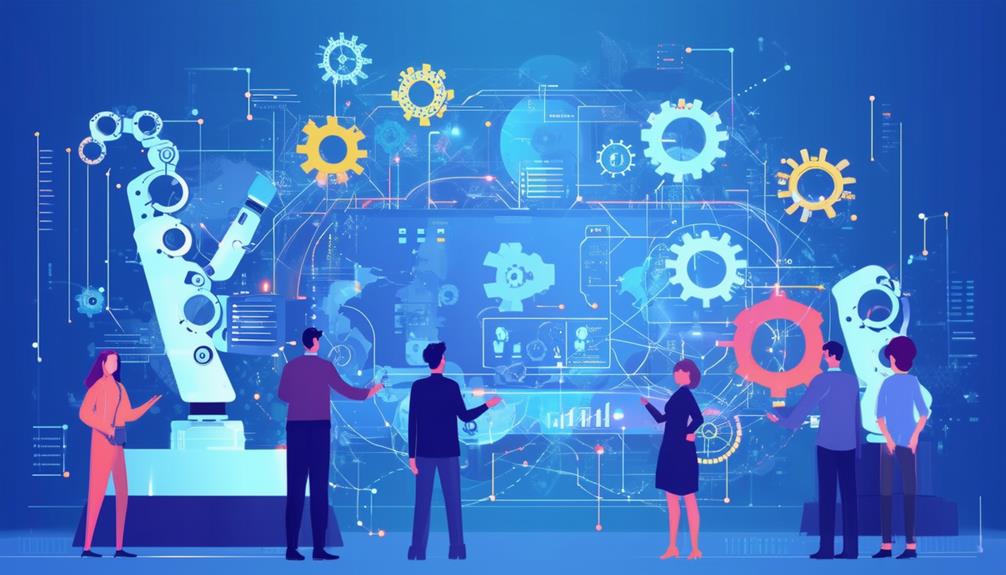
When implementing AI-driven automation, you will encounter significant challenges such as ensuring data quality, integrating with legacy systems, and addressing ethical concerns. Allocating appropriate resources and developing robust change management strategies are essential to overcoming these hurdles. Effectively addressing these factors ensures a smoother transition and maximizes the advantages of automation.
Identifying Key Obstacles
Implementing AI-driven automation often encounters critical challenges that can hinder its success. Recognizing these obstacles can help you navigate them more effectively. Here are some key hurdles you might face:
- Data Quality and Availability: High-quality, comprehensive data is essential for effective AI. Poor data quality can lead to unreliable outcomes, undermining your automation goals.
- Ethical Considerations: Issues like data privacy, bias, and transparency are significant. Ensuring that your AI solutions are ethical is not only a regulatory requirement but also builds trust with stakeholders.
- Integration with Legacy Systems: Existing infrastructure can be a major roadblock. Integrating AI with outdated systems often requires substantial modifications, adding complexity to the implementation process.
- Skill Gap and Change Management: Understanding AI technologies and aligning them with your business processes is crucial. Additionally, managing employee resistance and addressing fears of job displacement are important for smooth adoption.
Resource Allocation Strategies
Effective resource allocation strategies are essential for navigating the complexities of AI-driven automation and ensuring project success. By optimizing resource distribution, you can prioritize tasks, manage budgets, and efficiently utilize manpower. Leveraging AI algorithms and data analytics empowers you to make informed decisions, aligning resource use with your automation goals.
Resource allocation strategies facilitate workload distribution, identify skill requirements, and integrate appropriate technologies. For example, AI algorithms can analyze project data to assign tasks to the most suitable team members, thereby enhancing productivity. Data analytics offers insights into resource utilization, allowing dynamic adjustments as project needs evolve.
To ensure successful automation implementation, it's critical to allocate the right resources at the right time, encompassing manpower, budget, and technological tools. Effective strategies prevent bottlenecks and ensure critical tasks receive the necessary attention. Continuous monitoring and adjustment of resource allocation enable prompt resolution of unforeseen challenges.
Change Management Techniques
Implementing AI-driven automation effectively requires robust change management techniques to address and overcome potential challenges. To ensure a smooth transition, focus on several critical aspects:
First, involve your employees. Including them in the AI automation implementation process addresses fears and concerns about job displacement, making them feel valued and integral to the change.
Second, prioritize communication and transparency. Clearly explain why AI automation is being introduced, the benefits it offers, and how it will impact their roles. Open and honest communication builds trust and reduces resistance.
Third, provide training and support. Equip your staff with the necessary skills to work alongside AI technologies. Continuous training and support help them adapt to new systems and foster a more positive outlook on the changes.
Fourth, address misconceptions. Many employees may have unfounded fears about AI automation. Emphasize the benefits and debunk myths to shift the focus toward how AI can enhance their work rather than replace it.
Future Trends in AI Automation
Looking ahead, AI-driven automation will reshape the landscape by enhancing collaboration, creativity, and efficiency across various industries. The integration of Generative AI and intelligent automation will revolutionize business processes by driving creativity and adaptability, providing personalized experiences in automation that were previously unattainable.
Augmented intelligence will enable seamless collaboration between humans and machines, improving decision-making and problem-solving. Imagine AI systems that not only automate tasks but also offer insights, suggest solutions, and predict outcomes. This human-machine synergy will lead to unprecedented levels of efficiency and innovation.
The ongoing growth and adoption of AI automation will transform every sector, from healthcare to finance, manufacturing to retail. Advancements in AI technologies will foster greater innovation and operational efficiency, positioning businesses that leverage these tools to remain competitive and thrive in a constantly evolving market.
AI automation has the potential to revolutionize operations, not just by increasing speed but by expanding possibilities, creating new opportunities, and propelling businesses forward. As these technologies evolve, consider how they can be integrated into your strategies for maximum impact.
Conclusion
To sum up, integrating AI-driven automation will transform your business operations. By leveraging machine learning and AI, you can streamline processes, enhance customer experiences, and boost productivity. This technology not only eliminates manual tasks but also enables data-driven decision-making and continuous performance improvement. Although there may be challenges during implementation, the future holds even more innovative and efficient solutions. Don't delay—start adopting AI automation now to become a leader in your industry.