How Robot Sensors Enable Navigation, Vision, and Interaction
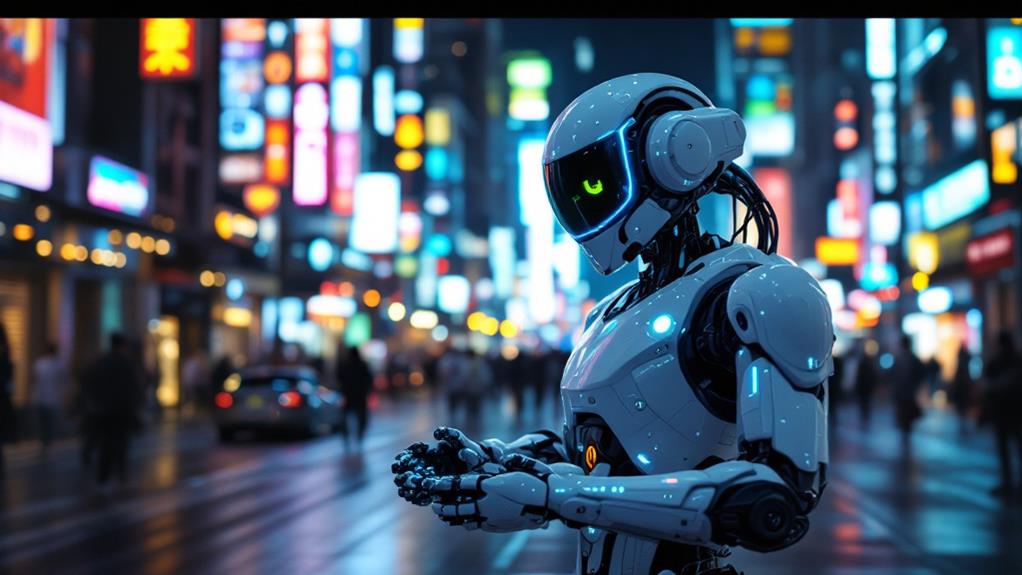
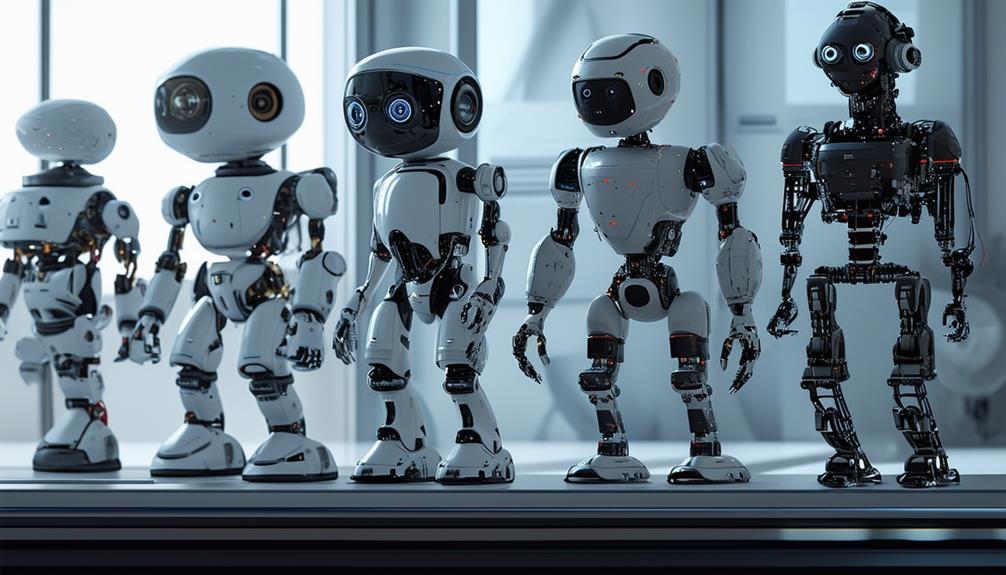
Robot sensors transform how robots navigate, see, and interact. Proximity and ultrasonic sensors help robots avoid collisions by detecting objects, ensuring smooth navigation. Vision systems like image recognition and depth sensors allow robots to understand their surroundings and perform tasks accurately. Interactive technologies, including touch sensors and haptic feedback, make robots responsive and adaptable, fostering seamless user interactions. LIDAR and GPS integration provide real-time environmental mapping for efficient path planning. Sensor fusion combines data from different sources to improve decision-making and responsiveness. Investigate further to uncover how these technologies shape advanced robotic applications.
Types of Robot Sensors
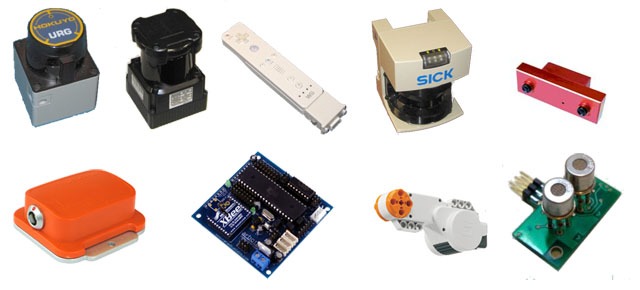
Robot sensors come in different types, each serving a unique function to improve navigation and interaction capabilities. When you investigate these sensors, you'll find that proximity sensors play a vital role in detecting nearby objects, helping robots avoid collisions. They guarantee that your robot can maneuver safely in its environment. Force sensors, on the other hand, are fundamental for tasks requiring a delicate touch, like gripping or assembling parts, allowing robots to interact with objects of varying resistance.
Temperature sensors are invaluable for evaluating environmental conditions. They enable your robot to respond to changes in temperature, regardless of it's for maintaining ideal operating conditions or for tasks requiring specific thermal measurements. Ultrasonic sensors send out sound waves to measure distance, which is perfect for detecting objects in a robot's path, even in low-visibility conditions.
Optical sensors, such as cameras and infrared sensors, provide your robot with the ability to see and interpret visual data. They're significant for tasks like identifying colors or reading barcodes. Finally, gyroscopic sensors maintain balance and orientation. They guarantee that your robot stays upright and on course, enhancing stability during movement.
Navigational Capabilities
Understanding the types of sensors is just the initial step in enhancing a robot's abilities; now, let's focus on how these sensors contribute to its navigational capabilities. When you equip a robot with sensors for obstacle detection, it can seamlessly identify and avoid impediments in its path. This guarantees smooth movement and prevents collisions. Sensors like LIDAR and ultrasound play a significant role here, providing real-time data about the surroundings.
Incorporating path planning capabilities allows the robot to determine the most efficient route from its current location to its destination. This process relies heavily on environmental mapping, where the robot constructs a virtual map of its surroundings. By doing so, it can anticipate potential obstacles and plan accordingly. You might find that robots use a combination of GPS, cameras, and other sensors to create accurate maps, enhancing their navigation.
To achieve reliable navigation, sensor calibration is vital. Regular calibration guarantees that sensors provide accurate data, which is imperative for precise obstacle detection and path planning. Without proper calibration, even the most advanced sensors can lead to errors, causing the robot to misinterpret its environment or choose inefficient paths.
Vision Systems in Robots

While maneuvering complex environments, a robot's vision system plays a fundamental role in interpreting the surroundings and making informed decisions. You rely on this advanced system to guarantee the robot can traverse safely and efficiently. Vision systems incorporate several key technologies that improve a robot's ability to understand its environment. For instance, image recognition is imperative for identifying objects and understanding scenes, while depth perception allows the robot to assess distances, which is critical for avoiding obstacles and traversing uneven terrain.
A robot's vision system can perform diverse tasks that contribute to its functionality:
- Color differentiation helps the robot identify and sort objects based on color, enhancing its ability to perform specific tasks.
- Facial recognition enables personal interaction, allowing the robot to recognize and respond to individuals.
- Object tracking is fundamental for following moving objects or people, guaranteeing the robot remains focused on tasks.
Moreover, scene understanding and environmental mapping allow robots to traverse their surroundings effectively. By using visual odometry, the robot can track its position and movement over time. These capabilities combined allow the robot to make smart decisions and adapt to changing environments seamlessly.
Interactive Technologies
In the domain of interactive technologies, robots are transforming how humans engage with machines. This transformation hinges on sensor fusion, which combines data from multiple sensors to create a seamless interaction experience. You might wonder how this affects your everyday encounters with technology. Well, think about how user interfaces have evolved. Advanced robots now use sensor fusion to interpret complex environments, allowing for more intuitive user interfaces that respond more naturally to your actions.
Interactive learning plays a significant role, too. Robots equipped with interactive learning capabilities can adapt to your preferences, improving how they respond to your inputs over time. This means when you interact with a robot, it gets better at understanding your needs, leading to a more personalized experience.
Robotic feedback is another fundamental aspect. As you engage with a robot, it provides feedback that helps guide your actions, making the interaction smoother and more effective. This feedback loop is crucial for creating a sense of collaboration between you and the robot. By combining sensor fusion with interactive learning and feedback, robots are poised to revolutionize how you interact with technology, making it more engaging and efficient.
Sensor Integration Techniques
In relation to sensor integration techniques, the key is how multiple sensors are seamlessly combined to improve a robot's functionality. You need to take into account sensor fusion, which involves merging data from diverse sensors to provide more accurate and reliable information. This process boosts a robot's ability to navigate complex environments, perceive its surroundings, and interact with objects effectively. By integrating data from different sensors, you can compensate for the limitations of individual sensors, resulting in more robust and precise operations.
To achieve successful sensor integration, it's vital to focus on sensor calibration. This guarantees that each sensor provides accurate data, which is fundamental for effective sensor fusion. Calibration minimizes discrepancies and aligns sensor data, so your robot can make better decisions based on consistent information.
When implementing sensor integration techniques, keep in mind these fundamental aspects:
- Data Synchronization: Confirm that sensor data is synchronized to avoid inconsistencies.
- Redundancy Management: Use redundant data to increase reliability and fault tolerance.
- Real-time Processing: Process sensor data in real-time for immediate decision-making.
Future Trends in Robotics
Robotics is gearing up for transformative changes as technology continues to advance at a rapid pace. You'll soon see autonomous vehicles becoming a staple on the roads, transforming how you commute and transport goods. These vehicles, equipped with advanced sensors, promise safer and more efficient travel.
In healthcare, robotic surgery is set to become even more precise and minimally invasive, offering patients quicker recovery times. With the integration of AI, these robots will provide surgeons with improved capabilities and insights during procedures. On the farm, agricultural robotics is making strides, helping you increase crop yield and efficiency. Robots can monitor plant health and automate tasks, reducing the need for manual labor.
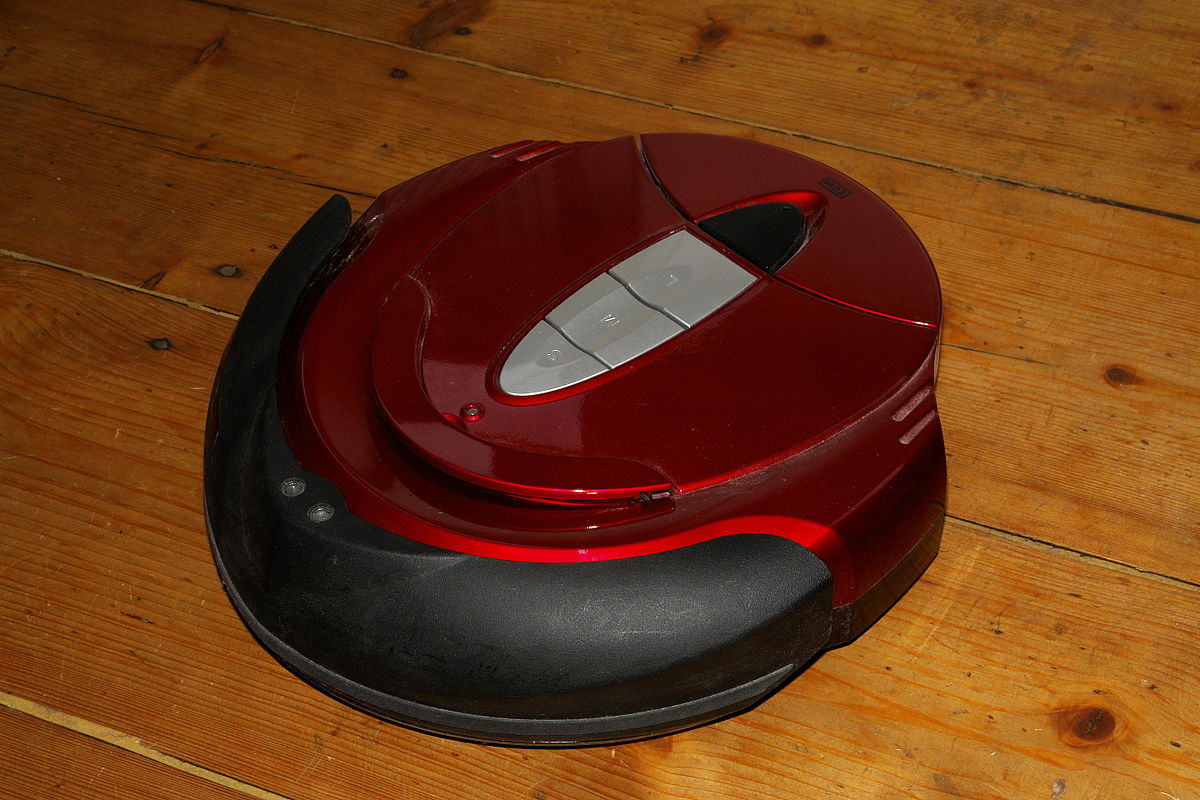
Your home is getting smarter, too. Smart homes equipped with robotics will manage everything from cleaning to security, offering you more convenience and peace of mind. Wearable robotics are also advancing, providing you with enhanced mobility and strength, particularly beneficial in rehabilitation and industrial settings. Ultimately, in industrial automation, robots are optimizing production lines, ensuring higher quality and faster output. Accept these trends, as they're set to redefine how you interact with the world around you.