How Robot Operating Systems (ROS) Integrate Hardware and Software

Robot Operating Systems (ROS) integrate hardware and software by using a Hardware Abstraction Layer (HAL) that standardizes interactions, letting you focus on developing algorithms instead of dealing with specific hardware details. This modular approach means you can easily upgrade hardware without needing to rewrite extensive code. ROS employs middleware and lightweight communication protocols to facilitate effective data exchange between different components. Furthermore, it supports speedy sensor integration and motion planning to help your robots adapt to dynamic environments. If you stick around, you'll uncover more about the real-world applications and tools that make ROS a crucial platform for robotics.
Overview of Robot Operating Systems
Robot Operating Systems (ROS) serve as the backbone for many robotic applications, enabling efficient communication and coordination among numerous components. You've likely noticed how these systems streamline robot architecture, allowing for modular design that's easier to manage and upgrade. With ROS, you can connect a variety of software packages seamlessly, giving your robot a more cohesive performance.
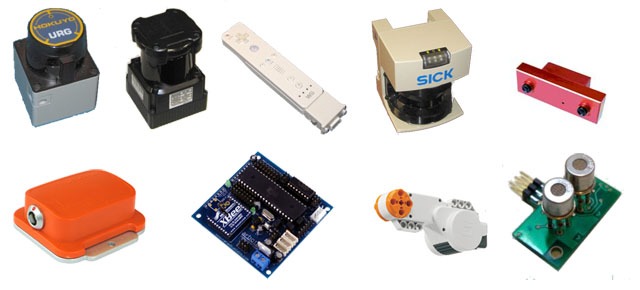
One of the standout features of ROS is its capability for sensor integration. It allows you to plug in different sensors without needing to rewrite extensive code. This flexibility means you can quickly adapt your robot to various tasks, regardless of whether it's navigation, object detection, or environmental monitoring. You'll find that by leveraging ROS, you can focus on developing algorithms and functionalities rather than wrestling with hardware compatibility issues.
Furthermore, ROS fosters a collaborative environment, encouraging developers to share their innovations. This shared knowledge base can greatly reduce your development time and improve your robot's capabilities. By understanding the architecture and integration possibilities ROS offers, you'll be well-equipped to build sophisticated robotic systems that meet your specific needs.
Key Components of ROS
A robust framework underpins the functionality of Robot Operating Systems (ROS), consisting of several key components that work together to facilitate seamless operation. One of the most critical aspects is sensor integration, which allows your robot to gather data from diverse sensors, such as cameras and LiDAR. This data is crucial for understanding the robot's environment and making informed decisions.
Another fundamental component is motion planning, which determines how your robot will navigate through its surroundings. This involves algorithms that calculate the best path from point A to point B while avoiding obstacles. By integrating sensor data with motion planning, your robot can adapt to dynamic environments, ensuring safe and efficient movement.
Additionally, ROS employs a publish-subscribe model, enabling different nodes to communicate effectively. This decentralized approach allows for scalability and flexibility, as you can easily add or modify components without disrupting the entire system.
Hardware Abstraction Layer

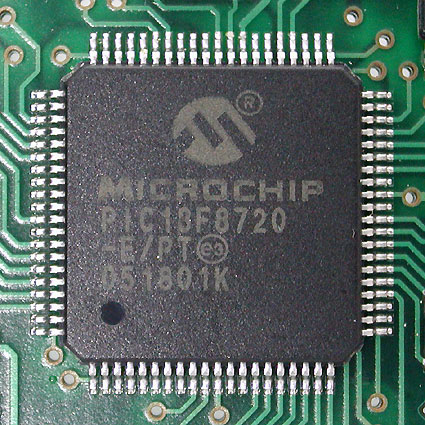
How does the Hardware Abstraction Layer (HAL) improve the functionality of a Robot Operating System? The HAL acts as a bridge between your robot's hardware and software, allowing you to integrate different components like robot sensors and actuator control seamlessly. By standardizing the interaction with hardware, you can focus on developing sophisticated algorithms without getting bogged down by specific hardware details.
Using a modular architecture, the HAL guarantees that you can swap out or upgrade hardware components without significant changes to your software. This flexibility is vital for performance optimization, as it allows you to test and refine your robot's capabilities efficiently. Additionally, the HAL improves system reliability by managing hardware interactions more effectively, minimizing the risk of errors during operation.
With the HAL in place, you can confidently develop applications that utilize a range of hardware setups while maintaining consistent performance. This abstraction not only simplifies the development process but also fosters innovation, as you're free to experiment with new sensors and actuators without worrying about compatibility issues. Ultimately, the HAL is fundamental for achieving a robust and efficient Robot Operating System.
Middleware and Communication Protocols
Integrating different hardware components through the Hardware Abstraction Layer sets the stage for efficient communication and data exchange within a Robot Operating System. Middleware serves as the backbone of this integration, facilitating message passing between diverse components. With middleware, you can guarantee that messages sent from one part of the system reach their intended destination seamlessly, allowing for real-time interactions.
Data serialization plays an important role in this process, converting complex data structures into a format that can be easily transmitted across the network. This means that when you're dealing with sensors, actuators, or other hardware, the data they generate can be efficiently packaged and sent to different modules for processing.
The choice of communication protocols also impacts how well your system performs. Using lightweight protocols can improve speed and reduce latency, which is fundamental in robotics applications where timing is critical. By leveraging middleware and effective communication protocols, you'll streamline the interactions among components, making your robotic system more responsive and adaptable to changes in its environment. Consequently, mastering these elements is significant for anyone looking to develop sophisticated robotic solutions.
Software Development Tools in ROS

When developing applications within the Robot Operating System (ROS), you'll find a variety of software development tools that improve your workflow and efficiency. One of the key features is the use of simulation environments like Gazebo and RViz, which allow you to test and visualize your robot's behavior without the risk of physical damage. These environments let you simulate different scenarios, helping you refine your algorithms before deploying them in the real world.
In addition to simulation, ROS provides powerful debugging techniques that make it easier to track down issues in your code. Tools like rqt_console and rqt_logger_level enable you to monitor runtime messages, while rqt_graph visualizes the nodes and topics in your system. This real-time feedback helps you pinpoint errors quickly, ensuring your development process stays on track.
Furthermore, ROS offers a variety of libraries and frameworks to streamline development. By leveraging these tools, you can focus on writing effective code while minimizing the time spent on troubleshooting and testing. Generally, mastering these software development tools is crucial for creating robust and efficient robotic applications within ROS.
Real-World Applications of ROS
In recent years, the Robot Operating System (ROS) has found its way into diverse real-world applications, demonstrating its versatility across numerous industries. You might be surprised to see how ROS improves autonomous vehicles, making them smarter and more capable of traversing complex environments. In industrial automation, it streamlines processes and boosts efficiency, allowing robots to work seamlessly alongside human operators.
Service robots, powered by ROS, are transforming sectors like hospitality and retail, providing assistance and elevating customer experiences. Meanwhile, agricultural drones equipped with ROS are innovating farming practices by enabling precise monitoring and efficient resource management. In healthcare, robotics powered by ROS is enhancing patient care, with robots assisting in surgeries and rehabilitation, making procedures safer and more effective.