Exploring the Use of 3D Printing in Modern Robot Construction

3D printing is transforming modern robot construction by offering you unmatched design flexibility and rapid prototyping capabilities. You can create intricate designs quickly, turning concepts into physical models in just hours. This method minimizes material waste, making it an efficient choice for engineers. With a variety of materials available, from strong metal alloys to flexible filaments, you can tailor robots for specific tasks. While challenges like accuracy and production speed exist, ongoing innovations are improving the technology. To investigate how these advancements impact the future of robotics, keep going to uncover more fascinating insights.
The Basics of 3D Printing
3D printing, often referred to as additive manufacturing, is transforming multiple industries, including robotics. You'll find that this technology allows you to create intricate designs with a level of precision that traditional manufacturing methods struggle to achieve. By layering materials, you can build complex geometries that are crucial in modern robotics.
In your design processes, 3D printing enables rapid iteration, so you can test and refine your ideas quickly. Instead of spending weeks or months on traditional prototypes, you can go from concept to physical model in just a few hours. This rapid prototyping technique not only saves time but also reduces material waste, making it a smart choice for engineers and designers.
Moreover, the flexibility of 3D printing means you can easily customize your designs to fit specific requirements. Regardless of whether you're constructing a robot arm or a drone chassis, you can adapt your prototype to incorporate new features without starting from scratch. Embracing these groundbreaking design processes will give you a competitive edge in the fast-evolving field of robotics, paving the way for new possibilities and advancements.
Advantages of 3D Printing in Robotics
The integration of additive manufacturing in robotics offers a range of advantages that can greatly advance your design and production processes. One of the most significant benefits is design flexibility. You can easily create lightweight structures and complex geometries that traditional manufacturing methods struggle to achieve. This allows your robots to be more efficient and agile, adapting to different tasks seamlessly.
Rapid prototyping is another essential advantage. You can quickly turn your ideas into tangible units, allowing for faster iterations and refinements in your designs. This not only speeds up the development process but also boosts your ability to innovate.
Cost efficiency is vital, too. By reducing material waste and minimizing the need for expensive tooling, you can save on production costs. Plus, the customization potential of 3D printing means you can tailor each robot to specific requirements, making your designs more effective and user-focused.
Common Materials Used in Robot Construction
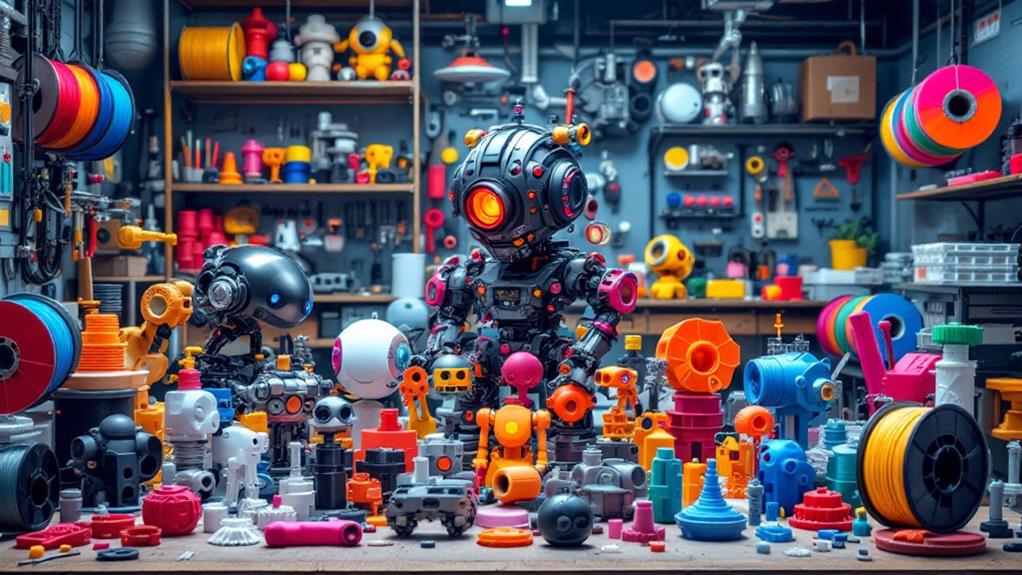
Incorporating 3D printing into robotics not only boosts design flexibility and rapid prototyping but also opens up a wide array of materials for construction. This assortment allows you to optimize your robot's performance and tailor it to specific tasks. Here are some common materials you might consider:
- Metal alloys: Known for their strength and thermal conductivity, these materials improve structural integrity while allowing for weight reduction.
- Polymer composites: These offer excellent design complexity, combining lightness with durability, making them perfect for intricate robot designs.
- Flexible filaments: Ideal for parts that need to bend or flex, these materials help you create adaptable robots that can handle different environments.
- High-performance plastics: These materials provide a balance between cost efficiency and resilience, making them suitable for numerous robotic applications.
Challenges and Limitations
While 3D printing offers remarkable advantages in robot construction, several challenges and limitations can hinder its effectiveness. One major issue is design complexity; intricate designs can be difficult to print accurately, leading to potential failures in the final product. You might also find that production speed varies considerably depending on the printer and material used, which can delay project timelines.
Cost efficiency is another concern. While 3D printing reduces material waste, high-quality materials often come with a hefty price tag, and supplementary expenses for post-processing techniques can add up. Material strength is critical for robotic components, and not all 3D printed materials possess sufficient durability, which may limit their application.
Scalability issues can arise when you try to mass-produce robotic parts, as 3D printing isn't always the best method for large quantities. Integration challenges can also emerge when incorporating 3D printed components with traditional manufacturing methods, requiring careful planning and design.
Lastly, regulatory concerns may hinder the adoption of 3D printing in robotics, as compliance with industry standards can be complicated. Addressing these challenges is crucial for maximizing the potential of 3D printing in robot construction.
Future Trends and Innovations

As technology advances, you'll find that 3D printing in robot construction is poised for exciting innovations. The integration of this technology is transforming how you approach robotic design, paving the way for more dynamic and adaptable systems.
- Improved manufacturing efficiency through streamlined processes
- Development of custom components tailored to specific tasks
- Increased reliance on rapid prototyping for faster iterations
- Adoption of sustainable practices to minimize waste
You can expect to see collaborative robots (cobots) becoming more prevalent, as they require less complex assembly and can be customized for a range of applications. This shift will allow for efficient production lines, where 3D-printed parts can be seamlessly integrated into robotic systems.
Moreover, advancements in materials will lead to stronger, lighter components, improving the performance of robots in different environments. The focus on sustainable practices will also drive innovation, encouraging you to use eco-friendly materials and reduce energy consumption during the manufacturing process.