Exploring the Mechanics Behind Robot Grippers and End Effectors
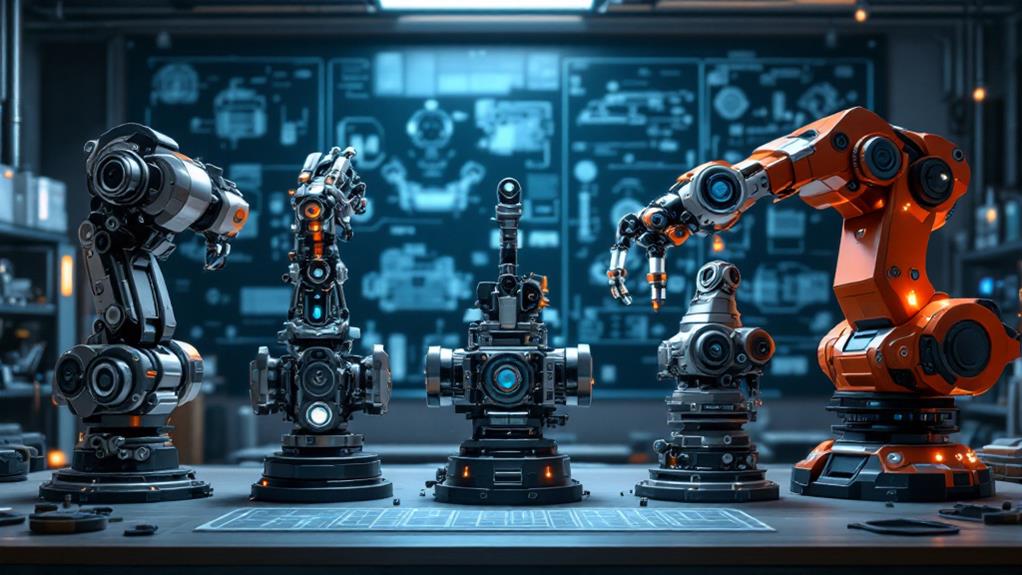
When exploring the mechanics behind robot grippers and end effectors, you're looking at a range of technologies from simple mechanical grips to advanced soft robotics. Grippers can be mechanical, pneumatic, hydraulic, magnetic, or electrical, each suited for different tasks like heavy-duty lifting or delicate handling. Innovations like bio-inspired and adaptive gripping mechanisms mimic natural movements for efficiency and versatility. Sensory feedback systems improve precision and safety by integrating tactile and force sensors. These technologies revolutionize industries such as healthcare, manufacturing, and agriculture by enhancing productivity and reducing errors. There's more to uncover as you continue your exploration.
Types of Robot Grippers
When exploring the world of robot grippers, you'll encounter several types designed for specific tasks and materials. Mechanical grippers are among the most common, using simple yet effective mechanisms to grasp objects. Pneumatic grippers operate with compressed air, offering quick and lightweight solutions for diverse applications. Hydraulic grippers, on the other hand, provide powerful gripping force suitable for heavy-duty tasks. If you're dealing with ferrous materials, magnetic grippers are the ideal choice as they easily lift metal objects without direct contact.
Electrical grippers offer precise control and are often used in delicate operations where sensitivity is key. Compliant grippers excel in handling irregular or fragile items, adapting their shape to the objects they handle. For more human-like dexterity, consider multi-fingered grippers or robotic hands, which mimic the movements of a human hand, allowing for complex manipulations. Specialized grippers are tailored for unique tasks, addressing specific industry needs. Modular grippers provide flexibility, enabling you to swap out components for various operations. By understanding these different types of robot grippers, you'll be better equipped to choose the right one for your specific application, enhancing efficiency and effectiveness in robotic automation.
End Effector Technologies
End effector technologies are fundamental to the versatility and functionality of robotic systems. When you're designing a robot, selecting the right end effector can make all the difference in how effectively it performs tasks. The gripper design you choose determines the robot's ability to interact with its environment, regardless of picking up delicate items or handling heavy machinery. You must consider the specific end effector functionalities required for your application to guarantee peak performance.
Start by evaluating the task at hand. If precision and delicacy are vital, investigate grippers designed for gentle handling, like those with silicone tips. For tasks demanding strength, opt for robust designs that can exert more force. Some end effectors integrate sensors that improve the robot's awareness, providing feedback that can refine its actions.
Don't overlook the importance of adaptability in gripper design. Modular designs allow you to interchange parts, customizing the end effector to suit varying tasks. This flexibility is significant as it extends the robot's utility across different applications. Remember, the right end effector technologies can greatly enhance your robot's efficiency, making it a valuable asset in any automated system.
Soft Robotics Innovations
Exploring further into the domain of robotics, soft robotics innovations offer a fascinating leap in versatility and adaptability. By mimicking natural organisms, bio-inspired designs are at the forefront of these advancements, allowing robots to perform tasks that rigid structures struggle with. You'll find soft actuators are key components, enabling robots to grip delicate objects or navigate uneven surfaces with ease.
Soft robotics focuses on creating flexible, adaptable systems that can safely interact with humans and handle fragile items. These innovations have opened doors to applications in healthcare, agriculture, and other fields where gentleness and precision are vital. When exploring soft robotics, consider these significant aspects:
- Material selection: Choosing the right materials is essential for creating soft actuators. They need to be flexible yet durable to withstand repeated use.
- Bio-inspired designs: Emulating nature's efficiency, these designs often draw inspiration from creatures like octopuses or human anatomy to improve functionality.
- Control systems: Developing advanced algorithms guarantees that soft robots can respond accurately to changing environments and tasks.
- Energy efficiency: Soft actuators often require less energy, making them ideal for battery-operated devices.
These innovations are transforming robotics, offering new possibilities and reshaping how robots interact with their surroundings.
Adaptive Gripping Mechanisms
In the domain of robotics, adaptive gripping mechanisms revolutionize how robots interact with diverse objects. You'll find these systems excel in handling a wide range of items due to their advanced adaptability strategies and material flexibility. By employing force control, these mechanisms adjust their grip to guarantee grasp stability, preventing damage to delicate objects while maintaining a secure hold on heavier items.
Sensor integration plays a vital role in adaptive gripping. You rely on sensors for precise object recognition, allowing the robot to determine the best approach for gripping each item. Sensors also feed data into feedback loops, which continuously adjust the grip based on real-time information. This dynamic adjustment capability enhances the overall performance metrics of the robotic system, as it can swiftly adapt to different shapes, sizes, and materials.
Sensory Feedback Systems

Building upon adaptive gripping mechanisms, sensory feedback systems improve the capabilities of robotic grippers by providing real-time data for more nuanced control. You'll find that integrating tactile sensors and force sensing into these systems allows robots to interact more intelligently with their environment. With proprioceptive feedback, a robot can understand its position and movement, leading to improved precision in handling delicate or irregular objects. This environmental awareness is vital for tasks requiring careful manipulation.
Sensor integration is crucial in creating effective feedback loops. By combining data from diverse sensors, you enable sensory fusion, which offers a thorough understanding of the task at hand. Data interpretation becomes more refined, allowing the robot to adjust its grip strength or position dynamically. You'll see robotic grippers making more informed decisions, adapting to unexpected changes, and performing complex tasks with greater ease.
Consider these key points for improving sensory feedback systems:
- Tactile sensors help detect surface textures and object contours, aiding in precision.
- Force sensing guarantees the robot applies appropriate grip pressure, preventing damage.
- Proprioceptive feedback gives robots a sense of self-movement and spatial orientation.
- Sensor integration and feedback loops improve data processing and decision-making.
Material Considerations
When selecting materials for robotic grippers, why not consider both the functional and environmental impact? Choosing the right gripper materials is essential for optimal performance and sustainability. Start by evaluating durability factors. You want materials that withstand wear and tear over time. Consider friction properties too; they determine how well the gripper can hold onto objects without slipping. Weight considerations are just as significant—lighter materials can improve speed and efficiency, but they shouldn't compromise structural integrity.
Don't forget about thermal resistance. If your robot operates in extreme temperatures, you'll need materials that can handle the heat (or cold) without degrading. Surface textures also play a critical role. They influence the grip's effectiveness and can be tailored to specific tasks. Look into manufacturing processes as well; they impact not only the final product's quality but also its environmental footprint.
And of course, there are cost implications. Balancing quality and budget is always a challenge, but investing in the right materials can save money in the long run by reducing maintenance and replacement costs. By carefully considering these factors, you'll make informed decisions that improve your robot's performance and longevity.
Applications Across Industries
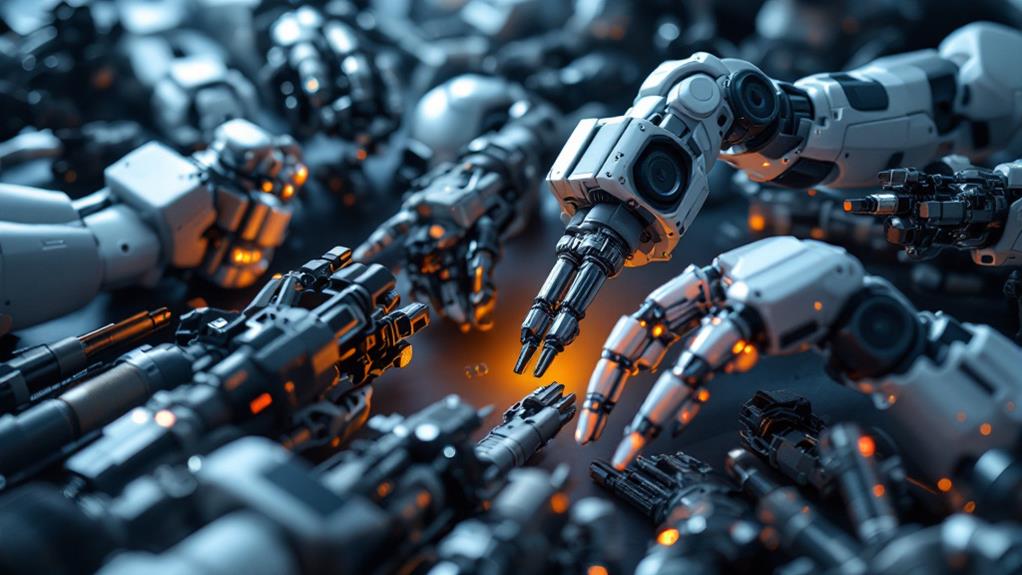
Robotic grippers are transforming a myriad of industries, bringing efficiency and precision to tasks once deemed labor-intensive. In industrial automation, they streamline assembly lines, reducing error rates and increasing productivity. You're witnessing a revolution where robots handle material with deftness, optimizing logistics processes and ensuring timely delivery.
In agriculture, robotic grippers are essential in agricultural robotics, picking delicate fruits and vegetables without damage. This advancement increases yield and reduces waste, making your farming operations more sustainable. Meanwhile, healthcare applications benefit from these grippers' precision, assisting in surgeries and handling sensitive materials, ultimately improving patient outcomes.
Education and research have also adopted robotic grippers. As educational tools, they're instrumental in teaching students about robotics and engineering concepts, preparing the next generation for a tech-driven future. Research advancements utilize these end effectors to push boundaries in automation and robotics, exploring new possibilities and applications.
Consider these gripping applications:
- Industrial Automation: Improves precision on assembly lines.
- Agricultural Robotics: Enables delicate harvesting and reduces waste.
- Healthcare Applications: Assists in surgeries and material handling.
- Educational Tools: Prepares students for future technological challenges.
Robotic grippers are reshaping industries, driving innovation, and improving efficiency across diverse sectors.
Challenges and Limitations
Despite the impressive advancements in robotic grippers and end effectors, several challenges and limitations persist. One major issue is design constraints, which often limit the flexibility and range of tasks a gripper can perform. You might find that achieving gripping precision is difficult, especially when handling delicate or irregularly shaped objects. Moreover, ensuring environmental adaptability is a persistent challenge, as robots must operate in a range of conditions without compromising performance.
Manufacturing limitations can hinder the development of more advanced grippers. Complex designs may require specialized materials or methods that aren't readily accessible, impacting both production time and cost efficiency. You may also encounter issues with operational reliability, as grippers must maintain consistent performance over long periods without frequent maintenance.
User interaction presents another challenge. As a user, you might struggle with interfaces that aren't intuitive or require extensive training. While technological advancements continue to improve robot capabilities, they can also lead to increased complexity, making systems harder to manage and integrate.
Lastly, cost efficiency remains a significant obstacle. Developing and deploying cutting-edge technology often comes with a hefty price tag, potentially limiting access and adoption in numerous industries.
Future Trends in Robotics

As the challenges of current robotic grippers and end effectors highlight the need for growth, you can look forward to promising trends shaping the future of robotics. One significant trend is the integration of human-robot collaboration, allowing robots to work alongside humans more efficiently and safely. This collaboration guarantees that robots can handle tasks requiring human dexterity and judgment while maintaining the precision and speed that robots offer.
Autonomous systems are also on the rise, enabling robots to function without constant human oversight. These systems allow robots to adapt to new environments and tasks autonomously, improving flexibility and reducing the need for reprogramming.
You should also keep an eye on advancements in artificial intelligence, which are making robots smarter and more adaptable. This intelligence will empower robots to understand complex tasks and environments, further augmenting their utility in different industries.
Finally, the development of soft robotics is expanding the capabilities of grippers and end effectors, making them more versatile and capable of handling delicate objects.
- Human-robot collaboration boosts efficiency and safety.
- Autonomous systems diminish the need for constant supervision.
- Advanced AI makes robots smarter and more adaptable.
- Soft robotics broadens capabilities for handling delicate tasks.