Elon Musk: AI and Robotics Visionary With Tesla and Spacex
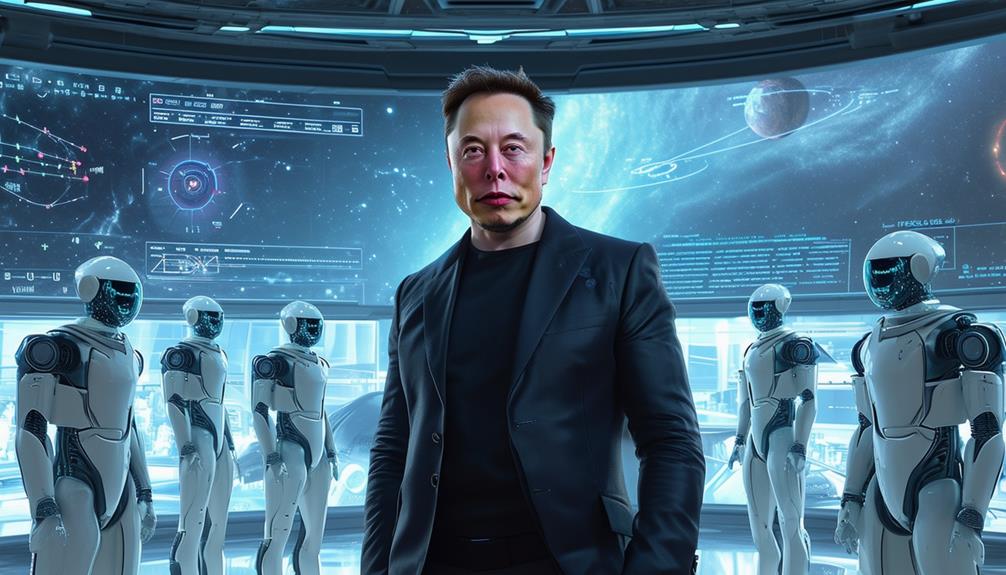
When you think of transformative tech leaders, Elon Musk unquestionably comes to mind, particularly for his groundbreaking contributions to AI and robotics through Tesla and SpaceX. At Tesla, Musk's innovations like Autopilot and Full Self-Driving are redefining the automotive industry, while SpaceX's achievements in reusable rockets are pushing the frontiers of space travel. Musk's ambitions extend further with Neuralink, which aims to seamlessly integrate AI with human cognition. How does Musk manage to juggle these groundbreaking ventures, and what challenges lie ahead as he continues to push the boundaries of what's possible?
Early Life and Education
Born on June 28, 1971, in Pretoria, South Africa, Elon Musk's early life was defined by his remarkable intelligence and insatiable curiosity. From a young age, Musk exhibited a profound interest in technology. At just 10 years old, he received his first computer, a Commodore VIC-20, and quickly taught himself programming. By age 12, he had developed and sold a video game called Blastar, highlighting his early entrepreneurial spirit.
Musk's intellectual prowess extended beyond technology. He attended the University of Pennsylvania, where he earned dual degrees in physics and economics, establishing a solid academic foundation for his future endeavors. However, his formal education took an unexpected turn when he left Stanford University after only two days to pursue entrepreneurial opportunities. This decision led to the co-founding of Zip2, a city guide software company, and subsequently X.com, which evolved into PayPal.
Elon Musk's early life was not without its difficulties. Growing up during the Apartheid era in South Africa, he experienced bullying and witnessed societal injustices, which instilled in him a strong sense of perseverance and justice. These formative experiences, coupled with his intelligence and passion for technology, paved the way for his future as a pioneering entrepreneur.
Tesla's AI Innovations
Elon Musk's vision for the future took a groundbreaking turn with Tesla's pioneering AI innovations in the automotive industry. Tesla has emerged as a leader in AI innovation, particularly with features like Autopilot and Full Self-Driving capabilities. These advancements have pushed the boundaries of what's possible in the automotive sector.
Tesla's commitment to autonomous driving technology has faced challenges. Critics question the feasibility and safety of Full Self-Driving, but Musk remains determined. Tesla collects vast amounts of data from its fleet, continuously refining its AI algorithms. This data collection is crucial for improving the performance and reliability of Tesla's autonomous driving technology.
Globally, Tesla's advancements in AI research have raised the bar for autonomous driving technology. The integration of these AI systems in Tesla vehicles demonstrates a bold commitment to innovation. By pushing the envelope, Tesla is not just participating in the automotive sector but redefining it, setting new standards for what's possible on the road.
SpaceX's Technological Advancements
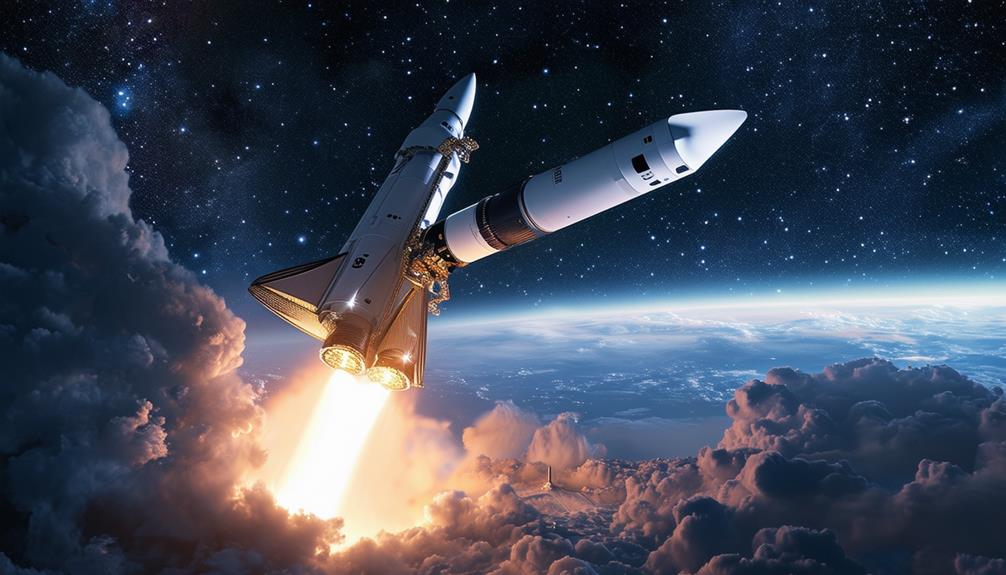
Elon Musk's relentless pursuit of space exploration has propelled SpaceX to achieve groundbreaking technological advancements. One of the most revolutionary achievements is the development of reusable rockets, significantly lowering the cost of space travel. SpaceX's Falcon 9 rocket can return to Earth and be prepared for another mission, showcasing a substantial leap in technological innovation.
SpaceX's Dragon spacecraft, designed for carrying humans and cargo, successfully launched astronauts into orbit on May 30, 2020. This marked a historic milestone in human space exploration. Musk's vision extends beyond Earth's orbit, aiming to establish a scientific base on the Moon and eventually send humans to Mars, making space travel more sustainable.
| Technological Innovation | Achievement |
|---|---|
| Reusable Rocket | Falcon 9 lands back on Earth |
| Dragon Spacecraft | Initial crewed mission on May 30, 2020 |
| Starship Development | Next-gen spacecraft with Raptor engine |
| Sustainable Space Travel | Focus on reducing space travel costs |
Starship, SpaceX's next-generation spacecraft, faces challenges with its advanced Raptor engine but represents the future of long-term human habitation on Mars. Musk's commitment to sustainable space exploration continues to push the boundaries of what's possible, ensuring that humanity becomes a space-faring civilization.
Neuralink and Human-AI Integration
While SpaceX focuses on exploring the cosmos, Neuralink aims to revolutionize human-AI integration by developing advanced brain-computer interfaces. Founded by Elon Musk in 2016, Neuralink's ambitious goal is to create seamless communication between the human brain and AI. Imagine a future where you could communicate telepathically or enhance your cognitive abilities through sophisticated technology. Musk envisions this becoming a reality with Neuralink.
Neuralink's brain-computer interfaces have the potential to aid individuals with neurological conditions, offering new ways to interact with the world. For instance, people suffering from paralysis might regain control over their environment using only their thoughts. The possibilities extend beyond medical applications, promising enhancements to human capabilities that could redefine what it means to be human.
Elon Musk's vision for Neuralink underscores his commitment to pushing technological boundaries. By facilitating human-AI integration, Neuralink aims to enhance cognitive abilities, making us smarter and more connected. However, it is essential to consider the ethical implications of such technology, including privacy and autonomy, as we move towards a future where human brains and AI merge. Neuralink's work continues to spark significant discussions about the future of human-AI integration.
AI Safety and Ethics
Elon Musk's commitment to AI safety and ethics stems from a deep understanding of the potential risks and benefits that artificial general intelligence (AGI) brings to society. While AGI has the potential to revolutionize various aspects of life, it also poses significant risks if not developed responsibly. Musk emphasizes the importance of ethical guidelines and regulatory measures to prevent misuse and societal harm.
To advance ethical AI development, Musk co-founded OpenAI, an organization dedicated to ensuring that the benefits of AGI are distributed equitably and that long-term safety is prioritized. Key principles Musk advocates for include:
| Principle | Description | Example |
|---|---|---|
| Fairness | Equitable distribution of AI benefits | OpenAI's mission statement |
| Regulation | Proactive control measures | Advocacy for AI legislation |
| Safety | Consideration of long-term impacts | Ethical guidelines for AGI |
Musk's focus on AI safety underscores the need for proactive measures to manage AGI's societal impact. His emphasis on ethics ensures that AI advancements align with humanity's best interests. By advocating for regulated and fair AI, Musk aims to guide AGI development in a way that maximizes benefits while minimizing risks. Through OpenAI, he continues to champion these principles, striving for a future where AI serves humanity responsibly and ethically.
Challenges and Controversies
Navigating a landscape filled with challenges and controversies, Tesla's AI technology has ignited significant debate regarding its safety, regulatory compliance, and ethical dimensions. Tesla's Autopilot and Full Self-Driving features, which aim to usher in an era of autonomous driving, have not been free from scrutiny.
- Safety Concerns: Critics contend that Tesla's Autopilot may not be as dependable as advertised, citing multiple incidents where the feature was involved in accidents. Questions persist about the AI's ability to manage complex driving scenarios safely.
- Regulatory Compliance: Regulators have expressed concerns about Tesla's claims concerning Full Self-Driving capabilities. Are these systems fully compliant with existing traffic laws? The absence of clear standards complicates their evaluation.
- Ethical Implications: Ethical concerns also emerge, particularly regarding how Tesla gathers and utilizes data to enhance its AI technology. Issues around privacy and data security remain pressing, and some argue that Tesla's practices may not fully honor user consent.
Elon Musk's ambitious predictions often meet resistance from cautious voices, creating a contentious dialogue. Whether you are a proponent or a critic, it's evident that the journey to fully autonomous vehicles is laden with challenges.
Future Vision and Goals
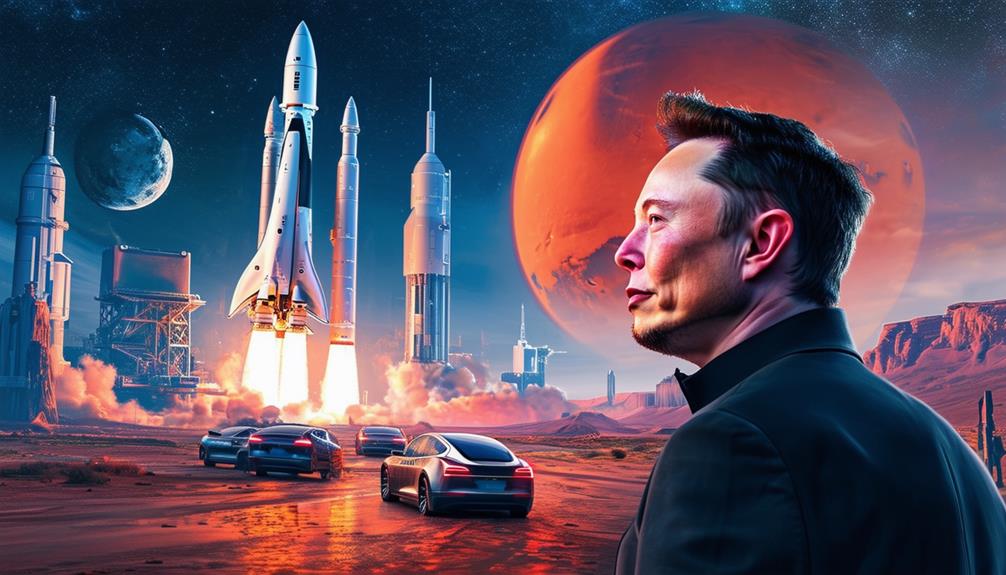
Elon Musk envisions a future where humanity prospers both on Earth and in space. His ambitious goals encompass revolutionizing transportation, advancing human-AI integration, and achieving interplanetary colonization. Through Tesla, Musk aims to develop fully autonomous vehicles using cutting-edge AI, transforming travel and significantly reducing accidents. This aligns with his commitment to renewable energy, as Tesla's electric vehicles and solar products aim to reduce dependence on fossil fuels.
With Neuralink, Musk is pushing the boundaries of human-AI interaction. By developing brain-machine interfaces, Neuralink seeks to merge the human brain with AI, potentially treating neurological conditions and enhancing cognitive abilities. This symbiotic relationship could redefine human interaction with technology and each other.
Space travel is another cornerstone of Musk's vision. Under his leadership, SpaceX is working to make space travel more accessible, with the ultimate goal of colonizing Mars to ensure humanity's survival in the event of a catastrophe on Earth. By focusing on AI research, space travel, and renewable energy, Elon Musk aims to secure a brighter, more sustainable future for humanity both on this planet and beyond.
Conclusion
In your exploration of Elon Musk's world, you've observed how his AI innovations at Tesla are revolutionizing driving, while SpaceX's advancements are extending the frontiers of space travel. Neuralink underscores his ambition for human-AI integration, aiming to enhance human capabilities. Despite facing numerous challenges and controversies, Musk's vision for the future remains clear: a seamlessly interconnected world where technology and humanity flourish together. You are witnessing the dawn of a transformative age, driven by Musk's relentless pursuit of innovation.