
AI and the Evolution of Video Game Development in the 2000s

When you think about video games in the 2000s, you might recall the leap in AI technology that fundamentally transformed the industry. From behavior trees and pathfinding algorithms to Artificial Neural Networks, AI advancements made games more immersive and intelligent. Platforms like Unity and Unreal Engine incorporated these features, pushing the boundaries of what developers could achieve. Games such as Spelunky and Minecraft introduced procedural content generation, offering endless replayability. These changes significantly impacted the balance and difficulty of games, setting the stage for more dynamic and personalized future gaming experiences.
Emergence of AI in Gaming

During the 2000s, AI in gaming rapidly evolved, revolutionizing player experiences and game design. Developers began integrating advanced techniques, significantly impacting gameplay. One major advancement was the use of behavior trees. Games like Hitman and F.E.A.R. employed these to create complex AI behavior, allowing non-playable characters (NPCs) to make decisions that felt lifelike and unpredictable.
Pathfinding algorithms also saw breakthroughs, with the A* algorithm becoming a staple for guiding NPCs through intricate environments. This led to characters moving and reacting in ways that felt natural and engaging, enhancing the overall gameplay experience.
The integration of Artificial Neural Networks marked another pivotal point. These networks enabled dynamic and scalable AI behaviors, allowing NPCs to adapt to player actions in real-time. The continuous evolution of AI techniques in the 2000s not only shaped contemporary games but also set the stage for future innovations, making game worlds more immersive and interactive than ever before.
AI-Driven Game Engines
AI-driven game engines like Unity and Unreal Engine are revolutionizing game development. These engines facilitate procedural content generation, which allows for the creation of expansive and diverse game worlds without manual intervention. Additionally, they enable adaptive enemy behavior that reacts to players' actions in real-time. This results in more immersive and dynamic gaming experiences, ensuring that no two playthroughs are identical.
Procedural Content Generation
In recent years, Procedural Content Generation (PCG) has transformed game development by automating the creation of diverse and engaging content. Using AI-driven game engines, procedural generation can produce game elements such as levels, environments, and quests without requiring manual design. This method not only enhances replayability by providing unique experiences with each playthrough but also streamlines the development process.
AI-driven PCG algorithms operate by utilizing parameters, rules, and constraints to generate coherent and compelling game content. These algorithms ensure that the generated content aligns seamlessly with the game's world and narrative, rather than appearing random or out of place. Popular game engines like Unreal Engine and Unity incorporate integrated AI-driven PCG tools, making content creation more efficient and less time-consuming.
The application of PCG in AI-driven game engines significantly reduces development time and costs by automating repetitive tasks. This automation allows developers to concentrate on the more creative aspects of game design. Ultimately, PCG delivers dynamic and varied gaming experiences, making each playthrough unique and engaging. This innovation has redefined possibilities in game development, setting new standards for creativity and efficiency.
Adaptive Enemy Behavior
Adaptive enemy behavior has revolutionized gameplay by making encounters more unpredictable and challenging. AI-driven game engines, particularly those developed in the 2000s, marked a significant leap in how enemies interacted with players. These engines employed machine learning algorithms to analyze player strategies and adapt enemy behavior in real-time. This adaptive nature ensured that each encounter felt fresh, compelling players to continually refine their tactics.
Shooter games like F.E.A.R. became notable for their advanced AI-driven systems. Enemies would alter their tactics based on player decisions, creating a more immersive and engaging experience. Instead of following predictable patterns, enemy AI could dynamically flank, retreat, or coordinate attacks.
Key Elements of Adaptive Enemy Behavior
| Element | Description |
|---|---|
| AI | Drives the dynamic and responsive nature of enemy behavior |
| Game Engines | Platforms that integrate machine learning algorithms for real-time adaptation |
| Enemy Behavior | Evolved tactics based on player actions |
| Player Actions | Input that AI analyzes to adjust enemy responses |
These elements collectively contribute to a more sophisticated and challenging gaming experience, enhancing both engagement and replayability.
NPC Behavior and AI
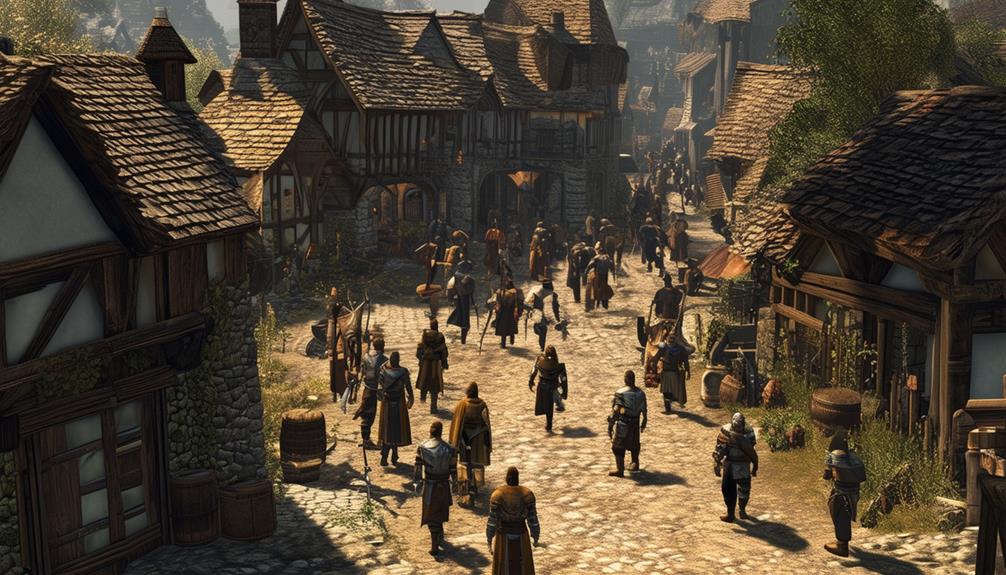
Advancements in AI technology during the 2000s led to significant improvements in NPC behavior in video games, greatly enhancing player immersion. AI evolved to enable NPCs to engage in diverse interactions and exhibit realistic behaviors, adapting their decision-making processes based on players' actions and in-game events. This shift made gaming experiences more dynamic and challenging.
One key development was the use of Behavior Trees, prominently featured in games like Hitman and F.E.A.R. These trees allowed for intricate modeling of NPC behavior, enabling them to respond intelligently to different scenarios. For example, an NPC in Hitman might notice suspicious activity and decide to investigate or call for backup, demonstrating adaptive decision-making. Additionally, improved AI algorithms allowed NPCs to exhibit survival instincts. They would take cover when under fire or retreat to safety when outnumbered. These lifelike behaviors made gameplay more engaging and realistic.
Procedural Generation Advances
Procedural generation has revolutionized video game development by enabling designers to create vast, dynamic, and randomized content efficiently. Instead of manually crafting every aspect of a game, developers can now use algorithms to generate unique experiences for every playthrough. This technique is central to games like Spelunky, where each level is created algorithmically, ensuring no two playthroughs are identical.
In No Man's Sky, players explore a universe of procedurally generated planets, each with distinctive ecosystems and landscapes. This immense and diverse virtual world would be impractical to design manually. Similarly, Minecraft uses procedural generation to create infinite worlds, fostering boundless exploration and creativity.
Key benefits of procedural generation in video games include:
- Infinite replayability: Games like Spelunky and Minecraft provide new experiences with every session.
- Reduced development time: Algorithmically generated content reduces the need for extensive manual design.
- Vast worlds: No Man's Sky features expansive universes that feel limitless.
- Dynamic gameplay: The inherent unpredictability keeps players engaged and challenged.
- Enhanced creativity: Players can explore and create without restrictions, thanks to ever-changing environments.
Incorporating procedural generation has fundamentally transformed game development and player experiences.
AI in Game Balance

AI in game balance ensures an engaging experience by dynamically adjusting difficulty levels. It features adaptive NPC behavior that responds to your strategies, making the gameplay feel more realistic. Additionally, AI can predict your actions to keep challenges fresh and prevent monotony.
Dynamic Difficulty Adjustment
Dynamic Difficulty Adjustment (DDA) utilizes AI to tailor game challenges to match your skill level, ensuring each playthrough remains engaging. AI algorithms analyze your performance in real-time to dynamically adjust the game's difficulty. This continuous adaptation ensures the game stays challenging yet enjoyable, optimizing your overall experience.
Popular games like Left 4 Dead and Resident Evil 4 have effectively implemented DDA, enhancing player immersion and satisfaction. By adjusting difficulty in real-time, DDA makes every gaming session feel fresh and uniquely challenging, regardless of how many times you play. This ensures that both beginners and advanced players find an appropriate level of challenge.
Here's how DDA enhances your gaming experience:
- Personalization: Adjusts challenges to your skill level, making the game more engaging.
- Balance: Maintains an optimal level of difficulty, preventing frustration or boredom.
- Immersion: Keeps you engaged by offering a seamless experience.
- Replayability: Increases replay value by ensuring each playthrough feels unique.
- Satisfaction: Enhances your sense of accomplishment by presenting the right amount of challenge.
Adaptive NPC Behavior
Adaptive NPC behavior leverages AI to develop dynamic, responsive game characters that adjust to your actions and skill level, ensuring a consistently engaging experience. This advanced AI in game design means NPCs aren't static; they evolve based on your progress, offering tailored responses to your gameplay. As you refine your skills, the NPCs adapt, maintaining challenge levels that keep you engaged.
The impact of this lies in the personalized experiences it offers. Instead of encountering uniformly difficult challenges, the game adapts to your abilities. If you're struggling, NPCs might ease up, allowing you to learn and improve. Conversely, if you're excelling, they'll increase the difficulty, ensuring consistent engagement.
This approach significantly enhances player immersion. When NPCs act and react in ways that reflect your actions, the game world feels more alive and believable. You're not just playing a game; you're part of an evolving narrative that reacts to you, making each playthrough unique and personalized. Adaptive NPC behavior creates a balanced, immersive gaming experience tailored to each player.
Player Strategy Prediction
Player strategy prediction leverages AI to analyze your gameplay patterns, ensuring the game evolves to match your tactics and skill level. This technique in game development utilizes player data and advanced AI models to craft a more personalized and engaging experience.
Game balance AI uses historical gameplay data to predict your strategies and dynamically adjust the difficulty. Machine learning models are trained to identify patterns in your decisions, adapting challenges in real-time as you progress. This ensures that the game remains challenging yet fair, keeping you immersed and motivated.
Through player strategy prediction, game developers can customize experiences for individual players. Instead of a universal difficulty level, the game adapts to your unique playstyle, offering a tailored experience for each player. This method enhances immersion and satisfaction, making the game more enjoyable.
Here's how player strategy prediction enhances your gaming experience:
- Analyzes your gameplay patterns to adjust difficulty.
- Uses historical data to predict your strategies.
- Adapts in real-time using machine learning models.
- Ensures balanced challenges suited to your skill level.
- Enhances immersion and personalizes your gameplay experience.
Enhanced Player Experience
Artificial intelligence has revolutionized video games, making interactions with characters feel more realistic and engaging. With AI, characters can now react to your actions and decisions in lifelike ways, significantly enhancing the player's experience and creating a more immersive environment. Games like Hitman and F.E.A.R. have utilized advanced AI techniques such as Behavior Trees to develop complex and realistic behaviors in characters, enriching your gaming experience.
These dynamic and scalable AI behaviors are not merely aesthetic; they profoundly impact game design by adding layers of challenge and depth. As a player, you might find yourself strategizing more thoughtfully, knowing that AI opponents can predict and adapt to your moves. This evolution in AI has enhanced the gaming experience by making scenarios more unpredictable and engaging.
The integration of AI-driven character behavior prediction and decision-making in the 2000s led to more realistic and challenging gameplay. This technological leap transformed video games from simple pastimes into immersive adventures, keeping you hooked and invested. The evolution of AI in video games has fundamentally changed how you interact with virtual worlds, improving every moment you spend playing.
AI in Real-Time Strategy
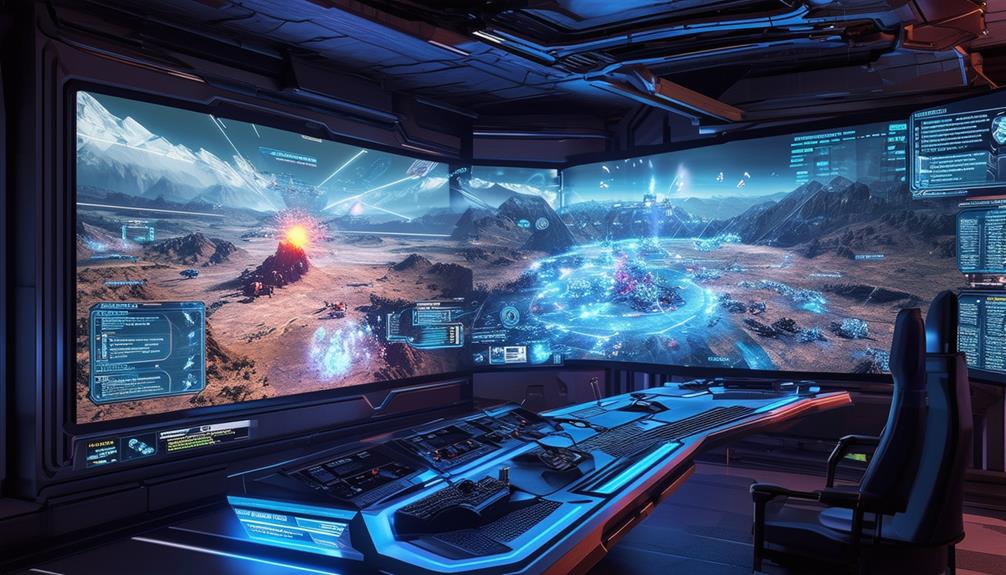
In the 2000s, real-time strategy (RTS) games made significant strides in player experience through the integration of advanced AI algorithms. These advancements revolutionized unit pathfinding and tactical decision-making, allowing in-game units to navigate complex terrains and respond dynamically to battlefield conditions. Algorithms like A* and Dijkstra's played crucial roles in optimizing unit movement and strategic planning.
Games such as StarCraft and Age of Empires exemplified these AI advancements by mastering resource management and adaptive enemy behaviors. AI-controlled factions no longer adhered to pre-set patterns; they adapted to player actions, making each game uniquely challenging. This shift towards sophisticated AI algorithms added layers of strategic depth and realism, greatly enhancing the overall player experience.
Key benefits of AI in RTS games include:
- Dynamic Unit Pathfinding: Efficient navigation through complex maps.
- Tactical Decision-Making: Real-time strategic choices to counter player moves.
- Adaptive Enemy Behaviors: Tactics that adjust based on player gameplay.
- Resource Management: Effective resource handling that mimics human strategies.
- Enhanced Gameplay: Increased strategic depth, making games more engaging and challenging.
These elements combined to create a more immersive and challenging experience in RTS games of the 2000s, setting a new standard for the genre.
Evolution in Sports Games
In the 2000s, sports games like Madden Football revolutionized realism by integrating advanced AI for strategic gameplay and coaching simulations, marking a significant leap in immersion. AI development enabled customized strategies and coaching decisions that mirrored real-life scenarios. This advancement was not confined to Madden; games like Earl Weaver Baseball and Tony La Russa Baseball also utilized AI to replicate managerial decisions and player interactions.
AI-driven opponents in sports games offered dynamic and challenging experiences, making each match feel unique and unpredictable. The AI could adjust its tactics based on your gameplay, ensuring no two games were alike. The strategic gameplay was further enriched by AI's ability to simulate realistic player behaviors and decisions.
These advancements in AI technology didn't just enhance realism; they deeply enriched the authenticity and immersion of sports games. Whether calling plays in Madden or managing a baseball team, the AI development during this period ensured your gaming experiences were as close to the real thing as possible.
Future Prospects of AI
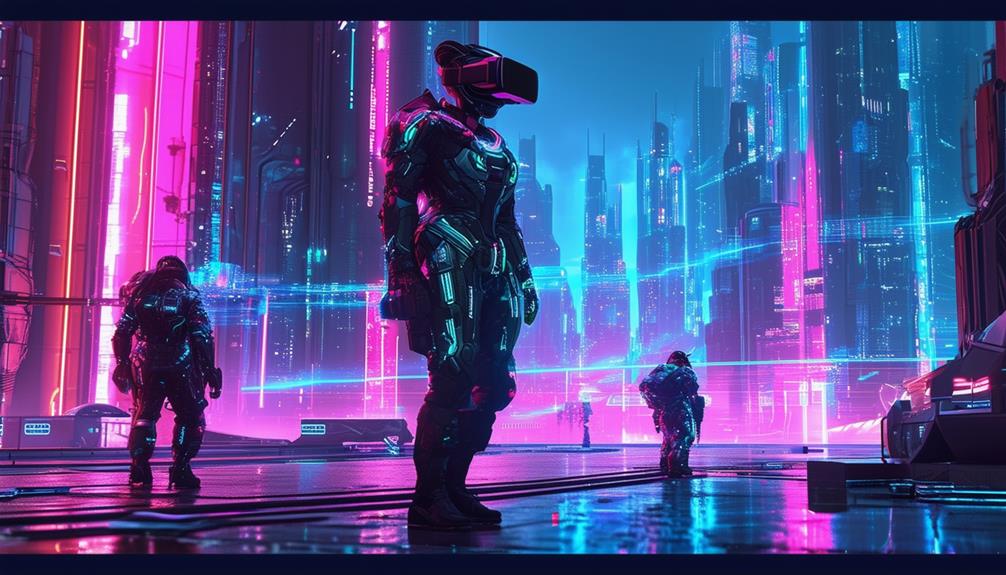
As AI technology advances, the future of video games is set to offer increasingly personalized and immersive experiences tailored to each player's unique preferences. AI will revolutionize how you interact with games by employing sophisticated algorithms to understand and predict your gaming habits.
AI-based NPCs will become smarter and more lifelike, making interactions feel natural and engaging. These characters will react to your decisions in real-time, providing a more dynamic gameplay experience. Emotional recognition technologies will enable games to adapt to your emotional state, creating a truly customized gaming experience.
Imagine playing in immersive environments that evolve based on your emotions and choices. These AI advancements will not only enrich gameplay but also make each session unique.
- AI gaming: Algorithms will customize gameplay to your habits and preferences.
- NPCs: Smarter, more realistic characters will enhance your interactions.
- Emotional recognition technologies: Games will adapt to your emotional state.
- Personalized gaming experiences: Each session will be unique and tailored to you.
- Immersive gaming environments: Dynamic worlds that change based on your actions and emotions.
The future of gaming is bright, promising endless possibilities for more engaging and interactive experiences.
Conclusion
AI has significantly transformed video game development throughout the 2000s. From smarter NPCs and dynamic game balance to vast procedural worlds, AI has revolutionized gaming experiences. Game engines like Unity and Unreal Engine have enabled these advancements, making games more immersive and personalized. As AI continues to evolve, expect even more groundbreaking innovations that will keep you engaged and challenged in future gaming worlds.