Advancements in Robot Vision Systems: How Robots “See” and Understand the World
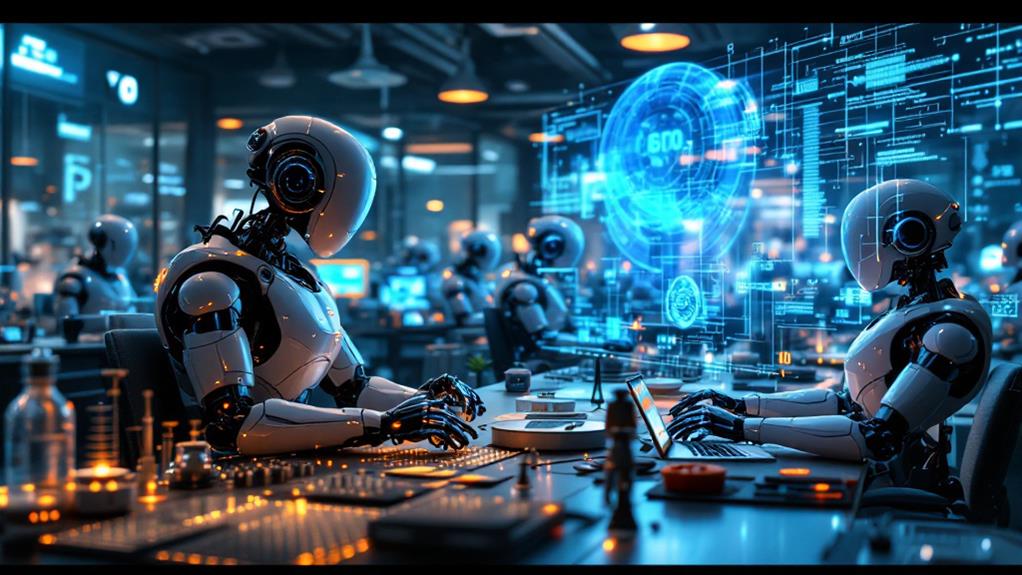
Robots are transforming how they see and understand the world through cutting-edge vision systems. They use technologies like stereo vision and image segmentation to analyze their surroundings effectively. With machine learning and AI, these machines can recognize objects and adapt to dynamic environments. Sensors like cameras, LIDAR, and infrared improve their perception, making real-time navigation possible. As advancements continue, robots become more autonomous, performing complex tasks in different industries, from warehouses to healthcare. You'll uncover even more exciting developments and applications in this rapidly evolving field.
Overview of Robot Vision Systems
Robot vision systems are fundamental components in modern robotics, enabling machines to interpret and understand their surroundings. When you think about robot perception, it's about how robots gather and process visual data to make sense of their environment. This involves visual cognition, where machines mimic human-like understanding by analyzing images and recognizing patterns.
Through sensory integration, robots combine data from multiple sources, improving their ability to interpret what they see. Environmental mapping plays a significant role here, as it helps robots create a visual representation of their surroundings, allowing them to navigate effectively. With accurate data interpretation, robots can make informed decisions based on the information they gather.
Visual feedback is important, too. It allows robots to adjust their actions in real-time, enhancing their spatial awareness and situational understanding. This means they're not just reacting to what they see; they're also learning and adapting. As you investigate deeper into robot vision systems, you'll see how these elements come together, making robots more capable of performing complex tasks in dynamic environments. Ultimately, this technology improves their interaction with the world, bringing them closer to human-like functionality.
Key Technologies in Robot Vision
Vision systems rely on several key technologies that improve a robot's ability to perceive and interpret its environment. One of the most significant is stereo vision, which allows robots to gauge depth and distance by comparing images from two cameras. This depth perception is essential for tasks like navigation and obstacle avoidance. Visual odometry bolsters this by tracking a robot's movement over time, using visual cues to estimate its position in real-time.
Light field technology captures more information about light, enabling advanced scene understanding and richer 3D reconstruction. Image segmentation helps robots identify and separate objects within a scene, making it easier to focus on relevant features. Feature extraction further refines this by highlighting specific characteristics of objects, aiding in classification and recognition.
Camera calibration guarantees that the data captured by cameras is accurate, which is critical for precise robotic perception. Visual servoing allows robots to adjust their movements based on visual feedback, improving interaction with their surroundings. By integrating these technologies, robots can achieve a sophisticated level of understanding, making them more effective in diverse applications.
Image Processing Techniques
How can image processing techniques improve a robot's ability to interpret its environment? By employing methods like image segmentation and feature extraction, robots can efficiently analyze and understand their surroundings. Image segmentation breaks down visual data into meaningful parts, allowing a robot to identify specific objects within a scene. This process helps it focus on pertinent information while ignoring distractions.
Once segmentation is complete, feature extraction comes into play. It enables the robot to identify and quantify fundamental characteristics of the segmented objects, such as shape, color, and texture. These features act as critical cues for the robot, helping it recognize and differentiate between diverse objects and obstacles.
Machine Learning and AI Integration
Integrating machine learning and AI into robot vision systems greatly enhances a robot's capability to interpret its environment. With the help of neural networks, robots can learn to recognize patterns and objects in complex scenes. You can utilize training datasets to teach your robot through supervised learning, where labeled examples guide the learning process. Unsupervised learning, on the other hand, allows the robot to identify hidden patterns without explicit labels, improving its ability to adapt.
Feature extraction plays a significant role, as it helps the robot focus on the most relevant information from the data. Data augmentation techniques can further enrich your training datasets, providing varied examples that increase the robot's robustness. Model optimization guarantees that the learning process is efficient, maximizing algorithm efficiency while minimizing computational resources.
Reinforcement learning introduces a trial-and-error approach, where robots improve their performance through feedback from their actions. Combined with advanced computer vision techniques, these methods provide an extensive framework for developing intelligent robots that can adapt to and understand their surroundings better than ever before. By leveraging these AI advancements, you can create more capable and versatile robotic systems.
Sensor Technologies and Their Roles
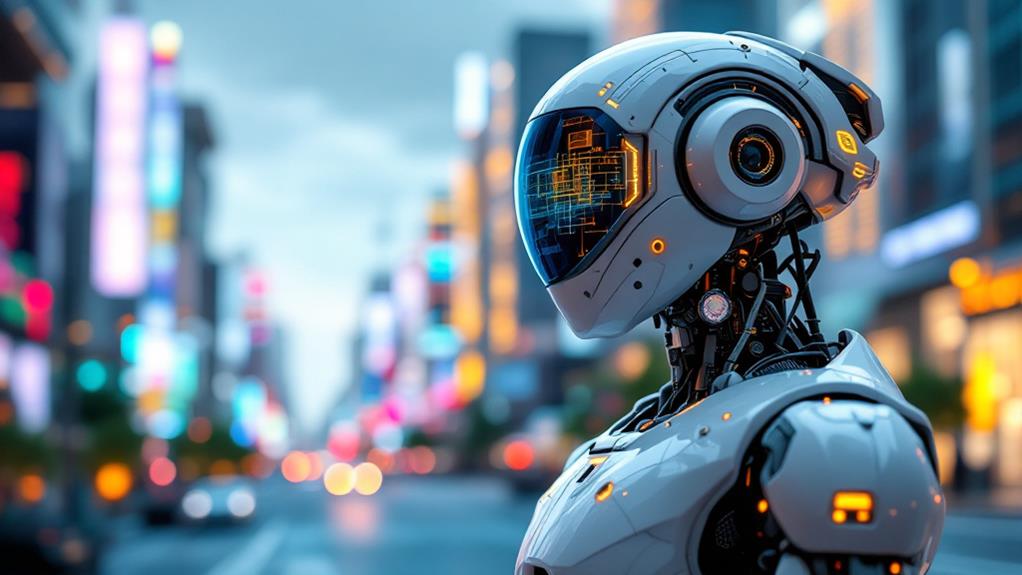
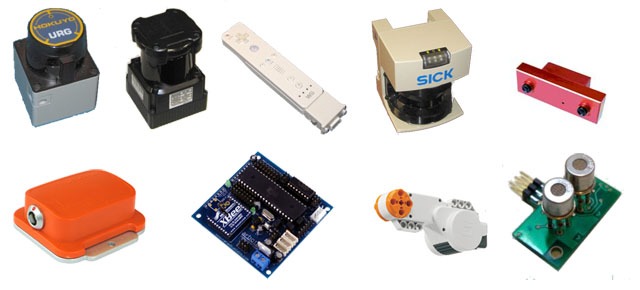
In the domain of robot vision systems, different sensor technologies play vital roles in enabling robots to perceive and interpret their environments effectively. You'll encounter several sensor types, including cameras, LIDAR, and infrared sensors, each contributing distinctly to a robot's perception capabilities. Cameras capture visual data, while LIDAR provides precise distance measurements using laser light, and infrared sensors detect heat signatures.
To improve the robot's understanding of its surroundings, you'll often see the application of sensory fusion. This technique combines data from multiple sensor types, allowing for a richer and more accurate representation of the environment. For instance, blending camera images with LIDAR data helps the robot create detailed 3D maps, enhancing navigation and obstacle detection.
Moreover, sensory fusion helps mitigate the limitations of individual sensors. If a camera struggles in low-light conditions, the robot can rely on LIDAR or infrared data to maintain awareness. By effectively integrating different sensor types, robots can interpret complex environments more reliably and make informed decisions. This synergy among technologies is vital for developing advanced robot vision systems that can operate autonomously in dynamic settings.
Real-Time Object Recognition
Building on the integration of diverse sensor technologies, real-time object recognition stands as a cornerstone of effective robot vision systems. It enables robots to identify and classify objects instantly, which is vital for tasks like navigation, manipulation, and interaction with their environment. You'll find that real-time object recognition relies heavily on advanced algorithms that process visual data quickly, allowing robots to make split-second decisions.
Incorporating machine learning techniques improves the visual perception of robots, enabling them to learn from their surroundings. As you observe a robot moving through an environment, it uses object tracking to maintain awareness of identified objects, even as they shift in position or orientation. This capability is fundamental for tasks such as avoiding obstacles or following a moving target.
Furthermore, real-time processing guarantees that robots can adapt to dynamic settings, recognizing new objects or changes in familiar ones. The efficiency of these systems greatly impacts the entire performance of robotic applications, from autonomous vehicles to industrial automation. By mastering real-time object recognition, robots become more adept at understanding and interacting with the world around them, paving the way for smarter and more responsive technologies.
Depth Perception in Robotics
Understanding depth perception is crucial for robots as they navigate and interact with their surroundings. By utilizing techniques like monocular depth and stereo vision, robots can better gauge the spatial dimensions of their environment. Monocular depth relies on a single camera to estimate distance through different cues, while stereo vision uses two cameras to create a more accurate representation of depth.
Depth estimation plays a critical role in enhancing a robot's spatial awareness, allowing it to understand how far away objects are and how to move around them safely. Depth sensors, such as LiDAR and ultrasonic sensors, provide valuable distance measurement data, helping robots build a detailed map of their surroundings through environmental mapping.
Additionally, visual odometry aids in tracking a robot's position over time by analyzing changes in its visual input. This combination of technologies guarantees that robots can navigate complex environments effectively, avoiding obstacles and interacting with objects in a meaningful way. As advancements continue in depth perception techniques, robots will become increasingly adept at interpreting and responding to their surroundings, enhancing their comprehensive functionality and reliability.
Applications in Various Industries
Robot vision systems have found their way into a multitude of industries, transforming how tasks are performed and improving efficiency. You'll see these systems in action across several key applications:
- Warehouse Automation: Robots equipped with advanced vision can navigate vast warehouses, picking and transporting items seamlessly.
- Agricultural Monitoring: Drones utilize vision systems to assess crop health, optimizing yields and reducing waste.
- Medical Imaging: In healthcare, robot vision aids in precise imaging, allowing for better diagnostics and treatment planning.
In addition to these, robotic navigation plays an essential role in autonomous vehicles, making them safer and more reliable. Automated inspection processes in manufacturing guarantee quality control, markedly reducing errors. Security systems now utilize these technologies for improved surveillance and threat detection. Moreover, industrial robotics benefit from vision systems, improving the efficiency of assembly lines and repetitive tasks.
With these advancements, you can see how robot vision systems are not just improving productivity but also paving the way for smarter, safer, and more efficient operations across diverse sectors. Embracing these technologies can lead to substantial benefits in both performance and reliability.
Challenges in Robot Vision
Despite the remarkable advancements in robot vision systems, several challenges still hinder their widespread adoption. One major issue is sensor calibration; if your sensors aren't calibrated properly, the data they collect can be inaccurate. Furthermore, varying lighting conditions can greatly affect perception accuracy, causing robots to misinterpret their surroundings.
Environment variability poses another challenge, as robots must adapt to different settings, which can complicate data interpretation. You'll find that ensuring computational efficiency is crucial; the algorithms must process data quickly without sacrificing performance. This brings us to algorithm optimization, where fine-tuning becomes important to improve accuracy and response times.
Hardware limitations also play a role; if the processing units can't handle complex tasks, the system's overall performance suffers. Noise reduction is critical in filtering out irrelevant data, which is necessary for effective spatial reasoning. Finally, overcoming these challenges requires a balance between advanced technology and practical implementation, as solutions need to be both effective and economically viable. As you explore the world of robot vision, addressing these hurdles will be key to revealing its full potential.
Future Trends and Innovations
The future of vision systems in automation is brimming with exciting innovations that promise to improve performance and usability. As you look ahead, you'll see three key trends shaping the landscape:
- Improved Visual Perception: Advances in machine learning and deep learning are enabling robots to interpret complex visual data with greater accuracy. This will lead to better decision-making and situational awareness.
- Autonomous Navigation: Future vision systems will incorporate sophisticated algorithms that allow robots to navigate environments with minimal human intervention. This autonomy will greatly increase efficiency in industries like logistics and manufacturing.
- Integration with Augmented Reality (AR): By combining AR with vision systems, robots will not only see but also interact with their environments in real-time. This integration will improve training, maintenance, and operational capabilities.
As these innovations unfold, you can expect robots to achieve higher levels of autonomy and efficiency. With improved visual perception and autonomous navigation, they'll tackle increasingly complex tasks and adapt to dynamic environments, changing the way we perceive automation forever.