Underwater Robots: Advancing Ocean Exploration and Conservation
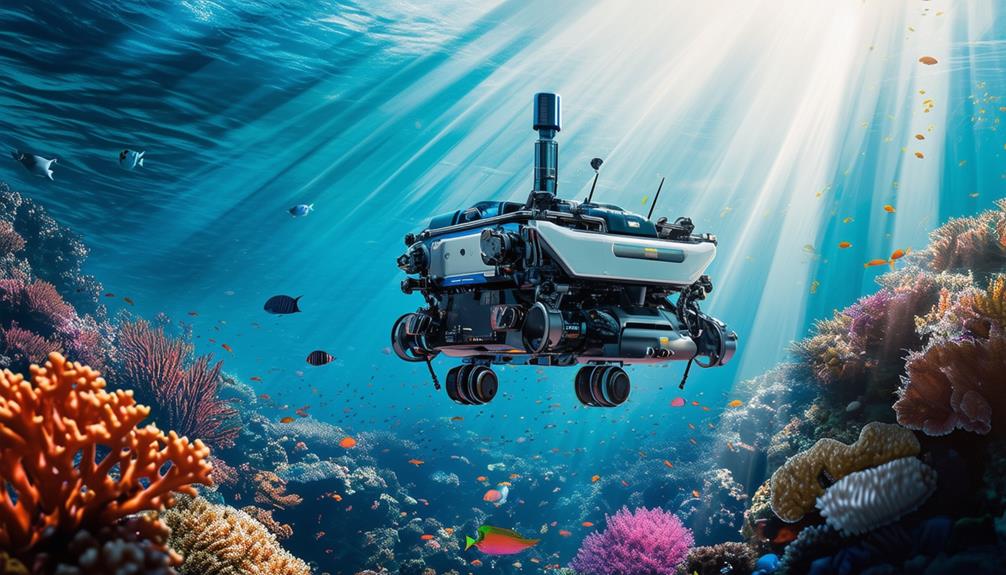
Underwater robots are revolutionizing ocean exploration and conservation by enabling scientists to study marine life and ecosystems with minimal disturbance. Equipped with high-resolution 3D imaging and sophisticated sensors, these advanced machines can reach depths of up to 1000 meters, unveiling secrets of the deep previously beyond our grasp. But how do these robots operate, and what challenges do they face in the unpredictable marine environment?
Evolution of Underwater Robots
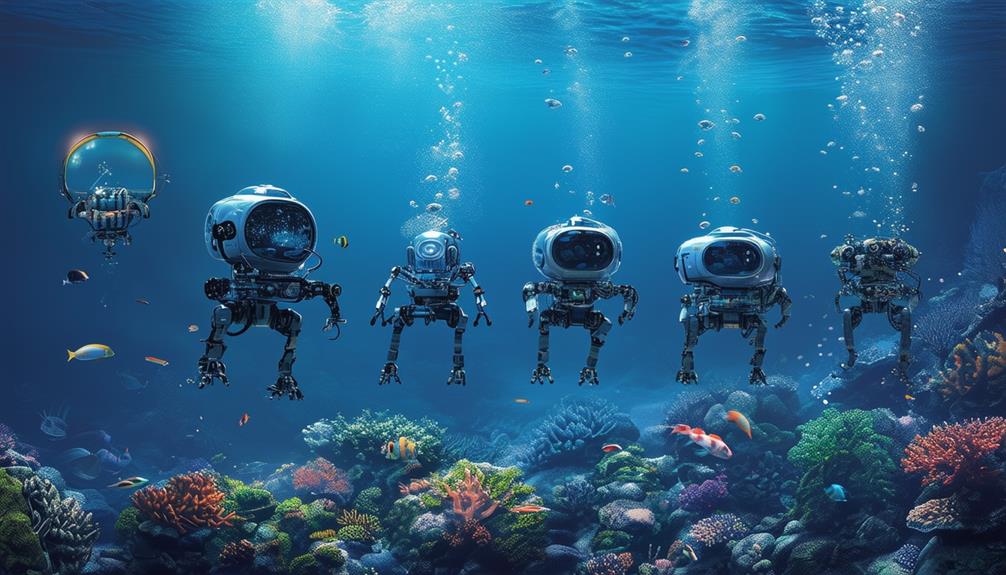
Underwater robots have significantly advanced, enabling scientists to explore marine life at depths ranging from 200 to 1000 meters without disrupting the ecosystem. These technological advancements allow for unprecedented deep-sea investigations. Equipped with sophisticated robotic systems, these underwater robots can film, capture, and study organisms in their natural habitats, greatly enhancing our understanding of marine ecosystems and supporting conservation efforts.
The incorporation of cutting-edge technology such as soft robotic grippers and high-resolution 3D imaging has transformed marine exploration. Soft robotic grippers allow researchers to collect samples without harming marine life, preserving the delicate balance of deep-sea ecosystems. High-resolution 3D imaging provides detailed observation and mapping of underwater environments, offering invaluable data for scientific research.
Key Applications in Oceanography
Harnessing cutting-edge technologies, underwater robots are pivotal in examining marine ecosystems, collecting essential data, and advancing oceanographic research. These robots have transformed our approach to studying and interacting with ocean depths.
Autonomous underwater vehicles (AUVs) and remotely operated vehicles (ROVs) lead deep-sea exploration efforts. Outfitted with advanced sensors, they navigate complex underwater terrains, offering critical insights into marine biodiversity, geological formations, and ocean dynamics. Their capacity to reach extreme depths and remain submerged for extended durations makes them indispensable for comprehensive data collection and environmental monitoring.
Key applications in oceanography include:
- Marine Biodiversity Studies: Underwater robots provide detailed observations of marine species and their habitats, enhancing our understanding of ecosystem health and biodiversity.
- Environmental Monitoring: By continuously collecting data on water quality, temperature, and chemical composition, AUVs and ROVs aid environmental conservation efforts and monitor climate change impacts.
- Underwater Geological Research: These robots investigate underwater geological structures, assisting scientists in understanding seabed composition and tectonic activity.
Benefits of Robotic Exploration
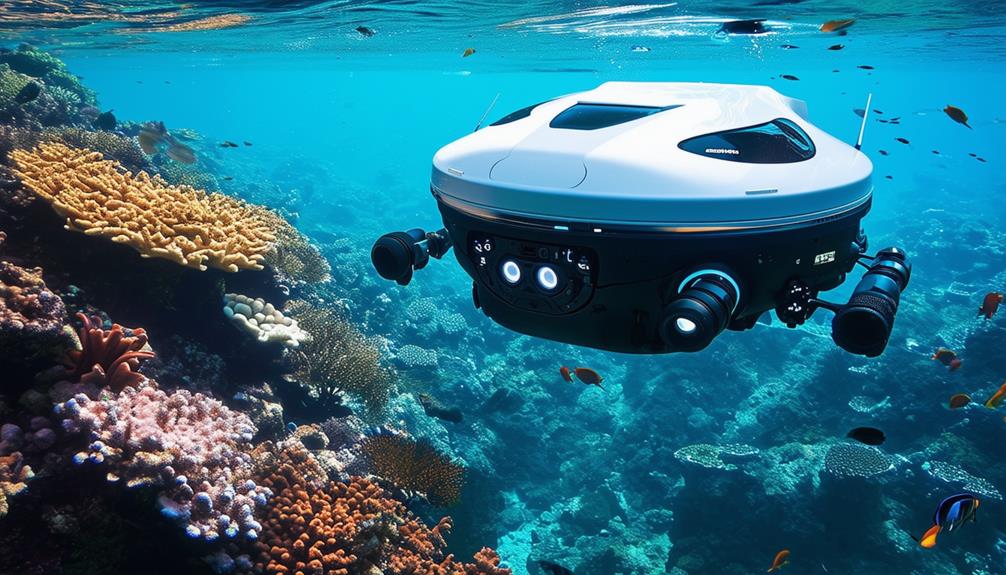
Underwater robots offer numerous benefits that revolutionize marine exploration and conservation. These advanced machines enable the study of marine life at depths ranging from 200 to 1000 meters without causing harm or disruption to delicate ecosystems. By accessing these deep regions, researchers gain unprecedented opportunities for scientific study in natural habitats, ensuring the safe capture and release of organisms for data collection.
Equipped with advanced soft robotic grippers, underwater robots can delicately handle marine creatures using flexible fingers and sophisticated sensors. This precision allows for the ethical handling of fragile marine species, promoting responsible exploration and conservation practices. Collaboration in high-resolution 3D imaging and genomic sequencing accelerates the discovery of new deep-sea life, significantly aiding in the conservation of previously unknown marine species.
Moreover, the development of cybertypes for deep-sea animals represents a new chapter in marine research. These digital representations preserve crucial information for future scientists, ensuring the continued investigation and understanding of the ocean's mysteries. Underwater robots not only advance our knowledge but also foster responsible stewardship of the marine environment.
Challenges and Limitations
Despite their impressive capabilities, cutting-edge underwater robots face several challenges and limitations that require careful consideration. One significant issue is the high initial investment costs. Building and deploying these robots for deep-sea exploration demands substantial financial resources, which can be a barrier for many institutions and conservation efforts.
Additionally, underwater robots encounter numerous technical challenges in harsh underwater environments, such as:
- Material Durability: These machines must endure intense pressure and extreme temperatures.
- Limited Communication: Effective navigation and data transmission are difficult due to water's properties.
- Maintenance Requirements: Regular upkeep is necessary to ensure their long-term functionality.
The environmental impact of deploying these robots also raises sustainability concerns. Their operations can disturb marine life and habitats, potentially contradicting conservation objectives.
Furthermore, the robots' reliance on sophisticated technology means they may not always adapt well to rapidly changing underwater conditions, which can affect their efficiency in performing complex tasks. While underwater robots have revolutionized ocean exploration, these challenges underscore the need for continuous improvement and mindful deployment to maximize their benefits for our planet's oceans.
Future Trends and Innovations
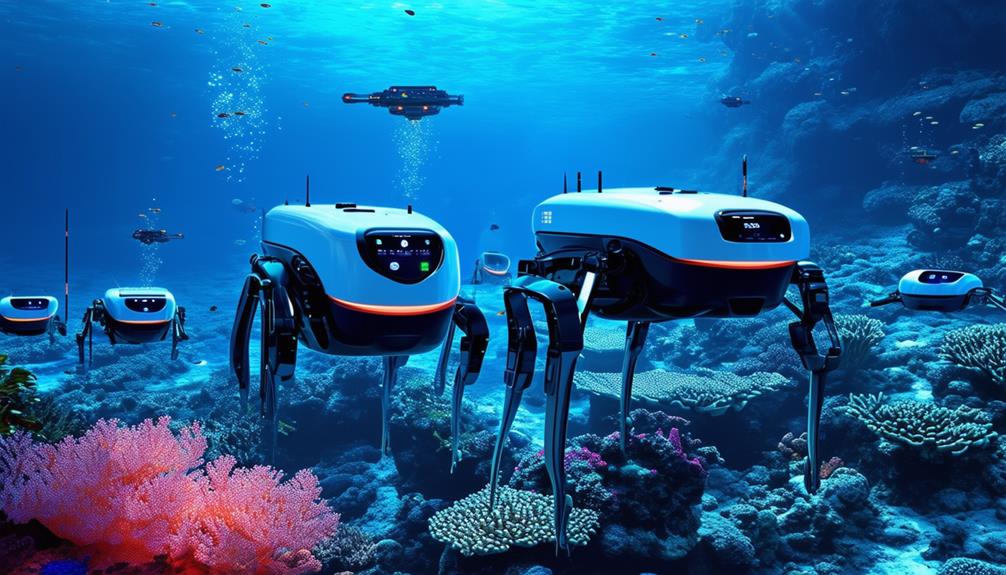
The future of underwater robotics is set to be transformative, driven by advancements in artificial intelligence and soft robotics. One significant trend is the development of AI-powered autonomy, which enables underwater robots to explore deeper and more hazardous environments without continuous human oversight. This advancement will allow for the collection of data from previously inaccessible areas of the ocean with increased efficiency.
Innovations such as soft robotic grippers are being designed to handle delicate marine organisms, crucial for studying deep-sea ecosystems without causing harm. High-resolution 3D imaging is another revolutionary technology, providing unprecedented detail in mapping underwater terrains and habitats. When combined with genomic sequencing, it facilitates comprehensive analysis of marine biodiversity, offering a thorough understanding of oceanic life.
The creation of cybertypes—digital representations of deep-sea animals—preserves critical biological information, supporting future scientific research and conservation efforts. These advancements are poised to enhance marine research significantly and contribute to more effective conservation strategies. By adopting these innovations, you are not only advancing scientific knowledge but also playing a crucial role in protecting the world's oceans.
Conclusion
You stand at the forefront of a revolution in ocean exploration and conservation, driven by the capabilities of underwater robots. These advanced machines provide unparalleled insights into marine ecosystems while safeguarding delicate environments. Equipped with high-resolution imaging and the ability to collect data at extreme depths, you can make significant strides in oceanographic research. Although challenges remain, future innovations promise to further enhance our understanding and preservation of the underwater world. Dive in and explore!
Related posts