
The Role of DARPA in Advancing AI Research During the 1970S
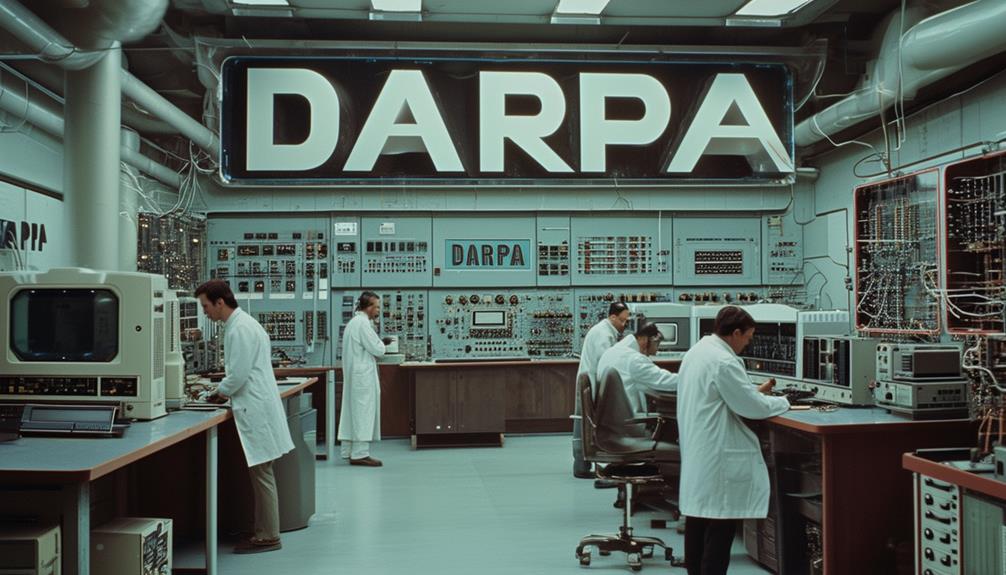
In the 1970s, DARPA's visionary initiatives significantly shaped the future of AI research. By funding groundbreaking projects like the Speech Understanding Research program and the Heuristic Programming Project, DARPA not only advanced machine intelligence but also fostered collaboration among influential figures such as John McCarthy and Marvin Minsky. Despite numerous technological barriers, DARPA's efforts laid the groundwork for future advancements. These early projects continue to impact today's AI technologies, highlighting the long-term benefits that emerged from this pivotal decade. Let's explore the legacy of DARPA's contributions to AI research.
DARPA's Vision in the 1970s

In the 1970s, DARPA was instrumental in driving advancements in artificial intelligence by funding pioneering projects and enhancing computer capabilities. The Defense Advanced Research Projects Agency (DARPA) played a pivotal role in the early development of AI, focusing on the creation of intelligent systems to expand the limits of computing.
One significant effort during this period was the Strategic Computing Initiative, which aimed to develop sophisticated AI algorithms and robust computing systems. DARPA's strategic investments were not solely aimed at immediate results; instead, they laid the groundwork for future breakthroughs in machine intelligence technologies. The agency's support enabled researchers to explore new frontiers in AI, fostering a culture of innovation and collaboration.
DARPA's vision in the 1970s was not just about incremental improvements but about fundamentally transforming the field of artificial intelligence. By championing cutting-edge projects and focusing on building smarter, more capable systems, DARPA set the stage for the rapid advancements in AI that followed.
Key AI Projects Funded
In the 1970s, DARPA's funding was instrumental in advancing pivotal AI projects, including the Speech Understanding Research (SUR) program. This initiative, managed by the Information Processing Techniques Office (IPTO), significantly improved speech recognition systems, especially for military applications. The SUR program's advancements in natural language processing laid the foundation for future AI technologies, influencing both military and civilian sectors.
Key AI projects funded by DARPA during this period include:
| Project Name | Focus Area | Impact |
|---|---|---|
| Speech Understanding Research | Speech Recognition | Revolutionized natural language processing |
| Heuristic Programming Project | Problem-Solving Algorithms | Enhanced efficiency in automated reasoning |
| Automated Theorem Proving | Logical Proofs | Advanced AI's capabilities in logical deduction |
These projects showcased DARPA's commitment to pushing the boundaries of artificial intelligence, ensuring long-term benefits across various technological domains.
Influential Researchers Supported
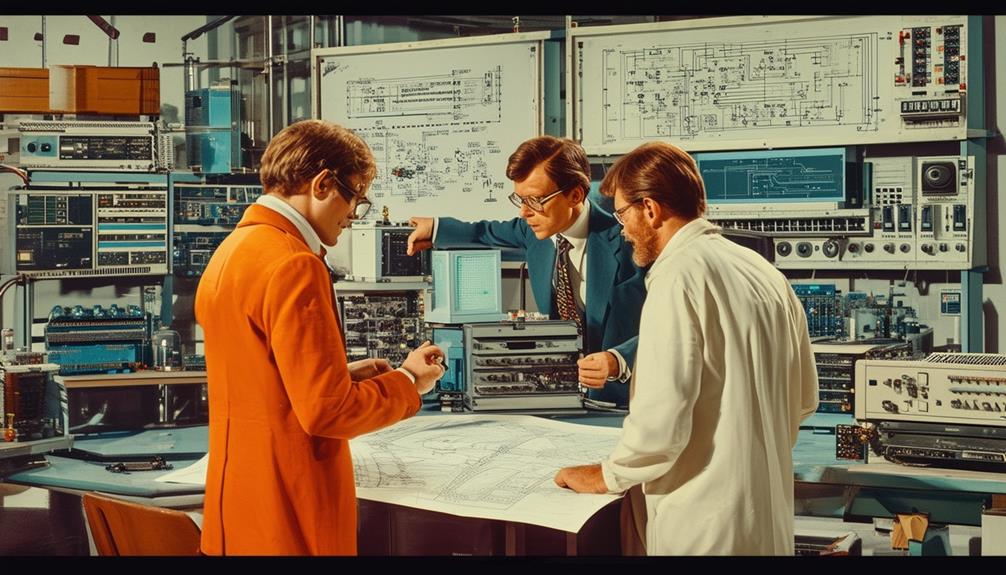
DARPA's support for influential researchers like John McCarthy and Marvin Minsky was pivotal in the 1970s. These key figures, backed by DARPA's funding, made groundbreaking contributions that significantly shaped the field of AI. Their work underscores how strategic partnerships can drive innovation and progress.
Key Figures Funded
By funding influential researchers like John McCarthy and Marvin Minsky, DARPA catalyzed groundbreaking advancements in artificial intelligence during the 1970s. Their support enabled these key figures to push the boundaries of machine intelligence through extensive research and development. As part of the Advanced Research Projects Agency, program managers and the DARPA director prioritized fundamental research, laying the groundwork for future technological innovations.
DARPA's investment wasn't just financial; it was about fostering a collaborative environment. By bringing together leading minds in AI, DARPA facilitated the exchange of ideas and knowledge, which proved vital for the development of expert systems, natural language processing, and robotics. The agency's commitment extended beyond funding to creating a robust network of intellectual resources.
The work supported by DARPA in the 1970s laid the foundation for AI's trajectory, influencing its growth and maturation. This period of intensive research and collaboration set the stage for the AI revolution that would unfold in subsequent decades, underscoring DARPA's pivotal role in shaping the field of artificial intelligence.
Groundbreaking Contributions Recognized
In recognition of groundbreaking contributions, DARPA celebrated influential researchers whose pioneering work in AI during the 1970s laid the foundation for future technological advancements. DARPA's support for visionaries like John McCarthy and Marvin Minsky was instrumental in advancing artificial intelligence. Their work, funded by DARPA, led to the development of significant AI concepts and machine learning techniques that remain influential today.
DARPA's research efforts during this era were not isolated projects but part of a broader strategy to create foundational AI programs that shaped the entire field. The agency's initiatives facilitated breakthroughs that became the bedrock for modern AI. For instance, DARPA's Strategic Computing program aimed to develop advanced computing systems for defense applications, pushing the boundaries of AI capabilities.
DARPA's strategic investments in the 1970s laid the groundwork for the contemporary AI landscape. By funding key researchers and projects, they enabled the Department of Defense to harness artificial intelligence for practical, defense-related uses. This early support catalyzed a series of advancements that continue to impact both military and civilian sectors, underscoring DARPA's pivotal role in the evolution of AI.
Technological Barriers Faced
During the 1970s, DARPA's AI research efforts were significantly constrained by the technological limitations of the era. The limited computational power available was a substantial barrier, making it difficult for researchers to run sophisticated algorithms. Memory limitations restricted data storage and retrieval, further complicating the development of AI technologies. Additionally, the processing speeds of the time were inadequate for real-time data processing, posing yet another challenge.
To summarize the technological barriers faced:
| Technological Barrier | Impact on AI Research |
|---|---|
| Computational Power | Slowed down complex calculations |
| Memory Limitations | Restricted data storage and retrieval |
| Processing Speed | Hindered real-time data processing |
These limitations collectively impeded DARPA's ability to fully explore and advance AI research during the 1970s.
Impact on Future AI Development

Impact on Future AI Development
DARPA's initiatives in the 1970s laid a crucial foundation for future advancements in AI technologies. By making pivotal investments during this period, DARPA, or the Advanced Research Projects Agency, catalyzed breakthroughs that became proof of principle for modern AI systems. These developed technologies underpinned critical advancements in machine learning and computational capabilities, significantly influencing the trajectory of AI development in subsequent decades.
One of DARPA's core missions has always been to bolster national security. In the 1970s, their investments in AI were closely tied to this objective, ensuring that the United States maintained a technological edge in military and defense applications. By funding projects that tackled complex AI problems, DARPA ensured that future AI technologies were robust and versatile enough to be integrated across various industries, including defense.
The long-term effects of DARPA's 1970s AI research are evident today. Technologies that once seemed futuristic are now integral to modern life, from autonomous systems to advanced data analytics. The groundwork laid by DARPA's early investments continues to influence the rapid evolution and application of AI, proving that their visionary approach was not only instrumental but also transformative.
Legacy of 1970s AI Research
The legacy of 1970s AI research is evident in early innovations like the General Problem Solver and ELIZA, which paved the way for future advancements. DARPA's influential projects during this period did more than just push boundaries; they established the foundation for modern AI. Understanding these pioneering efforts helps us appreciate the rapid progress in AI technology today.
Early AI Innovations
The pioneering AI projects of the 1970s, driven by DARPA's strategic investments, laid the foundation for the remarkable advancements in artificial intelligence we witness today. Visionary leaders, such as DARPA Director Jack Ruina, played a critical role in advancing early AI research. DARPA program managers orchestrated numerous groundbreaking research programs during this period.
Allen Newell, a pivotal figure in AI, collaborated with DARPA on several projects, including some of the earliest artificial intelligence programs that showcased the potential of machine learning. The Defense Agency's support was crucial in overcoming the computational limitations of the time.
Key contributions from 1970s AI research include:
- Logic Theorist: One of the earliest AI programs, funded by DARPA, which established foundational principles in automated reasoning.
- Dartmouth Summer Research Project on AI: This 1956 event, supported by DARPA, gathered leading minds to explore AI's future, setting a collaborative tone for subsequent research.
- Resurgence of AI Research: The 1970s experienced renewed interest and investment in AI due to DARPA's strategic initiatives.
- Advancements in Computer Technologies: DARPA's funding accelerated improvements in computational power, essential for AI development.
These early innovations were instrumental in shaping the AI landscape we recognize today.
Influential DARPA Projects
Building on early AI innovations, DARPA's influential projects in the 1970s, such as the Strategic Computing Initiative, significantly advanced the field of artificial intelligence. This initiative aimed to develop AI technologies for military applications, laying the groundwork for future breakthroughs in machine learning and computational intelligence that remain relevant today.
The Strategic Computing Initiative and other DARPA-backed projects extended beyond military use, spurring advancements across diverse domains. Despite some unsuccessful ventures, DARPA's persistent support in the 1970s fostered an environment ripe for innovation and significant progress in AI research.
To provide a clearer picture, here is an overview of key projects and their impacts:
| Project | Focus Area | Impact |
|---|---|---|
| Strategic Computing Initiative | Military Applications | Improved tactical decision-making |
| Machine Learning Programs | Computational Intelligence | Advanced algorithms and models |
| Knowledge-Based Systems | AI Research | Established groundwork for expert systems |
| Robotics Development | Autonomous Systems | Pioneered early robotics research |
These efforts collectively contributed to a legacy that continues to shape artificial intelligence research and development. DARPA's initiatives from the 1970s have undeniably influenced the landscape of AI, enabling many modern advancements.
Conclusion
DARPA's vision in the 1970s was instrumental in advancing AI research. By funding key projects and supporting influential researchers, they dismantled technological barriers and paved the way for future AI advancements. The impact of their initiatives is still evident today, illustrating that DARPA's efforts in the 1970s were crucial in shaping modern AI. Their legacy continues to inspire innovation and drive progress in artificial intelligence.
Related posts