The Role of AI in Supply Chain Management Post-Pandemic
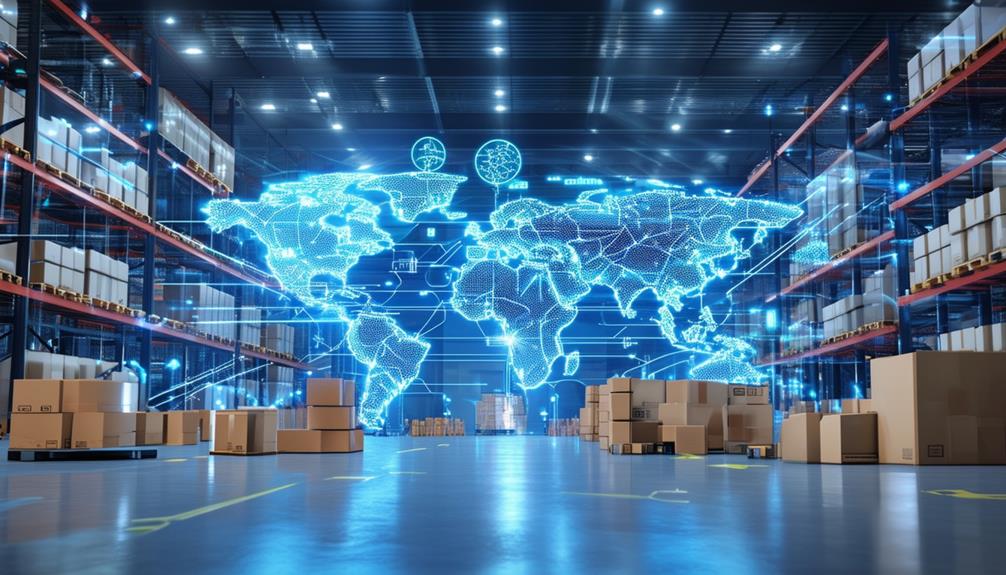
The pandemic significantly disrupted global supply chains, causing widespread delays and shortages. Now, AI is transforming supply chain management by providing real-time visibility across entire networks, predicting demand with high accuracy, and automating routine tasks. Beyond streamlining operations, AI anticipates disruptions and optimizes inventory levels, enhancing resilience. What does this mean for the future of your business and the broader industry? Integrating these advanced technologies into your supply chain strategy requires careful consideration of their broader implications.
Enhancing Supply Chain Visibility

Enhancing supply chain visibility enables the mapping of intricate global networks and the extraction of data from diverse sources using AI. This comprehensive view of the supply chain, from raw materials to end consumers, is facilitated by AI tools that analyze vast amounts of data to detect real-time shifts in market demand and customer sentiment.
Most companies face challenges in monitoring beyond their second-tier suppliers, making AI an invaluable asset. For example, Altana's AI tool efficiently maps global supply chains through advanced document processing systems. This level of visibility allows for better anticipation of disruptions and more effective responses.
Real-time data is essential for understanding market demand and making informed decisions. Google's Video AI technology creates real-time supply chain dashboards, enabling continuous monitoring and agile responses to fluctuations, ensuring the supply chain remains responsive and resilient.
Predictive Analytics for Demand Forecasting
AI-powered predictive analytics in demand forecasting is transforming how businesses anticipate and respond to market dynamics. In the post-pandemic landscape, analyzing historical data and market trends for accurate predictions has become indispensable. Leveraging AI in supply chain technology enables the creation of precise demand forecasts, essential for adapting to shifting consumer behaviors and volatile market conditions.
AI-driven predictive models offer more than just accurate forecasts; they enhance supply chain agility. By anticipating demand fluctuations, businesses can optimize inventory levels, ensuring the right products are available at the right times, thereby avoiding overstocking or understocking. This optimization is crucial for reducing costs and minimizing risks, priorities that have only intensified in the post-pandemic era.
Advanced algorithms in predictive analytics support real-time decision-making, allowing for swift responses to demand changes. This capability significantly improves supply chain management, making it more efficient and resilient. Ultimately, AI-powered demand forecasting enhances customer satisfaction by ensuring product availability when and where needed. In today's market, the ability to adapt quickly and accurately is not just an advantage—it is a necessity.
AI in Inventory Management
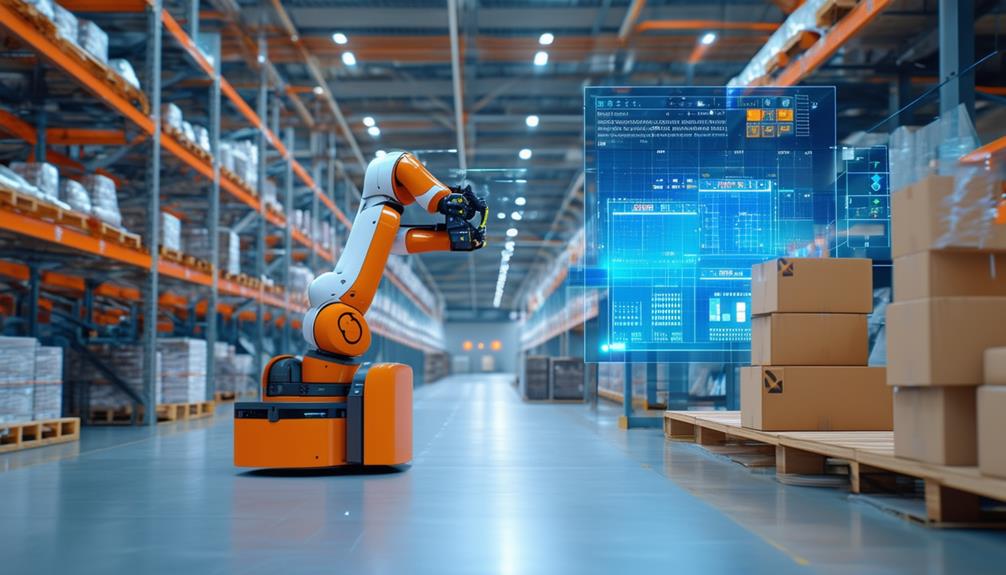
Leveraging AI in inventory management enhances demand forecasting accuracy and optimizes stock levels. AI algorithms utilize real-time data to monitor inventory, ensuring the optimal amount of stock is maintained. This minimizes excess inventory and reduces stockouts, leading to cost savings and improved operational efficiency.
Demand Forecasting Accuracy
AI-driven demand forecasting is transforming inventory management by significantly improving forecast accuracy, sometimes by as much as 30%. Utilizing advanced AI tools, businesses can analyze extensive datasets and historical trends with high precision. This enhancement in demand forecasting accuracy streamlines supply chains, ensuring that production and inventory levels are finely tuned to actual market needs.
Here's how AI tools are revolutionizing inventory management:
- Data Analytics: AI processes large volumes of data in real-time, enabling rapid adaptation to market fluctuations and optimized inventory levels.
- Reduction in Excess Inventory: Accurate forecasts can reduce excess inventory by up to 50%, lowering carrying costs and minimizing waste.
- Minimized Stockouts: Improved demand forecasting reduces stockouts, directly boosting customer satisfaction and loyalty.
- Enhanced Decision-Making: AI-driven insights facilitate more informed decisions, effectively balancing supply and demand.
Stock Level Optimization
AI has become instrumental in optimizing stock levels, preventing both overstocking and stockouts. Utilizing machine learning algorithms, businesses can analyze historical data and market trends to forecast demand accurately. This AI-driven approach not only reduces carrying costs but also enhances customer satisfaction by ensuring products are available when needed.
In the post-pandemic era, supply chain resilience is more critical than ever. AI's capability to process real-time data allows for dynamic adjustments in stock levels based on demand fluctuations. This ensures that businesses neither hold excess inventory nor face urgent restocking issues. Such operational efficiency minimizes waste and promotes a more sustainable supply chain.
Key Impacts of AI on Inventory Management:
| Benefit | Description | Outcome |
|---|---|---|
| Accurate Demand Forecasting | Leverages historical and market data for precise demand prediction | Reduced stockouts and surplus |
| Cost Reduction | Optimizes inventory levels to lower carrying costs | Improved profitability |
| Customer Satisfaction | Ensures product availability when customers need them | Increased customer loyalty |
| Supply Chain Resilience | Adapts to real-time demand fluctuations | Enhanced operational agility |
AI-driven optimization is transforming inventory management, making supply chains more responsive, efficient, and resilient in the post-pandemic world.
Real-time Inventory Tracking
AI-powered real-time inventory tracking enables businesses to make quick, data-driven decisions, significantly reducing instances of stockouts and overstock. Utilizing AI algorithms helps maintain optimal inventory levels, ensuring products are available as needed without incurring excess holding costs. This technology enhances supply chain transparency, offering a precise and up-to-date view of your inventory at any given time.
Here's how AI-driven real-time inventory tracking can revolutionize your operations:
- Improved Order Fulfillment: AI ensures the appropriate stock levels, improving your capacity to fulfill orders swiftly and accurately.
- Reduced Holding Costs: By optimizing inventory levels, you minimize costs related to storing surplus products.
- Enhanced Operational Efficiency: Automation minimizes manual errors, streamlining processes, and conserving valuable time.
- Better Supply Chain Visibility: Real-time data allows for effective monitoring and adjustments, facilitating better-informed decisions.
Automating Supply Chain Processes
Implementing AI to automate supply chain processes significantly reduces manual labor and human error, resulting in enhanced efficiency and precision. AI streamlines essential supply chain tasks such as inventory management and order processing, completing tasks in minutes that once took hours. This efficiency allows your workforce to focus on more strategic roles.
AI-driven automation not only saves time but also enhances decision-making capabilities. It provides faster, more accurate insights, boosting your supply chain's agility—an essential quality in the post-pandemic landscape where resilience and rapid adaptation are crucial.
Automating supply chain processes also leads to substantial cost savings. Reduced labor costs and fewer errors contribute to a leaner, more cost-effective operation. Enhanced operational effectiveness ensures you meet customer demands without compromising on quality or speed.
In the post-pandemic world, adopting AI automation in supply chain management is no longer just a trend but a necessity. Companies leveraging AI in their supply chain processes are thriving, demonstrating the undeniable benefits of this advanced technology.
AI-Driven Risk Management
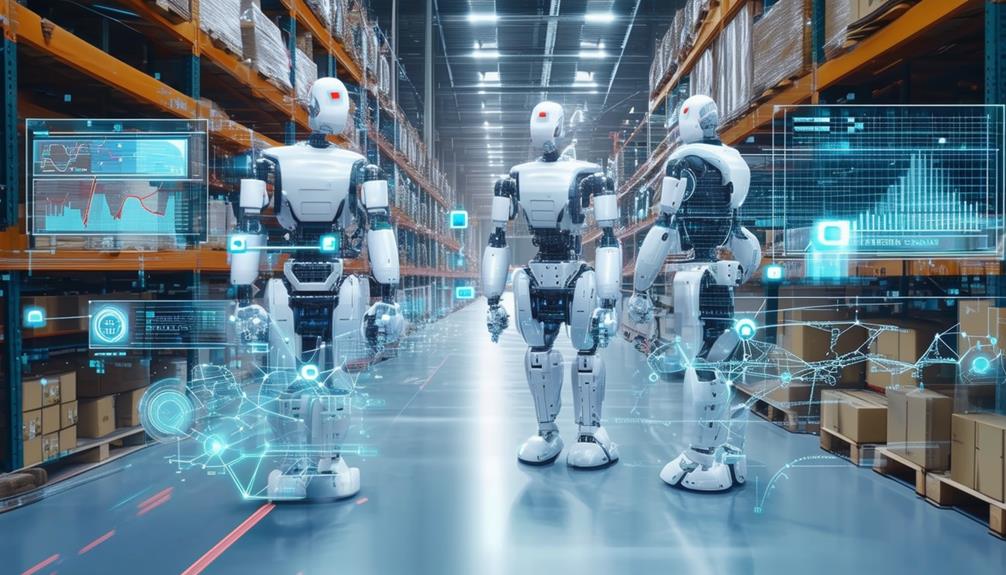
AI-driven risk management enhances your supply chain's resilience by predicting and mitigating disruptions through the analysis of real-time data. AI algorithms can swiftly detect potential risks, ensuring that your supply chain remains operational even under fluctuating global conditions.
Here's how AI improves your supply chain's risk management:
- Predicting Disruptions: AI algorithms analyze historical and current data to anticipate potential disruptions, allowing proactive preparation.
- Improving Response Times: AI enables faster reactions to issues, minimizing downtime and maintaining smooth operations.
- Enhancing Decision-Making: AI delivers actionable insights, facilitating quick and informed risk mitigation decisions.
- Adapting to Global Conditions: AI-driven systems adjust to evolving global conditions, ensuring supply chain resilience in the face of unexpected changes.
Post-pandemic, the role of AI in risk management has become crucial. Identifying potential disruptions and implementing effective solutions is now essential for maintaining operational efficiency. Integrating AI into your supply chain significantly boosts risk management capabilities, improves response times, and strengthens decision-making processes. This proactive approach ensures your supply chain is resilient, adaptable, and ready to face any challenges.
Future Trends in AI and Supply Chains
As AI technology advances, supply chains are undergoing significant transformations, becoming increasingly efficient and adaptable to future demands. One of the most notable trends is the integration of AI-powered predictive risk management. By anticipating and addressing potential disruptions, businesses can proactively mitigate risks, enhancing the resilience of their supply chains. This capability is crucial in a global trade environment characterized by constant evolution and unpredictable challenges.
AI's role in enhancing efficiency is paramount. It enables real-time optimization of operations, ensuring effective resource utilization and waste reduction. Moreover, innovations such as blockchain integration provide unparalleled transparency and security. Autonomous vehicles, guided by AI, hold the potential to revolutionize goods transportation, further boosting efficiency and reducing costs.
Adopting AI advancements provides a competitive advantage. Companies that implement AI practices are better equipped to adapt to rapid changes in the global market. They develop supply chains that are not only resilient and efficient but also agile and capable of meeting future demands. The future of supply chains lies in leveraging AI to create systems that are robust, adaptable, and capable of addressing emerging challenges head-on.
Conclusion
In the post-pandemic world, AI is revolutionizing supply chain management. With enhanced visibility, improved demand forecasting, optimized inventory, automated processes, and robust risk management, businesses gain a significant competitive edge. AI not only boosts efficiency and agility but also ensures resilience and adaptability. By integrating these AI-driven advancements, companies are better prepared to navigate the complexities of modern supply chains and maintain a leading position in the market.