
The Role of AI in Space Exploration: From Mars Rovers to Autonomous Satellites
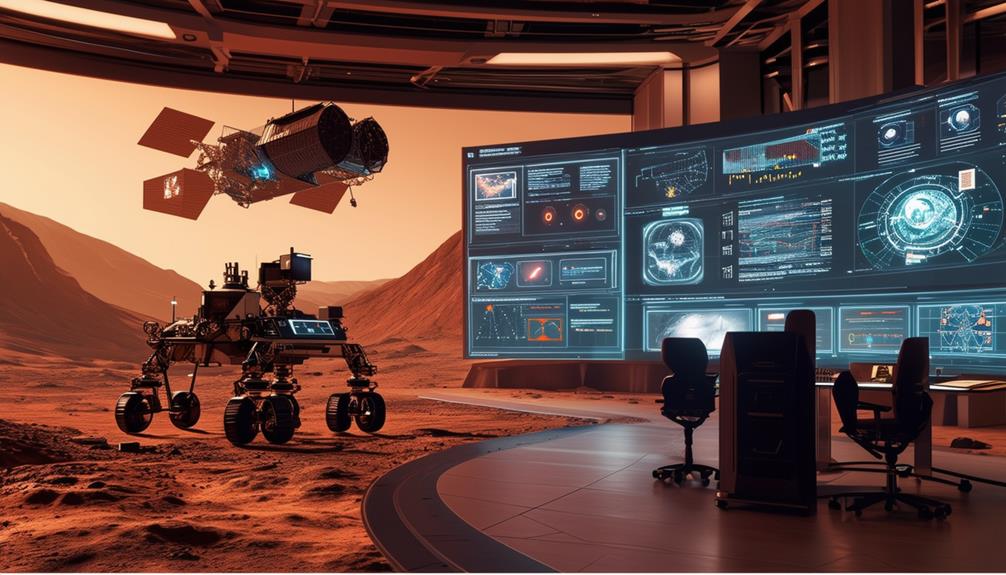
AI plays a pivotal role in modern space exploration. Mars rovers like Curiosity and Perseverance navigate the Red Planet's challenging terrain, making real-time decisions through advanced AI algorithms. Additionally, autonomous satellites leverage AI to manage independent movement and avoid collisions. This technology not only boosts mission efficiency but also significantly enhances our scientific exploration capabilities. Curious about how AI revolutionizes data analysis in space or aids spacecraft guidance? The implications are vast and captivating.
Mars Rovers and AI
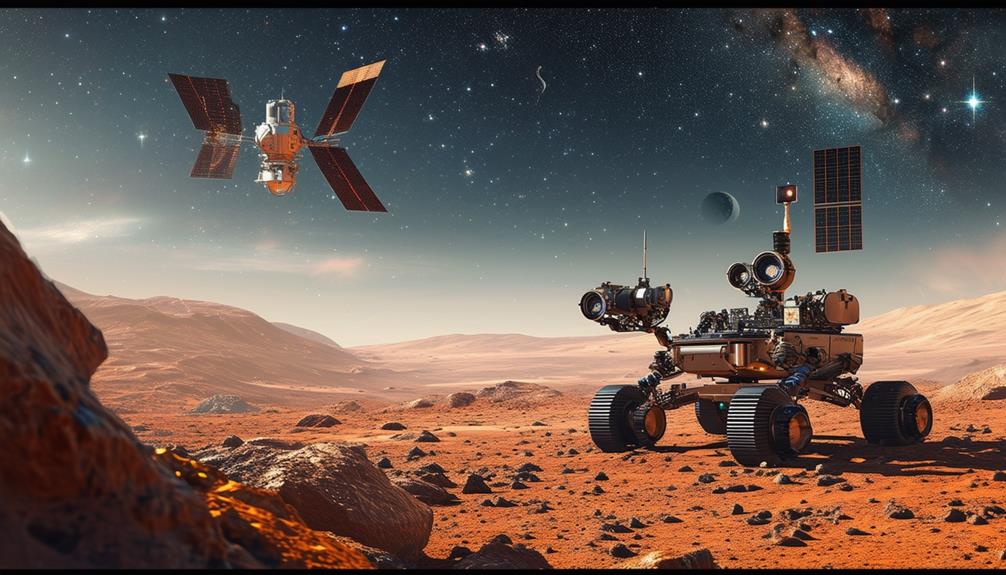
NASA's Mars rovers, such as Curiosity and Perseverance, leverage advanced AI algorithms to navigate and analyze the Martian terrain autonomously. These AI systems enable the rovers to make real-time decisions, selecting the safest and most efficient routes across the rugged landscape, which is crucial for maximizing mission efficiency and safety.
AI's contributions extend beyond navigation. The rovers use AI to perform detailed terrain analysis, identifying promising scientific targets. By processing data on-site, they can autonomously select and prioritize locations for experiments, eliminating the need to wait for instructions from Earth. This capability is essential for deep space exploration, where communication delays can impede timely decision-making.
Additionally, AI allows the rovers to adapt to the dynamic Martian environment. Whether maneuvering around unexpected obstacles or adjusting to weather conditions, these rovers can respond swiftly, ensuring the continuity of their scientific missions. This adaptability is critical for conducting successful experiments and collecting valuable data.
Incorporating AI into Mars rover operations highlights the potential of autonomous systems in space exploration. By enhancing mission efficiency and scientific output, AI is paving the way for more advanced and ambitious explorations beyond our planet.
Autonomous Satellites
Autonomous satellites, powered by advanced AI algorithms, are transforming space operations by independently navigating, optimizing orbits, and avoiding collisions. These intelligent systems utilize real-time data to make decisions that ensure they remain on course and evade potential hazards. By optimizing orbits, they conserve fuel and extend their operational lifespan, enhancing the efficiency of space missions.
In communication, autonomous satellites can predict patterns and optimize data transmission, ensuring rapid and efficient information relay. This capability is crucial for maintaining seamless connectivity, particularly in satellite constellations aimed at providing global coverage. Through AI, these satellites dynamically adapt to changing conditions, sustaining robust communication networks.
For Earth observation, AI-driven autonomous satellites are indispensable. They process vast amounts of satellite imagery to monitor changes in land cover, weather patterns, ice cover, and ecosystem health. This real-time analysis offers valuable insights for climate monitoring and disaster response. Machine learning algorithms empower these satellites to process data instantly, delivering actionable information for critical decision-making.
Data Analysis in Space

In space exploration, AI revolutionizes data analysis by swiftly processing and interpreting vast datasets from telescopes, satellites, and rovers. Machine learning algorithms enhance scientific understanding by identifying patterns in space data, excelling at anomaly detection to pinpoint irregularities that might indicate new celestial phenomena or potential issues requiring further investigation.
AI accelerates research exponentially by categorizing galaxies and mapping distant ones. Adaptive AI systems onboard spacecraft handle real-time data analysis, detect anomalies, and trigger corrective actions to ensure mission success. This capability allows AI to make critical decisions when human intervention isn't possible.
AI also revolutionizes Earth observation. Satellites equipped with AI track changes in land cover, weather patterns, and ecosystem health, providing invaluable insights into our planet's climate and environment. The precision and speed of AI-driven data analysis make it indispensable for both space exploration and Earth studies. With AI, the boundaries of what we can achieve in space and on Earth are continually expanding.
AI in Spacecraft Navigation
AI is revolutionizing spacecraft navigation by enabling autonomous movement across challenging terrains on distant planets. For instance, Mars rovers equipped with AI technology can explore the Martian surface without needing constant instructions from Earth. These autonomous systems employ advanced algorithms to analyze their surroundings, plan optimal routes, and avoid obstacles. This capability ensures that rovers can adapt to unexpected environmental conditions, maintaining their course and mission objectives.
Integrating AI into spacecraft navigation allows for real-time trajectory optimization. The algorithms assess the most efficient paths, enhancing the spacecraft's operational efficiency. This not only conserves valuable resources but also maximizes the scientific output of each mission. Autonomous navigation enables more comprehensive exploration and data collection.
AI-driven navigation systems are vital for the success of space missions. They enable spacecraft to respond to the dynamic challenges of space travel, from shifting sand dunes on Mars to potential hazards in the asteroid belt. By improving mission efficiency and facilitating safe, autonomous exploration, AI technology lays the groundwork for groundbreaking discoveries and the overall success of space exploration initiatives.
Earth Observation and Monitoring
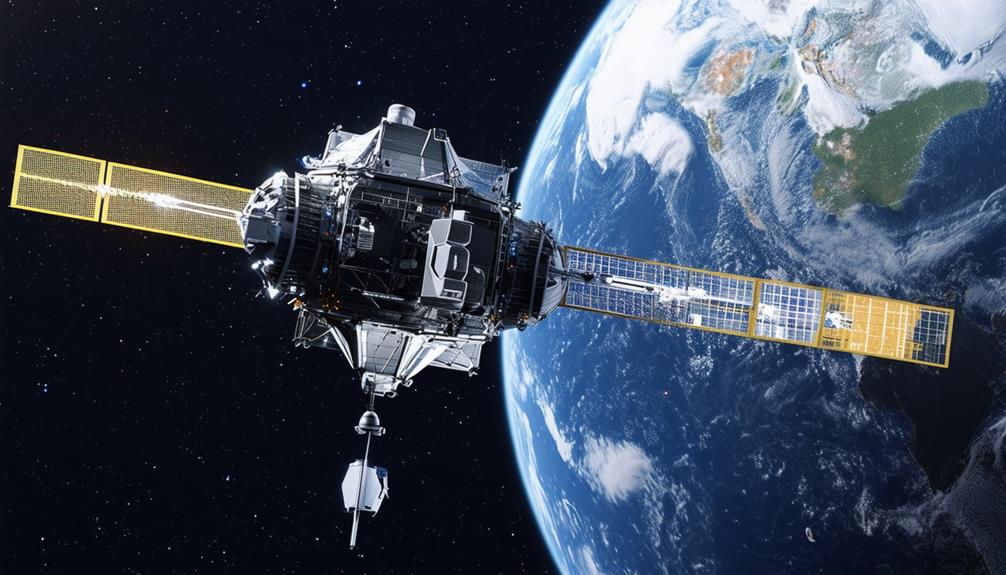
AI-powered satellites are transforming the way we observe and monitor Earth's environment. Equipped with advanced sensors, these satellites continuously track changes in land cover, weather patterns, and other critical environmental metrics. By processing vast amounts of satellite data with machine learning algorithms, we can now identify essential trends and patterns for climate monitoring and disaster response.
AI-driven Earth observation satellites excel at analyzing imagery to monitor changes in ice cover, ecosystem health, and natural disasters. These insights are crucial for addressing environmental challenges and understanding the impacts of climate change. For example, the precise data gathered by these satellites enable tracking of deforestation, melting ice caps, and the health of coral reefs.
Moreover, AI-powered satellites play a vital role in disaster response. They can rapidly analyze satellite data to assess damage from hurricanes, wildfires, and floods, facilitating quicker and more efficient emergency responses. By providing real-time information, these satellites help save lives and reduce damage. In summary, AI and advanced sensors are making Earth observation more accurate, insightful, and impactful than ever before.
Conclusion
AI is revolutionizing space exploration, from Mars rovers navigating challenging terrains to autonomous satellites optimizing their orbits. Beyond simplifying tasks, AI is expanding the horizons of what we can achieve in space. By utilizing AI for data analysis, spacecraft navigation, and Earth monitoring, we are significantly enhancing our scientific capabilities and increasing mission success rates. Embrace the future, where AI will continue to transform our understanding of the cosmos.