The Role of AI in Remote Work and Online Learning During the Pandemic
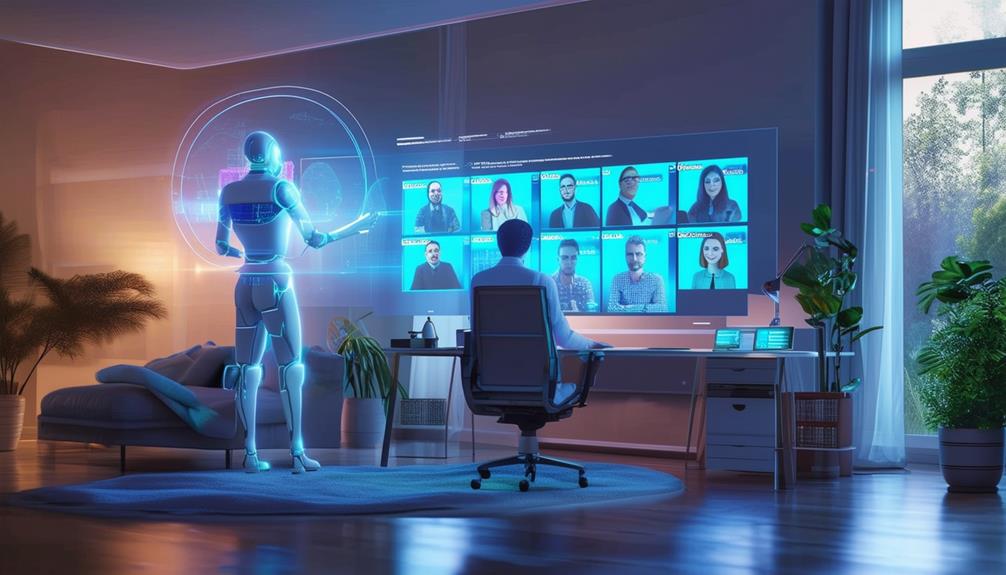
AI has significantly transformed remote work and online learning during the pandemic by automating routine tasks and enhancing communication. Virtual assistants have improved time management, while AI-driven tools have tailored learning experiences to individual needs. Notably, these technologies have also advanced security measures and adaptive learning, adjusting to proficiency levels in real-time. Imagine a future where AI not only personalizes work and education but also anticipates your needs and challenges. What innovations might this AI-driven landscape bring next?
AI in Remote Work

AI in remote work automates routine tasks, enhancing productivity and efficiency for remote teams. By leveraging AI tools like virtual assistants and chatbots, communication and collaboration are streamlined. These intelligent systems handle scheduling, manage emails, and set up virtual meetings, allowing team members to focus on strategic tasks.
Beyond task automation, AI analyzes data from remote work activities to offer valuable insights into performance and engagement. For example, an AI system can identify workflow bottlenecks or suggest optimizing team collaboration. This capability enables informed decision-making, improving overall productivity.
Machine learning algorithms also predict trends and patterns in remote work environments. They can help anticipate project timelines and allocate resources more efficiently, allowing for proactive management of virtual teams. Security is another critical area where AI excels. AI-driven systems detect and prevent potential cyber threats, ensuring a secure remote work environment. This added cybersecurity layer enables confident, protected work.
AI in Online Learning
Exploring AI in online learning reveals how personalized learning paths transform education by tailoring content to each student's unique needs. AI-powered virtual classroom assistants streamline administrative tasks and offer immediate support, enhancing learning efficiency. These innovations not only boost engagement but also improve comprehension for all students.
Personalized Learning Paths
Personalized learning paths are transforming online education by tailoring content to meet each student's unique needs and preferences. Leveraging machine learning, these paths analyze student data to deliver customized educational materials and activities. This results in a learning experience that aligns with your specific learning style and pace.
Adaptive learning technologies are crucial in this process, utilizing AI to continuously adjust content and assessments based on your proficiency levels. If you're excelling in a particular area, the system introduces more challenging materials to keep you engaged. Conversely, if you're struggling, it provides additional resources and simpler exercises to help you better understand the concepts.
At the heart of creating these personalized learning paths is student data analysis. By examining your performance data, AI algorithms can pinpoint your strengths and weaknesses, allowing educators to offer tailored support and feedback. This level of personalization not only enhances your learning outcomes but also makes the educational experience more engaging and effective. With AI-driven personalized learning paths, you're empowered to learn at your own pace and achieve your academic goals more efficiently.
Virtual Classroom Assistants
Building on the benefits of personalized learning paths, virtual classroom assistants powered by AI further enhance online learning by automating routine tasks and offering real-time support. These AI-driven tools adapt to individual needs, improving student outcomes by delivering tailored content and feedback precisely when needed.
In online classes, AI automates tasks like grading assignments and generating personalized learning materials, allowing educators to focus on more critical aspects of teaching. Imagine submitting an assignment and receiving instant, constructive feedback. Virtual classroom assistants make this possible, ensuring students stay engaged and on track.
Chatbots like Microsoft's Bing and Google's Bard are revolutionizing interactions with course content. These virtual assistants can answer questions, provide additional resources, and even simulate one-on-one tutoring sessions. The use of AI extends further with tools like ChatGPT, which assist in tasks requiring text and image processing, making complex subjects easier to understand.
Adaptive Learning Technologies
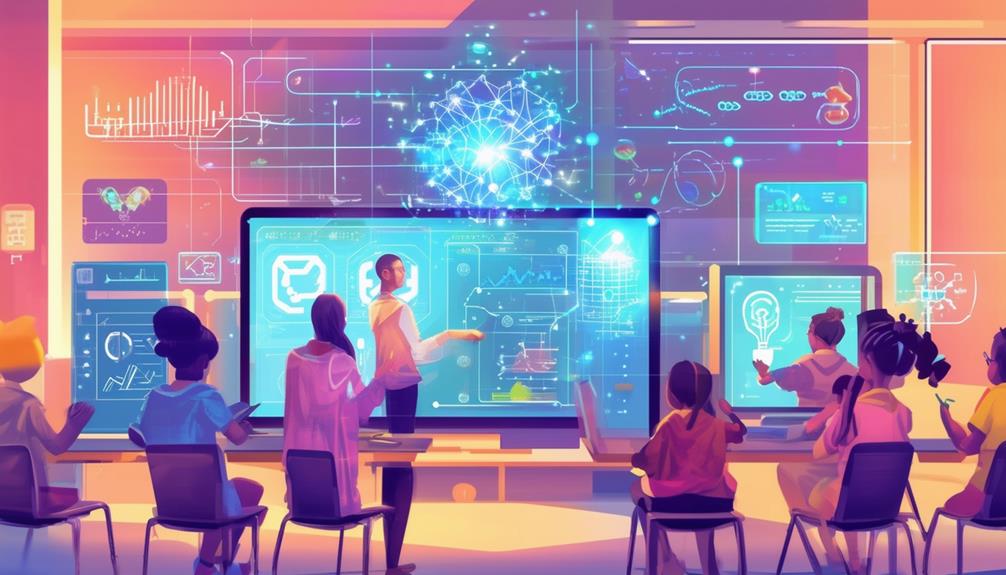
Adaptive learning technologies offer personalized learning paths tailored to your unique pace and style. These tools monitor your progress in real-time and provide immediate feedback, optimizing your learning experience. By customizing content to meet your specific needs, they enhance engagement and improve outcomes, particularly in remote learning environments.
Personalized Learning Paths
Adaptive learning technologies are transforming education by utilizing algorithms to customize educational materials according to each student's individual needs and progress. These technologies create personalized learning paths that adapt in real-time, ensuring that every student receives the necessary support to succeed. Through data analysis, adaptive learning technologies can identify your strengths and areas for improvement, offering targeted instruction to address your specific challenges.
In this advanced learning environment, you can expect:
- Dynamic coursework adjustments based on your performance, keeping you engaged and appropriately challenged.
- Instant feedback and guidance, aiding in faster comprehension of complex topics.
- Lessons tailored to your preferred learning style, making studying more enjoyable and effective.
- One-on-one support from virtual tutors, ensuring you never feel lost or overwhelmed.
These adaptive learning platforms continuously analyze your performance data, ensuring that the learning experience is interactive and individualized. Consequently, you receive a learning path that is uniquely suited to you, maximizing your potential and making education more accessible and effective. With adaptive learning technologies, your educational journey is personalized, paving the way for your success.
Real-Time Progress Tracking
Adaptive learning technologies leverage real-time progress tracking to offer a personalized educational experience tailored to your performance data. These AI-driven systems analyze your progress instantaneously, adjusting content and difficulty levels to suit your specific needs. If you're encountering difficulties with a topic, the system will provide simpler explanations or additional practice problems. Conversely, if you're excelling, it will introduce more challenging material to keep you engaged.
By continuously monitoring your performance, real-time progress tracking ensures that the educational content remains aligned with your current understanding and capabilities. This dynamic adjustment keeps you motivated and aids in grasping complex concepts more effectively. For instance, if you consistently struggle with a math module, the system will detect this and offer targeted exercises to address your weak points.
Educators also benefit from these AI technologies, as they can closely monitor your progress through real-time data. This allows them to identify areas where you might be struggling and intervene promptly with additional support or resources. This proactive approach has led to notable improvements in student outcomes and retention rates. Ultimately, adaptive learning tools make your educational path both effective and responsive to your unique needs.
Automating Remote Tasks
AI is revolutionizing remote work by automating tasks such as grading assignments, managing attendance, and creating personalized learning materials. Imagine the time saved without the need to manually grade each paper. With AI technology in online learning, remote tasks become more efficient, allowing educators to focus on meaningful interactions with their students.
Automation in remote work and online learning doesn't just ease the workload; it enhances the educational experience overall. Machine learning algorithms can predict student performance and adapt teaching methods accordingly. This allows for tailored support to each student, improving their engagement and understanding.
Consider these benefits of automation in remote tasks:
- Time Savings: Eliminate long hours spent grading or tracking attendance.
- Personalized Learning: AI generates custom learning materials that cater to each student's needs.
- Improved Efficiency: Streamlined processes free up time for one-on-one interactions.
- Better Outcomes: Timely feedback and guidance enhance student learning results.
Enhancing Virtual Collaboration

Virtual collaboration has become indispensable for remote teams, with AI-driven tools significantly boosting productivity and communication. During the pandemic, platforms like Zoom and Microsoft Teams experienced a notable surge in usage, with Zoom hosting over 300 million daily meeting participants in April 2020. AI-powered platforms such as Slack leverage natural language processing to streamline communication, making it easier for teams to stay connected and collaborate seamlessly.
Virtual whiteboarding tools like Miro and MURAL revolutionize brainstorming and idea-sharing by providing real-time digital canvases, thereby fostering creativity and problem-solving. Additionally, AI algorithms in project management tools like Asana and Trello enhance task assignments, scheduling, and progress tracking, ensuring remote teams remain organized and meet deadlines.
In the realm of online learning, AI integration offers personalized learning experiences. Platforms such as Coursera and Udemy utilize AI to adapt assessments and monitor progress, making online education more effective and engaging. By leveraging these AI-driven tools, virtual collaboration and online learning efforts can become more productive and impactful, enabling teams and individuals to thrive in a remote work environment.
Future of AI in Education
As AI continues to revolutionize remote work and online learning, its potential to reshape education becomes increasingly evident. Imagine a world where your learning experience is tailored specifically to your needs, making education more engaging and effective. The future of AI in education is not just a possibility; it's already happening. Here's how:
- Personalized Learning: AI customizes instructional materials based on individual learning styles and paces, making remote learning more effective.
- Predictive Analytics: Machine learning algorithms forecast grades and performance, enabling educators and learning management systems to provide timely interventions.
- Virtual Assistants: AI tools such as Expert Systems and Virtual Assistants act as personal tutors, offering real-time support and feedback based on analyzed data.
- Smart Classrooms: AI integration in smart classrooms enhances teaching efficiency and provides personalized learning experiences, making remote learning as interactive as in-person classes.
The future of AI in education promises to enrich the learning experience by addressing complex problems, aiding in research predictions, and overcoming challenges brought on by the pandemic. For online students, AI ensures a more personalized, efficient, and engaging educational journey.
Conclusion
AI has significantly transformed remote work and online learning during the pandemic. By automating repetitive tasks and enhancing virtual collaboration, it has made remote work more efficient and secure. In education, AI's adaptive learning technologies have personalized learning experiences, making them more effective and engaging. Looking ahead, AI will continue to shape the future of education, offering even more customized and real-time support. Embrace these advancements; they are here to stay and will improve both work and learning environments.