
The Role of AI in Cybersecurity

Are you aware of the increasing complexity of cyber threats and how AI is revolutionizing cybersecurity? By utilizing machine learning, natural language processing, and predictive analytics, AI can detect and respond to threats in real-time, providing a proactive defense that is unparalleled. However, implementing AI in cybersecurity strategies comes with its own set of challenges and considerations. How exactly does AI enhance threat detection, and what are the potential drawbacks? Let's explore the specifics of AI's role in strengthening our digital defenses.
Understanding Cyber Threats
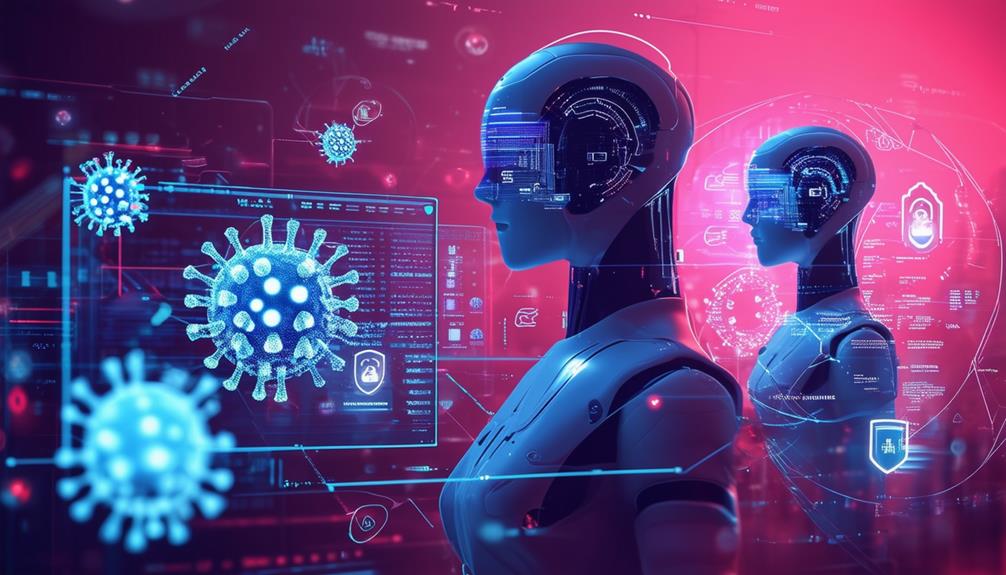
Understanding cyber threats is essential due to their diverse nature, ranging from malware and phishing attacks to sophisticated breaches sponsored by nation-states. As these threats evolve, adopting advanced strategies to counter them becomes increasingly vital. This is where AI revolutionizes cybersecurity. By leveraging machine learning algorithms, AI can analyze vast amounts of data to identify patterns and predict potential attacks, thereby building a robust defense against various threats.
AI's capabilities extend further. Natural language processing (NLP) allows systems to understand and interpret malicious communications, enhancing threat intelligence. This means detecting phishing attempts and social engineering attacks more efficiently. Additionally, AI's predictive analytics can foresee advanced persistent threats (APTs), enabling preemptive actions before significant damage occurs.
In today's landscape, where cyber threats are becoming more sophisticated, AI's role is indispensable. Integrating AI into cybersecurity means transitioning from reactive to proactive threat management. This proactive stance is crucial for defending against a myriad of cyber threats. By harnessing AI and its advanced tools, you ensure a more secure and resilient defense mechanism, safeguarding your data and networks effectively.
The Evolution of Cyber Attacks
As cyber attacks have evolved, they have become increasingly sophisticated and challenging to defend against using traditional methods. Nation-state-sponsored attacks pose significant threats to national security and critical infrastructure. These advanced persistent threats (APTs) employ highly refined hacking techniques, making it crucial to understand adversaries' tactics to develop effective defense mechanisms.
The expansion of the Internet of Things (IoT) has further complicated the cybersecurity landscape. With more devices connected to the internet, the attack surface has widened, providing cyber adversaries with more entry points to exploit. Traditional security measures are often inadequate against these dynamic and evolving threats, necessitating continuous adaptation and improvement.
Understanding the evolution of cybersecurity is vital for staying ahead of these rapidly changing threats. Cyber attacks are no longer just about breaching systems; they increasingly focus on long-term infiltration and data exfiltration. To counter these threats, adopting advanced, AI-driven solutions that can anticipate and respond to new hacking techniques in real-time is essential. By staying vigilant and continually updating defense mechanisms, organizations can better protect against the constantly changing landscape of cyber threats.
AI in Cybersecurity

AI is revolutionizing cybersecurity by utilizing machine learning algorithms to detect and respond to threats with exceptional efficiency. Integrating AI into your security framework enhances threat detection and response capabilities, enabling quicker identification and mitigation of cyber risks. AI in cybersecurity employs intelligent agents to continuously monitor systems, analyzing vast datasets to identify anomalies and potential threats.
Machine learning is crucial in understanding and adapting to evolving cyber threats, facilitating predictive analytics to forecast future risks based on emerging trends. This proactive threat detection allows organizations to stay ahead of cybercriminals, significantly reducing the likelihood of successful attacks. Additionally, AI-driven automation streamlines incident response processes, improving efficiency and reducing response times.
Continuous monitoring powered by AI ensures robust security infrastructure. By analyzing user behavior and context, AI strengthens security through continuous authentication, making risk-based access decisions that enhance protection. Ultimately, AI in cybersecurity not only bolsters your ability to detect and respond to threats but also fortifies your defenses against the ever-evolving landscape of cyber risks.
Key AI Components
Machine learning algorithms are fundamental AI components in cybersecurity, leveraging data to detect threats and anomalies effectively. These algorithms process extensive datasets to identify patterns and deviations indicative of cyber threats. By continuously learning and updating, they enhance the system's capacity to recognize and respond to new and evolving threats.
Natural Language Processing (NLP) is another crucial AI component, analyzing textual data to extract actionable insights and threat intelligence. NLP aids in understanding and processing information from sources such as security blogs, forums, and incident reports, providing timely and relevant intelligence.
Predictive Analytics extends this capability by forecasting potential future threats based on trends and historical data. This proactive approach enables anticipation and preparation for attacks before they occur, significantly improving the security posture.
Automation and Orchestration streamline cybersecurity tasks, increasing efficiency and expediting incident response. AI-driven automation can handle routine tasks, allowing more time for complex problem-solving. Orchestration ensures seamless integration of different security tools and processes, optimizing overall security operations. Collectively, these components bolster cybersecurity efforts, making them more robust, efficient, and responsive.
Machine Learning in Threat Detection

Machine learning algorithms excel in detecting anomalies, enabling real-time analysis that swiftly identifies potential threats. These capabilities facilitate predictive threat modeling, allowing organizations to stay ahead of cyber attackers. By continuously learning from new data, machine learning ensures that defenses are always evolving, thereby enhancing security measures.
Anomaly Detection Algorithms
Anomaly detection algorithms are instrumental in identifying potential cyber threats by utilizing machine learning to detect unusual patterns in data that may indicate security breaches. These algorithms are essential tools in cybersecurity, employing outlier detection to analyze large datasets and identify deviations from the norm. By examining historical data, they continuously learn and improve, significantly reducing false positives that are typical in traditional security systems.
By monitoring and analyzing data in real-time, anomaly detection algorithms proactively identify security risks. They not only respond to known threats but also anticipate and mitigate emerging ones. This proactive approach allows organizations to respond swiftly and effectively to potential cyber threats, minimizing the impact of any breaches.
Integrating these advanced algorithms into a cybersecurity strategy enhances the capability to detect early signs of attacks. Anomaly detection is crucial in maintaining a robust security posture, ensuring that defenses are always a step ahead of malicious actors. This dynamic approach evolves with the threat landscape, providing a powerful tool to safeguard digital assets.
Real-Time Analysis Benefits
Real-time analysis using machine learning provides cybersecurity teams with a critical advantage in swiftly detecting and counteracting emerging threats. By continuously monitoring and analyzing data for anomalies, machine learning enhances threat detection capabilities. This proactive defense allows organizations to identify and respond to cyber attacks as they occur, significantly reducing the time required to mitigate potential breaches.
Artificial Intelligence (AI) is central to this process. Machine learning algorithms can process vast amounts of data in real-time, identifying patterns and anomalies that may signal an emerging threat. As cyber attacks evolve, the ability to analyze data instantaneously ensures that defenses remain one step ahead.
Leveraging machine learning for real-time analysis enables cybersecurity teams to act swiftly, preventing potential breaches before they escalate into major issues. This proactive approach minimizes the impact of potential attacks, ensuring that your organization stays secure. The real-time capabilities of machine learning not only bolster threat detection efforts but also enable a more robust and dynamic defense against the ever-changing landscape of cyber threats. By staying ahead of cybercriminals, you are better equipped to protect your valuable data and resources.
Predictive Threat Modeling
Predictive threat modeling leverages machine learning algorithms to anticipate future cyber threats by analyzing historical data and identifying trends. This approach allows for the creation of behavioral models that detect anomalies and potential security risks, enabling organizations to proactively address evolving threats and enhance their cybersecurity posture.
Machine learning excels at processing large datasets to uncover patterns and trends, which are crucial for predicting and preventing security breaches before they occur. Integrating predictive threat modeling into your cybersecurity strategy enhances the accuracy and speed of threat detection processes.
Here is a table summarizing the key benefits of predictive threat modeling:
| Benefit | Description | Example Use Case |
|---|---|---|
| Threat Detection | Identifies anomalies and potential risks | Detecting unusual logins |
| Behavioral Models | Develops models based on historical data | User behavior analysis |
| Historical Data | Analyzes past events to forecast future threats | Trend analysis |
| Proactive Measures | Enables pre-emptive actions against threats | Patch management |
| Risk Reduction | Identifies vulnerabilities early to mitigate risks | Vulnerability assessments |
AI-Powered Security Analytics
AI-powered security analytics enable real-time threat detection, predictive risk assessment, and automated incident response. This cutting-edge technology helps your organization stay ahead of cyber threats while streamlining security processes. By leveraging AI, you shift from reactive to proactive network security, ensuring a more robust defense against potential attacks.
Real-Time Threat Detection
AI-powered security analytics are transforming threat detection by processing vast amounts of data at unprecedented speeds. These advanced tools utilize machine learning algorithms to identify patterns and anomalies, enabling real-time threat detection. By leveraging behavioral analytics, organizations can gain insights into user behaviors, making it easier to identify suspicious activities.
With AI, you are not just proactively identifying potential security risks but actively pinpointing them. AI-driven security analytics empower you to stay ahead of evolving cyber threats through advanced threat hunting capabilities. Here's how:
- Behavioral Analytics: Detects unusual user behaviors to flag suspicious activities.
- Machine Learning Algorithms: Uncover patterns and anomalies indicative of security threats.
- Threat Hunting Capabilities: Facilitate proactive identification and mitigation of risks.
By aggregating data from diverse sources, AI helps build a comprehensive security posture. This real-time analysis allows for immediate action upon detecting anomalies, reducing the window of opportunity for attackers. Proactive threat identification ensures you are not just waiting for an attack but actively searching for potential vulnerabilities.
Integrating AI-powered security analytics into your cybersecurity infrastructure is essential for maintaining robust defenses in an ever-changing threat landscape.
Predictive Risk Assessment
Leveraging historical data and trends, AI can forecast future threats, enabling organizations to stay one step ahead of cybercriminals. Predictive risk assessment, powered by advanced AI algorithms, helps identify vulnerabilities and potential risks before they escalate into actual security incidents. By analyzing large volumes of historical data, AI-driven security analytics provide real-time insights into emerging threats and cyber risks.
With predictive risk assessment, security measures can be prioritized, and resources can be allocated more effectively. This proactive approach ensures that organizations are not merely reacting to threats but anticipating them. By targeting the most at-risk areas, efforts and resources are focused where they are needed most, thereby mitigating potential threats before they cause significant harm.
AI-enhanced security analytics also improve proactive threat detection and response capabilities. Real-time insights into emerging threats enable faster, more informed decision-making. This reduces the impact of cyber attacks on organizations and ensures preparedness for any security challenges. In summary, predictive risk assessment helps maintain a robust security posture, keeping cyber risks at bay.
Automated Incident Response
Automated incident response is crucial for organizations aiming to detect and mitigate cyber threats in real-time. By leveraging AI-powered security analytics, organizations can implement automated processes that significantly reduce the time required to identify and neutralize threats. Utilizing big data analytics, AI can aggregate and analyze extensive security data to detect patterns and anomalies instantly.
Behavioral analytics are pivotal in this transformation by enabling proactive threat hunting. By understanding normal behavior patterns, AI can identify suspicious activities before they escalate into major security incidents. This proactive approach ensures that potential threats are addressed early, minimizing potential damage.
Key components that make automated incident response effective include:
- Automated playbooks: Predefined sets of actions that streamline security workflows, ensuring consistent and efficient incident response.
- Orchestration: AI-driven security analytics that coordinate multiple security tools and processes to create a cohesive defense strategy.
- Efficient incident response: The integration of AI and automation enables quicker threat detection and mitigation, thereby reducing the overall impact of cyber incidents.
Integrating AI Into Strategy

Before integrating AI into your cybersecurity strategy, it is crucial to conduct a comprehensive assessment of your organization's specific needs. This cybersecurity needs assessment will clarify the role of AI in your particular context and help set clear AI implementation objectives. By doing so, you ensure that the integration of AI aligns with your broader organizational goals and effectively enhances your cybersecurity strategies.
Once your needs are understood, focus on assembling a team of skilled AI professionals. Their expertise is vital for the efficient deployment and utilization of AI within your cybersecurity framework. These professionals will help maintain high data quality, which is essential for the successful implementation of any AI technologies.
Selecting the appropriate AI technologies is another critical step. Ensure the chosen technologies align with your organizational needs and objectives. This alignment will enhance the overall effectiveness of your cybersecurity strategies. Organizational coherence is key; everyone from top management to the IT team should be in agreement regarding AI deployment.
Future of AI in Cybersecurity
The future of AI in cybersecurity heralds revolutionary advancements in autonomous threat detection and response. AI will increasingly utilize advanced machine learning algorithms to develop self-learning security systems capable of adapting to evolving threats, making defense strategies not only essential but also proactive and predictive.
Expect AI to bring about:
- Essential security measures: AI will anticipate potential threats before they materialize, enabling real-time risk mitigation.
- Predictive security: Machine learning will analyze patterns to forecast cyberattacks, providing a proactive defense.
- Collaboration: AI technologies will work alongside human experts, ensuring a seamless integration of automated and human-driven strategies.
AI's role will be pivotal in real-time threat mitigation, processing vast amounts of data more quickly and efficiently than any human. This speed and efficiency keep you a step ahead of cybercriminals. The synergy between AI and human expertise will combine their strengths to create robust and adaptive defense mechanisms. As threats evolve, so will your security measures, thanks to AI's continuous learning and adaptation capabilities. Embrace these advancements to stay secure in an increasingly interconnected environment.
Conclusion
In embracing AI for cybersecurity, you're not merely adopting a tool; you're enhancing your defense strategy. AI's capabilities in machine learning, natural language processing, and predictive analytics allow for real-time threat detection and response. By integrating AI, you'll stay ahead of evolving cyber threats and significantly improve your security posture. It's crucial to understand that AI is designed to augment human expertise, not replace it, ensuring a stronger and more proactive approach to cybersecurity.
Related posts