The Rise of Robotics Competitions: DARPA Grand Challenge and Beyond
The evolution of robotics competitions, particularly the DARPA Grand Challenge in 2004, has played a pivotal role in advancing autonomous vehicle technology. This groundbreaking event not only expanded the boundaries of what was achievable but also laid the groundwork for future challenges, such as the DARPA Robotics Challenge Trials. These competitions have driven significant innovations from teams like the Stanford Racing Team and SCHAFT, highlighting the rapid progress in robotic capabilities. But what has been the broader impact of these competitions on the field of robotics and beyond?
Origin of DARPA Grand Challenge
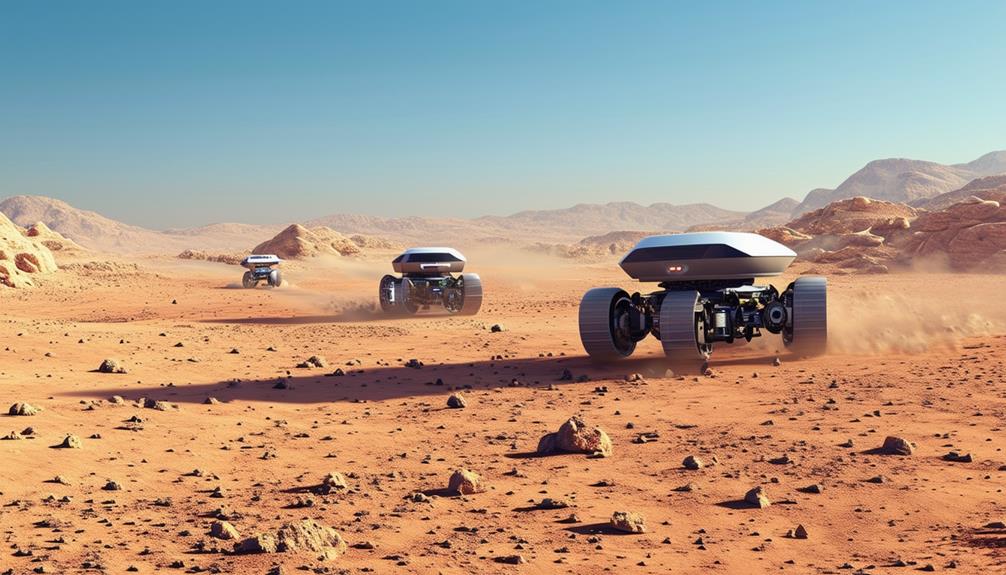
The DARPA Grand Challenge originated as an initiative by DARPA to advance autonomous military vehicle technology. Launched in 2004, the initial competition aimed to accelerate innovation in self-driving technology. Despite none of the 15 participating vehicles completing the designated route, the event highlighted significant challenges in the field and set the stage for future advancements.
By 2005, the Stanford Racing Team won the $2 million prize by successfully navigating the 132-mile course, marking a pivotal moment. The competition's format, which emphasized innovation and collaboration, effectively pushed the boundaries of what was achievable. The success of the Stanford Racing Team and other participants demonstrated notable progress, impacting not just military vehicle technology but also the broader field of autonomous driving.
The DARPA Grand Challenge showcased the power of competition in driving technological breakthroughs. It laid the groundwork for future innovations and collaborations, setting a precedent for how competitive challenges can lead to significant milestones in cutting-edge fields like autonomous military vehicles and beyond.
Key Milestones in Robotics
Robotics has achieved several significant milestones, greatly transforming various industries and everyday life. The 2004 DARPA Grand Challenge ignited a surge in research and development of autonomous vehicle technologies. Although no team completed the course that year, it set the stage for the Stanford Racing Team's victory in 2005, where they won the $2 million prize by successfully navigating a 132-mile course. This achievement underscored the potential of autonomous systems and spurred further innovation.
The 2013 DARPA Robotics Challenge Trials showcased robots designed to handle complex disaster response tasks. These competitions not only expanded the capabilities of robots but also fostered global collaboration among researchers and engineers. The 2015 DARPA Robotics Challenge Finals saw Team KAIST from South Korea emerge victorious, demonstrating extraordinary robot capabilities.
These DARPA challenges have been instrumental in driving technological advancements, encouraging innovation, and promoting global collaboration. Each milestone has contributed to the rapid evolution of robotics, paving the way for increasingly sophisticated and versatile machines.
Impact on Autonomous Vehicles
The DARPA Grand Challenge has significantly influenced the development of autonomous vehicles, accelerating technological advancements and fostering cross-industry collaborations. The 2005 Grand Challenge, where the Stanford Racing Team won the $2 million prize, highlighted the immense potential of autonomous technology. This event was more than just a competition; it served as a catalyst for innovation, pushing the limits of ground vehicle technology.
| Emotion | Impact | Example |
|---|---|---|
| Excitement | Rapid technological progress | Stanford Racing Team's victory |
| Inspiration | Cross-sector partnerships | Collaborations with Oshkosh |
| Hope | Future prospects of autonomous vehicles | Adoption in the commercial sector |
| Pride | Achievements in autonomy technology | Completing the 132-mile course |
| Curiosity | Ongoing innovation | New challenges and concepts |
The legacy of the DARPA Grand Challenge endures, profoundly influencing both defense and commercial sectors. Advanced driver-assistance systems in modern vehicles owe a great deal to these competitions. DARPA's challenges have spurred partnerships with innovators like Oshkosh Defense and TORC Robotics, driving the technology forward. These milestones illustrate that the fusion of competition and innovation can lead to groundbreaking advancements in autonomous vehicles. As self-driving cars become more prevalent, remember that their roots trace back to the spirit of innovation ignited by the DARPA Grand Challenge.
Notable Teams and Innovations
The DARPA Grand Challenge highlighted the pioneering efforts of teams like Stanford Racing and KAIST, whose groundbreaking achievements set new standards in robotic innovation. These events weren't merely competitions; they were platforms for showcasing advanced robotic solutions and breakthrough technologies. Teams such as SCHAFT and NimbRo Rescue exemplified adaptability and innovation, significantly advancing disaster-response robotics.
Pioneer Teams' Achievements
The Stanford Racing Team's triumph in the 2005 DARPA Grand Challenge marks a significant milestone in robotics. Completing the 132-mile course and securing the $2 million prize, they set a high standard for autonomous vehicle technology. This victory underscored the potential of robotics in practical applications and spurred many teams to innovate further.
Equally notable is SCHAFT's performance in the DARPA Robotics Challenge Trials, which advanced disaster-response robotics. Their work highlighted the essential role of robotics in emergency scenarios. Similarly, the NimbRo Rescue project focused on developing disaster-response robots, making substantial contributions to the field's growth and innovation.
In 2015, the South Korean team KAIST won the DARPA Robotics Challenge Finals. Their robot's outstanding performance showcased advancements in robotic technology across various environments. These achievements have been extensively documented in publications like the Journal of Field Robotics.
These pioneering teams have set benchmarks and paved the way for future innovations in robotics, demonstrating the transformative potential of these technologies.
Cutting-Edge Robotic Solutions
In recent years, notable teams have significantly advanced robotic technology, particularly in autonomous robots and disaster-response systems. The DARPA Robotics Challenge has been instrumental in fostering these innovations.
- Stanford Racing Team: Their self-driving technology clinched victory in the 2005 DARPA Grand Challenge by completing a 132-mile course, demonstrating the feasibility of autonomous vehicles.
- Team SCHAFT: At the DARPA Robotics Challenge Trials, they showcased exceptional robot capabilities, setting new benchmarks for robotics innovation.
- NimbRo Rescue Project: This initiative has made substantial contributions to disaster-response robotics, enhancing the field's capacity to manage emergencies effectively.
- Atlas Robot: Developed as a part of the DARPA Robotics Challenge, Atlas exemplifies a significant advancement in robotic technology, capable of performing complex tasks.
These innovations underscore how competitions like the DARPA Robotics Challenge propel the development of cutting-edge robotic solutions, driving significant progress in the field.
Breakthrough Technologies Unveiled
The DARPA Robotics Challenge has been instrumental in unveiling groundbreaking technologies and fostering remarkable innovations from top teams. The DARPA Grand Challenge laid the foundation, with the Stanford Racing Team achieving a milestone in 2005 by completing a 132-mile course and earning the $2 million prize. This event marked a pivotal moment in the development of autonomous vehicle technology. In the DARPA Robotics Challenge Finals of 2015, Team KAIST from South Korea garnered significant attention. Their robot's capabilities in disaster-response tasks set a new benchmark for future competitions, showcasing the advancements in robotics technology and innovative problem-solving techniques.
The 2013 DARPA Robotics Challenge Trials further emphasized the importance of teleoperated tasks, testing robots in high-stress environments to highlight the necessity for robust, adaptable technology. Top teams consistently push boundaries, motivated by substantial monetary rewards and the prestige of leading robotics innovation. Projects like NimbRo Rescue underscore the importance of creative approaches in addressing real-world challenges, particularly in disaster-response scenarios.
Evolution of Robotics Competitions
You've seen how the DARPA Grand Challenge laid the groundwork for robotics competitions, but that was merely the beginning. Key milestones, groundbreaking innovations, and emerging trends have shaped and will continue to influence the field. Understanding these factors highlights how robotics competitions drive technological advancements and prepare for real-world applications.
Historical Milestones in Robotics
The DARPA Grand Challenge, initiated in 2004, revolutionized robotics by demonstrating the potential of autonomous ground vehicles. This competition was a watershed moment, leading to groundbreaking advancements in the field. The Stanford Racing Team's victory in the 2005 challenge was a pivotal milestone, showcasing substantial progress in self-driving technology and inspiring a new generation of innovators.
The DARPA Robotics Challenge Trials in 2013 took things further by focusing on robots designed for disaster-response tasks. This event emphasized the potential of robotics in real-world crisis scenarios, pushing teams to develop more versatile and resilient machines. Notably, teams like SCHAFT and KAIST from South Korea excelled, setting new standards in robotics innovation.
These milestones have significantly impacted the robotics industry, fostering collaboration and rapid technological advancements. Four key historical moments that shaped the evolution of robotics competitions are:
- 2004: Introduction of the DARPA Grand Challenge for autonomous ground vehicles.
- 2005: Stanford Racing Team wins the second DARPA Grand Challenge.
- 2013: DARPA Robotics Challenge Trials focus on disaster-response robotics.
- 2015: SCHAFT and KAIST lead advancements in robotics innovation.
These events have paved the way for future competitions, propelling the industry toward new heights.
Key Innovations and Breakthroughs
Building on historical milestones, key innovations and breakthroughs in robotics competitions have pushed the boundaries of autonomous and disaster-response technology. The DARPA Grand Challenge sparked a revolution in autonomous vehicle technology, compelling teams to innovate rapidly. In 2005, the Stanford Racing Team made history by winning the $2 million prize, successfully traversing a 132-mile course and demonstrating the potential of self-driving cars.
The momentum continued with the DARPA Robotics Challenge Trials in 2013, which showcased significant advancements in disaster-response robotics. Teams like SCHAFT and KAIST from South Korea emerged as leaders, illustrating rapid progress and sophistication in robot capabilities. These competitions have not only driven technological advancements but also fostered a collaborative environment where industries and research fields converge.
Robotics competitions, initiated by events like the DARPA Grand Challenge, continue to catalyze innovation. They push the envelope in autonomous vehicle technology and disaster-response robotics, leading to smarter, more resilient machines. By consistently raising the bar, these events ensure that the field of robotics remains dynamic and constantly improving, paving the way for future breakthroughs.
Future Trends and Potential
As robotics competitions advance, look for significant strides in autonomy and artificial intelligence, pushing the boundaries of innovation. The DARPA Robotics Challenge has already set a high standard, but upcoming competitions will further drive progress and collaboration among industry leaders, targeting complex real-world challenges.
Key trends to watch include:
- Disaster Response: Robots with advanced autonomous technologies will be crucial in search and rescue operations, providing rapid and precise assistance in hazardous environments.
- Autonomous Vehicles: Competitions will refine self-driving technologies, enhancing the safety and efficiency of autonomous vehicles for everyday use.
- Artificial Intelligence: Deeper integration of AI in robotics will enable machines to learn and adapt to dynamic situations with minimal human intervention.
- Cross-Industry Collaboration: These competitions will foster partnerships across sectors, leading to innovative solutions that benefit multiple industries, from healthcare to manufacturing.
Global Influence and Expansion
The DARPA Grand Challenge has ignited a wave of global enthusiasm, inspiring numerous robotics competitions worldwide. Its influence is evident in the rise of events such as RoboCup and the VEX Robotics World Championship, which attract international participation and foster collaboration and innovation in autonomous technology.
Global robotics competitions play a crucial role in engaging students in hands-on STEM learning. The FIRST Robotics Competition, for instance, involves students from various countries, showcasing diverse talents and creating a platform for young innovators to excel.
| Event | Focus | Participants |
|---|---|---|
| DARPA Grand Challenge | Autonomous vehicles | Global tech teams |
| RoboCup | Soccer-playing robots | Universities worldwide |
| VEX Robotics World Championship | Engineering and programming robots | School students globally |
| FIRST Robotics Competition | STEM education and teamwork | High school students |
| Eurobot | Autonomous robotics | European teams |
These events not only push the boundaries of technology but also promote international collaboration and the development of future leaders in science, technology, engineering, and mathematics.
Future Trends in Robotics
Future trends in robotics will likely emphasize the improvement of autonomy algorithms and stronger industry collaboration. The rapid pace of innovation in autonomous technology, fueled by robotics competitions like the DARPA Grand Challenge, shows no signs of slowing down. Expect advancements in disaster-response robots and autonomous ground vehicles to become more sophisticated and reliable.
Here are four key areas to watch:
- Self-Driving Technology: Significant advancements in the safety and efficiency of self-driving cars are anticipated. These developments will be driven by ongoing research and lessons learned from past DARPA challenges.
- Disaster-Response Robots: Enhanced autonomy algorithms will allow robots to navigate complex environments, making them invaluable in disaster scenarios for search and rescue missions.
- Industry Collaboration: Companies and research institutions will increasingly collaborate to push the boundaries of what is possible, accelerating the pace of innovation and bringing cutting-edge technologies to market faster.
- Robotics Competitions: These events will continue to be a hotbed for creativity and technological breakthroughs, inspiring new generations of engineers and developers to push the envelope in autonomous technology.
Educational and Research Benefits
Robotics competitions such as the DARPA Grand Challenge offer participants invaluable hands-on learning experiences that translate directly into practical skills and knowledge in autonomous systems. This isn't just theoretical learning; participants tackle real-world problems using cutting-edge technology. This approach to learning fosters a deep understanding of innovation in robotics and provides educational benefits that are difficult to replicate in a traditional classroom setting.
Moreover, participating in competitions like the DARPA Robotics Challenge confers significant research benefits. It enables collaboration with peers, educational institutions, and industry partners, driving forward the boundaries of what is achievable in autonomous systems. This collaborative environment is a breeding ground for new ideas and advancements in the field of robotics.
Key Benefits:
| Educational Benefits | Research Benefits |
|---|---|
| Practical, hands-on learning | Driving innovation in robotics |
| Collaboration with institutions | Access to cutting-edge technology |
| Development of practical skills | Advancing the field of autonomous systems |
These competitions not only equip participants with essential practical skills but also contribute to the broader research community by fostering innovation and collaboration.
Conclusion
Robotics competitions, beginning with the DARPA Grand Challenge, have revolutionized technology by driving significant advancements in autonomous vehicles and igniting global innovation. These events have showcased notable teams and groundbreaking innovations, setting the stage for the future of robotics. As these competitions continue to evolve, they will foster collaboration, education, and cutting-edge research. Dive into this exciting exploration; the future of robotics is brighter than ever, thanks to these transformative challenges.
Related posts