The Rise of Deep Learning and Its Transformative Impact on AI
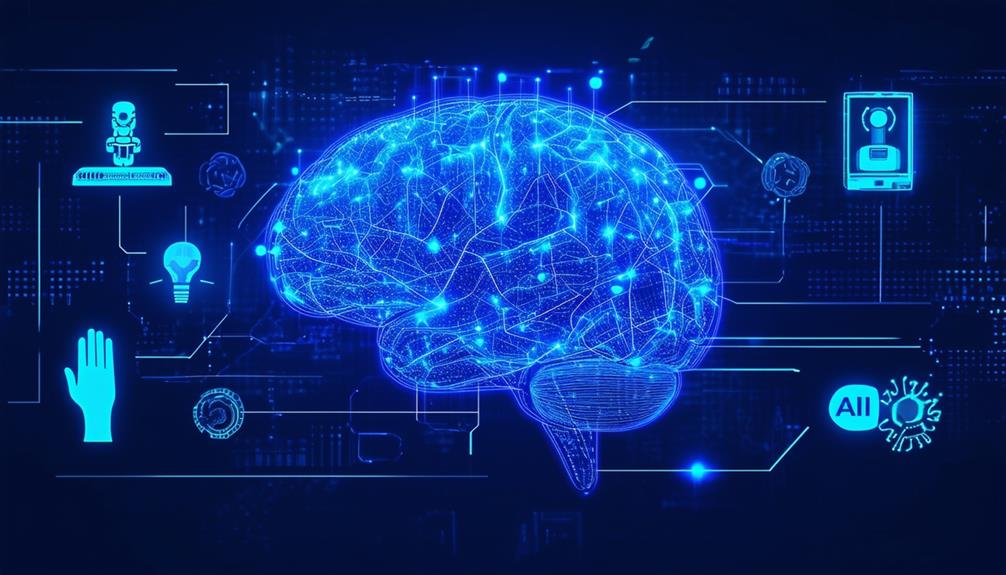
The rise of deep learning has had a profound impact on artificial intelligence, fundamentally transforming various fields. By mimicking the human brain through artificial neural networks, deep learning has revolutionized image and speech recognition, natural language processing, and more. It has enabled significant breakthroughs in healthcare diagnostics and financial forecasting, illustrating its vast capabilities. But what makes deep learning so transformative, and how is it reshaping industries? Further investigation reveals key innovations driving AI into new domains and future prospects that hold even greater potential.
Understanding Deep Learning
Deep learning is a transformative subset of machine learning that utilizes artificial neural networks to analyze and learn from vast amounts of data. It has revolutionized the field of artificial intelligence (AI), enabling machines to execute complex tasks such as image and speech recognition with remarkable precision. By emulating the human brain's information processing mechanisms, deep learning has unlocked new AI capabilities that were once deemed unattainable.
The emergence of deep learning has significantly impacted various industries, including healthcare, finance, and entertainment. For instance, it powers automated medical diagnoses, personalized financial recommendations, and immersive gaming experiences, all driven by sophisticated algorithms.
Deep learning models employ artificial neural networks composed of interconnected layers that process data hierarchically. This structure allows the system to detect patterns, make predictions, and continuously enhance its performance. Recent advancements in neural network architecture and optimization techniques have broadened the scope of AI applications considerably.
Evolution of Neural Networks
As deep learning continues to drive AI innovation, it's fascinating to explore the rich history and evolution of neural networks that laid the groundwork for these advancements. Neural networks, inspired by biological neural networks, date back to the 1940s. One of the earliest models was the Perceptron, created by Frank Rosenblatt in 1958. It marked a significant step, but the true leap in neural network development came in 1986 with the revival of the backpropagation algorithm. This algorithm allowed neural networks to learn from errors, greatly enhancing their performance.
During the 1980s and 1990s, architectures like Hopfield networks and Boltzmann machines added depth to the field. Hopfield networks, named after John Hopfield, became known for their capacity to store memories. Boltzmann machines, on the other hand, introduced a way to model probability distributions over binary variables, further enriching neural network capabilities.
In 2006, Geoff Hinton's work on deep learning sparked a new phase of innovation. Hinton's emphasis on building multi-layered neural networks has since become the foundation of modern AI applications. This evolution underscores the crucial role neural networks play in the current AI landscape.
Breakthroughs in Image Classification
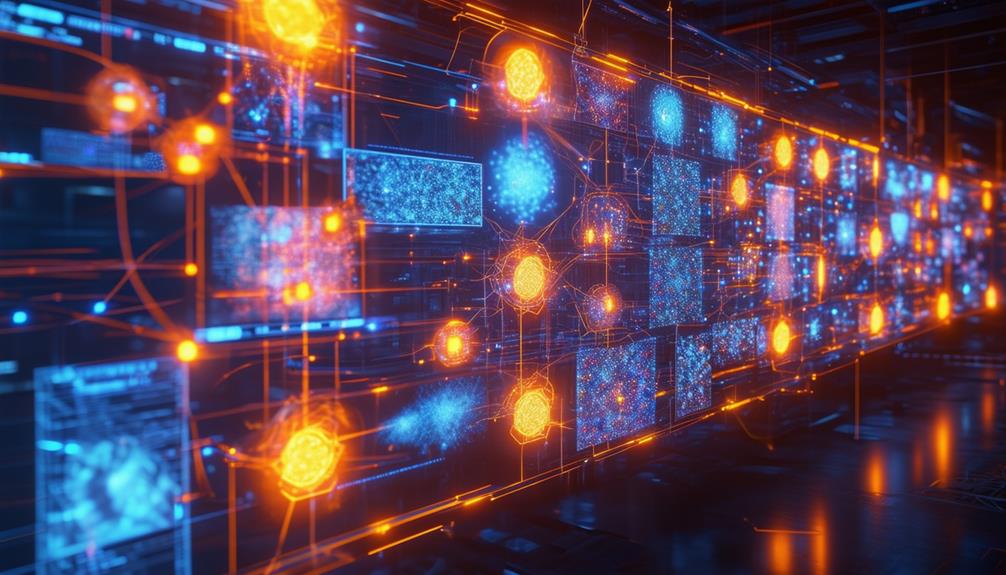
The victory of AlexNet in the 2012 ImageNet Challenge marked a transformative moment in image classification, significantly advancing the field of deep learning. AlexNet introduced convolutional neural networks (CNNs), which enabled hierarchical feature learning, allowing models to automatically identify complex patterns and features in images. Prior to AlexNet, image classification accuracy was limited, but this breakthrough demonstrated the immense potential of deep learning.
The field continued to evolve after AlexNet, with models such as ResNet and Inception pushing the boundaries of accuracy and efficiency. ResNet, for example, introduced residual learning, which allowed for the training of very deep networks without suffering from the degradation problem. This innovation led to improved accuracy in image classification tasks.
Additionally, the advent of GPUs played a crucial role in this revolution. These powerful processors accelerated the training of deep learning models, making it feasible to handle large datasets and complex computations. Thanks to GPUs, tasks that previously took weeks could now be completed in days, leading to faster and more accurate image classification models. The synergy of deep neural networks, CNNs, and GPUs has fundamentally transformed the landscape of image classification.
Advancements in Speech Recognition
Speech recognition has undergone remarkable advancements with the integration of deep learning techniques. You may have noticed the substantial improvements in voice assistants like Siri, Alexa, and Google Assistant, which are now much better at understanding and responding to your commands. This leap in performance is primarily due to the power of neural networks and Long Short-Term Memory (LSTM) networks, which excel at handling speech recognition tasks.
Deep learning models are trained on vast datasets of spoken language, enabling them to convert speech to text in real-time with impressive accuracy. Traditional methods cannot match the precision and speed that neural networks provide. This technology has transformed how we interact with devices, making voice commands more intuitive and efficient.
Here are four key advancements in speech recognition thanks to deep learning:
- Improved Accuracy: Deep learning models have surpassed traditional methods, offering a significant enhancement in speech recognition accuracy.
- Real-Time Conversion: Neural networks enable real-time speech-to-text, making interactions seamless.
- Enhanced Voice Assistants: LSTM networks and other deep learning algorithms have revolutionized voice assistants, making them more responsive and reliable.
- Transformative Impact: These advancements have transformed human-computer interaction, making it more natural and user-friendly.
These breakthroughs demonstrate how deep learning continues to reshape the landscape of artificial intelligence.
Natural Language Processing Revolution
Deep learning has revolutionized Natural Language Processing (NLP), enabling machines to understand and generate human language with unprecedented accuracy. Neural networks, particularly recurrent neural networks (RNNs) and transformers, have greatly improved NLP tasks such as machine translation and sentiment analysis.
Large pre-trained language models like BERT and GPT have been game-changers, pushing the boundaries of language understanding and generation. These models, trained on vast amounts of text data, can grasp context and nuance, making them incredibly effective for a range of applications.
However, this revolution in NLP comes with challenges. One major issue is the presence of biases in language models. Since these models learn from data that may reflect societal prejudices, they can inadvertently perpetuate these biases, raising ethical concerns about fairness and inclusivity in AI systems. Additionally, ensuring that these complex models are interpretable and transparent remains a critical challenge.
Despite these hurdles, the advancements in NLP powered by deep learning are undeniable. They've bridged language barriers with more accurate machine translation and opened up new possibilities for human-computer interaction.
Industry Applications and Impacts
Deep learning is revolutionizing healthcare, leading to breakthroughs in medical imaging and personalized treatments. In the finance sector, it enhances fraud detection and transforms trading strategies. These advancements are just the beginning of how deep learning is reshaping various industries.
Healthcare Advancements
Deep learning has revolutionized healthcare, leading to unprecedented improvements in diagnostic accuracy and personalized treatment plans. By leveraging AI, deep learning algorithms can analyze vast amounts of patient data quickly and accurately, significantly impacting medical imaging. AI outperforms human experts in detecting abnormalities like tumors, thereby enhancing diagnostic precision. Personalized medicine has also advanced, with AI-driven tools tailoring treatments to individual patients by analyzing their unique data and predicting outcomes with remarkable accuracy.
Here are four key impacts of deep learning in healthcare:
- Enhanced Diagnostic Accuracy: AI systems analyze medical images with greater precision than humans, identifying conditions like cancer and cardiovascular diseases early.
- Improved Personalized Medicine: By examining patient data, deep learning creates tailored treatment plans, ensuring each patient receives the most effective therapy.
- Streamlined Administrative Processes: AI automates routine tasks such as scheduling and managing records, reducing costs and improving efficiency.
- Optimized Resource Allocation: Deep learning assists hospitals in allocating resources more effectively, reducing medical errors and enhancing patient outcomes.
Deep learning in healthcare is not just a technological advancement; it is a lifesaving revolution.
Financial Innovations
Deep learning is revolutionizing the financial industry by enhancing fraud detection, predicting market trends, and optimizing trading strategies. Financial institutions leverage deep learning to analyze vast amounts of financial data with greater accuracy than traditional methods, resulting in higher fraud detection rates and safer transactions.
By predicting market trends, deep learning models enable proactive decision-making. They process historical and real-time data to deliver critical insights, essential for making informed financial choices. In trading, these algorithms optimize strategies to ensure better returns and minimize risks.
Risk assessment and portfolio management also see significant improvements with deep learning. These models evaluate various risk factors, enhancing the precision of loan approvals and investment decisions. They assist in constructing a balanced portfolio that aligns with your risk tolerance and financial objectives.
Moreover, AI-powered chatbots elevate customer service by providing personalized recommendations based on your financial behavior. This leads to cost savings, increased efficiency, and improved decision-making capabilities. Overall, deep learning is not merely a buzzword but a transformative force in the financial sector.
Future Prospects and Innovations
Future Prospects and Innovations
Building on current advancements, deep learning is set to bring groundbreaking innovations across multiple industries. With neural networks at its core, deep learning has already revolutionized artificial intelligence. The next wave of innovation will likely see significant improvements in unsupervised learning techniques, enabling AI to process and learn from vast amounts of unlabelled data. Recurrent neural networks, especially in natural language processing, will continue to advance, bringing us closer to achieving general intelligence.
Here are four areas to monitor:
- Healthcare: AI-driven diagnostics and personalized medicine will become more precise, leveraging deep learning to analyze complex medical data.
- Autonomous Systems: Autonomous vehicles and drones will benefit from advanced deep learning models, enhancing safety and efficiency.
- Natural Language Processing: Expect breakthroughs in understanding and generating human language, making AI assistants more intuitive and responsive.
- Reinforcement Learning: This technique will see enhancements, leading to smarter robotics and more sophisticated game AI.
Conclusion
Deep learning has revolutionized AI, significantly impacting fields such as image and speech recognition, and natural language processing. By utilizing advanced neural networks, industries worldwide are experiencing remarkable advancements. The progression doesn't stop here; future innovations promise even more groundbreaking developments. Stay alert, as the evolution of deep learning is just beginning, and its potential is boundless. As AI continues to push the boundaries of what's possible, its transformative impact will only grow.
Related posts