The Integration of AI and Robotics: Machine Learning in Autonomous Systems
AI and robotics are fundamentally transforming the world around us, with machine learning playing a critical role in this evolution. By enabling machines to autonomously navigate, recognize objects, and predict maintenance needs, both supervised and unsupervised learning approaches are at the forefront of these advancements. This seamless integration allows robots to adapt in real time and collaborate safely with humans, revolutionizing various industries. What might surprise you is how these developments are set to change not just industrial applications but also everyday life in unexpected ways.
Understanding AI and Robotics

To fully understand the integration of AI and robotics, one must recognize how these technologies enable machines to think and act autonomously. Central to this integration are robots equipped with AI, allowing them to perform complex tasks without human intervention. These autonomous systems are designed to perceive their environment, analyze data, and make real-time decisions using advanced artificial intelligence and machine learning algorithms.
In robotics, AI enhances the intelligence of robots, enabling them to learn from their experiences and adapt to new situations. This adaptability is crucial for handling diverse and unpredictable tasks. For example, AI-powered robots in manufacturing can adjust their actions based on the materials they handle, ensuring precision and improving efficiency.
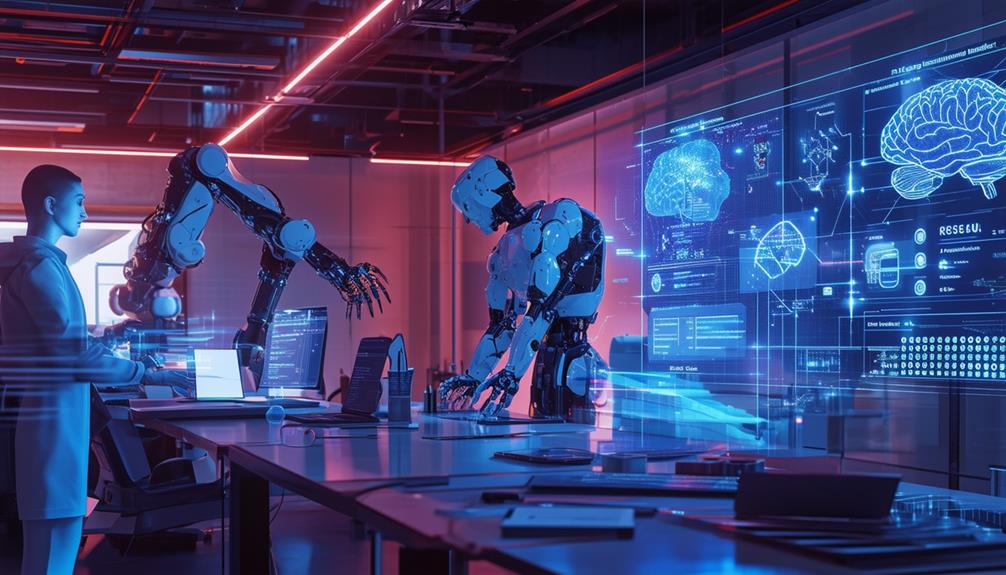
Additionally, collaborative robots, or cobots, utilize AI to work safely alongside humans. These robots can understand and respond to human actions, increasing productivity while enhancing workplace safety. Autonomous systems in robotics offer significant benefits, such as cost reduction, increased precision, and improved productivity. By integrating AI, these systems can perform intricate tasks with high accuracy, transforming various industries and paving the way for a future where machines and humans collaborate seamlessly.
Types of Machine Learning
When exploring the types of machine learning, you'll find supervised learning and unsupervised learning to be fundamental approaches. Supervised learning uses labeled data to make predictions, while unsupervised learning uncovers hidden patterns in unlabeled data. These techniques are essential for enabling autonomous systems to adapt and make informed decisions.
Supervised Learning Approaches
Supervised learning, a cornerstone of machine learning, enables algorithms to make precise predictions by training them on labeled datasets. This process involves input-output pairs, where the input is the data fed into the model and the output is the known result that the model aims to predict. This methodology refines the decision-making processes of algorithms. Supervised learning techniques encompass regression for predicting continuous outputs and classification for predicting discrete outcomes.
For example, if you're predicting house prices, regression would be appropriate. For sorting emails into 'spam' or 'not spam,' classification would be used. Common algorithms in these scenarios include linear regression, logistic regression, and support vector machines, each excelling in specific types of data and prediction tasks.
In practical applications, supervised learning excels in fields such as healthcare, where it aids in disease diagnosis, and finance, where it is utilized for risk assessment. Marketing also leverages supervised learning for customer segmentation, enhancing targeted advertising. By utilizing labeled data, supervised learning algorithms can make accurate predictions, significantly boosting the capabilities of autonomous systems.
Unsupervised Learning Techniques
Unsupervised learning empowers algorithms to discover hidden patterns and structures in data without requiring labeled outputs, enabling advanced autonomous capabilities. This approach is particularly valuable in robotics, where systems can autonomously analyze vast amounts of unstructured data. Key methods in unsupervised learning include clustering and dimensionality reduction, which allow autonomous systems to identify hidden patterns crucial for decision-making.
Clustering groups similar data points together, facilitating tasks like anomaly detection and recommendation systems. For instance, a robot might use clustering to identify unusual behavior in its environment. Dimensionality reduction simplifies complex datasets, enhancing data visualization and making the data more actionable for system analysis.
| Technique | Application | Benefit |
|---|---|---|
| Clustering | Anomaly detection | Identifies outliers |
| Clustering | Recommendation systems | Personalizes experiences |
| Dimensionality Reduction | Data visualization | Simplifies data |
| Dimensionality Reduction | Structured data analysis | Improves decision-making |
Enhancing Robotics Capabilities
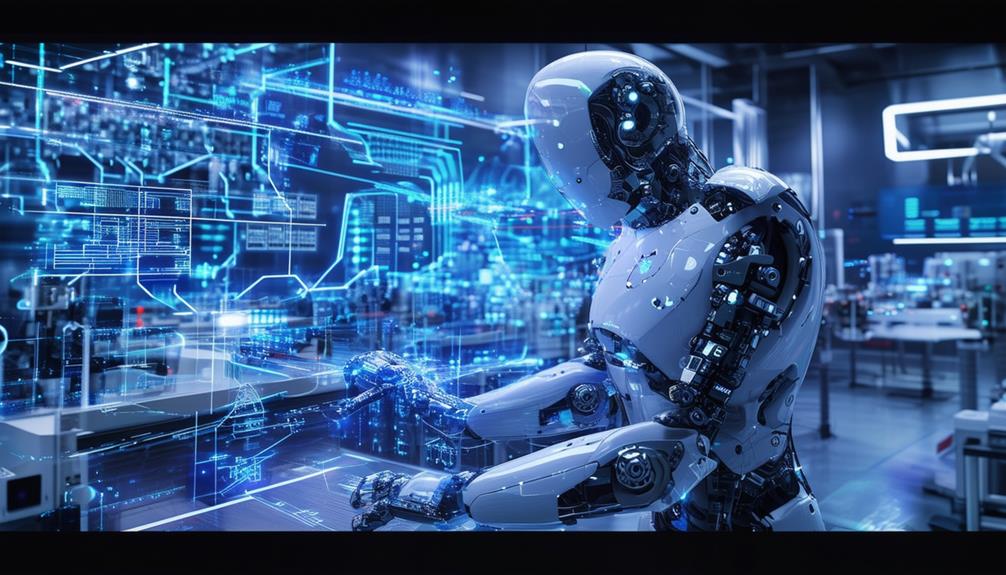
Integrating AI into robotics significantly enhances their capabilities, empowering robots to analyze data, adapt to changing conditions, and autonomously make real-time decisions. This synergy between AI and robotics results in autonomous systems that can operate independently, perceiving their environment and making decisions without human intervention. AI-powered vision systems, for instance, enable robots to better understand their surroundings, thereby improving tasks such as object recognition and navigation.
In industrial automation, the combination of AI and machine learning with robotics has led to substantial improvements in productivity and safety. These intelligent robots can adapt to new tasks, detect errors, and optimize processes, thereby reducing downtime and increasing manufacturing efficiency. Collaborative robots, or cobots, equipped with AI capabilities, can work seamlessly alongside humans in shared workspaces. This not only enhances safety by anticipating and responding to human actions but also prevents accidents and boosts overall productivity.
Autonomous Navigation
Autonomous navigation enables robots and vehicles to independently navigate complex environments using advanced AI algorithms and a suite of sensors. These technologies allow machines to perceive their surroundings, make real-time decisions, and efficiently plan paths. Core components such as GPS and lidar provide critical data for accurate location tracking and environmental mapping, which are essential for determining optimal routes.
By incorporating AI algorithms, autonomous navigation systems can execute sophisticated path planning and adapt to dynamic conditions. The main elements of these systems include:
- GPS: Delivers precise location data to guide robots and vehicles.
- Lidar: Generates detailed 3D maps of the environment for accurate navigation.
- Path Planning: AI-driven methodologies that identify the most efficient routes.
- Sensors: Gather real-time data to support informed navigation decisions.
- Applications: Used in self-driving cars and unmanned aerial vehicles (UAVs) to exemplify practical implementations.
For example, self-driving cars use these technologies to maneuver through busy streets safely, while UAVs rely on them for precise aerial maneuvers. By integrating these components, autonomous systems can avoid obstacles and execute tasks with minimal human intervention, making autonomous navigation a pivotal advancement in robotics across various industries.
Obstacle Avoidance
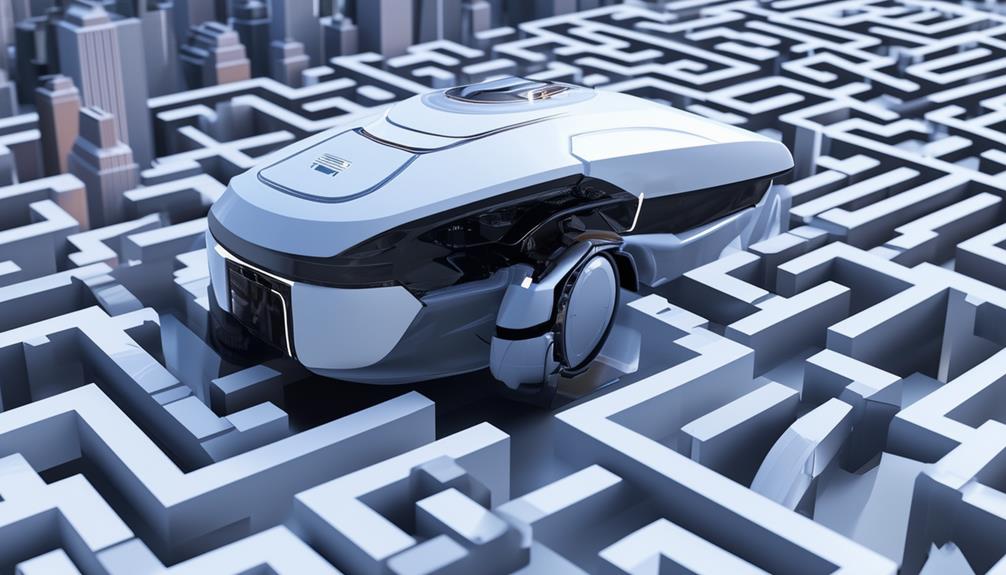
Obstacle avoidance equips robots and autonomous vehicles with the essential ability to detect and navigate around obstacles in their environments. Utilizing AI and robotics, these systems employ machine learning algorithms to process sensor data and make real-time decisions. Sensors such as Lidar, cameras, and ultrasonic sensors provide critical real-time information, enabling autonomous systems to identify and react to obstacles efficiently.
Deep learning enhances obstacle avoidance by allowing robots to more accurately recognize various types of obstacles. With advanced AI techniques, autonomous vehicles and other robots can learn from past experiences, continuously refining their path-planning strategies. This capability is crucial for the safe and efficient operation of autonomous vehicles, drones, and industrial robots across sectors such as logistics, agriculture, and manufacturing.
In obstacle avoidance, machine learning algorithms assist the system in mapping out alternative routes when obstacles are detected. The integration of Lidar and other sensors ensures that robots receive precise data, aiding in better decision-making processes. Consequently, autonomous systems become more reliable and effective in navigating complex environments, thereby enhancing productivity and safety in various applications.
Object Recognition
Object recognition enables robots to accurately identify and classify objects in their environments, facilitating intelligent interactions with the world around them. By utilizing advanced algorithms, robots can process extensive visual data to recognize objects based on shapes, colors, textures, and patterns. This capability is crucial for enhancing their efficiency and precision in a variety of tasks.
Machine learning, particularly deep learning, plays a pivotal role in these advancements. Through deep learning, robots analyze visual data using computer vision, allowing them to interpret images and videos similarly to human perception. These algorithms empower robots to make informed decisions and seamlessly adapt to their surroundings.
Applications of Object Recognition in Robotics:
- Inventory Management: Robots can track and manage items in real-time with high accuracy, minimizing errors and optimizing efficiency.
- Pick-and-Place Operations: Precision in identifying and handling objects accelerates these tasks, making them more reliable.
- Autonomous Navigation: Robots can navigate complex environments by recognizing and avoiding obstacles.
- Quality Control: Automated systems can meticulously inspect products for defects.
- Service Robots: Object recognition enhances the capabilities of service robots, from delivering packages to assisting in healthcare.
Incorporating object recognition into robotics not only advances automation but also ensures tasks are executed with exceptional precision and adaptability.
Human-Robot Interaction
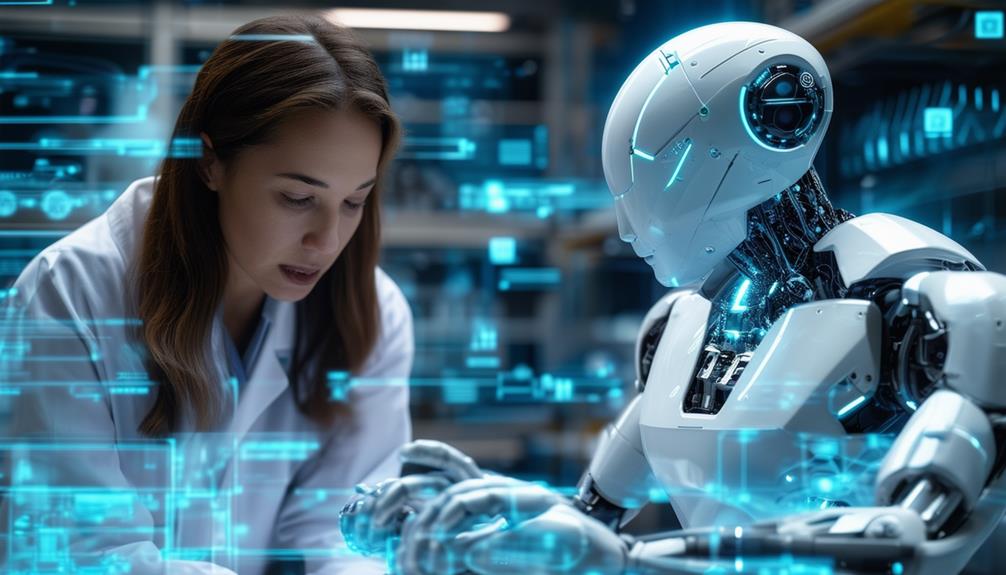
Enhancing human-robot interaction requires refining communication protocols to enable robots to better comprehend and respond to human gestures and commands. This improvement facilitates seamless collaboration, where robots assist humans in repetitive and mundane tasks. By integrating AI, the workspace becomes more efficient and harmonious, leveraging human expertise alongside robotic efficiency.
Enhancing Communication Protocols
Effective human-robot interaction protocols are essential for smooth and productive collaboration between humans and robots. These protocols outline how information, commands, and feedback are exchanged during interactions, ensuring seamless communication. When guided by well-defined communication protocols, human-robot collaboration enhances safety, productivity, and efficiency.
To achieve seamless communication and effective task assignments, consider these key elements:
- Clear Communication Channels: Establish reliable and straightforward channels for exchanging information between humans and robots.
- Defined Task Assignments: Ensure each party understands their roles and responsibilities in collaborative tasks.
- Effective Coordination: Synchronize actions and responses to minimize errors and enhance performance.
- Feedback Mechanisms: Implement systems for real-time feedback to promptly address issues or changes in the task environment.
- Safety Protocols: Integrate safety measures within communication protocols to protect both humans and robots during interactions.
These elements optimize efficiency and minimize errors, making human-robot collaboration more effective and secure. Integrating these protocols into your systems will significantly improve task coordination and execution, leading to better outcomes in various applications.
Improving Collaborative Tasks
With AI integration, collaborative tasks between humans and robots become more efficient, as robots can intuitively understand and respond to human gestures and commands. By leveraging advanced AI techniques, these robots facilitate seamless interaction, optimizing task performance in shared workspaces. This not only increases productivity but also fosters a harmonious work environment.
AI-powered robots excel in real-time decision-making, allowing them to adapt quickly to changing conditions. This adaptability ensures tasks are executed with precision while maintaining a high standard of safety. In collaborative tasks, robots assist humans by handling repetitive or strenuous activities, thus improving overall efficiency.
| Key Aspect | Benefit | Outcome |
|---|---|---|
| AI Techniques | Improved understanding of human commands | Seamless interaction |
| Real-Time Decision-Making | Quick adaptation to changing conditions | Optimized task performance |
| Adaptive Robotics | High precision in task execution | Enhanced safety and productivity |
| Shared Workspaces | Robots and humans working together harmoniously | Harmonious work environment |
In shared workspaces, AI integration enables robots to analyze data and make informed decisions, leading to optimized task performance. This symbiotic human-robot interaction not only enhances productivity but also ensures a safer, more efficient work environment. By incorporating advanced AI techniques, the stage is set for a future where collaborative tasks are executed flawlessly, ushering in an era of seamless human-robot collaboration.
Predictive Maintenance
Predictive maintenance leverages machine learning to scrutinize sensor data, forecasting equipment failures before they occur, ensuring smoother operations and reduced costs. By employing machine learning algorithms for sensor data analysis, potential issues can be identified proactively, significantly minimizing downtime and maintenance expenses. This method allows maintenance activities to be scheduled based on the actual condition of the equipment, rather than on inflexible, time-based schedules.
Machine learning algorithms are adept at identifying patterns and anomalies in sensor data, providing early warnings of potential equipment failures and enabling preemptive action. This proactive approach not only enhances operational efficiency but also improves equipment reliability and extends its lifespan.
Key benefits of predictive maintenance include:
- Reduced Downtime: Predicting equipment failures minimizes unexpected outages.
- Cost Savings: Maintenance is need-based rather than time-based, reducing unnecessary costs.
- Improved Equipment Reliability: Continuous monitoring and addressing potential issues ensure smooth equipment operation.
- Early Warnings: Early anomaly detection prevents major failures.
- Enhanced Operational Efficiency: Streamlined maintenance processes boost productivity.
With predictive maintenance, you are not merely maintaining your equipment but optimizing its performance and reliability.
Real-World Applications
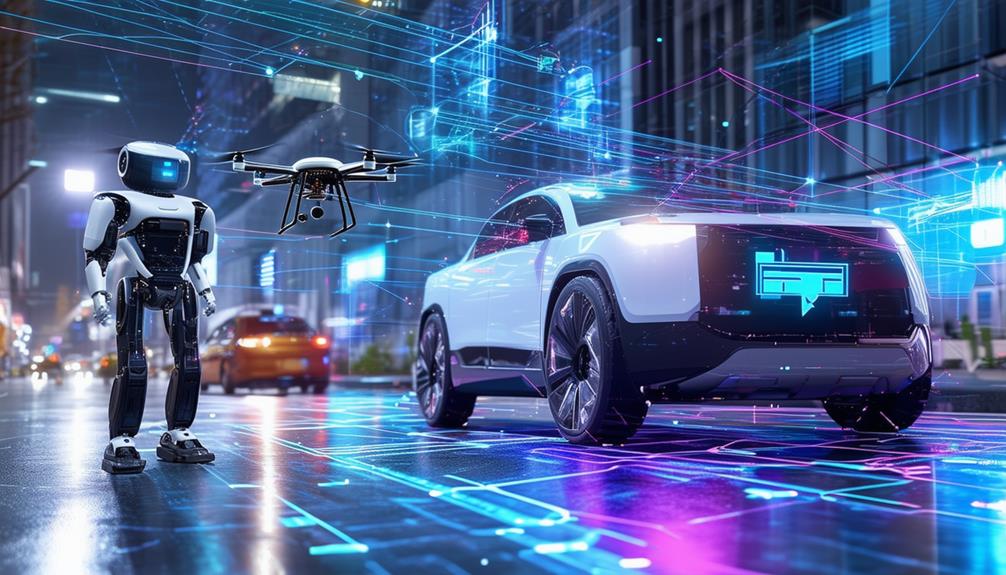
AI and machine learning in autonomous systems are revolutionizing industries by enabling robots to perform tasks with unparalleled precision and efficiency. In manufacturing, advanced robotics systems integrated with AI can make real-time decisions, enhancing production line speed and accuracy while minimizing errors. These systems use learning algorithms for object recognition and manipulation, enabling them to handle materials and assemble products with minimal human intervention.
In healthcare, AI-driven robots and systems analyze medical images to assist in diagnosing diseases and planning treatments. Surgical robots, guided by precise algorithms, perform intricate operations with improved accuracy, leading to better patient outcomes. Autonomous robots in hospitals also deliver supplies and medications, streamlining workflows.
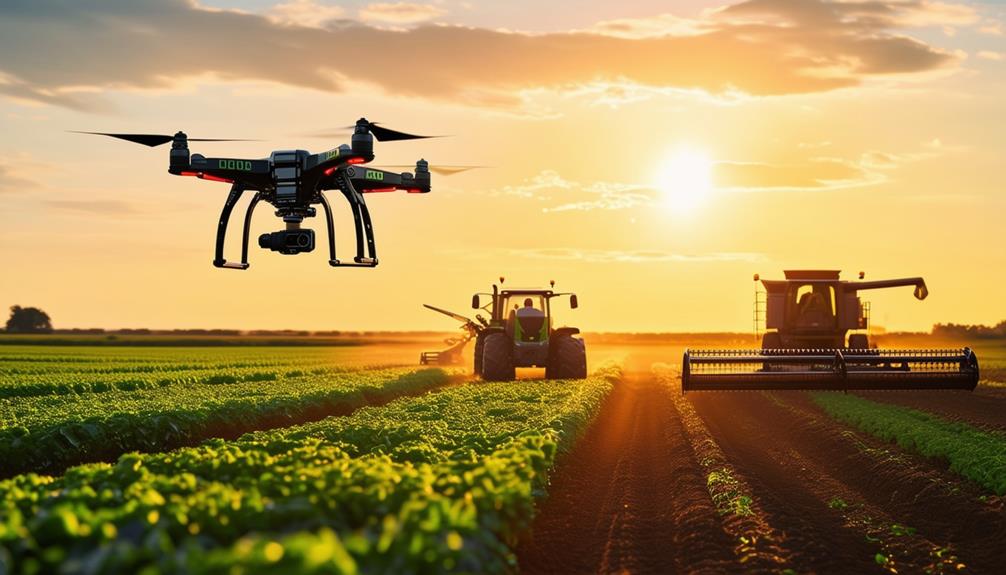
Logistics has seen remarkable advancements with AI integration. Drones equipped with AI optimize inventory monitoring and last-mile deliveries. Swarm robotics, where multiple robots collaborate, enhance warehouse operations and transportation networks.
Voice commands and AI in autonomous vehicles enable safe navigation, energy efficiency, and reduced traffic congestion. These vehicles make real-time decisions based on data from their surroundings, improving road safety and efficiency.
Future Advancements
Building on transformative real-world applications, future advancements will see autonomous systems making even more sophisticated decisions and adapting seamlessly to complex environments. Artificial intelligence (AI) and machine learning are not merely buzzwords; they are foundational to these developments. With deep learning, robots will perform intricate tasks with unprecedented accuracy.
As we look ahead, here's what you can expect:
- Enhanced Decision-Making Capabilities: AI will enable robots to make better, faster decisions in real-time.
- Autonomous Learning: Machine learning will allow robots to learn from their surroundings and autonomously enhance their performance.
- Improved Human-Robot Interaction: AI integration will facilitate smoother interactions between robots and humans in collaborative work settings.
- Transparency and Accountability: Research in explainable AI will ensure that the decision-making processes of autonomous systems are transparent and accountable.
- High-Precision Task Execution: Advancements in deep learning will empower robots to handle more intricate tasks with high accuracy.
These advancements will not only optimize the functionality of autonomous systems but also build trust by ensuring transparency and accountability. AI-driven robots will become indispensable across various sectors, making life easier and more efficient.
Conclusion
You've seen how AI and robotics, powered by machine learning, are transforming autonomous systems. With advancements in navigation, obstacle avoidance, and human-robot interaction, robots are becoming more efficient and adaptable. Predictive maintenance ensures longevity and reliability, while real-world applications highlight their increasing impact. As technology advances, the seamless integration of AI and robotics will continue to revolutionize industries, driving unprecedented levels of precision, productivity, and collaboration. The future of automation is incredibly promising.
Related posts