The Impact of the First Robotics Research Laboratories

You might wonder how the early Robotics Research Laboratories have shaped the landscape of modern robotics. These pioneering institutions didn't just advance technology; they revolutionized safety standards and efficiency across various industries. By fostering interdisciplinary research and promoting knowledge transfer, they created fertile ground for groundbreaking innovation. Their collaborations with corporations and partnerships with Historically Black Colleges and Universities (HBCUs) demonstrate a commitment to diverse academic relationships. What truly sets them apart, however, is their ability to bridge theory and practice, addressing complex societal challenges. Curious about how these elements intertwine to push the boundaries of what's possible in robotics?
Advancing Technological Innovations

The Initial Robotics Research Laboratories lead the charge in advancing robotics and autonomous systems. Here, mechanical engineering seamlessly integrates with computer science to push the boundaries of what's possible. This interdisciplinary approach results in groundbreaking automation systems that redefine efficiency and utility.
The laboratories' innovations include designing robotic exoskeletons and prosthetic devices, significantly enhancing the quality of life by improving mobility and support. These devices exemplify the labs' excellence in mechanical engineering.
Additionally, the labs develop autonomous robots crucial for high-stakes environments. These robots assist in firefighting and conduct search and rescue missions, demonstrating practical applications developed through rigorous computer science and mechanical engineering principles.
Operating within the collaborative environment of the Ford Motor Company Robotics Building, researchers and engineers work side by side, fostering innovation. This ensures the laboratories remain at the forefront of robotics and autonomous systems, continually setting new industry standards.
Enhancing Safety Standards
The Robotics Research Laboratories prioritize safety by developing cutting-edge systems that set new benchmarks for secure robotic operations. Through the Initial Robotics initiatives, researchers focus on creating autonomous systems that enhance efficiency while placing a premium on safety.
Collaborative projects in the lab are designed to address safety challenges across various industries. These projects leverage the latest robotics technology to ensure safety protocols are integrated from the outset. The labs feature advanced testing facilities where researchers rigorously evaluate the safety features of new robotic systems. This process allows them to identify potential risks and implement solutions before deployment.
Initial Robotics' emphasis on safety has led to innovative solutions that redefine secure robotic operations. Researchers continually push the boundaries to develop systems that not only perform tasks efficiently but also ensure maximum safety. By adhering to high safety standards, the Robotics Research Laboratories contribute significantly to creating a safer environment where humans and robots can coexist and collaborate seamlessly. Their work is crucial in ensuring that the integration of robotics into everyday applications is both safe and reliable.
Boosting Efficiency in Industries

Pioneering Robotics Research Laboratories are significantly enhancing efficiency across various industries by developing advanced robotics solutions. These labs focus on streamlining processes and reducing costs, thereby positively impacting manufacturing and logistics operations. For example, Ford Motor Company has partnered with these laboratories to implement state-of-the-art robotics technologies, optimizing their assembly lines and boosting productivity.
A crucial element in this efficiency improvement is the flexibility offered by modern robotics systems. Unlike traditional machinery, these robots can adapt to various tasks, making them invaluable in dynamic industrial environments. This adaptability allows companies to quickly adjust their operations to meet changing market demands without extensive retooling.
Additionally, the laboratories' participation in robotics competitions accelerates innovation. These competitions challenge teams to solve real-world industrial problems, leading to breakthrough solutions that are immediately applicable in the field. The practical experience gained directly translates to more efficient and versatile robotics systems.
Fostering Interdisciplinary Research
At the University of Michigan's Premier Robotics Research Laboratories, experts from a broad spectrum of fields collaborate to tackle complex challenges, driving scientific exploration forward. Researchers from engineering, computer science, psychology, and social sciences work together to push the boundaries of robotics and automation.
State-of-the-art equipment and shared spaces allow for efficient testing and development of cutting-edge robotics projects. The Robotics Building's enhanced infrastructure promotes knowledge sharing and collaboration, facilitating engagement with colleagues from various disciplines.
Snapshot of Interdisciplinary Contributions:
| Discipline | Contribution |
|---|---|
| Engineering | Design and development of hardware |
| Computer Science | Algorithms and software for automation |
| Psychology | Human-robot interaction studies |
| Social Sciences | Societal impact and ethical considerations |
Robotics research at U-M also emphasizes closing societal gaps and promoting equity. By addressing real-world issues, researchers are not only advancing technology but also making a positive societal impact through collaborative efforts.
These research labs foster a culture of collective achievement, propelling innovation and scientific discovery forward through interdisciplinary collaboration.
Promoting Knowledge Transfer
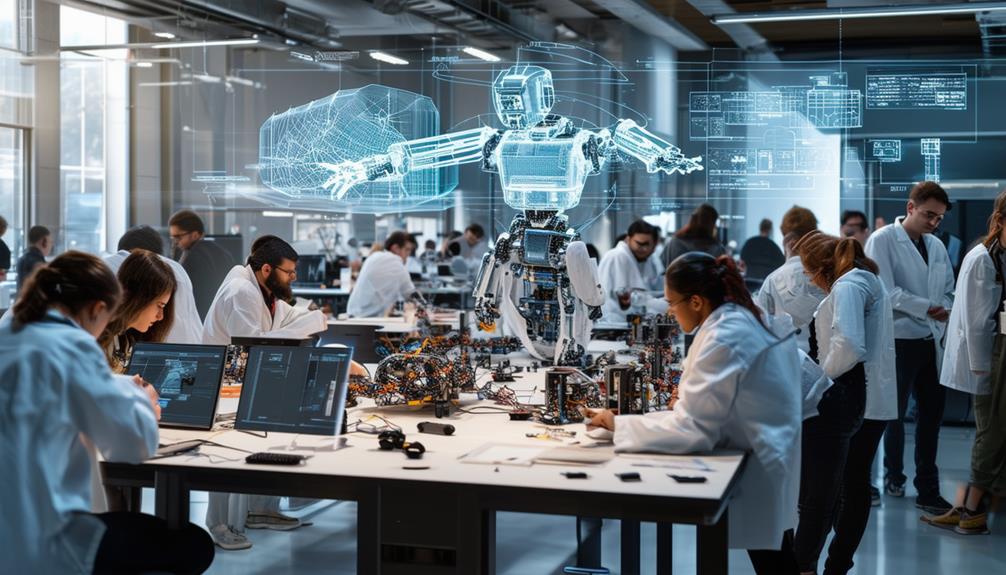
At the Ford Motor Company Robotics Building, you're immersed in a collaborative learning environment that fosters knowledge transfer. Through mentorship and skill development, everyone advances together. Cross-disciplinary innovation propels progress and ignites new ideas in robotics research, ensuring a comprehensive and forward-thinking approach.
Collaborative Learning Environments
The Robotics Building's collaborative learning environments facilitate knowledge transfer through open communication and teamwork among researchers. The building's design emphasizes collaboration and innovation, ensuring continuous exposure to new ideas and methodologies. Transparent and open spaces enhance visibility and engagement with ongoing research, promoting effective knowledge sharing.
In these spaces, cross-disciplinary collaboration becomes intuitive. Whether you're an engineer, computer scientist, or biologist, the building's layout supports seamless idea and expertise exchange across all fields. Access to state-of-the-art equipment and shared spaces ensures the best tools and environments for fostering collaboration are available.
Ongoing infrastructure improvements further promote knowledge sharing and collaboration. These upgrades guarantee a cutting-edge environment that supports the latest advances in robotics research. The Robotics Building is not just a workplace; it is a dynamic ecosystem designed to keep you engaged, inspired, and connected with peers, driving the collective progress of the research community.
Mentorship and Skill Development
Mentorship at the Initial Robotics Research Laboratories bridges the gap between theoretical knowledge and practical expertise, ensuring that aspiring researchers gain invaluable hands-on experience. Here, mentorship isn't just about guidance; it's an active process where experienced professionals transfer their knowledge to students. This hands-on learning approach allows you to apply theoretical concepts in real-world scenarios, enriching and deepening your learning experience.
Mentors in these labs focus on fostering creativity, enhancing problem-solving skills, and building technical expertise. Working closely with these seasoned professionals not only teaches you about robotics but also prepares you for future careers in STEM fields. The mentorship program is designed to blend theoretical lessons with practical applications, providing the tools you need to succeed.
Structured mentorship is crucial for the success of robotics research projects. Direct interaction with mentors offers insights that textbooks cannot provide, making you a more competent and confident researcher. Being part of the Initial Robotics Research Laboratories puts you in an excellent position to develop essential skills for your future career.
Cross-Disciplinary Innovation
Building on a robust mentorship framework, the Initial Robotics Research Laboratories excel in fostering cross-disciplinary innovation by promoting seamless knowledge transfer among researchers. At the Ford Motor Company Robotics Building, the design prioritizes transparency and collaboration. Open areas and large atriums are specifically intended to break down barriers and encourage spontaneous interactions among researchers from different fields.
The infrastructure improvements at the Robotics Building at U-M significantly enhance knowledge sharing. Researchers actively design lab spaces using specialized software, ensuring that the layout fosters collaboration and innovation. This hands-on approach in creating their work environment fosters a sense of ownership and encourages creative solutions.
Access to state-of-the-art equipment and collaborative spaces is another significant asset. These resources facilitate the testing and development of cutting-edge robotics creations, providing fertile ground for both scientific exploration and industrial applications. The collaborative research approaches adopted here aim to drive both scientific inquiry and practical solutions, making cross-disciplinary innovation not just a possibility but a daily reality.
Strategic Academic Partnerships
Strategic academic partnerships at the Robotics Research Laboratories are invaluable. Collaborations with the University of Michigan (U-M) and Ford Motor Company enable groundbreaking research and resource sharing, effectively bridging theory and practice in robotics. These partnerships not only drive innovative production solutions but also equip students to meet the evolving demands of the industry.
Collaborative Research Initiatives
Collaborative research initiatives at the Forefront Robotics Research Laboratories drive innovation by uniting academic experts and industry leaders to address real-world robotics challenges. By fostering strategic partnerships, the laboratories create an environment where theoretical research converges with practical application. Researchers from diverse University of Michigan programs collaborate with industry partners, effectively bridging the gap between academia and the commercial sector.
These initiatives are not solely focused on solving immediate problems; they also prepare students and researchers for future advancements. Collaborations with industry leaders ensure that the laboratories foster innovation and produce students who are industry-ready. This hands-on experience is invaluable in a rapidly evolving field like robotics.
Furthermore, the laboratories emphasize cross-disciplinary collaboration and actively partner with Historically Black Colleges and Universities (HBCUs) to promote diversity and inclusivity. This approach enriches the research environment, bringing varied perspectives and fostering a more inclusive robotics community.
The state-of-the-art infrastructure at the Ford Motor Company Robotics Building supports these collaborative efforts, providing a fertile ground for knowledge sharing and innovation. Here, academic and corporate minds converge, driving advancements that push the boundaries of robotics.
Resource Sharing Benefits
Strategic academic partnerships enable the Robotics Research Laboratories to bridge the gap between theoretical research and practical industry applications through effective resource sharing. These collaborations between U-M programs and industry partners lead to production solutions that prepare students for the real-world demands of the robotics field.
The benefits of these partnerships extend beyond immediate academic and industry outcomes. They foster innovation and ensure the research remains cutting-edge. By collaborating with Historically Black colleges, the Robotics Research Laboratories promote diversity and inclusion in STEM education, offering remote robotics courses to a broader audience.
Key benefits of resource sharing through these partnerships include:
- Enhanced Practical Training: Students gain hands-on experience with industry-standard tools and technologies.
- Diverse Perspectives: Cross-disciplinary collaborations introduce varied insights, fostering innovative solutions.
- Infrastructure Improvements: Updated facilities in the Robotics Building enhance knowledge sharing and collaboration.
- Industry Readiness: Students are better prepared to meet industry needs, improving employability and fostering innovation.
- Inclusive Education: Remote course offerings to Historically Black colleges promote a more inclusive and diverse STEM field.
These strategic partnerships highlight the importance of resource sharing in advancing education and industry in robotics.
Collaborations With Corporations

In partnership with corporations, the Robotics Research Laboratories effectively bridge the gap between academic theory and practical industry application. For example, working with companies like Ford Motor Company demonstrates how theoretical knowledge can transform into pioneering real-world solutions. These collaborations extend beyond academia, taking place within the Robotics Building where corporate and academic minds converge to push the boundaries of robotics research.
Imagine being a student here. You're not just learning from textbooks; you're working alongside industry experts, tackling real production challenges and gaining insights into cutting-edge technologies. The Robotics Building is designed to foster these interactions, ensuring you're well-prepared for industry demands. The cross-disciplinary nature of these collaborations provides a holistic education, blending engineering, computer science, and business principles.
Engagement With HBCUS
When considering U-M's engagement with HBCUs, you'll find a strong focus on collaborative research initiatives that introduce innovative perspectives to robotics. Scholarship and internship opportunities provide HBCU students with valuable hands-on experience. Additionally, community outreach programs ensure that underrepresented groups have access to advanced STEM education.
Collaborative Research Initiatives
How do the Robotics Research Laboratories' collaborations with HBCUs drive innovation and improve accessibility in STEM education? By partnering with Historically Black Colleges and Universities (HBCUs), the Robotics Research Laboratories break down barriers and open doors for a more diverse talent pool in STEM fields. These collaborations offer remote robotics courses, making STEM education more accessible to students who might otherwise be left out.
Engaging with HBCUs also fosters cross-disciplinary collaboration and builds strong industry partnerships. This drives innovation by merging theoretical knowledge with practical application, ensuring students are well-equipped for industry demands. The hands-on experience gained through these partnerships bridges the gap between theory and practice, bringing diverse perspectives to the forefront of robotics research.
Here are some key benefits of these collaborative initiatives:
- Remote Robotics Courses: These offer greater accessibility to STEM education for more students.
- Cross-Disciplinary Collaboration: Students and researchers from different fields work together to solve complex problems.
- Industry Partnerships: These collaborations prepare students for real-world industry needs.
- Practical Production Solutions: Partnerships focus on creating tangible solutions that can be readily applied in the industry.
- Diverse Perspectives: Engaging with a wide range of backgrounds promotes innovation and inclusivity in robotics research.
These initiatives not only advance research but also enrich the educational experience for all involved.
Scholarship and Internship Opportunities
Building on collaborative efforts with HBCUs, scholarship and internship opportunities are crucial in nurturing future leaders in robotics. These programs aim to enhance accessibility and promote diversity within STEM education. By offering remote robotics courses through partnerships with Historically Black Colleges and Universities (HBCUs), students can acquire essential knowledge and skills without relocating.
The scholarships provided through this collaboration help mitigate financial challenges, enabling students to concentrate on their studies and research. Additionally, the internship opportunities bridge the gap between academic learning and real-world industry demands. At the Ford Motor Company Robotics Building, students engage in cross-disciplinary collaboration and industry partnerships, equipping them for practical production solutions.
Overview of Available Opportunities:
| Opportunity | Description | Benefit |
|---|---|---|
| Remote Courses | Access to robotics courses from HBCUs remotely | Increased accessibility and flexibility |
| Scholarships | Financial support for students in robotics programs | Reduced financial burden |
| Internships | Hands-on experience in industry settings | Practical skills and industry readiness |
| Cross-Disciplinary Work | Collaboration with diverse academic fields | Broadened perspectives and innovation |
| Industry Partnerships | Engagements with companies like Ford | Enhanced career prospects and networking |
These opportunities are more than just educational stepping stones; they are pathways to becoming leaders in the field of robotics.
Community Outreach Programs
Community outreach is crucial for connecting HBCUs with the robotics industry, providing access to advanced educational opportunities and preparing students for industry demands. Collaborations, such as those with institutions like the University of Michigan, enable HBCUs to offer remote robotics courses that integrate theoretical knowledge with practical application. These initiatives extend beyond education to include practical production solutions, allowing students to tackle real-world challenges.
Partnering with HBCUs enhances cross-disciplinary collaboration and knowledge transfer, essential for advancing robotics research. These collaborations also promote diversity and inclusion, bringing new perspectives and innovative ideas to the field.
Community outreach programs make a significant impact through:
- Remote Learning: HBCU students access advanced robotics courses from any location.
- Industry Preparation: Programs emphasize practical skills, ensuring students are ready for the job market.
- Knowledge Transfer: Cross-disciplinary projects foster the exchange of innovative ideas.
- Diversity Enrichment: Including diverse voices strengthens research and innovation.
- Real-world Application: Students engage in practical production solutions, gaining hands-on experience.
Community outreach programs are foundational in building strong, inclusive, and innovative robotics communities, benefiting both education and industry.
Addressing Societal Challenges
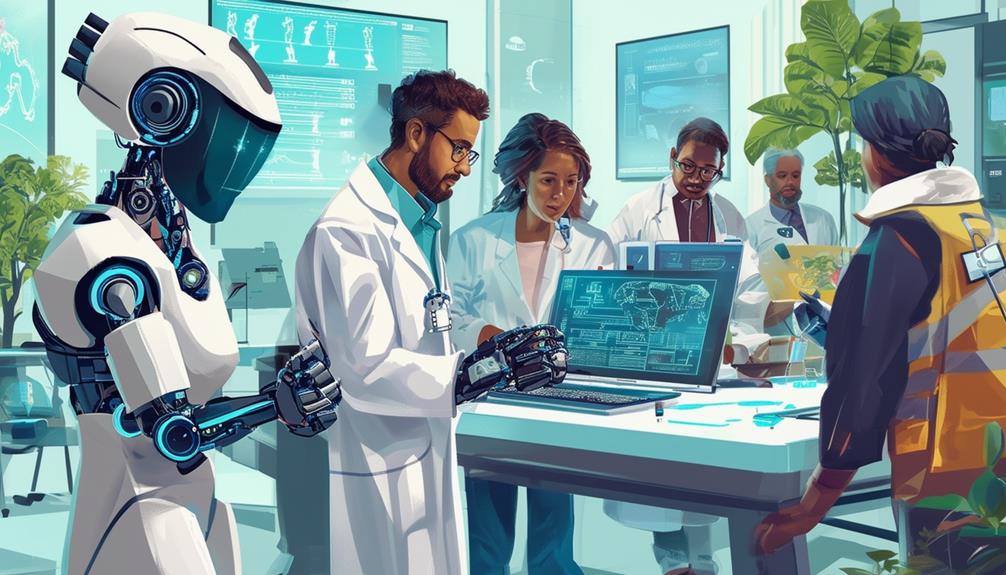
The Robotics Research Laboratories are dedicated to addressing critical societal challenges by focusing on mobility solutions for individuals with disabilities. Their research aims to enhance safety, promote accessibility, and advance equity through innovative robotics technologies. These efforts are not merely about creating sophisticated gadgets; they are about making a tangible difference in people's lives.
By employing collaborative approaches, the labs drive scientific exploration and develop industrial solutions to address complex societal issues. Teamwork is essential for advancing robotics in ways that bridge societal gaps and foster positive community change. These labs collaborate with industries, healthcare providers, and academic institutions to ensure their innovations have practical real-world applications.
Key focus areas include robotics advancements that significantly impact daily life, particularly for those with mobility impairments. Prioritizing projects with societal benefits, the labs leverage their expertise to tackle real-world challenges. Your contributions to these projects could lead to technologies that transform lives, making communities more inclusive and equitable. Ultimately, the Robotics Research Laboratories are not just advancing technology; they are steering society toward a more accessible and just future.
Bridging Theory and Practice
Connecting theoretical insights with real-world applications, the Robotics Research Laboratories ensure that their innovations directly address practical needs. By collaborating with Ford, the University of Michigan (U-M) ensures that your work transcends textbooks and makes a tangible impact in the robotics industry.
At the Ford Motor Company Robotics Building, you benefit from a unique environment where academic and corporate partnerships thrive. This collaboration prepares you to meet industry demands, making your transition from student to professional seamless. You're not just learning theory; you're applying it to solve real-world problems.
Key highlights include:
- Industry-Relevant Training: Gain hands-on experience that aligns with current industry needs.
- Collaborative Projects: Participate in projects that integrate diverse expertise from academia and industry.
- Innovation Driver: Contribute directly to cutting-edge advancements in robotics.
- Expanded Access: Remote courses in partnership with Historically Black Colleges and Universities (HBCUs) broaden educational opportunities.
- Cross-Disciplinary Synergy: Collaborate with professionals from various fields to foster research excellence.
This approach not only bridges the gap between theory and practice but also ensures you are well-equipped to drive innovation in the ever-evolving field of robotics.
Conclusion
The Robotics Research Laboratories have revolutionized the field of robotics by driving technological innovations, enhancing safety, and improving industrial efficiency. Their commitment to interdisciplinary research, knowledge transfer, and collaboration with corporations and HBCUs has been instrumental in addressing societal challenges and bridging the gap between theory and practice. These laboratories are shaping the future of robotics, making a significant impact in both academia and industry.