
The Impact of Robotics on Construction and Infrastructure Development
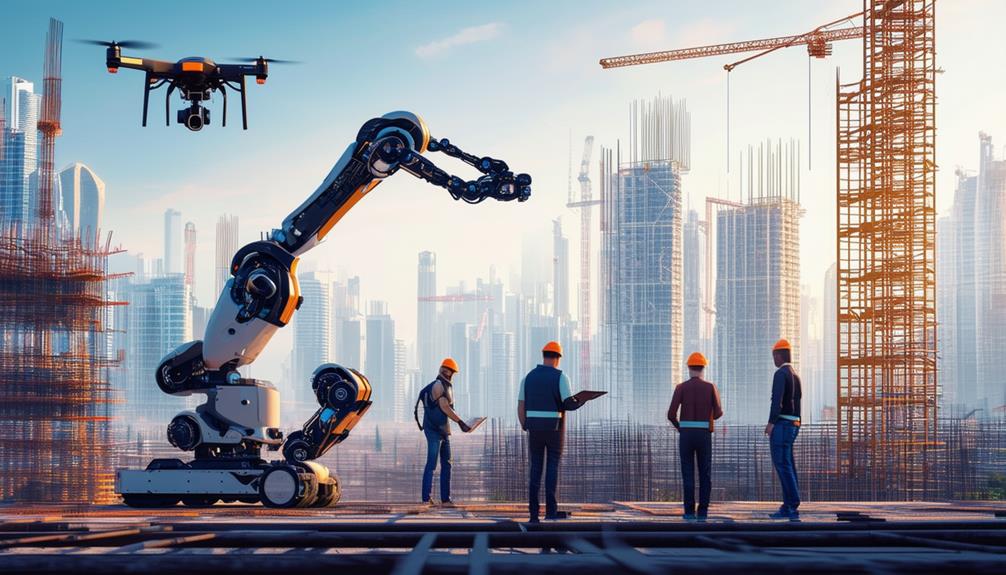
Robotics are transforming construction and infrastructure development. Technologies such as bricklaying robots and autonomous heavy machinery are accelerating project timelines and enhancing precision. They also reduce material waste and address labor shortages. Additionally, robots can undertake hazardous tasks, thereby improving on-site safety. What does this mean for the industry's future and your business strategies? Let's explore the nuances and potential impacts of robotics integration in construction.
Types of Construction Robots
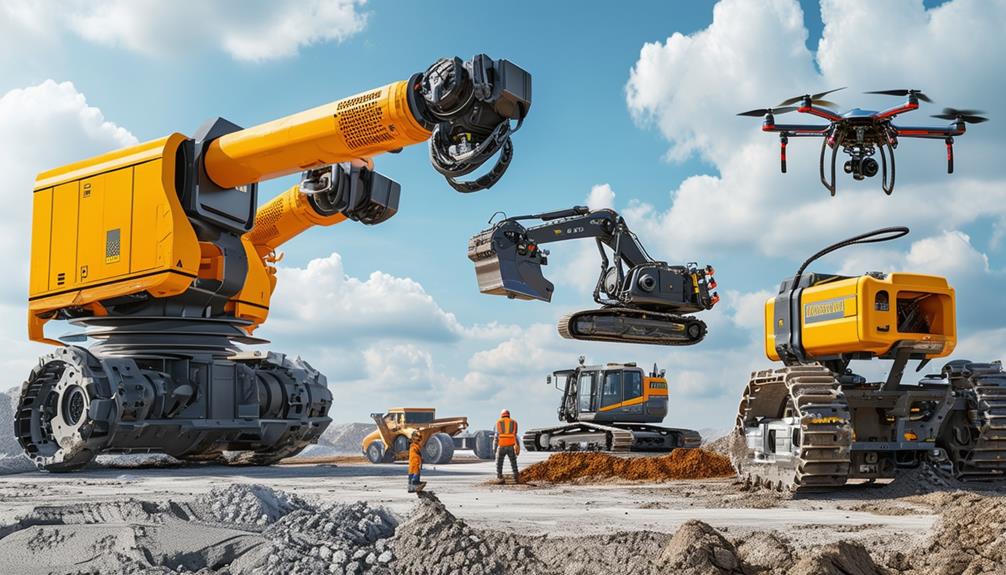
Construction robots come in various forms, each designed to enhance specific tasks and improve overall efficiency on job sites. Among the most notable is the bricklaying robot, which autonomously places bricks, significantly accelerating the construction process and minimizing material waste. These robots ensure walls are constructed more quickly and precisely than with traditional manual labor.
Demolition robots are another critical advancement. By performing tasks remotely, they enhance safety and efficiently dismantle structures, lowering the risk of worker injury. These robots can handle even the most complex demolition tasks, making them essential in contemporary construction practices.
Autonomous trucks and heavy machinery are also being trialed and utilized on construction sites. These self-driving machines transport materials and execute heavy lifting without direct human intervention, boosting productivity and reducing human error.
Furthermore, construction layout robots can directly print building plans onto site floors, saving time and virtually eliminating layout mistakes. Jobsite monitoring robots, including drones and rovers equipped with high-resolution cameras, track progress and improve productivity by providing real-time data and insights. The integration of these construction robots promises a future where construction is both more efficient and safer.
Efficiency and Precision
Integrating robotics into construction delivers unmatched accuracy and substantial time savings. Robots excel in high-precision tasks such as bricklaying and welding, ensuring projects meet exact specifications. This combination of precision and speed reduces errors and significantly boosts overall productivity.
Enhanced Building Accuracy
Thanks to advanced robotics, the construction industry now achieves unprecedented levels of accuracy and precision. By integrating robotic technologies, tasks such as bricklaying and layout can be performed with remarkable accuracy, essential for successful infrastructure development. For instance, autonomous drones and robots use advanced technologies to monitor sites efficiently and ensure layouts are perfectly executed.
In terms of construction layout, robots can directly transfer building plans onto site floors using cloud-based systems. This minimizes human error and accelerates the process, allowing for more efficient resource utilization. Precision tasks like robotic welding and 3D printing further enhance the accuracy of infrastructure development, ensuring that each component fits perfectly.
Moreover, the integration of robotics in construction facilitates timely project completion. Robots can work continuously without fatigue, maintaining high precision levels throughout. This not only saves time but also reduces material waste, promoting more sustainable construction practices. Improved building accuracy through robotics is transforming construction project execution, ensuring higher quality and better resource management in the long run.
Time-Saving Techniques
Integrating robotics into construction projects can dramatically reduce timelines and labor costs by automating and optimizing crucial tasks. Robots, for instance, can perform bricklaying and welding with exceptional speed and precision. This automation not only shortens project durations but also ensures precision, leading to quicker completion and fewer errors.
By incorporating robotics, you'll observe a marked increase in construction efficiency. Advanced technologies, such as drones and robots, streamline various construction stages, saving valuable time. Drones can rapidly survey large areas, providing accurate data that enhances planning and execution.
Robots managing precision tasks contribute to higher productivity and shorter project timelines. With robots handling repetitive and strenuous tasks, human workers can focus on more complex project aspects, further accelerating progress. Overall, integrating robotics in infrastructure development can boost efficiency by up to 30%, ensuring projects are completed on time and within budget.
Safety Enhancements
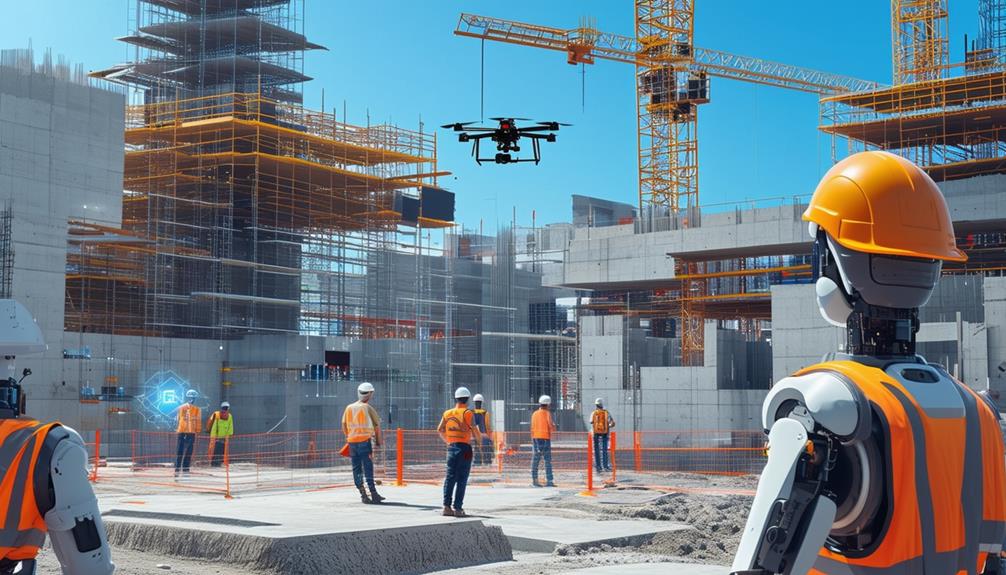
The integration of robotics in handling hazardous tasks such as demolition and excavation significantly reduces workplace accidents. Equipped with advanced sensors and technologies, robots enhance site monitoring and safety protocols. By automating dangerous processes, robotics ensure a safer environment for all construction workers.
Reduced Workplace Accidents
By automating hazardous tasks like demolition and excavation, robotics significantly reduce the risk of workplace accidents in construction. When robots undertake these dangerous jobs, efficiency and safety on construction sites are greatly enhanced. Automation keeps construction workers out of harm's way, allowing them to focus on less risky, more manageable tasks.
Here are four ways robotics and automation contribute to reduced workplace accidents:
- Hazardous Task Handling: Robots can perform perilous activities such as high-rise building inspections or operations in unstable environments, minimizing the risk of injury to construction workers.
- Advanced Safety Measures: Equipped with sensors and advanced technologies, robots can quickly detect and address potential hazards, preventing accidents before they occur.
- Consistent Performance: Robots do not suffer from fatigue or distraction, ensuring that safety protocols are consistently followed, thereby reducing the likelihood of accidents.
- Real-Time Monitoring: Automation systems provide real-time data and analytics, offering valuable insights to help maintain a safe construction site.
Hazardous Task Automation
Integrating robotics into hazardous tasks like demolition and excavation significantly enhances safety on construction sites. These automated processes mitigate the risk of accidents by taking over dangerous operations, thereby safeguarding human lives.
Robotics elevate safety standards in the construction industry by minimizing human exposure to potentially life-threatening situations during tasks like demolition and excavation. This reduction in exposure not only prevents injuries and fatalities but also fosters a safer overall work environment. The precision of robotic operations ensures that tasks are completed efficiently and in adherence to strict safety protocols.
Advanced technologies and sensors embedded in these robots further enhance safety measures. These innovations enable robots to navigate complex environments and execute hazardous tasks with exceptional accuracy—often surpassing human capabilities. Consequently, the adoption of automated processes in construction significantly reduces the likelihood of accidents, promoting a safer, more efficient work setting.
Enhanced Site Monitoring
Leveraging autonomous drones and rovers equipped with high-definition cameras and LiDAR technology revolutionizes site monitoring by providing real-time updates and identifying construction errors. These advanced monitoring systems offer several benefits that significantly improve the construction process.
First, they increase productivity by:
- Providing accurate, real-time updates: Immediate insights into daily work progress enable quick, informed decision-making.
- Reducing rework: Early error detection allows for timely corrections, saving both time and resources.
- Improving safety measures: These systems can identify potential hazards and risks, ensuring a safer work environment.
- Ensuring timely project completion: Constant oversight helps keep projects on schedule and within budget.
Robotics in site monitoring play a crucial role in maintaining high safety and efficiency standards on construction sites. Integrating these technologies not only enhances safety measures but also streamlines the entire construction process. This approach ensures that projects are completed on time and set new benchmarks in quality and safety, helping you stay ahead in a competitive market.
Cost Savings
Implementing robotics in construction can significantly reduce labor costs, often by up to 50%, while also minimizing expenses related to workplace injuries. By integrating robotics and automation, tasks can be completed up to twice as fast compared to human labor, reducing errors and lowering overall project costs. The initial investment in robotics is offset over time by reduced labor expenses and increased efficiency.
For example, demolition robots not only expedite the demolition process but also lessen the reliance on manual labor, leading to substantial savings. Additionally, the use of robots for hazardous tasks reduces the risk of injury, thereby cutting down on associated medical and compensation costs. Given the current global labor shortage affecting the construction sector, robotics ensures projects continue without delays, enhancing operational reliability and efficiency.
Adopting these advanced technologies gives you a competitive edge by delivering high-quality results with fewer resources. In essence, the use of robotics in construction is a forward-thinking investment that optimizes both budget and project timelines.
Overcoming Labor Shortages
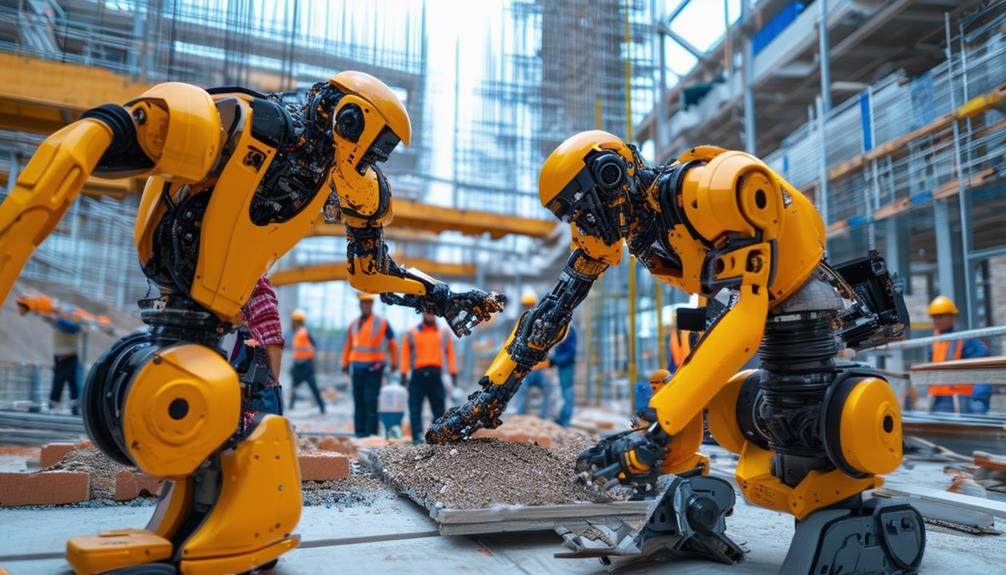
Robotics in construction can effectively address the labor gaps left by retiring workers, ensuring projects proceed without interruption. As the industry grapples with a growing labor shortage, automation and robotics are crucial for maintaining project continuity. By integrating robots into construction workflows, you can directly tackle workforce limitations, allowing large-scale projects to advance smoothly.
The efficient deployment of robots guarantees that tasks are completed consistently and without fatigue, significantly boosting productivity. This not only helps meet project timelines but also mitigates the impact of labor shortages on overall efficiency. Here are four key benefits of using robotics in construction:
- Enhanced Productivity: Robots can operate continuously without breaks, accelerating project timelines.
- Consistency and Precision: Automation ensures tasks are executed with high accuracy, minimizing human error.
- Reduced Delays: With robots assuming critical roles, delays due to labor shortages are minimized.
- Cost Efficiency: Despite the high initial investment, long-term benefits include reduced labor costs and fewer project overruns.
Incorporating robotics into construction is a practical solution for overcoming workforce limitations and ensuring the seamless progress of construction projects.
Future Trends in Robotics
In the coming years, groundbreaking advancements in construction robotics are poised to revolutionize the industry. Autonomous drones will conduct site surveys and inspections, providing real-time data to enhance project oversight. On-site 3D printing robots will enable rapid prefabrication of components, significantly reducing material waste. Bricklaying robots will streamline masonry work, achieving unmatched precision and speed.
Exoskeletons will empower workers by reducing fatigue and the risk of injury through mechanical support. This technology will enhance both safety and efficiency on job sites. Robotic arms will play a crucial role in prefabrication, assembling complex structures with a level of accuracy beyond human capability.
The integration of these robots will address skilled labor shortages and rising costs, making construction projects more efficient and safer. Companies like Brokk AB, Husqvarna AB, and Fastbrick Robotics Ltd are spearheading innovation, while firms such as Dusty Robotics and Ekso Bionics are expanding their offerings to meet industry demands. As the global construction robotics market grows, these advancements will redefine building and infrastructure development.
Conclusion
Robotics is fundamentally reshaping construction and infrastructure development. By integrating advanced technologies, the industry is witnessing increased efficiency, improved precision, and enhanced safety on projects. Additionally, significant cost savings are realized, and labor shortages are effectively mitigated. As the sector evolves, staying ahead by adopting cutting-edge robotics and ensuring sustainable practices is crucial for timely project completion. The transformative impact of robotics on the industry is both undeniable and beneficial.