The Impact of Open-Source Software on Robotics Development

Open-source software has revolutionized robotics, transforming it from an expensive and exclusive field to one that is accessible and innovation-rich. Platforms like ROS (Robot Operating System) and TensorFlow are crucial, providing robust solutions that streamline development and address complex challenges. The collaborative nature of these platforms not only reduces costs but also accelerates technological advancements. How does this collaborative ecosystem function, and what does it mean for the future of robotics? Let's explore further.
Benefits of Open-Source Software

In the current robotics industry, open-source software significantly reduces costs and makes advanced technology accessible to everyone. By embracing open-source software, you can participate in a collaborative environment that ignites innovation and accelerates development. This approach not only decreases expenses but also enriches access to cutting-edge robotics technology.
Open-source software provides transparent access to the source code, allowing you to learn, customize, and improve your robotics projects with ease. Without being locked into proprietary systems, you can modify the software to fit specific needs, leading to more efficient and cost-effective operations. This transparency fosters continuous learning and development, empowering you to stay abreast of the latest advancements.
Moreover, open-source software promotes interoperability within the robotics field. It allows different components and systems to integrate seamlessly, making projects more flexible and scalable. The community-driven nature of open-source development creates a diverse ecosystem of developers, researchers, and enthusiasts. This collective effort drives continuous progress and innovation in robotics technology, ensuring you benefit from the collective expertise and creativity of a global network.
Key Open-Source Platforms
Exploring key open-source platforms such as ROS, Gazebo, OpenCV, TensorFlow, Arduino, and Raspberry Pi reveals their significant impact on advancing robotics development. These platforms offer robust tools and foster a collaborative environment, allowing you to leverage contributions from a vast community of experts. This collective knowledge accelerates innovation and enhances your ability to solve complex robotics challenges efficiently.
Popular Robotics Frameworks
Popular open-source robotics frameworks like ROS, Gazebo, OpenCV, TensorFlow, Arduino, and Raspberry Pi are transforming the development and testing of robotic applications. These tools are instrumental in driving advancements in open-source robotics. Starting with ROS (Robot Operating System), it provides an extensive suite of libraries and tools that simplify the design of complex robotic systems. ROS allows for seamless management of sensor data, control of actuators, and implementation of algorithms, making it a cornerstone for robotic software development.
Gazebo complements ROS by offering a robust simulation environment where developers can test and refine their robotic applications without the need for physical hardware, thereby accelerating development cycles. OpenCV specializes in computer vision, enabling robots to process and interpret visual inputs for tasks such as object recognition and tracking. This capability is crucial for autonomous navigation and interaction with the environment.
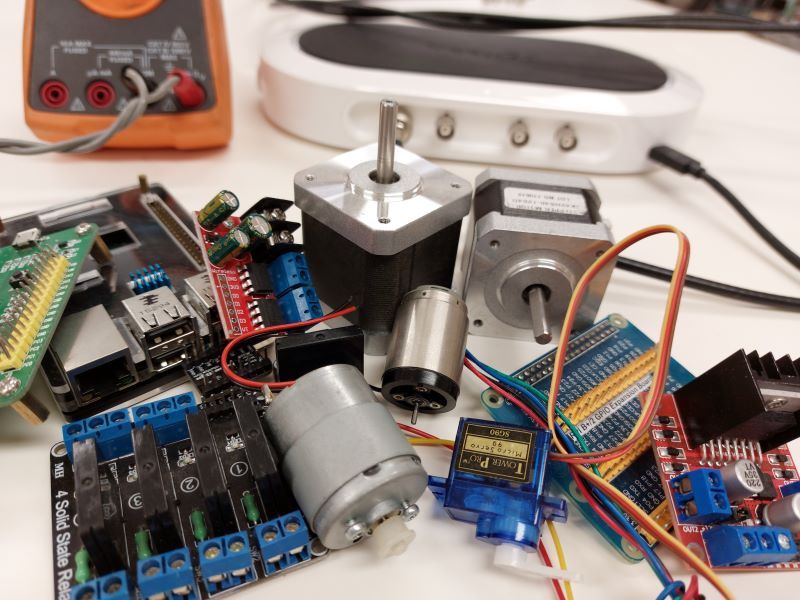
TensorFlow adds machine learning capabilities to the mix, allowing robots to learn from large datasets. This enhances their decision-making processes and adaptability, making them more intelligent and capable in dynamic environments. On the hardware side, Arduino and Raspberry Pi are essential components. Arduino boards facilitate the integration of various sensors and actuators, making them ideal for prototyping and testing physical interactions. Raspberry Pi, with its robust processing power, serves as a versatile platform for running complex algorithms and managing advanced robotic functions. These frameworks collectively provide a solid foundation for developing innovative and functional robotic solutions, pushing the boundaries of what is possible in the field of robotics.
Collaborative Development Benefits
Key open-source platforms like ROS, Gazebo, OpenCV, and TensorFlow significantly foster collaborative development within the robotics community. By leveraging these platforms, you can collaborate with others, contribute to open-source projects, and benefit from the collective intelligence of the community.
- ROS (Robot Operating System): ROS provides a comprehensive suite of tools and libraries, facilitating the integration of diverse components into robotic systems, thereby simplifying development and deployment.
- Gazebo: This powerful simulation environment allows you to test applications in realistic settings, offering a sandbox for experimentation and validation before physical deployment.
- OpenCV (Open Source Computer Vision Library): OpenCV is essential for vision-based applications, providing a vast library of pre-built algorithms for image processing and computer vision tasks.
- TensorFlow: This platform enables the incorporation of AI capabilities into robotic systems, supporting the development of machine learning models that can be integrated into robots for advanced functionalities.
These platforms encourage contributors by continuously evolving with new features and capabilities. This collaborative ecosystem ensures rapid innovation and minimizes redundancy, making it easier to develop complex robotic systems efficiently.
Quick Comparison of Key Open-Source Platforms
| Platform | Primary Use | Key Benefit |
|---|---|---|
| ROS | Robotics middleware | Diverse tools & libraries |
| Gazebo | Simulation environment | Realistic testing |
| OpenCV | Computer vision | Extensive algorithm library |
| TensorFlow | Machine learning | AI integration |
| Arduino/RPi | Hardware integration | Cost-effective solutions |
Community Collaboration

Community collaboration is crucial for advancing open-source robotics development. Global contributors bring diverse perspectives and expertise, creating an environment conducive to innovation. Continuous improvement, fueled by shared insights and feedback, leads to robust and versatile robotic solutions.
Participation in an open-source robotics project means becoming part of a dynamic community. This engagement facilitates learning, knowledge sharing, and collective advancement. Collaborative efforts result in a rich exchange of ideas and problem-solving strategies, benefiting all participants.
The value of diverse contributors cannot be overstated. Their varied backgrounds and experiences foster inventive solutions and address challenges from multiple angles. This inclusivity ensures that open-source robotics projects are not only creative but also adaptable to diverse needs and applications.
Cost-Effectiveness in Development
Building on the collaborative spirit, open-source software in robotics development offers a cost-effective approach by eliminating the need for expensive proprietary licenses. Utilizing open-source tools like ROS and Gazebo can significantly lower costs, as these tools are robust, free, and widely supported by the community. This makes them an excellent choice for reducing development expenses.
Open-source hardware platforms like Arduino and Raspberry Pi also contribute to cost-effective business operations. These platforms are not only affordable but also versatile, making it easier to prototype and develop robotic systems without incurring high costs. When combined with open-source software, these hardware solutions can substantially reduce both hardware and software expenses.
Using open-source libraries and frameworks allows access to existing solutions, cutting down on development time and costs. Collaborative projects within the open-source community pool resources and expertise, further driving down expenses. Here is a concise illustration of the benefits:
| Aspect | Proprietary | Open-Source |
|---|---|---|
| Software Licensing | Expensive | Free |
| Development Costs | High | Lower |
| Hardware Platforms | Specialized and costly | Arduino, Raspberry Pi |
| Community Resources | Limited | Extensive and collaborative |
Accelerated Innovation

Leveraging open-source software in robotics accelerates innovation by providing immediate access to the latest tools and resources. By utilizing open-source software in your robotics development projects, you tap into a vast pool of shared knowledge and cutting-edge technologies. This collaborative environment fosters rapid development and experimentation, markedly reducing time-to-market for new robotic solutions.
Here are four key ways open-source software drives accelerated innovation in robotics:
- Immediate Access to Tools: Open-source platforms offer the latest development tools and libraries, keeping you at the forefront of technological advancements.
- Enhanced Collaboration: By participating in open-source projects, you gain from the collective expertise of a global community, leading to faster problem-solving and shared progress.
- Customizable Solutions: Open-source software allows for high levels of customization, enabling you to adapt and tailor solutions to specific needs, thereby fostering innovation.
- Encouraged Experimentation: With reduced costs and fewer barriers to entry, you can afford to experiment more, driving creative and out-of-the-box thinking in your projects.
Enhancing Interoperability
Open-source software significantly boosts interoperability in robotics, enabling different systems to communicate and collaborate effectively. By adopting open-source solutions, you ensure that your robotic systems are compatible with a wide range of platforms and technologies. This compatibility is essential for the seamless integration of diverse hardware and software components from various sources.
Interoperability fosters innovation by encouraging collaboration and knowledge sharing—core principles of open-source software. Frameworks like ROS (Robot Operating System) exemplify this by prioritizing interoperability, thereby simplifying the development and deployment of complex robotic systems. This approach not only streamlines the development process but also expands the possibilities in the field of robotics.
Here's a concise comparison to illustrate the advantages:
| Aspect | Open-Source Software |
|---|---|
| Interoperability | High |
| Collaboration | Enhanced |
| Development Speed | Accelerated |
| Cost | Lower |
| Flexibility | High |
Case Studies in Robotics
In real-world applications, open-source software has driven remarkable advancements in robotics, as evidenced by several compelling case studies. These examples highlight how development skills, open-source projects, and the robotics community have come together to push the boundaries of what's possible.
- ROS (Robot Operating System): A cornerstone in robotics, ROS enables the creation of complex robot applications. It serves as a hub for the robotics community, allowing developers to share and enhance each other's work. The TurtleBot project, for instance, uses ROS to teach robotics and development skills to newcomers.
- Gazebo: This open-source simulation environment is essential for testing and validating robot designs before physical implementation. Developers can simulate real-world scenarios, thereby reducing the time and cost associated with hardware testing. Projects like the DARPA Robotics Challenge have utilized Gazebo for rigorous robot testing.
- OpenCV: Enhancing robots' perception capabilities, OpenCV is a go-to for image and video processing tasks. The autonomous vehicle community extensively uses OpenCV for object detection and tracking, which is essential for navigation in real-world environments.
- TensorFlow: As an open-source machine learning framework, TensorFlow allows robots to learn and adapt from data. Projects like Google's DeepMind have employed TensorFlow to develop advanced robotic systems capable of complex decision-making and learning from experiences.
These case studies demonstrate the transformative impact of open-source software in real-world robotics development, highlighting its role in fostering innovation, collaboration, and efficiency.
Future Trends in Robotics
As we look to the future, robotics is set to transform industries through advancements in swarm robotics, human-robot collaboration, and edge computing. Robots will increasingly work together in groups, known as swarm robotics, to tackle complex tasks more efficiently. This method mimics the behavior of social insects, enabling robots to perform collective tasks that would be impossible individually. Open-source platforms will play a crucial role in driving this innovation, offering accessible tools for researchers and developers.
Human-robot collaboration is another significant trend. By working alongside humans, robots can enhance efficiency and safety in various sectors, from manufacturing to healthcare. These collaborative robots, or cobots, are designed to operate safely in close proximity to humans, thereby reducing workplace injuries and boosting productivity.
Edge computing is also becoming vital in the robotics landscape. By processing data locally on the device, rather than relying on centralized cloud servers, robots can make faster decisions and operate more autonomously. This is particularly important for applications requiring real-time responsiveness. Incorporating these trends, the future of robotics promises increased efficiency, safety, and innovation, all driven by the accessibility and collaborative nature of open-source platforms.
Conclusion
Open-source software has revolutionized robotics development by reducing costs and fostering innovation. Platforms like ROS, Gazebo, and TensorFlow offer powerful tools and encourage collaboration. By integrating diverse components and providing realistic testing environments, they accelerate progress and make advanced technology more accessible. The future of robotics is promising, with open-source software enhancing interoperability and driving community-driven advancements. Prepare for a new era in robotics!