The Impact of AI and Robotics on the Future of Work and Employment

When considering the future of work, AI and robotics are pivotal. These technologies are not mere buzzwords; they are actively transforming industries by automating routine tasks and optimizing complex processes. With predictions that about 25% of jobs could be automated by 2030, it is crucial to understand the implications for job displacement, the creation of new opportunities, and the skills necessary to thrive. How will you navigate this evolving landscape, and what strategies will you employ to remain relevant? The answers lie in comprehending how these advancements will reshape our work environment.
Evolution of AI and Robotics
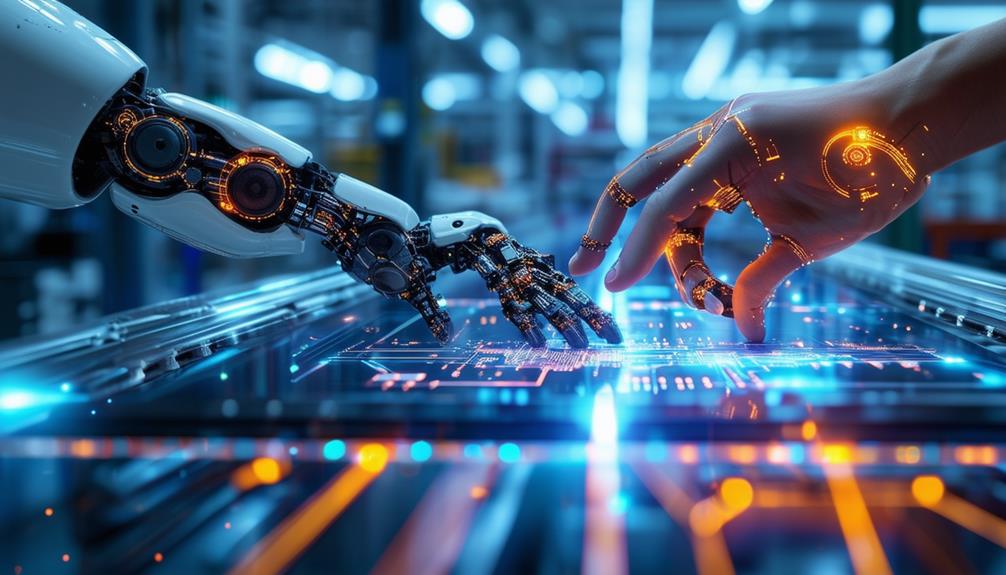
Advancements in AI and robotics have revolutionized how machines interact with their environments and perform tasks. Intelligent machines have emerged that can efficiently handle a wide range of activities, becoming integral to sectors such as healthcare, business, and social services. These advancements significantly enhance productivity and accuracy across these fields.
In healthcare, specialized robots perform surgeries with precision beyond human capability. In business, AI-driven systems optimize logistics and decision-making processes. These intelligent machines are purpose-built for specific tasks, making them increasingly adept at meeting the unique requirements of different sectors.
A crucial element in this evolution is the use of learning models, which enable robots to adapt and improve based on their interactions and experiences. This capability means the AI-robotics intersection involves not just planned actions but also continuous learning and evolution. Understanding these technologies' ongoing integration and transformation across industries is essential for shaping the future of work.
Automation of Routine Tasks
Advancements in AI and robotics are increasingly automating routine tasks across various industries, fundamentally transforming work processes. Automation is now a pivotal element in this AI revolution, optimizing activities that involve repetitive actions such as data collection, writing, and customer service. By 2030, it is projected that approximately 25% of jobs could be automated, significantly impacting the job market.
These changes are particularly evident in roles like customer service representatives and receptionists, where automation can efficiently handle inquiries and manage appointments. While this shift enhances efficiency, it also poses the challenge of adapting to new job requirements for the workforce.
To remain relevant in this evolving landscape, upskilling and reskilling are crucial. If you are in a role susceptible to automation, acquiring new skills or enhancing existing ones can facilitate a transition to roles less likely to be automated. The AI revolution is not solely about job displacement but also about creating opportunities for growth and innovation. Embrace this change by focusing on continuous learning and adaptability to ensure competitiveness in the future job market.
Job Displacement Trends

The increasing adoption of AI and robotics is driving significant job displacement across various sectors. By 2030, around 25% of jobs are expected to be automated, leading to substantial shifts in employment. Jobs that involve routine tasks are particularly vulnerable, as artificial intelligence excels at performing repetitive and predictable tasks more efficiently than humans.
By 2025, it is predicted that the rise in robot adoption will result in a decline in jobs that involve routine manual tasks. The extent of this impact varies across industries, with those having high technical feasibility for automation experiencing more pronounced declines in certain types of employment.
The relationship between robot integration and job displacement is evident: as robots take on more routine tasks, fewer human workers are needed for these roles. This trend highlights the urgent need to understand and mitigate the effects of artificial intelligence on employment. Moving forward, anticipating job displacement and preparing for its consequences will be essential for maintaining economic stability and workforce resilience.
New Employment Opportunities
As AI and robotics advance, they don't just eliminate jobs; they also create new roles that harness human creativity and technical skills. Emerging jobs are evolving alongside AI technology, opening up diverse employment opportunities. For instance, industries such as healthcare are experiencing a surge in demand for AI specialists who can develop and manage advanced healthcare systems. This technological change is about more than just replacement; it's about creating new avenues for human ingenuity.
By 2030, it's estimated that AI will automate around 25% of jobs, but this shift will also generate roles that require human oversight and innovation. Consider positions like AI ethicists, data analysts, and robotics technicians. These roles are part of the Future of Jobs and highlight how technological advancements can spur economic growth.
McKinsey predicts that AI could add approximately $13 trillion to the global economy by 2030, reflecting the significant potential for new employment opportunities. While routine tasks may be automated, jobs that require problem-solving, creativity, and emotional intelligence will flourish. As the job market evolves, adapting to these changes can open up exciting new career paths.
Skills for the Future Workforce
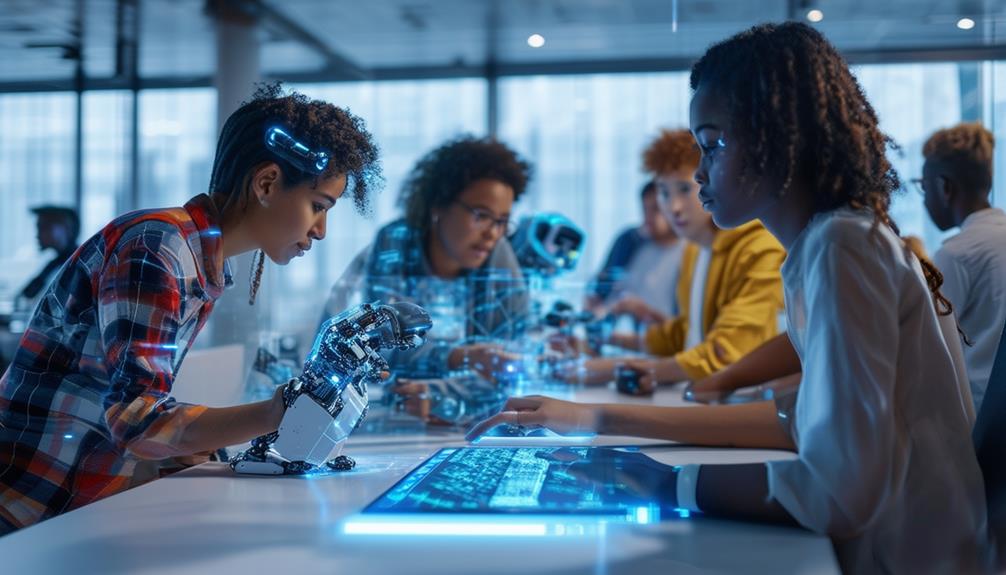
To thrive in the evolving job market shaped by AI and robotics, you must develop a blend of soft skills and technical expertise. Lifelong learning is critical to staying competitive, as technological advancements require continuous skill development. Enrolling in AI-focused programs can help you acquire the necessary skills to succeed in this tech-driven environment.
Soft skills such as communication, adaptability, and problem-solving are just as crucial as technical expertise. Agility and adaptability are key traits for navigating the changing job landscape. Specializing in specific areas of AI can also open up new job opportunities and career advancement paths.
| Skill Type | Examples |
|---|---|
| Soft Skills | Communication, teamwork, adaptability |
| Technical Expertise | Machine learning, data analysis, coding |
| Lifelong Learning | Online courses, certifications, workshops |
| AI-Focused Programs | Specialized AI and robotics courses |
| Continuous Development | Regularly updating skills, ongoing training |
Incorporate these skills into your career strategy to prepare for the future workforce. By blending soft skills with technical expertise and committing to lifelong learning, you'll be well-equipped to meet the demands of the modern job market shaped by AI and robotics.
Economic Impacts of AI
The adoption of AI is poised to transform the global economy, potentially adding $13 trillion by 2030. This anticipated growth is driven by the widespread integration of AI technologies across various sectors. According to McKinsey, about 70% of companies are expected to adopt these innovations, leading to significant economic impacts. Automation is projected to affect approximately 25% of jobs by 2030, fundamentally altering the labor market.
While this shift may displace certain jobs, it will also create new opportunities, necessitating a dynamic and adaptable workforce. The economic growth fueled by AI technologies is forecasted to result in a 16% increase in cumulative GDP by 2030, highlighting the potential benefits. Different industries will experience varying degrees of impact, with some benefiting more from automation and AI-driven efficiencies than others.
As AI technologies become more prevalent in the business landscape, they will reshape both economic activity and labor markets. Companies that adopt AI are likely to experience increased productivity and innovation, fostering growth and competitiveness. However, this transformation also brings challenges, such as job displacement, requiring strategies to help workers transition to new roles. The economic impacts of AI are extensive, presenting both opportunities and challenges for the future.
Bridging the Capital-Labor Gap
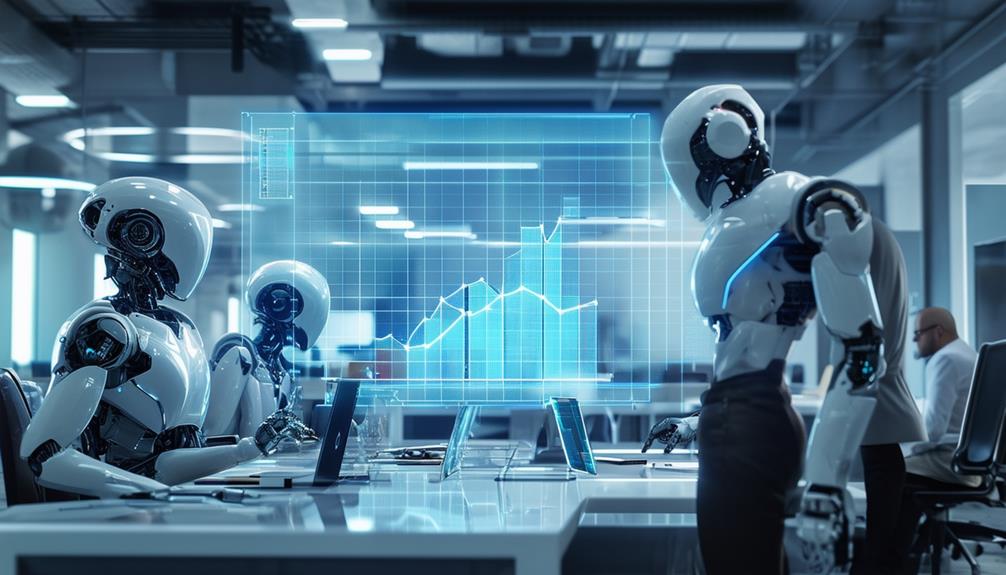
Bridging the capital-labor gap necessitates collaborative efforts from both management and policymakers to ensure workers remain central to productivity growth in an AI-driven economy. As automation and AI technologies advance, the risk of increasing employment inequality becomes more pronounced. Therefore, the focus should be on integrating human workers with new technologies rather than replacing them.
Management should view human workers as essential assets for enhancing productivity. By prioritizing the enhancement of human capabilities through AI, companies can improve job quality and efficiency. This approach not only boosts productivity but also helps sustain employment levels.
Policymakers play a crucial role by creating policies that support the development of AI technologies that complement human labor. Investments in research and development should aim to create tools that enhance human skills rather than make them redundant. Additionally, it is vital to ensure that workers have a say in how AI technologies are implemented. When workers are organized and actively involved in the production process, the transition to an AI-driven economy can be smoother and more equitable.
Worker Empowerment Strategies
Effective worker empowerment strategies revolve around integrating AI tools to enhance both productivity and decision-making. By harnessing data-driven technology, you can optimize efficiency and enable better decision-making within your workforce. Publicly funded programs can play a crucial role by providing training and resources for upskilling, ensuring that workers are well-equipped for the modern era.
To understand the potential impact, examine case studies where organizations have successfully integrated AI technologies. These examples can serve as inspiration and provide guidance on prioritizing worker empowerment. Additionally, the responsible adoption of AI by nonprofits is essential. Ensuring that technology benefits both workers and society can address ethical concerns and create a balanced approach to AI implementation.
Generative AI development also plays a significant role in worker empowerment. By focusing on societal benefits, generative AI can create more opportunities for skill development and job creation. This approach not only empowers workers but also fosters a more inclusive and dynamic workforce. Through these strategies, you can ensure that AI tools are used to improve worker empowerment and contribute positively to society.
Human-AI Collaboration
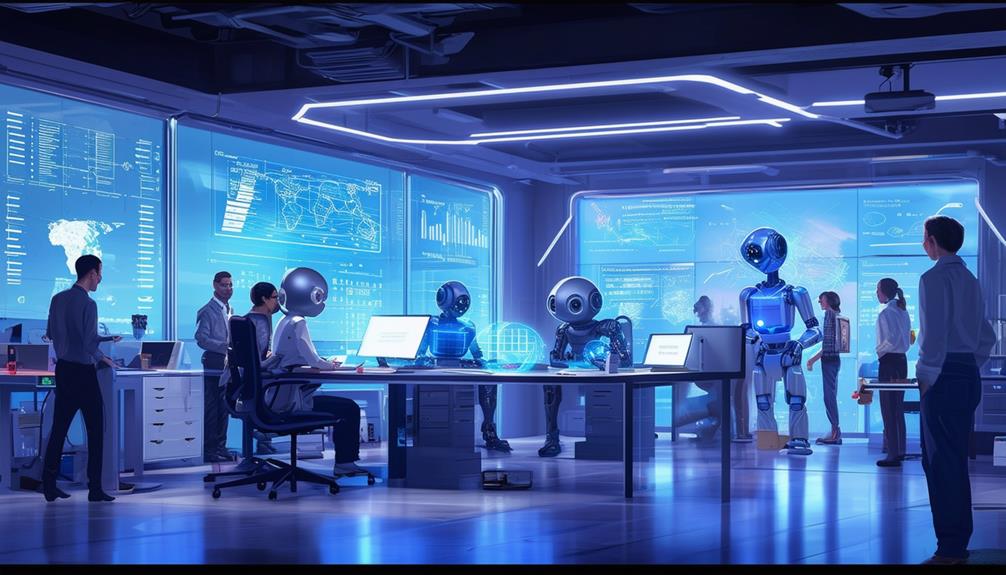
Embracing Human-AI collaboration can significantly boost workforce productivity by allowing AI to handle repetitive tasks, thereby freeing employees to concentrate on creative and strategic activities. This shift not only enhances efficiency but also necessitates evolving skillsets to maintain relevance. Collaborating with AI improves decision-making processes and fosters innovation across industries.
Enhancing Workforce Productivity
Human-AI collaboration significantly enhances workforce productivity by combining human creativity with AI's precision and speed. This partnership enables workers to focus on tasks that require ingenuity and emotional intelligence while AI handles data-driven processes with unmatched accuracy. The synergy not only boosts productivity but also fosters the development of new skills and innovative solutions.
In your daily work, AI technologies can support you in performing tasks more efficiently. Leveraging AI's capabilities allows you to enhance output and improve the quality of your work. Collaborative efforts between humans and AI systems lead to better decision-making processes, enabling more effective problem-solving.
Human-AI collaboration streamlines workflows, resulting in quicker task completion and increased efficiency. For instance, AI can analyze large datasets in minutes, freeing you to interpret the results and make strategic decisions. This optimized resource utilization drives business growth, allowing you and your team to achieve more in less time.
Skillset Evolution Required
As AI continues to enhance productivity, evolving your skillset to collaborate effectively with advanced technologies becomes essential. The future workforce will increasingly depend on a synergy between human capabilities and AI, making it crucial to develop new skills. This collaboration can significantly boost productivity and efficiency in your role.
Adaptability is key. As AI and robotics evolve, your ability to quickly grasp and utilize these tools will distinguish you. Staying updated with the latest advancements and continuously learning how to integrate AI into your workflows will be crucial for career progression in an AI-driven landscape.
Human-AI collaboration extends beyond understanding technology; it focuses on optimizing performance to meet organizational objectives. Successful professionals will seamlessly integrate AI into their daily tasks, driving innovation and achieving success. By enhancing your skillset to include AI proficiency, you will not only elevate your efficiency but also unlock new opportunities for career growth.
Policy and Ethical Considerations
Effective policies and ethical frameworks are essential to address the challenges posed by AI and robotics to employment. These policies must encompass various aspects to ensure a balanced approach. Rapid advancements in AI and robotics could lead to significant job displacement, necessitating a focus on comprehensive retraining programs and job transition assistance. Such measures ensure that workers can smoothly transition into new job opportunities generated by these technologies.
To facilitate these transitions effectively, consider the following key policy areas:
- Worker Protection Regulations: Establish clear rules to guarantee fair employment practices in an AI-driven world.
- Privacy Safeguards: Develop robust policies to protect employee data and privacy in workplaces increasingly reliant on AI.
- Comprehensive Retraining Programs: Implement detailed programs to help workers acquire new skills relevant to the evolving job market.
- Job Transition Assistance: Offer robust support systems to aid workers in moving from displaced jobs to new roles.
- Promotion of New Job Opportunities: Encourage the creation of jobs in emerging AI-related fields to compensate for those lost to automation.
Balancing innovation with these ethical considerations is critical for shaping a sustainable future of work. By focusing on these areas, we can help mitigate the negative impacts of AI and robotics on employment and ensure a fair and equitable transition for all workers.
Conclusion
AI and robotics are fundamentally transforming work and employment. While automation may displace certain roles, it also creates new opportunities. Embrace upskilling and reskilling to remain relevant in this changing landscape. By collaborating with AI and narrowing the capital-labor gap, you can empower yourself and others in the workforce. With the right strategies and ethical considerations, this technological revolution can drive innovation and career growth for all.