The History of the Deep Blue Vs. Garry Kasparov Chess Matches
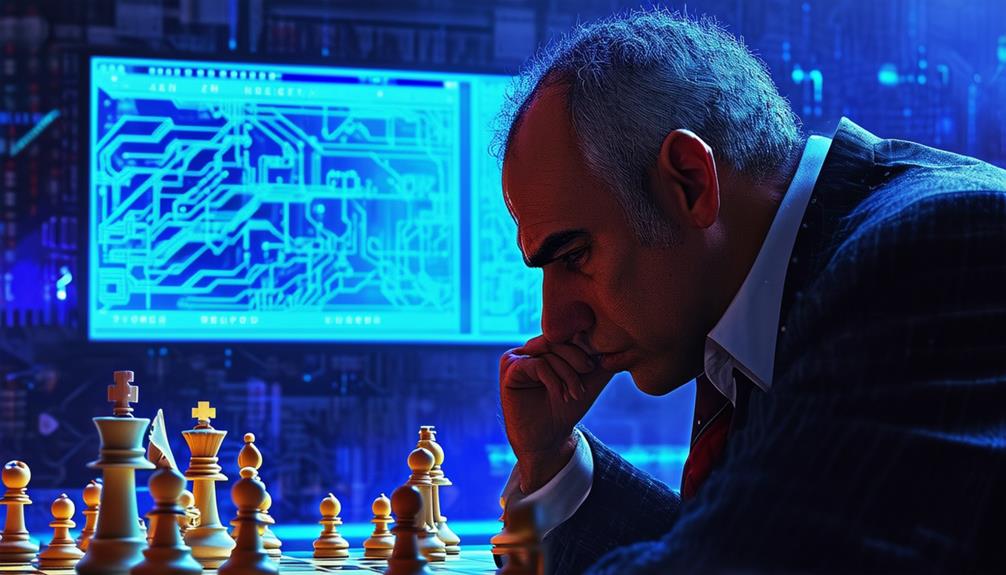
You might be familiar with the iconic chess matches between Deep Blue and Garry Kasparov in the late '90s. These games transcended the realm of chess, representing a groundbreaking clash between human intellect and artificial intelligence. In 1996, Kasparov's victory affirmed human superiority. However, the 1997 rematch saw Deep Blue emerge victorious, marking a pivotal moment in AI history. What exactly changed between 1996 and 1997, and why was it so significant? Let's delve into the details.
Background and Significance

The Deep Blue vs. Garry Kasparov chess matches were seminal in showcasing the advancing capabilities of artificial intelligence in strategic gaming. Held in 1996 and 1997, these matches captivated global attention as the reigning world champion, Garry Kasparov, faced IBM's supercomputer, Deep Blue. The significance of these encounters cannot be overstated, as they highlighted the evolving dynamics between human intellect and machine computation in chess.
In 1996, Deep Blue made history by defeating Kasparov in the initial game of their match, marking the first time a reigning world champion lost to a computer under classical time controls. This victory was a watershed moment for AI, demonstrating its potential to rival human expertise in complex strategic games. Despite this, Kasparov ultimately won the 1996 match with a score of 4-2, underscoring that human ingenuity still prevailed.
However, the 1997 rematch told a different story. Deep Blue triumphed with a score of 3.5-2.5, proving that AI could not only compete with but also surpass the world's best human players. These matches highlighted the rapid advancements in AI technology and its growing significance across various domains.
The 1996 Match
In 1996, Garry Kasparov faced off against IBM's Deep Blue in a groundbreaking chess match that tested the limits of human and artificial intelligence. This match was historic as it marked the first time a reigning world champion was defeated by a computer under classical time controls. In the initial game, Deep Blue won, stunning the chess world and demonstrating the potential of artificial intelligence. The IBM team had reason to celebrate, but Kasparov was determined to prove his prowess.
Kasparov bounced back in the second game, securing victory after a strategic battle that lasted 73 moves. This win reasserted his dominance and showcased his resilience. Games 3 and 4 resulted in draws, reflecting a closely matched competition and the tension between human intuition and machine calculation.
The fifth game was a turning point. Kasparov, playing Black, won, marking the sole Black victory in the entire series. This game highlighted his strategic brilliance and adaptability. With the final game ending in another victory for Kasparov, the 1996 match concluded with a score of 4-2 in favor of the world champion. The intense gameplay and draw offers made this match unforgettable.
The 1997 Rematch
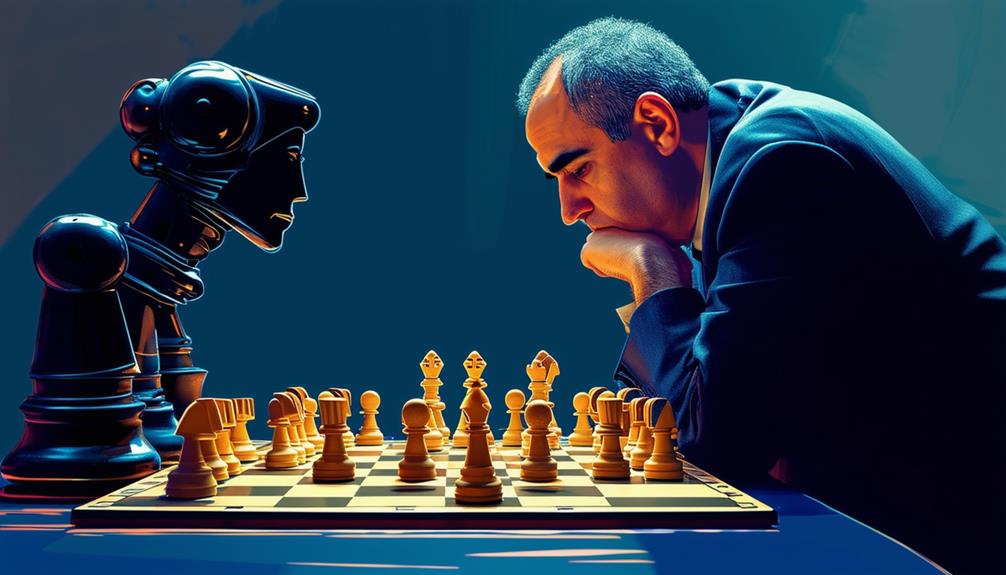
The 1997 rematch between Garry Kasparov and IBM's Deep Blue was a pivotal moment in the contest between human intellect and artificial intelligence. This highly anticipated six-game series saw the world champion facing an upgraded version of the computer program. Determined to demonstrate human superiority in chess, Kasparov was up against a formidable opponent in Deep Blue.
The rematch featured intense moments, especially in Game 4, where Kasparov struggled with time management and ultimately lost. The climax occurred in Game 6, when Deep Blue executed a remarkable knight sacrifice, forcing Kasparov into a difficult position. Confronted with the machine's relentless precision, Kasparov resigned, marking Deep Blue's victory. This event underscored the advancing capabilities of computer programs in the realm of chess.
Despite a draw in the third game after 45 moves, Deep Blue's performance in the 1997 rematch showcased its advanced capabilities. This pivotal event signaled a new era in which artificial intelligence could challenge, and even surpass, human champions.
Impact on Chess
Kasparov's matches against Deep Blue revolutionized the perception of artificial intelligence in chess. These encounters didn't merely pit human against machine; they showcased AI's potential to challenge the highest levels of human strategic thinking. For chess players globally, the matches between Garry Kasparov and Deep Blue became a landmark event, demonstrating that AI could compete at the pinnacle of strategic complexity, thereby altering the landscape of competitive chess.
| Aspect | Impact |
|---|---|
| AI's Role | Elevated to a formidable opponent in chess |
| Human Intellect | Emphasized adaptability and strategic thinking |
| Chess Tournaments | Now integrate AI as a crucial component |
| Machine Learning | Advanced significantly due to these matches |
Kasparov's initial defeat was historic, marking the first time a computer program beat a reigning World Champion in a chess match. However, his subsequent victory underscored the enduring power of human intellect. These matches pushed the boundaries of machine learning technology and reshaped competitive chess. Today, grandmasters often utilize AI for training, integrating it into their preparation strategies, thereby blending human skill with artificial intelligence for enhanced performance.
Legacy in Technology

The Deep Blue vs. Garry Kasparov matches marked a transformative moment in the field of artificial intelligence and machine learning. Deep Blue's victory over the reigning world chess champion was not merely a win in a game but a significant milestone for AI technology, demonstrating its potential to rival human intellect in complex strategic scenarios.
The impact of these matches can be summarized as follows:
- Advancement of AI Algorithms: Researchers built upon the strategies used by Deep Blue to create more advanced and sophisticated AI algorithms.
- Human Adaptability and Strategic Thinking: Kasparov's ability to adapt his strategies against Deep Blue underscored the critical role of human ingenuity in overcoming AI opponents.
- Diverse Applications: The principles from these matches have been applied to various fields, including healthcare and finance, illustrating the broad relevance of AI advancements.
Kasparov's encounters with Deep Blue sparked ongoing discussions about the future role of AI in competitive environments and its influence on human decision-making processes. The legacy of these matches continues to drive innovation in AI and machine learning, highlighting that human adaptability and strategic thinking remain vital even in the age of advanced technology.
Conclusion
The Deep Blue vs. Garry Kasparov matches marked a pivotal moment in AI and human competition. The 1996 match demonstrated human resilience, while the 1997 rematch showcased AI's emerging dominance. These games not only changed the landscape of chess but also influenced technological advancements and sparked significant questions about the future of AI. The legacy of these matches continues to shape our understanding and development of artificial intelligence today.
Related posts