The History of Japanese Robotics: From ASIMO to Cutting-Edge Androids
You might find Japan's history in robotics fascinating, starting with early innovations inspired by tradition. Take ASIMO by Honda, introduced in 2000, which marked a major milestone. ASIMO could walk and even recognize faces and voices, setting the stage for Japan's expedition from basic robots to advanced androids. Humanoid robotics evolved rapidly, integrating seamlessly into everyday life from robotic pets to automated assistants. While technological and ethical challenges persist, Japan's unique approach balances innovation with cultural values. Investigate how these elements contribute to Japan's leading role in robotics and imagine what's next on the horizon.
Early Innovations in Robotics
In the early days of robotics development, Japan emerged as a pioneer with a series of groundbreaking innovations that laid the foundation for modern robotics. You might be fascinated to learn that Japan's mechanical origins in robotics were deeply intertwined with cultural influences. The country's rich history in automata, or karakuri puppets, showcased intricate mechanical skills long before the technological era. These early mechanical marvels, designed to entertain and perform simple tasks, demonstrated Japan's innate curiosity and craftsmanship in creating lifelike machines.
As you investigate Japan's early innovations, it's significant to recognize how cultural factors played a vital role. The Japanese concept of monozukuri, which emphasizes the spirit of making things, inspired engineers to push the boundaries of what machines could do. Furthermore, Japan's fascination with humanoid robots can be traced back to cultural narratives and folklore that often depicted life-like, human-friendly machines.
ASIMO: A Breakthrough Achievement
Moving from Japan's early robotics innovations to one of its most iconic achievements, we find ASIMO, a marvel that encapsulates the country's dedication to advanced robotics. Created by Honda, ASIMO set a new benchmark for humanoid robots when it was introduced in 2000. As you explore ASIMO features, you'll uncover its ability to walk smoothly, climb stairs, and even run at a speed of 6 km/h. This remarkable robot stands out with its human-like dexterity, capable of recognizing faces and voices, and even responding to simple commands.
ASIMO's impact on robotics is undeniable. For many, it represents a leap forward in human-robot interaction. You can't overlook how it inspired advancements in robotics technology, serving as a platform for further research and development. ASIMO demonstrated that robots could perform complex tasks, paving the way for future innovations. It became an ambassador of technology, showcasing Japan's prowess on the world stage.
The Rise of Humanoid Robotics
Humanoid robotics have surged in prominence, transforming from science fiction dreams into tangible realities. As you investigate the world of Japanese robotics, you'll notice how these creations aren't just technological marvels but also cultural symbols. They embody Japan's fascination with blending tradition and innovation, leading to robots that don't merely function but also resonate with Japan's cultural ethos.
When considering robot ethics, it's crucial to address how these humanoid robots impact society. You're confronted with questions about privacy, autonomy, and the potential for these robots to replace human jobs. Yet, you'll find that Japan approaches these ethical concerns with a focus on harmony and coexistence. The goal isn't to replace humans but to integrate robots into daily life, assisting where they can improve human capabilities.
Cultural implications play a significant role in shaping the development and acceptance of humanoid robots in Japan. You'll observe that these robots often reflect human characteristics, not just in appearance but in mannerisms, making them more relatable and acceptable within Japanese society. This cultural acceptance has propelled Japan to the forefront of humanoid robotics, setting a precedent for the rest of the world.
Pioneering Android Technologies
While exploring pioneering android technologies, you'll uncover how Japan's cutting-edge innovations have transformed the robotics industry. Japanese engineers have pushed the boundaries of artificial intelligence and robotics, creating androids that not only look human but also exhibit emotional intelligence. These androids can recognize and respond to human emotions, making interactions more natural and intuitive. By focusing on emotional intelligence, developers aim to create androids that can integrate seamlessly into environments where humans and machines coexist.
However, with these advancements come significant considerations in robot ethics. As androids become more human-like, questions arise about their roles and responsibilities. Should they be granted rights? Can they be held accountable for their actions? These questions highlight the need for ethical frameworks to guide the development and implementation of such technologies. Japan has been at the forefront of these discussions, emphasizing the significance of balancing innovation with ethical considerations.
Robotics in Everyday Life

As androids evolve with emotional intelligence, their integration into daily life becomes increasingly feasible. You might already encounter robotic pets that offer companionship without the hassle of feeding or cleaning. These lifelike companions can mimic behaviors of real animals, providing comfort and emotional support. Imagine a robotic dog wagging its tail when you come home or a cat curling up next to you, purring in response to your touch. They're perfect for those who love animals but can't commit to a live pet due to allergies or lifestyle constraints.
Automated assistants are another significant aspect of robotics in everyday life. Picture a world where you don't have to worry about mundane tasks. You can rely on these assistants to manage your schedule, handle household chores, or even prepare meals. They're designed to adapt and respond to your needs, making daily activities more efficient and enjoyable. Your mornings might start with an automated assistant brewing coffee and setting reminders for the day.
As these technologies become more sophisticated, they aim to improve your quality of life, providing convenience and support without compromising personal interaction.
Challenges in Robotics Development
Developing advanced robotics comes with its own set of hurdles. You might think that creating a robot that mimics human behavior is straightforward, but it's not. One of the major challenges in this field is dealing with technological limitations. Robotics developers often encounter issues like insufficient battery life, limited processing power, and the complexity of programming intricate movements and responses. These technological hurdles can greatly slow down progress and innovation.
But it's not just about technology; robot ethics also presents a significant challenge. As robots become more advanced and integrated into society, questions arise about their impact on jobs, privacy, and even human rights. You need to evaluate how robots might be used, who controls them, and what guidelines are in place to guarantee they're used responsibly. This ethical dimension requires ongoing discussions, regulations, and adjustments as technology evolves.
Balancing technological advancements with ethical considerations is no small task. You have to guarantee that robots not only perform their intended functions effectively but also adhere to societal norms and values. Steering through these challenges is essential for the continued growth and acceptance of robotics in everyday life.
Future Trends in Japanese Robotics
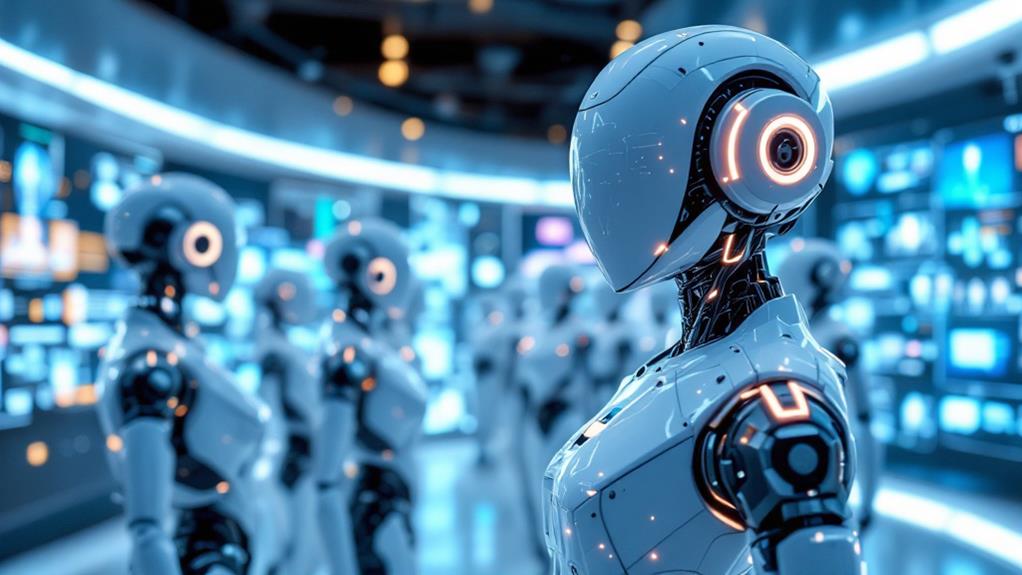
Robots in Japan are on the brink of a transformative period, paving the way for groundbreaking innovations. As you look to the future, you'll see a surge in the development of autonomous systems that promise to revolutionize industries. Transportation, healthcare, and manufacturing are just a few sectors ready to be redefined by these advanced technologies. Imagine self-driving cars maneuvering busy streets with ease or robotic assistants providing personalized care for the elderly. These aren't distant dreams; they're rapidly approaching realities.
But with great power comes great responsibility, and robotic ethics will play an essential role in shaping these advancements. You'll need to reflect on questions about privacy, safety, and the societal impact of widespread automation. How do you guarantee these machines act in ways that align with human values? It's a challenge that can't be ignored as autonomous systems become more integrated into everyday life.
In Japan, where tradition meets innovation, balancing these ethical considerations with technological progress is key. By addressing these issues head-on, you'll not only push the boundaries of what's possible but also guarantee a future where robots improve human lives responsibly and effectively.
Related posts