The History of Drone Technology: From Military Applications to Civilian Use
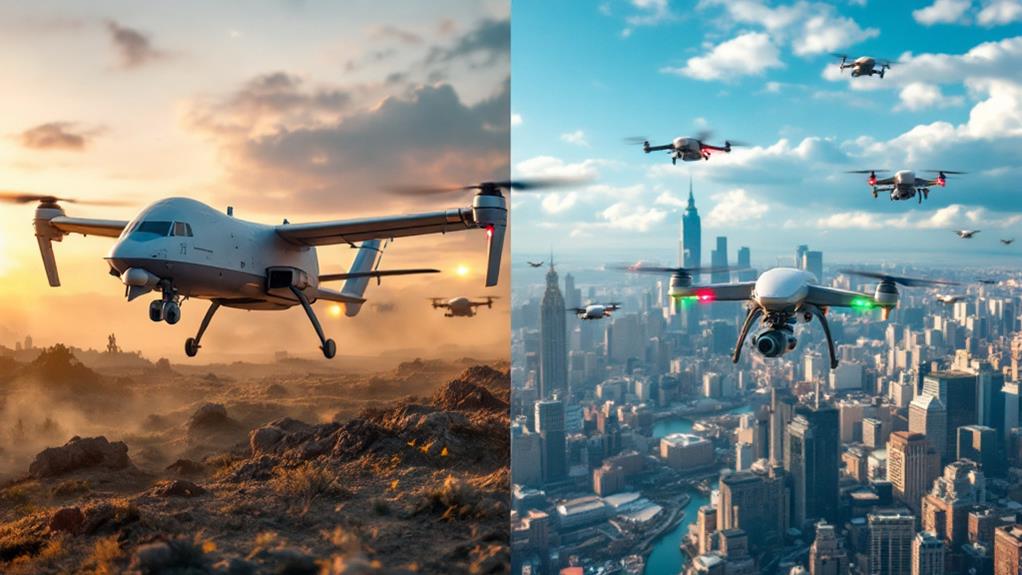
Drone technology's expedition began with military innovations in the early 20th century, primarily for surveillance during World War I and the Cold War. As you look closer, you'll see drones evolved into sophisticated tools with stealth capabilities and autonomous systems. By the 2000s, they found civilian applications in agriculture, humanitarian efforts, and photography. Today, drones deliver goods, monitor environmental changes, and improve recreational experiences. This shift has sparked discussions on regulations and ethical concerns. If you keep exploring, you'll uncover the latest trends transforming how we use drones across diverse industries.
Early Beginnings of Drones
Exploring the early beginnings of drones reveals a fascinating evolution from simple concepts to sophisticated technology. You'll find that the roots of drone technology are intertwined with pioneering inventions that shaped the way we think about flight. The expedition starts in the early 20th century, with inventors experimenting with remote-controlled aircraft. These early prototypes, often rudimentary, laid the groundwork for what would become the modern drone.
As you investigate deeper, you'll uncover that these initial designs aimed primarily at military applications. Inventors like Elmer Sperry and his work on gyroscopic stabilization systems were essential, allowing for more controlled flight. Over time, these innovations led to increasingly complex models capable of carrying payloads and maneuvering autonomously.
You can't overlook the importance of World War I, where these early prototypes saw their primary practical use. They sparked interest in further development, pushing boundaries and inspiring future generations. Each step taken in this early phase set the stage for the advanced UAVs you see today. This evolution showcases not just technological progress but also the creativity and vision driving the world of drones from inception to the present.
Military Innovations in UAVs
The evolution of military innovations in UAVs has dramatically transformed modern warfare and surveillance capabilities. You might be amazed at how stealth technology allows drones to operate undetected, making them invaluable for reconnaissance missions. These unmanned aerial vehicles have become essential for target acquisition, providing real-time intelligence that improves decision-making on the battlefield.
Autonomous systems have taken UAV performance to another level, enabling them to execute complex tasks without human intervention. This capability drastically boosts battlefield logistics, allowing for efficient payload delivery and support for ground troops. You'll also notice how weaponized drones have changed military tactics, offering tactical advantages that traditional aircraft can't match.
However, the rise of UAVs has also prompted the development of counter drone measures. Military forces must adapt to the threat posed by enemy drones, utilizing advanced technologies to neutralize them. This ongoing arms race highlights the significance of staying ahead in drone capabilities and their applications. As you investigate the landscape of military UAV innovations, you'll see how these advancements continue to shape conflict dynamics and redefine strategies for future warfare.
The Cold War Era
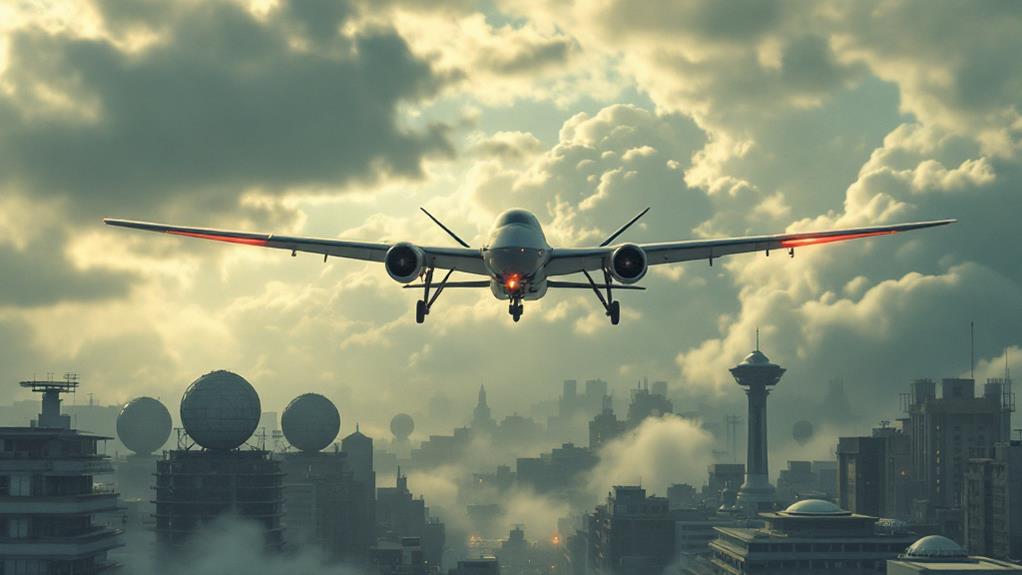
As military UAV innovations advanced, they laid the groundwork for significant developments during the Cold War period. You'd see the rise of drones as crucial tools in surveillance strategies, allowing nations to monitor each other's activities without putting pilots at risk. These early UAVs were indispensable for reconnaissance missions, gathering intelligence on enemy forces while minimizing exposure to combat.
Covert operations became more feasible, as drones could infiltrate hostile airspace undetected. The focus on electronic warfare also intensified, with nations competing to develop systems that could jam or intercept enemy communications. This technological rivalry pushed the boundaries of what drones could achieve, integrating advanced sensors and data-gathering capabilities.
However, the increased use of drones in Cold War espionage raised questions about drone ethics. You'd find debates emerging around the moral implications of using unmanned vehicles for surveillance and attacks. Military strategy evolved to incorporate these new technologies, emphasizing the need for adaptability in a rapidly changing battlefield. In this tense geopolitical climate, drones transformed warfare, setting the stage for their future in both military and civilian applications.
Technological Advancements in the 2000s
Rapid advancements in drone technology during the 2000s transformed both military and civilian applications. You witnessed the rise of autonomous navigation systems, allowing drones to fly complex routes without human intervention. This leap in technology paved the way for improved aerial mapping and precision payload delivery, making drones indispensable for numerous industries.
As drones became more capable, swarm technology emerged, enabling multiple drones to operate collaboratively. This innovation bolstered military strategies while raising questions about drone regulations and their implications for civil airspace. Battery advancements guaranteed longer flight times, while augmented sensor integration improved data collection, fueling new applications in agriculture, surveillance, and environmental monitoring.
However, as drones proliferated, so did public perception issues, particularly surrounding privacy concerns and data security. People began to worry about the potential for intrusive surveillance and unauthorized data collection, leading to calls for stricter regulations.
- Drones transforming emergency response
- The thrill of aerial photography for everyone
- Fears of surveillance overshadowing benefits
- The promise of safer, efficient delivery systems
These advancements set the stage for the next wave of drone innovation, shaping our world in unexpected ways.
Rise of Commercial Drones
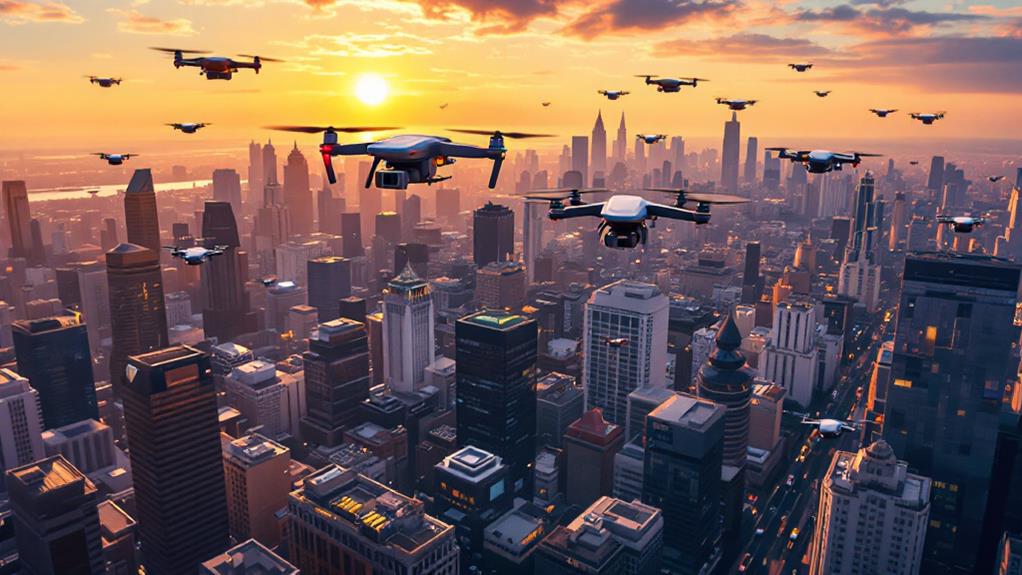
With the technological groundwork laid in the 2000s, commercial drones began to take flight, transforming diverse industries. You might've noticed how consumer demand skyrocketed for these versatile devices, paving the way for innovations like drone delivery services. Companies are now using drones for package tracking, guaranteeing timely deliveries right to your doorstep.
Aerial mapping has also gained traction, enabling industries like agriculture and construction to gather data efficiently. You can see drones monitoring environmental changes, providing vital insights into wildlife habitats and climate patterns. Meanwhile, recreational use has exploded; enthusiasts fly drones for fun, capturing stunning aerial photos and videos.
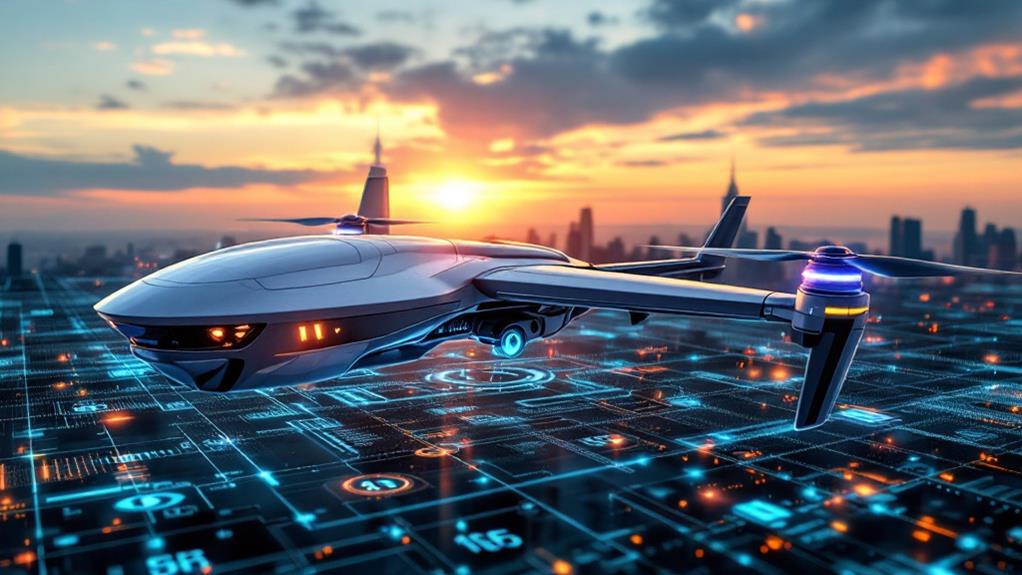
Urban air mobility is on the horizon, promising to revolutionize how we navigate crowded cities. However, as excitement grows, so do safety concerns. You might wonder about the implications of drones buzzing overhead, leading to discussions about regulations and best practices to guarantee safe operations. As commercial drones continue to evolve, their potential applications seem limitless, from enhancing logistics to enabling new recreational experiences. It's an exciting time, and you'll want to keep an eye on how this technology unfolds.
Regulatory Challenges and Developments
Maneuvering the regulatory landscape has become a critical challenge as commercial drone usage expands. You face a myriad of hurdles, from safety regulations to licensing requirements. As you navigate these complexities, you must also consider public perception and privacy concerns, which can heavily influence the acceptance of drone technology.
- The fear of surveillance invading personal space.
- The anxiety over the safety of drone operations in crowded areas.
- The confusion stemming from inconsistent international standards.
- The frustration with enforcement challenges that leave loopholes.
Airspace integration remains a significant concern; without a clear framework, drone operations could lead to dangerous encounters with manned aircraft. Furthermore, data protection issues loom large, as companies must guarantee they handle sensitive information ethically and securely. As regulations evolve, you'll need to stay informed and adaptable, guaranteeing compliance while fostering innovation. The future of drone technology hinges on how effectively these regulatory challenges are addressed, balancing safety, privacy, and public trust. Embracing these developments can pave the way for a harmonious coexistence of drones in our everyday lives.
Drones in Agriculture
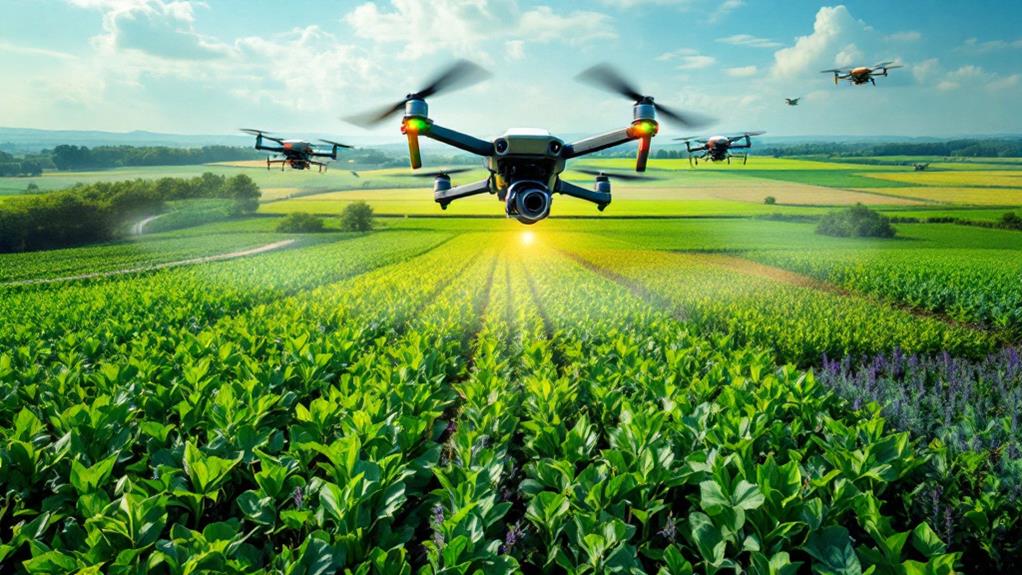
As regulations around drone usage become clearer, the agricultural sector is increasingly embracing this technology to improve productivity and efficiency. Drones are transforming how you approach crop monitoring, allowing for real-time data collection that improves precision agriculture. With aerial mapping, you can identify crop health issues and optimize your yield estimation processes.
Using drones for pesticide spraying not only saves time but also guarantees uniform application, reducing waste and environmental impact. In livestock management, drones help monitor animal location and health, streamlining operations and boosting welfare.
Soil analysis becomes more efficient with drone technology, as you can gather detailed information about soil conditions across large areas. This data informs your irrigation management strategies, ensuring that every crop gets the right amount of water.
Moreover, farm automation is taking a leap forward with drones, which can integrate seamlessly into your existing systems. By collecting and analyzing data, you can make informed decisions that lead to better productivity and sustainability on your farm. Embracing drones means you're not just keeping up with innovation; you're positioning yourself at the forefront of modern agriculture.
Humanitarian and Disaster Relief Uses
In the wake of natural disasters, drones have become invaluable tools for humanitarian efforts. You can see their impact in multiple ways, from search and rescue missions to medical delivery. Drones quickly assess damage and map affected areas, ensuring help reaches those in need faster than ever. They even distribute supplies, making a critical difference when traditional methods fail.
- Imagine a family receiving life-saving medicine when roads are impassable.
- Picture rescuers locating trapped individuals in a collapsed structure.
- Visualize volunteers delivering food and water to isolated communities.
- Consider the hope drones bring to those affected by disaster.
Additionally, aerial mapping helps organizations prioritize their resources, while wildlife monitoring and infrastructure inspection contribute to environmental conservation. Drones streamline operations and gather data that would be difficult to obtain otherwise. With each advance in drone technology, you witness a growing commitment to humanitarian aid, ensuring that relief efforts are more effective and timely. As drones continue to evolve, their role in disaster response will only expand, changing the way we approach humanitarian crises forever.
Drones in Photography and Videography
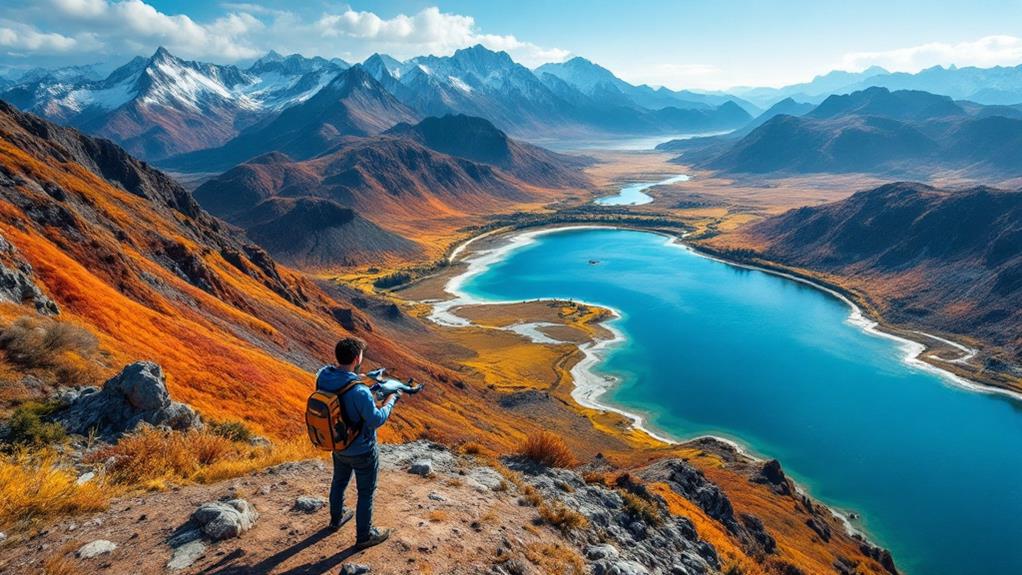
Drones have transformed photography and videography, allowing creators to capture stunning aerial shots that were once impossible or prohibitively expensive. With a drone in hand, you can investigate new perspectives, revealing unique angles of landscapes, events, and subjects. The rise of drone photography has democratized this art form, making it accessible to hobbyists and professionals alike.
Imagine soaring above a wedding venue, capturing breathtaking moments from above, or filming a real estate listing that showcases the entire property and surrounding area. Aerial videography takes storytelling to new heights, giving your videos a cinematic quality that captivates viewers. You can easily create dynamic content for social media, documentaries, or promotional materials.
With advancements in camera technology, today's drones come equipped with high-resolution cameras, gimbals for stabilization, and advanced features like automated flight paths. These tools improve your ability to produce professional-grade content without the need for a helicopter or crane. Regardless of you're shooting a nature documentary or a personal project, drone photography and aerial videography open up a world of creative possibilities, allowing you to raise your work and engage your audience in exciting new ways.
Future Trends in Drone Technology
The future of drone technology is poised for remarkable advancements that will redefine how we interact with the world. You'll soon witness drones equipped with autonomous navigation systems capable of flying independently, transforming industries from logistics to emergency response. Imagine a world where drone delivery becomes the norm, bringing everything from groceries to medical supplies right to your doorstep in minutes.
Consider the emotional impact of these innovations:
- Faster access to crucial goods during crises can save lives.
- Reduced traffic congestion means a cleaner, quieter environment.
- Increased connectivity in remote areas bridges the gap in service and support.
- Innovative applications spark creativity, pushing boundaries of what's possible.
As regulations evolve, you'll see a surge in drone usage for personal and commercial purposes. With improved battery life and boosted payload capacities, the potential for drone delivery services is boundless. This transformation promises not just convenience, but a new age of efficiency and sustainability. Prepare yourself, as these technologies will become integral to your daily life, making the impossible possible and enriching your experiences in ways you never imagined.
Related posts