The History of Autonomous Robots: From Early Concepts to Modern Innovations
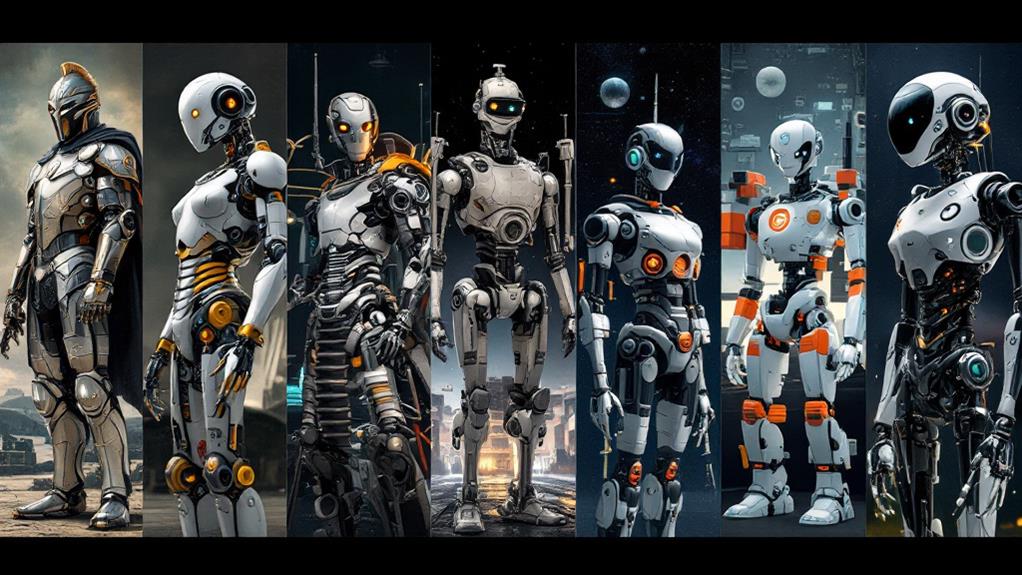
You're witnessing a fascinating expedition from ancient myths to the forefront of technology with autonomous robots. They began as mythical beings like Talos and evolved through Renaissance mechanical automata, gaining complexity during the Industrial Revolution with innovations like the Jacquard Loom. The early 20th century sparked visions of mechanical sentience, leading to cybernetics and AI breakthroughs. Today, sensor technology and machine learning enable robots to adapt and thrive in industries and daily life. As you venture further, investigate how these innovations manifest in our everyday world, shaping the future with intelligence and autonomy.
Ancient Myths and Legends
In the domain of ancient myths and legends, the concept of autonomous robots has been a source of fascination and imagination. You'll find that these mythical constructs were often depicted as legendary creations, crafted by gods or skilled artisans to perform tasks beyond human capability. In Greek mythology, Hephaestus, the god of blacksmiths and craftsmen, is a prominent figure associated with such creations. He forged Talos, a giant bronze automaton designed to guard the island of Crete. Talos circled the island three times a day, demonstrating the ancients' early exploration of self-operating machines.
Another intriguing example is the story of the golem from Jewish folklore. The golem, a creature formed from clay, was brought to life through mystical incantations. You can see how this reflects the desire to create life-like beings for protection or labor, embodying the essence of mythical constructs. These stories underscore humans' longstanding fascination with creating beings that could act independently, serving as a demonstration of our enduring quest for innovation. As you investigate deeper into these myths, you'll appreciate how they laid the groundwork for future generations to dream of autonomous technology.
Renaissance Automata
As myths and legends laid the imaginative groundwork for autonomous creations, the Renaissance age witnessed the tangible birth of automata. During this time, creativity and curiosity flourished, and inventors began crafting intricate machines that could move and mimic life. These early automata were marvels of mechanical puppetry, capturing the fascination of many. Imagine watching a beautifully crafted mechanical bird flap its wings or a knight in armor jousting on its own. These creations weren't just for entertainment; they also had deeper philosophical implications.
You'd find that Renaissance thinkers pondered the boundary between life and machine, questioning what it meant to be truly alive. Automata challenged these notions, as they appeared lifelike yet lacked consciousness. This period's inventors, like Leonardo da Vinci, investigated these boundaries, pushing technology and thought to new heights. By crafting these mechanical wonders, they spurred debates on the nature of life and the potential of machines.
As you examine the Renaissance automata, you'll see how these early inventions laid fundamental groundwork for modern robotics, blending art, science, and philosophy in ways that continue to inspire and intrigue today.
Industrial Revolution Pioneers

With the dawn of the Industrial Transformation, the landscape of autonomous machines shifted dramatically. It wasn't just about mechanical marvels; it was about redefining how work was done. You'd see the rise of machines capable of performing tasks that had once required human hands. These weren't just tools—they were the new epoch's robotic artisans, transforming industries with their mechanical labor.
During this period, inventors and engineers laid down the groundwork for future innovations. They focused on creating machines that could replicate repetitive tasks with precision and efficiency. Imagine the impact of these early pioneers as they developed devices that changed production forever.
Here are some highlights that capture the spirit of this transformation:
- Jacquard Loom: Transformed textile production with its punch card system.
- Steam Engines: Powered factories and inspired further technological advances.
- Automatic Spinning Machines: Improved thread production, ensuring consistent quality.
- Mechanical Printing Presses: Made mass communication more accessible and faster.
- Programmable Machines: Set the stage for future computational breakthroughs.
These innovations weren't just about speeding up existing processes. They marked the beginning of a new chapter where machines began to shoulder the load of mechanical labor, paving the way for the sophisticated robotics of today.
Early 20th Century Visions
Amidst the backdrop of a rapidly changing world, early 20th-century inventors envisioned a future where autonomous machines would revolutionize daily life. You'd find yourself marveling at the bold concepts of mechanical sentience that began to take form during this period. Think of the early 1900s, a time when innovation was booming and the possibilities seemed endless. Inventors imagined robots that could think, learn, and even make decisions on their own. This was an age marked by the optimism of technological progress and the thrilling potential of machines that could possibly possess their own kind of intelligence.
But these visions weren't just technical; they also raised significant philosophical implications. You'd wonder about the nature of consciousness and if a machine could ever truly possess it. These questions prompted debates on the essence of humanity and the ethical boundaries of creating life-like machines. Could mechanical sentience blur the line between human and machine, and what would that mean for society? As you examined these early visions, you'd realize that the questions posed by these early 20th-century dreamers still resonate today, setting the stage for future innovations in robotics.
The Rise of Cybernetics
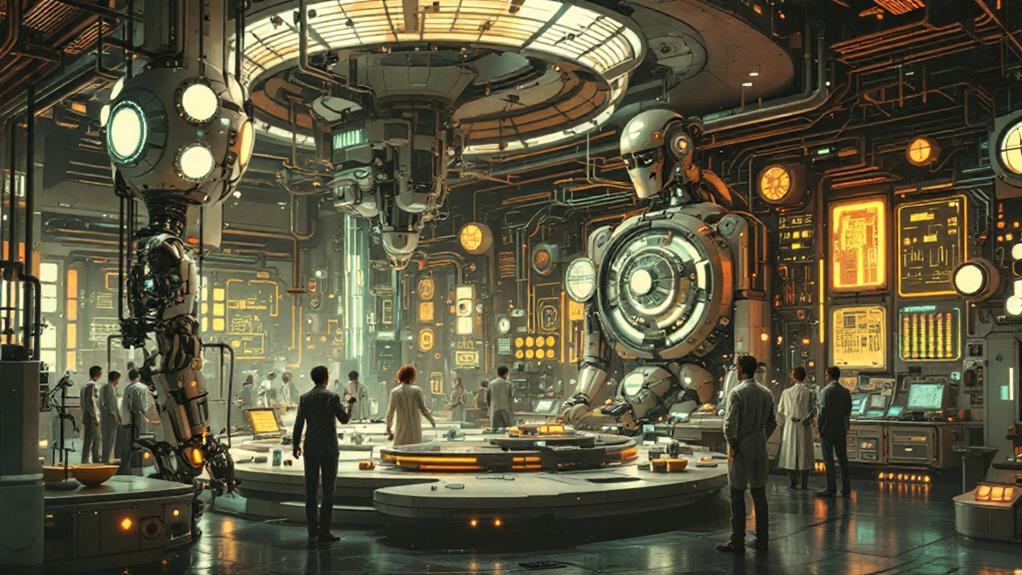
The early visions of autonomous machines laid the groundwork for a significant advancement in robotics: the rise of cybernetics. You'll find that cybernetics, born in the mid-20th century, introduced revolutionary concepts like feedback loops and control theory, transforming your understanding of self-regulating systems. By focusing on how machines could mimic biological processes, cybernetics paved the way for creating cybernetic organisms capable of adaptive behavior.
What makes cybernetics fascinating is its interdisciplinary nature. It brought together ideas from diverse fields, creating a rich tapestry of innovation:
- Feedback loops: These mechanisms allow machines to self-correct and improve performance over time.
- Control theory: This helps robots maintain stability and achieve desired outcomes in dynamic environments.
- Information processing: Fundamental for enabling machines to interpret and respond to data efficiently.
- Human-robot interaction: Investigates how robots can seamlessly integrate into human activities.
- Societal implications: Raises questions about ethics and the role of robots in our lives.
You'll see that cybernetics didn't just influence technology but also reshaped how we think about intelligence and autonomy. The rise of cybernetics marked a significant moment, setting the stage for more sophisticated developments in robotics and human interaction.
AI and Machine Learning Breakthroughs
In recent years, AI and machine learning breakthroughs have transformed the field of robotics, pushing the boundaries of what machines can achieve. You've likely noticed how neural networks have become the backbone of modern robotics, allowing robots to learn tasks autonomously. These systems mimic the human brain's structure, enabling machines to process vast amounts of data and make decisions in real-time. As a result, robots are now more adaptable and can perform complex tasks with minimal human intervention.
Algorithm optimization plays a vital role in enhancing these capabilities. By refining algorithms, you guarantee that robots process information faster and more efficiently. This means that they can react more quickly to changes in their environment, making them ideal for dynamic tasks like autonomous driving or drone navigation. You've seen how these improvements have led to robots that not only perform repetitive tasks but also adapt to new challenges with ease.
These advancements in AI and machine learning have made it possible for robots to operate in environments previously considered too unpredictable or hazardous. As you investigate the world of robotics, you'll find that the integration of these technologies continues to shape the future of autonomous machines.
Sensor Technology Advancements
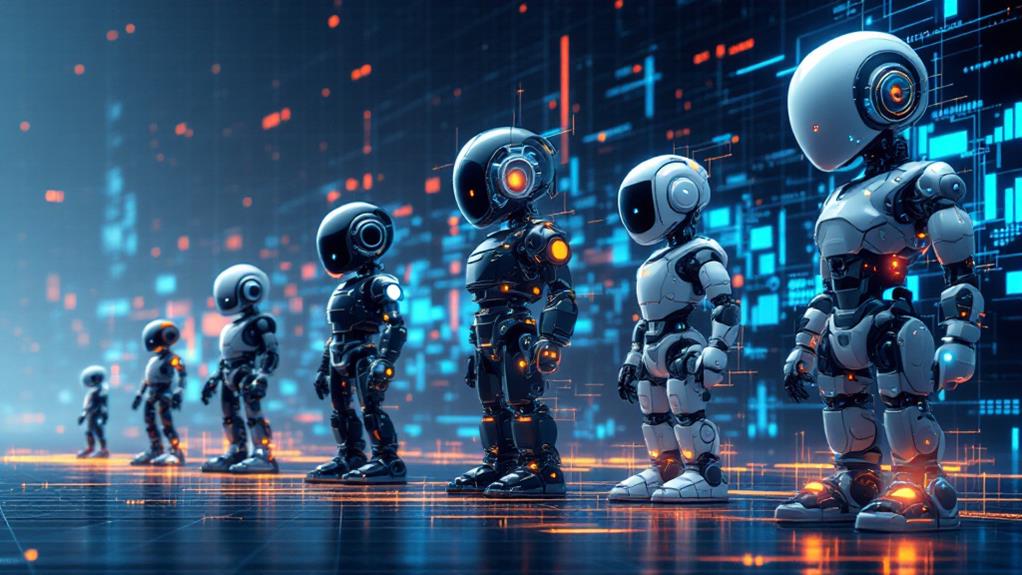
Many might overlook just how crucial sensor technology advancements are to the evolution of autonomous robots. You see, it's not just about the robot's AI; it's about how it perceives the world. Through sensor fusion, robots combine data from multiple sources, enhancing their robotic perception and environmental awareness. This allows them to navigate complex scenarios with increased precision.
Consider these advancements:
- Adaptive sensing: Robots adjust their sensory input based on changing conditions.
- Sensor miniaturization: Smaller sensors make robots more efficient and versatile.
- Multi sensor integration: Integrating different sensors provides a thorough view of the surroundings.
- Real time feedback: Instant processing of sensory data keeps robots responsive and agile.
- Intelligent sensors: These sensors interpret data on the fly, improving decision-making.
Thanks to these innovations, robots can perform obstacle detection with remarkable accuracy. Sensory data processing guarantees they adapt to new environments swiftly and safely. By incorporating these technologies, autonomous robots have become more adept at understanding and interacting with their surroundings. This evolution has expanded their capabilities far beyond their initial design, making them an integral part of modern technological advancements. Whether in daily life or complex operations, sensor technology continues to drive robotic progress.
Autonomous Robots in Industry
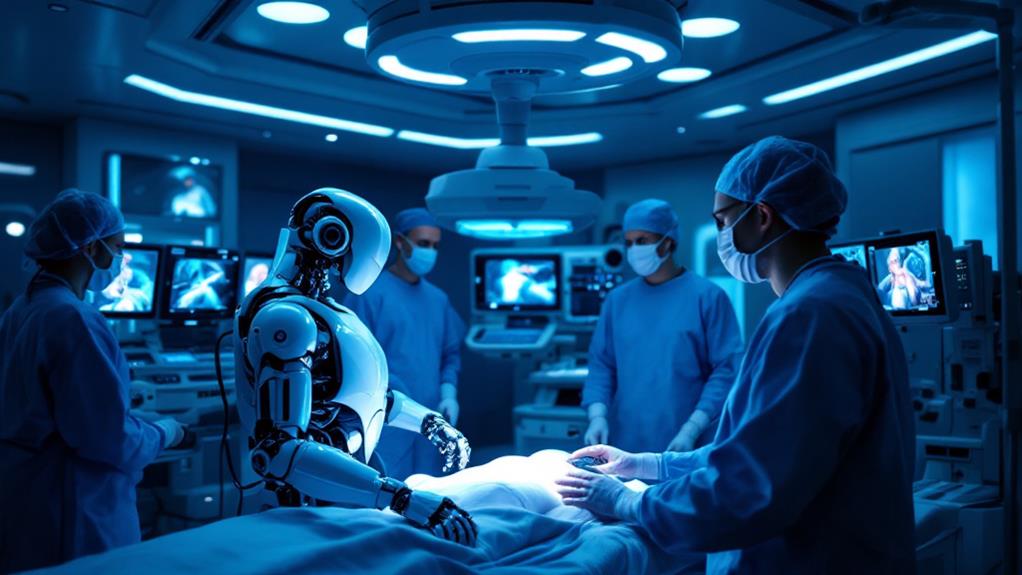
Revolutionize your operations by integrating autonomous robots into industry processes. These cutting-edge machines are transforming how factories operate, making them more efficient and cost-effective. By adopting factory automation, you can streamline production lines, reduce human error, and enhance productivity. Autonomous robots excel in repetitive tasks, ensuring consistent quality while freeing up your human workforce for more complex problem-solving roles.
Consider the impact of robotic processes on your industry's capabilities. These robots can perform precision tasks with speed and accuracy, improving the overall output. They're not just limited to simple operations; advanced models can adapt to new tasks with minimal reprogramming, offering flexibility in manufacturing. This adaptability means you can respond swiftly to market changes and customer demands.
Moreover, integrating autonomous robots can lead to considerable cost savings. With reduced labor costs and minimized downtime due to fewer errors and maintenance requirements, your bottom line can notably benefit. As technology advances, these robots continue to become more affordable and accessible, making them a feasible investment for businesses of all sizes. Embrace the future of manufacturing and uplift your production capabilities with autonomous robots today.
Everyday Robots in Modern Life

Imagine waking up to a world where robots seamlessly integrate into your daily routine, improving convenience and efficiency. You start your day with smart appliances preparing your morning coffee and breakfast. Cleaning robots swiftly tackle dust and debris, freeing you from mundane chores. With household assistants, managing your schedule and controlling home environments becomes effortless. These robots aren't just about practicality; they're about enriching your life.
Consider these exciting possibilities:
- Robotic pets that mimic real animals, providing companionship without the hassle of feeding or cleanup.
- Delivery drones that bring groceries or packages straight to your doorstep, saving you time and effort.
- Personal companions that offer conversation, reminders, and even monitor your well-being.
- Entertainment bots that play games, perform tricks, or stream media content tailored to your preferences.
- Companionship robots designed to detect emotional cues and provide comfort or engaging interactions.
Each of these innovations brings something unique to your daily life. Regardless of whether it's through personal companions that improve social connections or delivery drones making errands obsolete, the future is here. Welcome a lifestyle where robots work alongside you, making every day smoother and more enjoyable.
Related posts