The History of Artificial Intelligence in Robotics: Early Beginnings to Today
The history of artificial intelligence in robotics takes you from mechanical automatons of the past to today's advanced systems. Early concepts emerged with pioneers like Leonardo da Vinci, but it was the Industrial Revolution that truly kicked off automation. You witnessed the rise of AI with programs designed to mimic human intelligence through expert systems. By the 20th century, industrial robots were reshaping manufacturing. Today, machine learning improves robots' abilities to adapt and interact, while ethical considerations guide their development. Each step in this expedition reveals a fascinating interplay of technology and ethics—there's so much more to uncover!
Origins of Robotics
From the earliest days of human invention, the concept of automating tasks has fascinated thinkers and creators alike. You'll find that robotic pioneers like Leonardo da Vinci designed mechanical automatons, which served as some of the initial early inventions in the domain of robotics. These groundbreaking creations laid the groundwork for understanding how machines could mimic human actions.
As time progressed, the focus shifted to industrial applications, especially during the Industrial Revolution, when technological breakthroughs transformed manufacturing processes. Foundational theories in mechanics and engineering began to intertwine with these advances, forming conceptual frameworks that guided future developments in robotics.
The societal impacts of these advancements were profound; they changed how people worked and interacted with machines. You might notice that the emergence of robotic systems not only improved productivity but also sparked discussions about labor and ethics. As you investigate the origins of robotics, it becomes clear that the expedition from mechanical automatons to sophisticated robots is marked by a continuous quest for efficiency and creativity, which continues to shape our understanding of automation today.
Early Automation Concepts
Automation has always been a driving force behind human ingenuity, pushing the boundaries of what machines can achieve. In the context of automation history, early mechanical inventions laid the groundwork for what we now recognize as early robotics. These inventions, often simple in design, utilized basic control systems to perform repetitive tasks, showcasing the potential for machines to improve productivity.
As you investigate the theoretical foundations of automation, it's fascinating to see how pioneers envisioned machines capable of complex functions. The development of sensor technologies enabled machines to interact with their environments, paving the way for more sophisticated industrial applications. Programming languages began to emerge, allowing engineers to refine their designs and improve machine capabilities.
However, with these advancements came ethical considerations. You might ponder the societal impacts of automation, particularly regarding job displacement and the human reliance on machines. Understanding these early automation concepts not only helps you appreciate the evolution of robotics but also encourages you to think critically about the future. As you reflect on the past, consider how these early ideas continue to influence modern robotics and AI development today.
The First AI Programs

The emergence of the initial AI programs marked a significant turning point in the evolution of robotics. These programs showcased the potential of machines to perform tasks that required human-like intelligence. One of the earliest milestones was the Turing Test, which evaluated a machine's ability to exhibit intelligent behavior indistinguishable from a human. Early AI systems focused on symbolic reasoning and knowledge representation, laying the groundwork for future advancements.
Expert systems emerged, designed to solve complex problems by mimicking human decision-making processes. They utilized decision trees to provide solutions in specialized domains, enhancing problem solving. Meanwhile, game playing algorithms demonstrated AI's capability to strategize, with programs like IBM's Deep Blue challenging human champions.
As technology progressed, neural networks began to play an essential role in machine learning, enabling computers to learn from data. Natural language processing allowed for better interaction between humans and machines, while machine vision equipped robots with the ability to interpret visual information. These pioneering programs created a foundation for the sophisticated AI-driven robotics we see today, transforming how robots perceive and interact with the world around them.
Robotics in the 20th Century
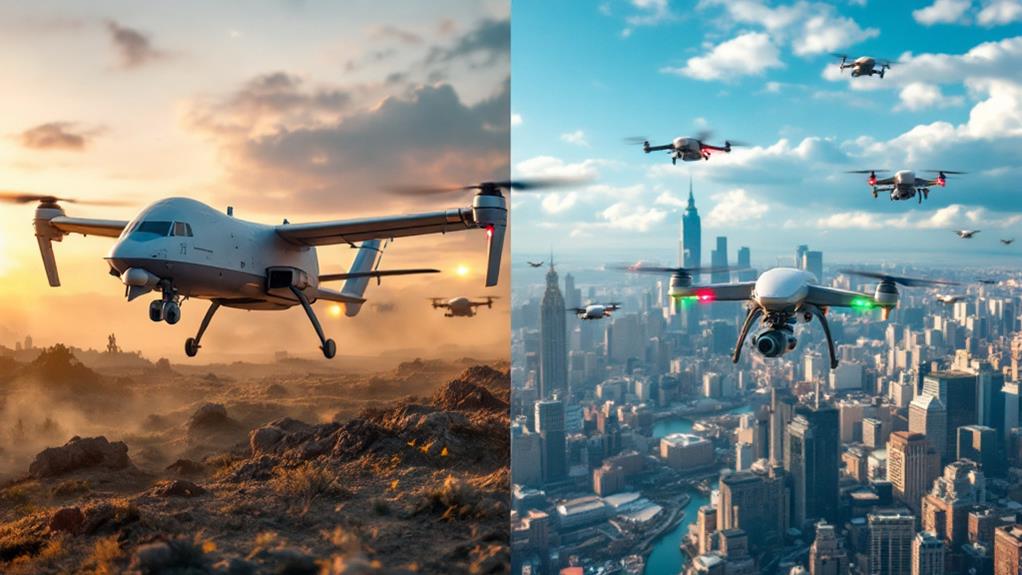
Robotics in the 20th century saw remarkable advancements that transformed industries and everyday life. You could witness the rise of industrial robots, changing manufacturing processes with robotic arms that performed tasks with precision and speed. As industries evolved, military applications became a significant focus, leading to the development of drones and other autonomous vehicles for surveillance and combat.
Service robots began making their way into homes and businesses, assisting with everything from cleaning to customer interaction. Educational robotics emerged, encouraging STEM learning for students and fostering interest in engineering and technology. You might have also noticed the rise of consumer drones, which opened new avenues for photography and recreational flying.
Telepresence robots gained traction, allowing people to connect remotely, enhancing communication and collaboration. Meanwhile, robotic exoskeletons were developed to assist individuals with mobility challenges, showcasing the potential of robotics in healthcare. Humanoid robots sparked intrigue, pushing the boundaries of human-like interaction. Ultimately, swarm robotics demonstrated the power of decentralized problem-solving, mimicking nature's efficiency. Together, these innovations laid the groundwork for the robotics landscape we see today.
Machine Learning Advances
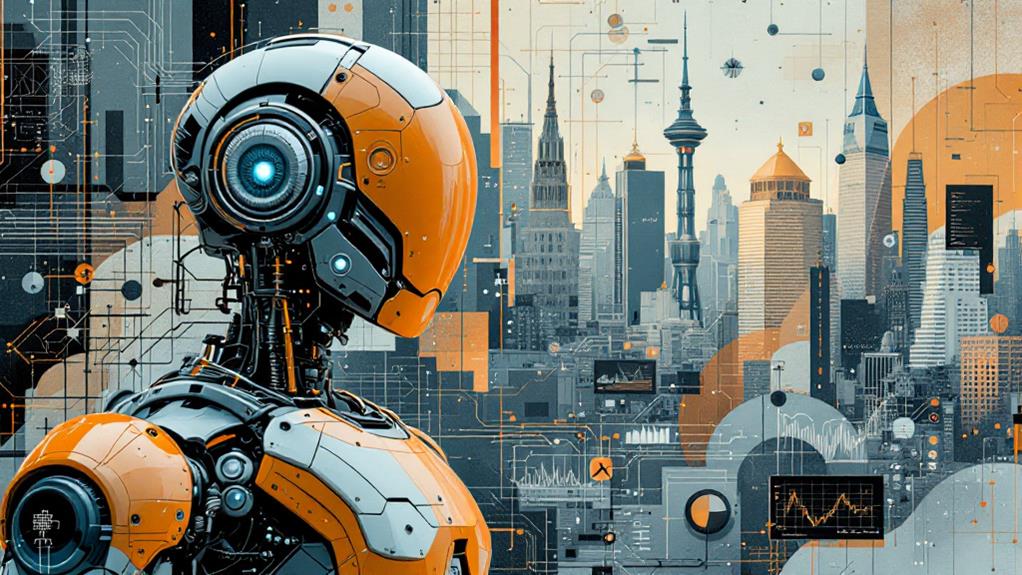
As industries adopted robotics, the integration of machine learning began to redefine their capabilities. You might notice how deep learning and neural networks have transformed tasks that were once impossible. These technologies enable robots to recognize patterns and make decisions based on vast amounts of data. For instance, supervised learning helps train robots by providing labeled datasets, while unsupervised learning allows them to uncover hidden structures without explicit instructions.
Reinforcement learning stands out by allowing robots to learn from trial and error, optimizing their actions based on rewards. This approach improves their ability to adapt in dynamic environments. Transfer learning plays a significant role, letting robots apply knowledge gained from one task to different but related tasks, speeding up the learning process.
Algorithm optimization is vital for improving the efficiency and performance of these machine learning models. You'll find predictive modeling particularly useful in anticipating outcomes, helping robots make informed decisions. Together, these advancements in machine learning guarantee that robotics not only performs repetitive tasks but also engages in complex problem-solving, paving the way for smarter, more capable machines in multiple industries.
Integration of AI and Robotics
In the current fast-paced world, integrating AI and robotics has become a game-changer across different sectors. You'll find that this integration improves human-robot collaboration, making tasks more efficient and effective. AI algorithms drive advancements in robotic autonomy, allowing robots to operate independently while adapting to their environments. Sensory integration plays an essential role here, enabling robots to perceive and respond to stimuli like humans do.
Cognitive robotics has emerged, equipping machines with the ability to learn and make decisions based on experience. This leads to the development of adaptive systems that adjust their actions in real-time, increasing productivity. Swarm intelligence is another fascinating aspect, where multiple robots work together to solve complex problems, mimicking natural systems.
However, as you investigate this integration, it's important to evaluate robot ethics. You must guarantee that robots operate within moral guidelines, especially when they exhibit emotional intelligence. Predictive analytics further improves AI's role in robotics, allowing systems to anticipate needs and outcomes. As you witness these advancements, you'll understand how the fusion of AI and robotics is shaping a smarter, more efficient future.
Breakthroughs in Perception
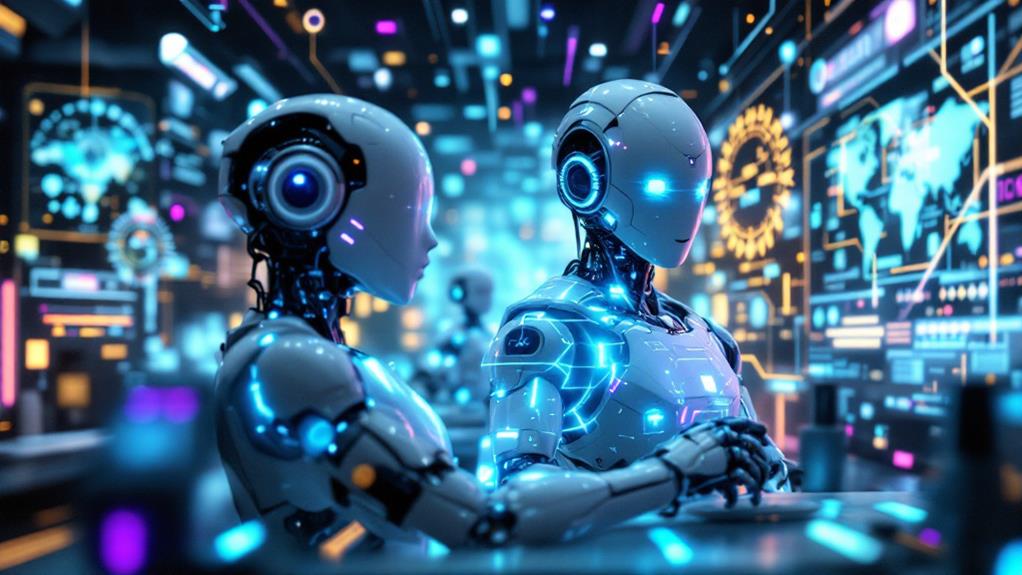
Numerous breakthroughs in perception technology have transformed how robots interact with their environments. You've likely seen advancements in sensor technology that enable robots to gather detailed information about their surroundings. These sensors improve visual recognition, allowing robots to identify objects and navigate complex spaces effectively.
A key aspect of this evolution is environmental mapping, where robots create detailed representations of their surroundings. This relies heavily on data processing capabilities, enabling quick analysis and decision-making. Machine perception plays a crucial role here, as it allows robots to interpret sensory data and understand context.
With sensory integration, robots combine inputs from multiple sources, leading to improved cognitive robotics. This means they can learn from experiences and adapt to new situations. Robotic vision has made significant strides, allowing robots to "see" much like humans do.
Moreover, multi-modal perception integrates different sensory modalities, improving robots' ability to operate in dynamic environments. Intelligent sensing further refines this process, enabling robots to make informed decisions based on real-time data. In summary, these perception breakthroughs are vital for advancing robotic capabilities and improving their utility in everyday tasks.
Autonomous Robots Development
Breakthroughs in perception have paved the way for significant advancements in the development of autonomous robots. You're witnessing robots that can navigate complex environments with ease, thanks to improved robotic perception and autonomous navigation technologies. These robots are learning from their surroundings, utilizing robot learning techniques to boost their efficiency and perform tasks with precision.
You might be intrigued by the concept of swarm intelligence, where groups of robots work collaboratively, mimicking natural systems to solve problems. This teamwork improves task automation, allowing for streamlined processes in multiple applications. As these robots engage in human-robot interaction, they're becoming more intuitive, even displaying emotional intelligence to better understand and respond to human needs.
However, as you investigate this field, consider the importance of robot ethics and safety standards. Ensuring that these autonomous systems operate safely and ethically is vital for widespread adoption. Collaborative robots, or cobots, are designed to work alongside humans, and their development adheres to rigorous safety protocols. With these advancements, the future of autonomous robots looks promising, transforming industries while prioritizing human safety and ethical considerations.
Current Trends in AI Robotics
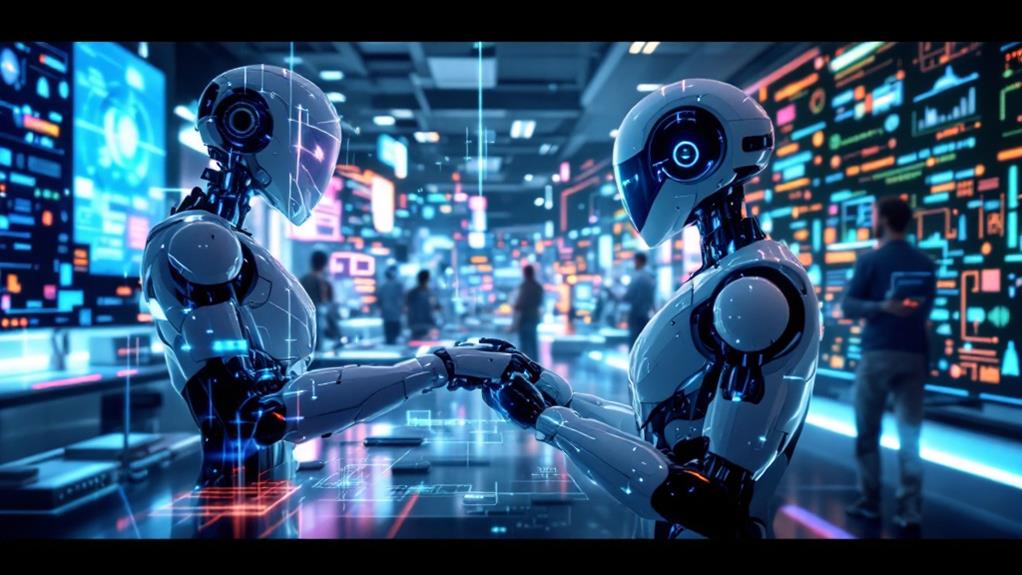
As the field of AI robotics evolves, you'll notice several trends shaping its future. One significant trend is the rise of collaborative robots, or cobots, which work alongside humans in diverse industrial applications. These robots improve efficiency while ensuring safety through advanced AI algorithms that enable seamless human-robot interaction.
Another trend gaining traction is swarm robotics, where multiple robots work together to complete complex tasks. This approach mimics natural systems and promotes enhanced problem-solving capabilities. Alongside these advancements, ethical considerations are becoming increasingly significant. As robots integrate into daily life, addressing concerns around AI safety and the implications of human-robot interactions is vital.
Social robots are also on the rise, designed specifically to engage with humans in meaningful ways, regardless of whether in healthcare or education. This trend highlights the growing need for robotics education, preparing future generations for careers in this exciting field. Ultimately, the robotic process is evolving to prioritize not only functionality but also ethical standards and safety measures, ensuring that AI robotics serves humanity positively. Staying informed about these trends will help you navigate the rapidly changing landscape of AI robotics.
Future of AI in Robotics
In the coming years, you'll likely see AI in robotics transform industries at an unprecedented pace. As robots become more intelligent and adaptable, you can expect significant advancements in numerous areas. Here are three key developments to watch for:
- Improved Human-Robot Interaction: Future robots will communicate and collaborate with you more intuitively, using natural language processing and advanced sensors to understand your needs and emotions better.
- Autonomous Decision-Making: AI will empower robots to make real-time decisions based on complex data analysis, allowing them to adapt to dynamic environments, regardless of whether in manufacturing or healthcare.
- Ethical Considerations: As robots become more integrated into daily life, ethical frameworks will emerge to guide their development and deployment. You'll see discussions around privacy, job displacement, and the moral implications of human-robot relationships.
Navigating these advancements will require careful thought about ethical considerations, ensuring that technology improves human lives without compromising values. As you engage with this evolving landscape, being informed will help you accept the future of AI in robotics responsibly.
Related posts