The Future of Swarm Robotics: How Multiple Robots Collaborate to Solve Problems

The future of swarm robotics holds incredible potential for collaboration among multiple robots to tackle complex problems. By mimicking the collective behavior of social organisms, these decentralized systems improve efficiency through real-time task allocation and adaptive strategies. Swarm robots excel in disaster response, efficiently evaluating damage and traversing hazardous areas. They also play crucial roles in environmental monitoring, gathering data through integrated sensor networks. As technology advances, you'll see more sophisticated decision-making and communication protocols emerging. If you stick around, you'll uncover even more about how swarm robotics is set to transform diverse industries and daily life.
Overview of Swarm Robotics
Swarm robotics is a captivating field that focuses on the coordination of multiple robots to achieve a common goal. You'll find that these systems utilize swarm intelligence, mimicking the collective behavior of social organisms like ants or bees. Through effective robotic communication, robots share information about their surroundings, enabling them to adapt to environmental dynamics.
In swarm robotics, decentralized systems improve autonomy, allowing each robot to operate independently while contributing to the complete mission. This approach fosters robust autonomous navigation, where robots can maneuver through complex environments without a central controller. Task allocation becomes seamless as robots dynamically assign roles based on their capabilities and the current context, boosting overall efficiency.
You'll notice that algorithm efficiency is vital in swarm robotics; optimized algorithms enable robots to process information quickly and respond to changes in real-time. By leveraging collective behavior and decentralized systems, swarm robotics can tackle complex tasks that would be challenging for a single robot. This collaborative effort not only improves performance but also opens up new possibilities for applications in diverse fields, from search and rescue missions to environmental monitoring.
Key Technologies Driving Development
The advancement of swarm robotics relies heavily on several key technologies that improve communication, navigation, and decision-making among robots. Effective communication protocols enable robots to share information quickly and reliably, which is critical for coordinating their actions. Decentralized algorithms allow each robot to operate independently while still contributing to a common goal, enhancing resilience and flexibility.
Sensor integration plays a significant role in gathering environmental data, enabling robots to perceive their surroundings accurately. This data drives collective behavior, allowing robots to act in harmony and adapt to changing conditions. Swarm intelligence emerges from these interactions, leading to creative problem-solving strategies that no single robot could achieve alone.
Multi-robot coordination is fundamental for executing complex tasks efficiently. By optimizing task allocation, robots can distribute work based on their capabilities, ensuring that energy efficiency is heightened throughout the operation. With these technologies, swarm robotics is positioned to tackle numerous challenges, leveraging the power of collective action and intelligent design to create more effective robotic systems. As you investigate this field, consider how these advancements will shape the future of collaboration among robots.
Applications in Disaster Response

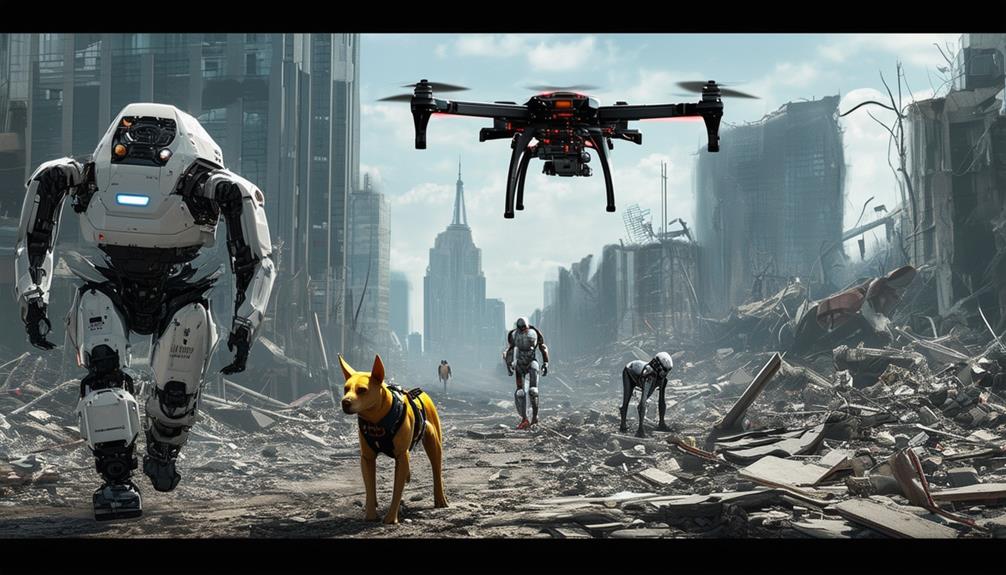
In critical situations, swarm robotics can revolutionize disaster response efforts by deploying multiple robots that work together seamlessly. You'll witness the power of robotic coordination, as these autonomous units utilize collective intelligence to tackle complex challenges. Imagine a scenario where an earthquake strikes; swarm robots can rapidly assess damage, pinpointing areas that need immediate attention while optimizing search patterns for trapped individuals.
Thanks to real-time communication, these robots share information and coordinate their movements efficiently, ensuring no essential detail is overlooked. Their autonomous navigation capabilities allow them to traverse hazardous terrains, minimizing risks to human responders. As they gather data, they can aid in resource allocation, ensuring that supplies and assistance are delivered where they're most needed.
This collaborative approach improves emergency response efforts, enabling teams to act swiftly and effectively. By harnessing swarm robotics, you're not just boosting the chances of saving lives; you're transforming how communities respond to disasters. As technology continues to advance, the integration of swarm robotics into disaster management will become increasingly important, paving the way for a safer, more efficient future.
Environmental Monitoring Innovations
Harnessing the potential of swarm robotics in environmental monitoring opens up new avenues for data collection and analysis. You'll find that these robots can work together seamlessly, forming sensor networks to gather real-time data across vast areas. This capability improves ecological assessments by providing more thorough insights into ecosystems.
With advanced data fusion techniques, you can merge information from diverse sensors, improving accuracy in wildlife tracking and pollution detection. Imagine deploying a swarm of robots that can monitor air quality, water pollution, and biodiversity simultaneously, giving you a clearer picture of environmental health.
Furthermore, swarm robotics plays a vital role in habitat restoration efforts. By analyzing data on soil conditions, vegetation, and wildlife patterns, you can make informed decisions that promote sustainable resource management. In climate modeling, the collective intelligence of these robotic swarms allows for more precise predictions, offering valuable insights into future environmental changes.
Incorporating swarm robotics into your environmental monitoring strategies empowers you to address pressing challenges more effectively, ultimately contributing to a healthier planet for all. Adopt these innovations, and you'll be at the forefront of ecological progress.
Challenges and Limitations Ahead

While swarm robotics holds immense promise, several challenges and limitations must be addressed for successful implementation in environmental monitoring. You'll encounter issues like communication protocols that need to be robust enough to handle multiple robots exchanging data without interference. Furthermore, scalability issues arise when increasing the number of robots, as coordination algorithms may struggle to maintain efficiency.
Here are a few key challenges to take into account:
- Energy Efficiency: Balancing energy consumption is critical to guarantee long operational periods for robots in remote areas.
- Real-Time Processing: The ability to process data instantly is fundamental for making quick decisions in dynamic environments.
- Hardware Limitations: The physical constraints of robots can limit their adaptability to different environmental conditions.
Moreover, system security must be a priority to protect against external threats that could compromise the swarm's integrity. Finally, the robots' environment adaptability is significant; they need to navigate varying terrains and respond to changing conditions effectively. Addressing these challenges will pave the way for more successful and reliable swarm robotics applications in environmental monitoring.
Future Trends in Swarm Robotics
As the challenges of swarm robotics are tackled, exciting future trends are emerging that promise to improve their capabilities in diverse applications. You'll see advancements in autonomous navigation, allowing robots to traverse complex environments with minimal human input. This capability is augmented by scalable algorithms that adapt seamlessly as the size of the swarm changes, ensuring efficiency regardless of the number of robots involved.
Collective decision making will become more sophisticated, enabling robots to analyze data and reach consensus faster. Improved communication protocols will facilitate real-time information sharing among robots, boosting their ability to respond to dynamic situations. Swarm intelligence will be harnessed to create systems that learn from their experiences, optimizing their strategies over time.
Additionally, expect to see better resource allocation methods, allowing swarms to utilize available resources efficiently. With the integration of adaptive behaviors, robots will be able to adjust their actions based on environmental feedback, ensuring they remain effective in varying conditions. Collectively, these trends will not only improve the functionality of swarm robotics but will also expand their applications across industries, from agriculture to disaster response.
Societal Impacts and Ethical Considerations

Swarm robotics holds immense potential, but its integration into society raises significant ethical and social questions. You need to reflect on the social implications that come with deploying these technologies. As swarm robots become more prevalent, you'll face ethical dilemmas related to accountability issues and privacy concerns. Who's responsible if a swarm of robots makes a mistake?
Here are some key points to contemplate:
- Job Displacement: The rise of swarm robotics could lead to significant job loss in multiple sectors.
- Regulatory Challenges: Governments will need to develop decision-making frameworks to manage the use of these technologies.
- Public Perception: How society views swarm robotics will influence its acceptance and implementation.
Additionally, you should think about how these robots make decisions. The algorithms guiding them may raise concerns about bias and transparency. Balancing innovation with ethical considerations is vital for fostering public trust. As you navigate this evolving landscape, it's imperative to engage with these issues proactively to guarantee the responsible deployment of swarm robotics in your community.
Related posts