The Future of Humanoid Robots: Developments and Challenges

Imagine a world where humanoid robots seamlessly integrate into daily life, enhancing industries from healthcare to customer service. Advances in AI and machine learning drive this vision, but it's crucial to consider the ethical implications and societal impact. Balancing innovation with responsibility is key. How can we embrace these technological marvels while addressing job displacement and ensuring transparent development? The path forward is complex, and the answers might surprise you. What lies ahead for humanoid robots? Let's explore the developments and challenges together.
Historical Overview
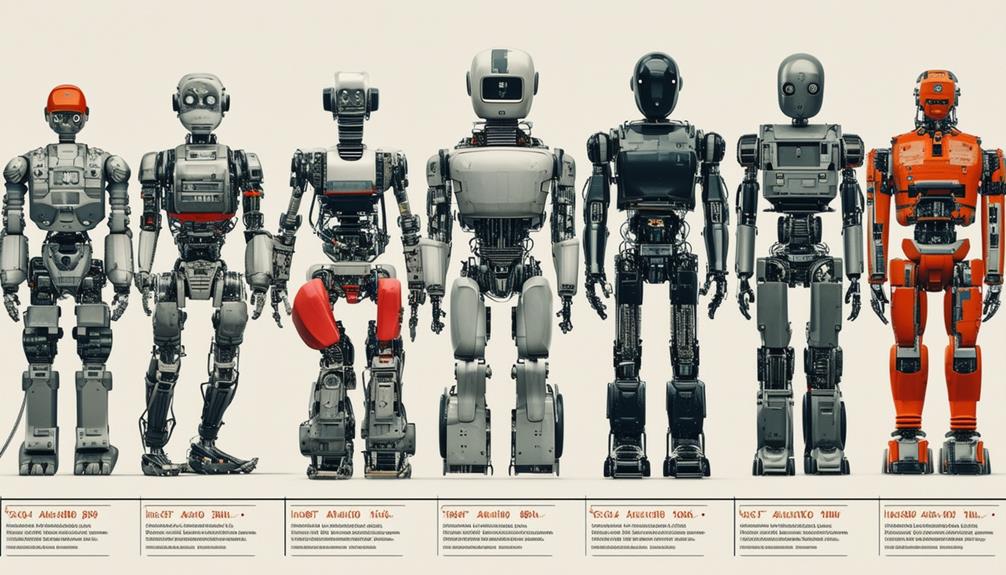
The history of humanoid robots is marked by continuous innovation, beginning with the mechanical automata of the Renaissance and evolving into the advanced machines of today. Early pioneers like Jacques de Vaucanson and Nikola Tesla created initial human-like prototypes that laid essential groundwork for modern robotics. Their contributions were pivotal, steering the focus toward developing machines capable of mimicking human actions and reactions.
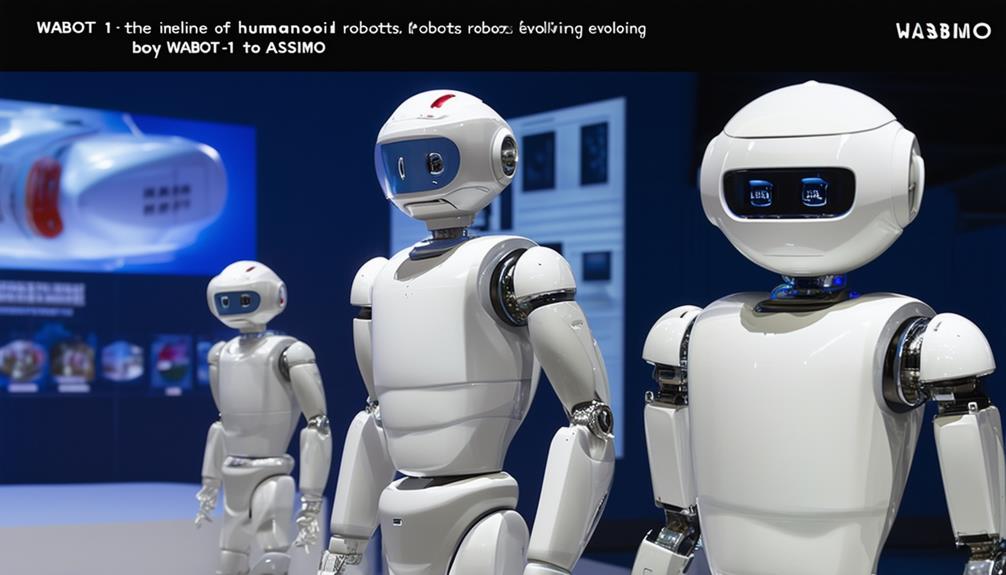
The late 20th century saw a pivotal shift with the integration of computing and artificial intelligence, significantly accelerating robotics research. This era emphasized the development of sensory perception, environmental interaction, and notably, bipedal locomotion. A landmark achievement occurred in 2000 with Honda's ASIMO, a humanoid robot that demonstrated exceptional advancements in bipedal movement, dexterity, and interaction capabilities, setting a new benchmark for the field.
ASIMO's development highlighted the critical role of sensory systems in enabling robots to effectively respond to their environments. These breakthroughs laid the foundation for ongoing advancements in humanoid robot design. Today, companies like Boston Dynamics are at the forefront, exploring cutting-edge concepts and expanding the possibilities of what humanoid robots can accomplish.
Technological Advancements
Today's humanoid robots showcase remarkable advancements in AI and machine learning, enabling them to think and make decisions akin to humans. Robotics and sensor integration further enhance their ability to interact with the environment and perform complex tasks. These technological leaps are revolutionizing the capabilities of humanoid robots, continuously pushing the boundaries of innovation.
AI and Machine Learning
AI and machine learning are transforming humanoid robots by enabling them to learn from data and enhance their capabilities over time. Integrating artificial intelligence into these robots allows them to adapt to new situations, improve their cognitive abilities, and execute complex tasks with high precision. Machine learning algorithms empower these robots to make decisions, understand their surroundings, and interact effectively with humans.
Consider a humanoid robot in a healthcare setting: with AI integration, it can analyze patient data to offer personalized care and predict potential health issues. This level of intelligence and adaptability is achieved through continuous learning from extensive data sets. In manufacturing, AI-powered robots can optimize production processes, enhance quality control, and minimize downtime by learning from operational data.
Technological advancements in AI and machine learning are expanding the capabilities of humanoid robots. These innovations are making robots not only smarter but also more human-like in their interactions. Consequently, AI and machine learning are driving substantial transformations across various industries, providing intelligent, efficient, and personalized solutions that were previously unimaginable.
Robotics and Sensor Integration
Integrating advanced sensors into humanoid robots is crucial for enabling real-time data processing and interpretation, mimicking human cognitive functions. In the ever-evolving robotics industry, these sophisticated sensors are essential for perception, interaction, and decision-making. They allow robots to detect and respond to their environment, enhancing adaptability and efficiency.
Layered software systems within humanoid robots manage sensor data, utilizing architectures like Apache Spark for real-time processing. This technology facilitates the seamless integration of visual, spatial, and sensory data, significantly improving the robots' capabilities. The humanoid robot market is experiencing rapid growth, driven by these advancements that enhance robots' intelligence and functionality.
Additionally, artificial intelligence (AI) models, such as those on platforms like papAI, further optimize sensor integration by supporting diverse industrial use cases. These AI models enhance robot performance for various tasks, increasing efficiency and effectiveness across multiple industries. By incorporating these advancements, the robotics industry is progressing towards creating humanoid robots that are not only capable but also versatile and reliable.
Key Humanoid Robots Today
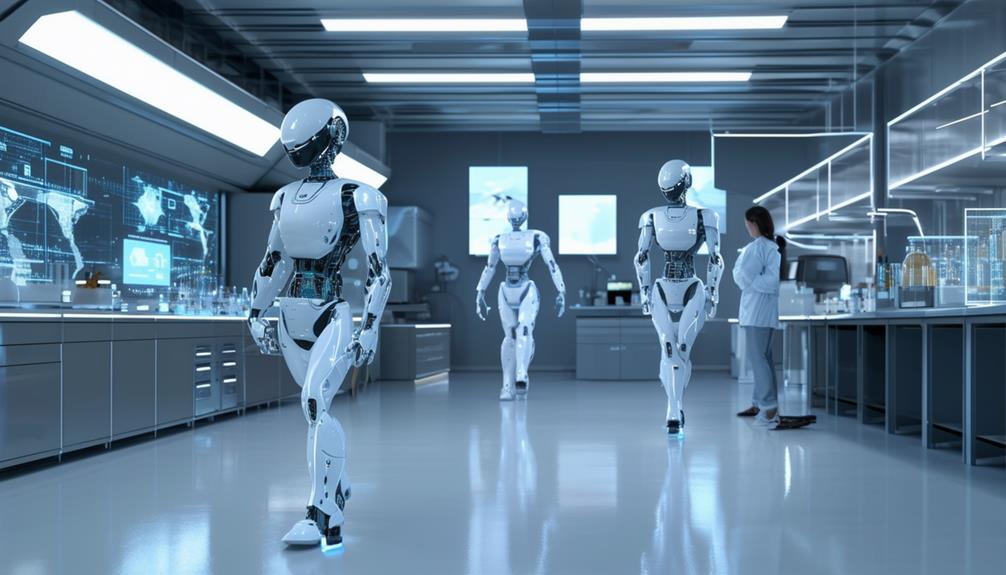
Today's leading humanoid robots, such as Boston Dynamics' Atlas, Agility Robotics' Digit, and SoftBank Robotics' Pepper, showcase significant advancements in mobility, dexterity, and interaction. Boston Dynamics' Atlas is particularly renowned for its impressive agility and human-like movements, making it ideal for tasks requiring balance and coordination. SoftBank Robotics' Pepper excels in social interaction and is often used in customer service roles, thanks to its capability to read and respond to human emotions.
These robots are not just for demonstration; they are making tangible impacts in various fields. For instance, Atlas is being tested for disaster response scenarios, highlighting its potential to save lives. Meanwhile, Pepper is a familiar face in the healthcare industry, assisting patients and providing companionship.
Key highlights of these humanoid robots include:
- Boston Dynamics' Atlas: Known for advanced mobility and human-like agility, suitable for complex physical tasks.
- SoftBank Robotics' Pepper: Excels in social interaction, widely used in customer service and healthcare settings.
- Agility Robotics' Digit: Focuses on mobility and dexterity, making it ideal for logistics and delivery services.
These robots are paving the way for the future, pushing the boundaries of what's possible in humanoid robotics.
AI Integration
When considering AI integration in humanoid robots, envision machine learning advancements endowing these robots with human-like cognitive abilities. It's essential to also address ethical AI implementation to ensure these intelligent machines act responsibly. Together, these components shape the future of humanoid robots across various industries.
Machine Learning Advancements
Advancements in machine learning are revolutionizing the cognitive abilities of humanoid robots, enabling them to process and interpret sensory data similarly to humans. Through AI integration, these robots can comprehend visual, spatial, and sensory inputs in real-time. Software layers function as their 'brain,' managing diverse data to facilitate human-like perception and interaction.
A notable aspect is the industrial application of AI models, enhancing the efficiency of humanoid robots across various sectors. In manufacturing, these robots perform intricate tasks with high precision, reducing error margins. In healthcare, they assist in patient care by leveraging advanced data analysis and decision-making capabilities.
Key points to consider:
- Machine learning advancements: Enable robots to replicate human thought processes and decision-making.
- AI integration: Crucial for efficient processing and interpretation of sensory data.
- Software layers: Act as the robots' 'brain,' essential for perception and interaction.
Ethical AI Implementation
Ensuring the ethical implementation of AI in humanoid robots necessitates the use of transparent algorithms and decision-making processes to build trust and credibility. By focusing on responsible development, it is possible to address biases in programming and promote fairness in interactions. This entails being transparent about decision-making processes and ensuring that the algorithms used are understandable and explainable.
Human-centered design principles are essential in guiding AI integration. By prioritizing user safety and well-being, developers can ensure that robots are not only efficient but also safe and respectful of human values. Collaboration among interdisciplinary teams is crucial for addressing the ethical dilemmas that arise, thereby ensuring that AI applications are socially beneficial.
The following table highlights key aspects of ethical AI implementation:
| Aspect | Importance | Action Steps |
|---|---|---|
| Transparent Algorithms | Builds Trust | Ensure explainability and clarity |
| Responsible Development | Promotes Fairness | Address biases in programming |
| Human-Centered Design | Ensures User Safety | Prioritize safety and well-being |
| Interdisciplinary Collaboration | Addresses Ethical Dilemmas | Foster teamwork and communication |
This concise and focused approach ensures semantic accuracy, completeness, consistency, conciseness, relevance, interoperability, and trustworthiness in the implementation of ethical AI in humanoid robots.
Market Dynamics

The humanoid robotics market is projected to surge from $1.6 billion in 2022 to an astounding $214.4 billion by 2032, reflecting substantial growth driven by advancements in multiple sectors. This rapid expansion underscores the increasing integration of humanoid robots in personal assistance, entertainment, education, and healthcare.
Significant contributions are emerging from the Asia-Pacific region, particularly from countries like India, China, and Japan, which are at the forefront of driving market demand. This growth trend is not confined to the region but is spreading globally as various industries acknowledge the benefits of humanoid robots. In healthcare, for instance, humanoid robots are being utilized for roles such as security, pharmaceutical dispensing, and patient assistance.
Key factors contributing to the market's momentum include:
- Increased Efficiency: Humanoid robots excel at performing repetitive tasks with high precision, allowing human workers to focus on more complex activities.
- Enhanced Safety: In hospital environments, robots can minimize human exposure to infectious diseases.
- Educational Benefits: Robots offer personalized learning experiences, tailored to meet individual student needs.
These elements collectively indicate a robust market trajectory, setting the stage for a transformative future in humanoid robotics.
Addressing Challenges
Addressing the challenges in humanoid robotics requires a multifaceted approach that includes ethical considerations, job displacement concerns, and responsible development practices. These advanced technologies bring significant challenges when integrating them into society.
Ethics play a pivotal role. Questions about robot rights and the moral implications of their tasks must be addressed. Developing guidelines to ensure these robots operate in ways that align with human values and ethics is imperative.
Collaboration among stakeholders—researchers, engineers, policymakers, and the public—is crucial. This teamwork ensures that all perspectives are considered and helps build a framework for responsible development. Open communication and transparency are key to gaining public trust. When people understand the benefits and limitations of humanoid robotics, they are more likely to accept and support these innovations.
Job displacement is another pressing issue. As humanoid robots become more capable, concerns about their impact on employment grow. Policymakers need to create strategies to mitigate these effects, such as retraining programs and new job creation in emerging industries. By addressing these significant challenges head-on, we can help ensure that humanoid robotics are integrated into society in an ethical, responsible, and beneficial manner.
Conclusion
In summary, humanoid robots will revolutionize industries with their AI-driven capabilities. However, it is essential to address ethical concerns and job displacement issues directly. By fostering collaboration and prioritizing transparency, we can build public trust and ensure responsible integration. Staying informed and engaged will enable us to be part of a future where humanoid robots enhance our lives while effectively managing the challenges they present.
Related posts