The Evolution of Robotic Exoskeletons: Military, Medical, and Civilian Applications
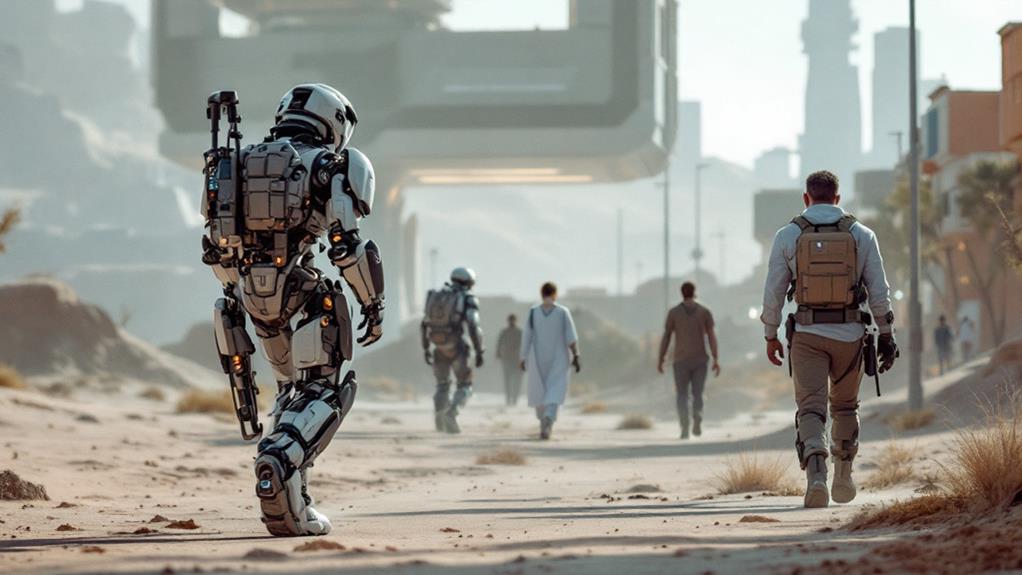
Robotic exoskeletons have drastically advanced from rudimentary designs to high-tech solutions across military, medical, and civilian fields. In the military, they elevate soldiers' efficiency by minimizing fatigue and injuries, while adaptive designs improve agility. Medically, exoskeletons empower patients with mobility impairments, facilitating better rehabilitation outcomes and aiding surgical precision. Civilian industries benefit by reducing worker strain and increasing productivity, allowing older employees to remain effective. Technological strides like lightweight materials and intuitive controls are crucial, although challenges like battery efficiency remain. Uncover how these innovations shape industries and improve lives as advancements continue to transform possibilities.
Historical Development of Exoskeletons
Throughout history, the concept of enhancing human abilities with mechanical aids has fascinated innovators. Early prototypes of exoskeletons emerged in the 20th century, driven by the desire to augment strength and endurance. These initial designs were rudimentary, yet they laid the groundwork for future advancements. As technology progressed, the design evolution of exoskeletons saw significant improvements, incorporating lightweight materials and efficient power sources. Material advancements have played a vital role, with innovations like carbon fiber and advanced alloys making exoskeletons more practical and comfortable for users.
Research breakthroughs in robotics and biomechanics have further accelerated development. Interdisciplinary collaborations between engineers, scientists, and medical experts have been critical in overcoming technical challenges and refining functionality. However, funding challenges often impeded progress, as securing investment for such cutting-edge projects was no small feat.
Public perception and ethical considerations have also influenced the trajectory of exoskeleton development. While many people see the potential for life-changing benefits, concerns about accessibility and the potential for misuse remain. Addressing these issues has been fundamental in gaining broader acceptance and support. As exoskeletons continue to evolve, their historical progression highlights the blend of innovation, collaboration, and perseverance that drives technological progress.
Military Applications and Innovations
As exoskeleton technology advanced, its potential applications in the military became apparent. You can see how these devices offer tactical advantages by improving battlefield efficiency and increasing soldier safety. With an adaptive design, exoskeletons can adjust to different operational environments, ensuring they meet the demands of distinct missions. Regardless of it's trudging through rugged terrain or urban settings, these suits provide essential support.
Yet, wearability issues remain a significant hurdle. Soldiers need to move freely, and any restriction can be detrimental. That's where ongoing innovations focus on creating lightweight, comfortable designs without compromising durability. Integration challenges also arise, as these systems must seamlessly work with existing military gear. Ensuring that soldiers can quickly adapt to wearing exoskeletons involves thorough training simulations that mimic real-world scenarios.
You'll find that despite these challenges, the benefits are undeniable. By reducing fatigue and injury risks, exoskeletons play an important role in protecting soldiers on the front lines. As technology continues to evolve, the military aims to overcome these obstacles, refining designs for better adaptability and integration. Ultimately, the goal is to optimize soldier performance and improve mission success in different operational contexts.
Enhancing Soldier Performance
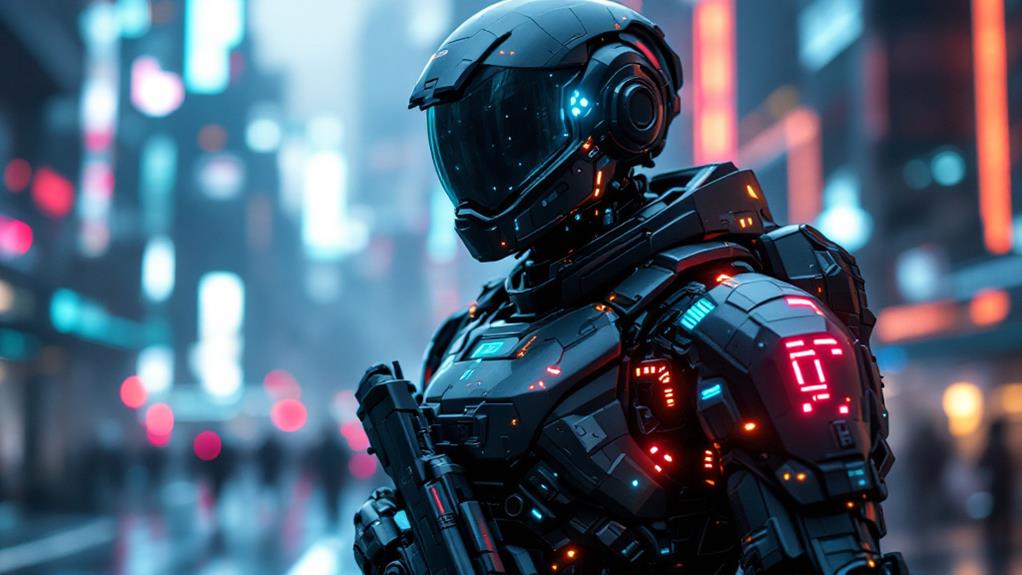
Performance improvement is at the core of adopting exoskeleton technology in the military. When you're out in the field, every advantage counts, and these devices considerably enhance combat readiness. By improving physical endurance, exoskeletons allow you to carry heavier loads without tiring as quickly, making load management a breeze. They also help in injury prevention by supporting your joints and muscles, reducing the risk of strains and sprains during demanding missions.
Exoskeletons aren't just about strength; they're about smarter, more efficient operations. With adaptive technologies, you can move more naturally, giving you the agility and speed needed in fast-paced environments. This not only improves operational efficiency but also contributes to comprehensive soldier wellness by minimizing fatigue and stress on your body.
Training improvements are another critical benefit. Exoskeletons can simulate real-world conditions more accurately, providing you with invaluable experience before you even step onto the battlefield. These systems can adjust to your specific needs, ensuring you're prepared for any mission. By focusing on these elements, exoskeletons are transforming how soldiers like you prepare for and execute missions, ensuring you're always ready for what's next.
Medical Use Cases and Benefits
Robotic exoskeletons have transformed the medical field, offering a new lease on life for patients with mobility impairments. These groundbreaking devices provide significant benefits across a range of medical use cases. For instance, they deliver exceptional mobility assistance, empowering patients to regain independence and improve their quality of life. Regardless of whether you're dealing with injury recovery or managing chronic pain, exoskeletons are designed to support your path to improved health and well-being.
In surgical settings, robotic exoskeletons integrate seamlessly, aiding surgeons with precision and reducing fatigue during long procedures. For elderly care, these devices offer vital support, allowing seniors to maintain their mobility and live more active lifestyles. Additionally, in neurological rehabilitation, exoskeletons provide personalized therapy, adapting to your specific needs and promoting better patient outcomes.
Here's how robotic exoskeletons can benefit you:
- Patient empowerment: Enables you to take control of your mobility and independence.
- Adaptive technologies: Offers tailored solutions for your unique health challenges.
- Elderly care: Supports aging individuals in maintaining their quality of life.
Rehabilitation and Mobility Solutions
In the domain of rehabilitation and mobility solutions, robotic exoskeletons stand out as revolutionary tools. They offer patient empowerment by giving you more control over your rehabilitation experience. With adaptive technology, these exoskeletons adjust to your unique needs, tackling mobility challenges head-on. As an assistive device, they considerably improve rehabilitation outcomes by providing consistent, repetitive movements that are vital in physical therapy. Your user experience is at the forefront of design considerations, guaranteeing comfort and ease of use.
Imagine the therapeutic benefits you'd gain as the exoskeleton aids in muscle strengthening and improved coordination. It's not just about walking again; it's about walking confidently. These devices are designed to support your natural gait, making each step feel more stable and controlled. The result is an improvement not only in physical health but also in your mental well-being as you regain independence.
When considering design, manufacturers focus on lightweight materials and intuitive controls. This attention to detail guarantees that you can use the exoskeleton effectively in your daily routine. Welcome the future of rehabilitation with these cutting-edge tools that promise a new level of mobility and freedom.
Civilian Industry Transformations
As the civilian industry adopts robotic exoskeletons, you're witnessing transformations that are reshaping diverse sectors. These high-tech suits are not just futuristic fantasies; they're becoming crucial tools that empower the workforce and elevate industrial efficiency. By wearing these exoskeletons, workers experience ergonomic benefits, allowing them to perform physically demanding tasks with reduced strain and injury risk. This technology particularly aids an aging workforce, enabling older employees to continue contributing effectively.
Exoskeletons offer remarkable safety improvements and productivity enhancements, making workplaces safer and more efficient. For instance, they can:
- Reduce fatigue: Wearing an exoskeleton minimizes muscle strain, allowing you to work longer with less exhaustion.
- Improve precision: Fine-tuned movements become easier, leading to fewer errors and better quality in tasks requiring accuracy.
- Support disaster response: When time is critical, exoskeletons can help initial responders carry heavy equipment and navigate challenging terrains.
Furthermore, these innovations provide accessibility solutions, enabling individuals with physical limitations to participate more fully in the workforce. The result is a more inclusive environment where diverse talents can thrive. As robotic exoskeletons continue to evolve, they promise to transform civilian industries, making them more adaptable and resilient in the face of future challenges.
Exoskeletons in Everyday Life
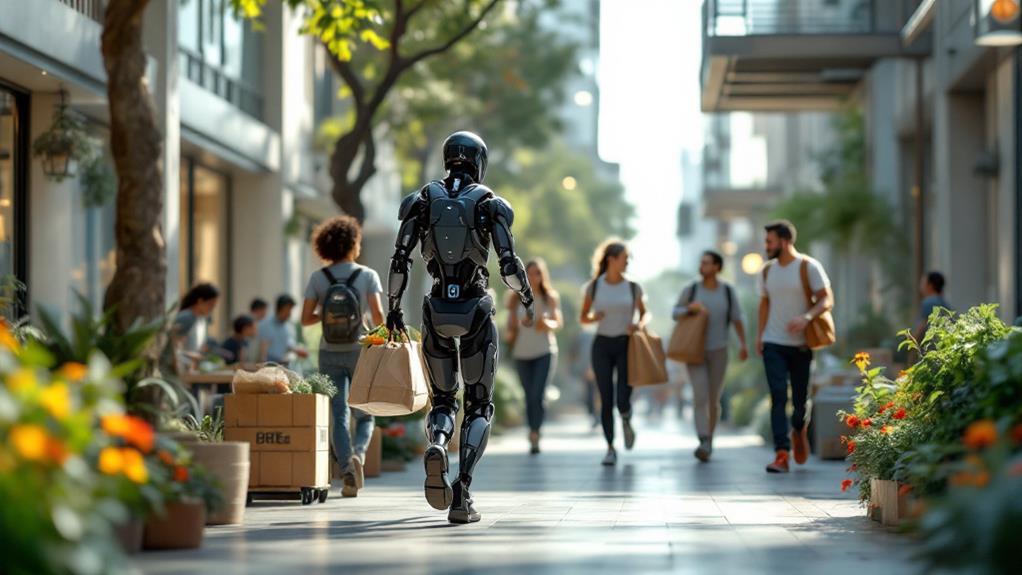
Imagine slipping on a lightweight exoskeleton that improves your daily activities, from grocery shopping to gardening. Picture an exoskeleton design that focuses on mobility independence, allowing you to carry heavier loads with ease or tend to your garden without straining your back. The ergonomic benefits of such a device can't be overstated. It helps you maintain proper posture and reduces fatigue, making everyday tasks more enjoyable and less taxing.
The user experience is at the forefront of these developments. Adaptive technologies guarantee that the exoskeleton adjusts to your unique movements, providing seamless support. For those undergoing rehabilitation protocols, it offers a world of possibilities, aiding in faster recovery and improved strength. However, wearability challenges persist, as designers work to create devices that are both comfortable and effective for extended use.
Social acceptance is another crucial aspect. As these devices become more common, they could redefine how society views mobility aids, shifting perceptions from clinical necessity to everyday convenience. The balance lies in crafting exoskeletons that integrate smoothly into daily life, making them as common and accepted as smartphones or fitness trackers, improving quality of life for many.
Technological Advancements and Challenges
While the promise of robotic exoskeletons is exciting, turning that promise into reality involves overcoming several technological hurdles. You'll need to contemplate sensor integration to guarantee the device responds accurately to your movements. Battery efficiency is vital too; nobody wants their exoskeleton to run out of juice mid-task. Material science also plays a key role, as you want something lightweight yet durable.
Think about the user interface. It should be intuitive, allowing you to operate the exoskeleton without a steep learning curve. But that's not all; you'll face affordability challenges. High costs can make these devices inaccessible to many who'd benefit from them.
There are also regulatory hurdles. Maneuvering these can be complex, but they're fundamental to guarantee safety and reliability. Don't forget ethical considerations. How do we guarantee these devices are used responsibly and equitably?
- Design ergonomics: Guarantees comfort and usability for diverse body types.
- Affordability challenges: Making tech accessible without breaking the bank.
- Regulatory hurdles: Complying with standards for safety and effectiveness.
Tackling these challenges is fundamental to bring the promise of robotic exoskeletons from concept to widespread reality.
Future Trends and Possibilities
Overcoming current challenges lays the groundwork for what's next in robotic exoskeletons. As you look to the future, ethical considerations will play a significant role in shaping how these devices are developed and deployed. You'll need to take into account how regulatory frameworks can keep pace with rapid advancements, ensuring safety and accessibility for all users. Design innovations will focus on improving the user experience, making exoskeletons more intuitive and easier to use.
Integration strategies are fundamental for exoskeletons to become part of everyday life. You'll investigate how these devices can seamlessly fit into existing systems, regardless of whether in healthcare, industry, or daily activities. Cost implications remain a significant hurdle; reducing production costs will be crucial to making exoskeletons more affordable and widely available. As market trends evolve, you'll see a shift towards customizable and versatile exoskeletons that cater to a broader audience.
Public perception will influence the adoption of exoskeleton technology. Transparent communication about benefits and risks can help build trust and drive acceptance. By addressing these key areas, you can anticipate a future where robotic exoskeletons improve human capabilities across multiple sectors, transforming how we live and work.