
The Evolution of Mechanical Automata in the Renaissance
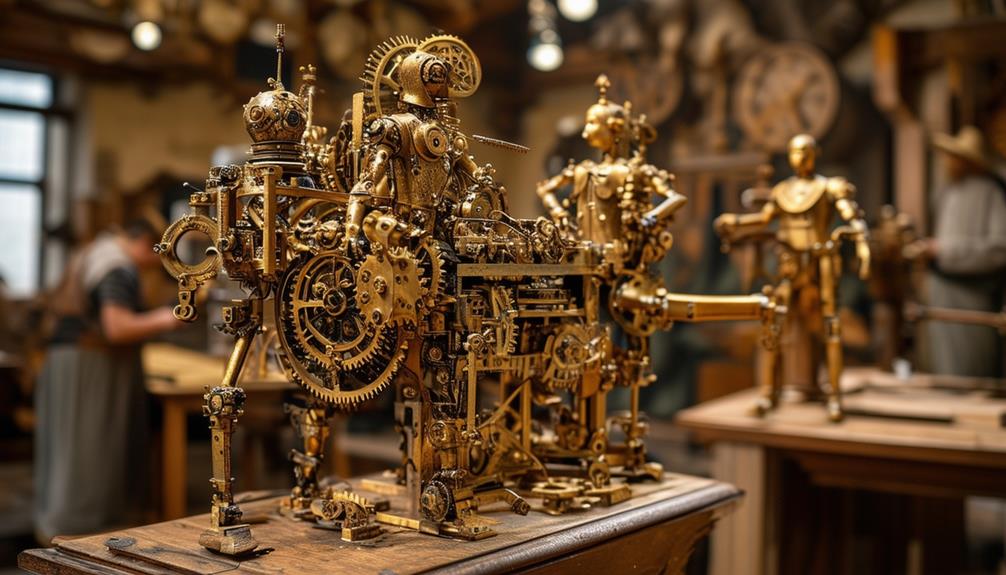
Imagine stepping into a Renaissance court and encountering a lifelike lion, crafted entirely from gears and springs, prowling before you. This mechanical marvel, like many others of the time, was the work of artisans such as Leonardo da Vinci, who harnessed emerging engineering advancements to create wonders that represented a fusion of art and science. These automata were not mere curiosities; they pushed the boundaries of what was thought possible and laid the groundwork for modern engineering. What motivated these pioneers to undertake such ambitious projects, and how did their innovations shape the future of engineering? The answers are both fascinating and enlightening.
Beginnings of Renaissance Automata

The Renaissance marked the emergence of mechanical automata, led by visionaries such as Leonardo da Vinci and Gianello Della Tour. These pioneers advanced technology and artistry, creating intricate machines that fascinated and entertained. Da Vinci's automata, including his mechanical lion and flying birds, displayed remarkably lifelike movements. Similarly, Gianello Della Tour's clockwork monk exemplified sophisticated engineering and craftsmanship, significantly impacting mechanical device development.
Renaissance automata were deeply influenced by contemporary philosophical inquiries. Thinkers like Rene Descartes compared animal bodies to complex machines, inspiring automata creators to mimic nature's intricacies mechanically. These creations were not merely for entertainment; they celebrated human ingenuity and the potential of mechanical technology.
Influence of Engineering Advancements
Engineering advancements during the Renaissance revolutionized mechanical automata. Clockwork mechanisms transformed designs, while precision tools enhanced craftsmanship. The integration of cross-disciplinary knowledge enabled creators to achieve lifelike movements and gestures, showcasing remarkable engineering skills.
Clockwork Mechanisms Revolutionized Design
Clockwork mechanisms during the Renaissance propelled automata design to unprecedented heights, enabling intricate and lifelike movements. Leonardo da Vinci, a luminary of the era, showcased these advancements through his famed mechanical lion, which demonstrated how clockwork mechanisms could drive complex and captivating motions. This creation illustrated the period's engineering breakthroughs, enchanting audiences with its realism.
By integrating precise gears and springs, da Vinci's automata achieved a level of natural movement previously unattainable. These mechanisms revolutionized automata design, allowing creators to imbue their inventions with dynamic and lifelike behaviors. They merged artistry with mechanical ingenuity, bringing a sense of magic and wonder. The precision and reliability of these systems enabled the creation of automata that could convincingly mimic natural movements, enhancing their engagement and believability.
Throughout the Renaissance, advancements in engineering facilitated the development of more sophisticated automata. Clockwork mechanisms were not only functional but also a testament to human creativity and technical prowess. As these mechanisms became more refined, they opened new possibilities for automata design, setting the stage for future innovations. This period marked a significant evolution in the history of mechanical creations, driven by a relentless pursuit of engineering excellence.
Precision Tools Enhanced Craftsmanship
Advancements in precision tools during the Renaissance empowered artisans to craft intricate automata mechanisms with unparalleled accuracy. Improved lathes and cutting devices provided Renaissance artisans with the ability to shape and refine tiny components with a level of precision previously unattainable. These tools allowed for the creation of gears, springs, and other vital parts that were pivotal for the precise movement of automata mechanisms.
The introduction of improved lathes enabled artisans to turn metal and wood with greater control, resulting in smoother and more reliable components. Cutting devices, enhanced by new metalworking techniques, allowed for the fabrication of intricate designs necessary for lifelike automata actions. These advancements weren't just about tools but also about the meticulous skills of the craftsmen who wielded them.
Engineering advancements in gear technology further amplified the capabilities of these artisans. The precise interlocking of gears ensured that the movements of the automata were not only accurate but also fluid, mimicking lifelike actions. As a result, Renaissance automata became marvels of mechanical sophistication, captivating audiences with their realism and complexity. The precision tools and enhanced craftsmanship of this period laid the foundation for modern mechanical engineering.
Cross-disciplinary Knowledge Integration
The advanced precision tools of the Renaissance not only enhanced craftsmanship but also fostered a profound integration of cross-disciplinary knowledge, blending engineering, art, and creativity to achieve groundbreaking automata designs. Innovators like Jacques de Vaucanson and Leonardo da Vinci leveraged their engineering expertise and artistic creativity to animate intricate mechanisms. Their work exemplified how the convergence of diverse disciplines could result in automata with remarkably lifelike movements.
This integration of cross-disciplinary knowledge is evident in several ways:
- Material Innovations: New materials and engineering techniques allowed for the construction of more durable and complex components, essential for intricate mechanisms.
- Artistic Detailing: Collaboration between artists and engineers added lifelike details, transforming automata into both mechanical marvels and visual masterpieces.
- Sophisticated Mechanisms: The fusion of artistic creativity and engineering led to automata capable of performing intricate, human-like actions, captivating audiences.
In essence, the Renaissance blurred the boundaries between art and science, producing automata that were not only technical achievements but also works of art. This cross-disciplinary collaboration set the stage for innovations that would enchant and inspire for centuries.
Key Innovators and Artisans

Leonardo da Vinci's groundbreaking designs brought mechanical lions to life with lifelike movements, demonstrating advanced engineering. Similarly, Al-Jazari's ingenious creations showcased sophisticated mechanical automata long before the Renaissance. Together, these innovators expanded the boundaries of mechanical engineering.
Leonardo Da Vinci's Designs
Leonardo da Vinci's designs, like his mechanical lion for Louis XII, masterfully combined artistry and engineering, setting a high standard for Renaissance automata. This mechanical lion, capable of walking, shaking its tail, and rearing up on its hind legs, captivated audiences with its lifelike movements and intricate mechanisms, showcasing Leonardo's ability to blend creativity with engineering expertise.
Key aspects of Leonardo's contributions to Renaissance automata include:
- Lifelike Movements: His designs, particularly the mechanical lion, featured fluid, natural motions that closely mimicked real animals.
- Intricate Mechanisms: Leonardo's profound understanding of mechanics enabled him to develop complex internal systems that powered his automata.
- Artistry and Engineering: His creations seamlessly integrated artistic beauty with advanced engineering, making them both aesthetically pleasing and functional.
Leonardo's automaton designs, exemplified by the mechanical lion, demonstrated his exceptional skill and innovative spirit. His work established a benchmark for future innovations, merging art and science in a manner that continues to inspire.
Al-Jazari's Ingenious Creations
While Leonardo da Vinci's designs captivated Renaissance Europe, Al-Jazari's creations from the Islamic Golden Age set remarkable precedents in mechanical automata. Al-Jazari, a prolific inventor from the 12th and 13th centuries, introduced water-powered automatons that were both technologically advanced and artistically stunning. His Floating Orchestra, for instance, showcased intricate mechanical movements driven by water, animating a group of musicians. This marvel wasn't just for entertainment; it demonstrated an in-depth understanding of hydraulics and mechanics.
Another of Al-Jazari's masterpieces is the Elephant Clock, a complex timekeeping device combining engineering with cultural symbolism. It featured an intricate system of gears and water flow, displaying time through the movements of a mahout, an elephant rider, and other figures. Similarly impressive was his Musical Boat, designed to entertain guests with automated performances while floating on water. These devices were not just mechanical wonders but also works of art that fused function with aesthetic appeal. Al-Jazari's pioneering work in automaton design continues to inspire modern creators and engineers, proving that his legacy is as enduring as it is influential.
Notable Mechanical Creations
Renaissance automata, such as Leonardo da Vinci's mechanical lion and Johannes Muller von Konigsberg's flying eagle, captivated audiences with their intricate designs and lifelike movements. These creations were not only marvels of engineering but also spectacles that left onlookers in awe. Da Vinci's lion, for instance, could walk, shake its tail, and rear up on its hind legs, showcasing the advanced capabilities of Renaissance automata.
Juanelo Turriano's clockwork monk, currently housed at the Smithsonian, is another notable creation. This automaton could move its head, arms, legs, eyes, and mouth, offering a remarkably lifelike experience. Additionally, Gianello Della Tour crafted mechanical birds that could fly and entertain the court of Charles V.
Other notable mechanical creations include:
- Silver Swan: Created by John Joseph Merlin and James Cox in the 18th century, this automaton simulates a swan preening and catching fish.
- Digesting Duck: Invented by Jacques de Vaucanson, this automaton could eat, digest, and excrete food.
- Pierre Jaquet-Droz's Automata: These included mechanical birds and dolls that could write and draw, mesmerizing anyone who saw them.
These automata set the stage for future technological marvels, blending artistry with mechanical precision.
Technological Breakthroughs

The Renaissance period witnessed groundbreaking technological advancements that enabled creators to design automata with lifelike movements and intricate mechanisms. Innovators like Leonardo da Vinci were at the forefront of these developments. Da Vinci's mechanical lion, created for Louis XII, is a prime example, showcasing walking, tail-shaking, and rearing actions that amazed audiences with its realism.
Juanelo Turriano's clockwork monk, now housed at the Smithsonian Institution, exemplifies these technological breakthroughs. This intricate automaton could move its head, arms, legs, eyes, and mouth in a manner that mimicked human behavior, highlighting the remarkable skill and creativity of Renaissance engineers. These advancements demonstrated a profound understanding of mechanics and a drive to push technological boundaries.
Gianello Della Tour's creations for Charles V, including flying birds and fighting soldiers, further illustrate the period's engineering prowess. These automata were more than novelties; they represented the pinnacle of craftsmanship and innovation. By mastering intricate mechanisms, Renaissance automata creators laid the groundwork for future advancements in robotics and mechanical engineering, forever changing the landscape of technological development.
Entertainment and Practical Uses
Automata in the Renaissance captivated audiences with their lifelike movements and served practical purposes across various contexts. These mechanical marvels were not mere toys; they demonstrated the era's advanced engineering skills. For example, Leonardo da Vinci's mechanical lion, designed to entertain King Louis XII, amazed onlookers with its realistic movements and hidden compartments filled with flowers.
These creations blended entertainment with functionality in remarkable ways. John Joseph Merlin's clockwork monks, such as the one created by Juanelo Turriano and now housed in the Smithsonian, exemplify this blend. These intricate devices were more than novelties; they showcased the potential for automata to serve religious and educational purposes.
Here are three notable examples of Renaissance automata:
- Mechanical Eagle: Johannes Muller von Konigsberg crafted this masterpiece to greet Emperor Maximilian, symbolizing ingenuity and power.
- Mechanical Lion: Leonardo da Vinci's creation for King Louis XII illustrated the intersection of art and mechanics, fascinating both royalty and commoners.
- Clockwork Monks: Turriano's creations demonstrated mechanical precision, serving as both spiritual symbols and engineering marvels.
These automata, whether flying birds or clockwork monks, bridged the gap between practical application and mesmerizing spectacle, highlighting the inventive spirit of the Renaissance.
Legacy of Renaissance Automata

Centuries after their creation, the groundbreaking designs of Renaissance automata continue to captivate and inspire modern engineers and artists alike. Figures like Leonardo da Vinci, Gianello della Tour, and Juanelo Turriano left a lasting legacy with their inventive and lifelike designs, setting a high standard in mechanical movements and craftsmanship for future generations.
King Philip II of Spain, deeply fascinated by mechanical marvels, commissioned Turriano to create a mechanical monk, a work that showcased both technical prowess and artistic creativity. Notably, the intricate and lifelike automata of the Renaissance provided foundational knowledge in mechanical design, which inspired later innovations.
The writings and creations of other Renaissance figures like René Descartes and Johannes Müller von Königsberg further propelled the development of automata technology. Museums today proudly preserve these works, allowing contemporary automaton artists to draw inspiration from the period's engineering and artistic achievements.
The legacy of Renaissance automata is evident in their continued influence on modern automaton makers, who still admire and emulate the technical ingenuity and aesthetic beauty of these early masterpieces. The Renaissance marked the beginning of a profound exploration in mechanical innovation, an influence that still resonates today.
Transition to Modern Mechanisms
During the transition from Renaissance automata to modern mechanisms, engineers began incorporating advanced materials and techniques, enhancing both the complexity and lifelike nature of these creations. Leonardo da Vinci's designs already showcased sophisticated mechanical movements, but subsequent developments, such as the introduction of clockwork motors and innovations in materials, significantly improved these automata.
Key advancements in this evolution include:
- Clockwork Motors: These wound springs provided consistent power, enabling automata to perform intricate movements with precision and reliability.
- Innovations in Materials: The use of durable and flexible materials allowed for a greater range of motion and finer details, enhancing the lifelike qualities of the automata.
- Sophisticated Movements: Engineers developed mechanisms that enabled automata to mimic human and animal actions more accurately, exemplified by the intricate movements in Juanelo Turriano's clockwork monk.
These advancements were crucial in expanding the capabilities of mechanical creations. With each new development, automata became more complex and lifelike, laying the groundwork for the sophisticated robots and animatronics of today. The evolution from Renaissance automata to modern mechanisms reflects a continuous pursuit of innovation and realism in mechanical engineering.
Conclusion
The Renaissance era saw the fusion of art and engineering in the creation of mechanical automata that mesmerized audiences. Pioneers like Leonardo da Vinci and Gianello Della Tour expanded the limits of mechanical design, leading to innovations that continue to inspire modern technology. These automata, which blended entertainment with functionality, laid the cornerstone for contemporary mechanical engineering. Reflecting on their legacy, it is evident that Renaissance automata were not merely curiosities but harbingers of future technological advancements.