The Emergence of Service Robots in Domestic Environments During the 1980s
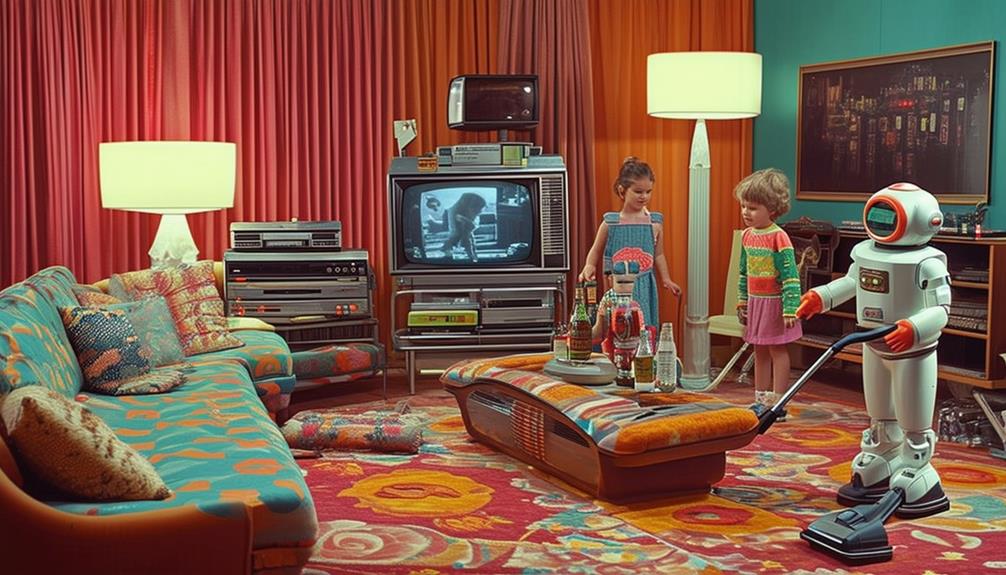
Imagine the dawn of service robots entering homes during the 1980s. Models like the HERO series by Heathkit and Topo by Androbot Inc. hinted at a future where robots could handle everyday tasks, moving beyond their industrial roots. Despite limited computing power and rudimentary sensors, these pioneering robots sparked a shift in envisioning home automation. Curious how these early innovations laid the foundation for today's smart homes? Let's trace the evolution from those humble beginnings to the sophisticated systems we use now.
Early Developments
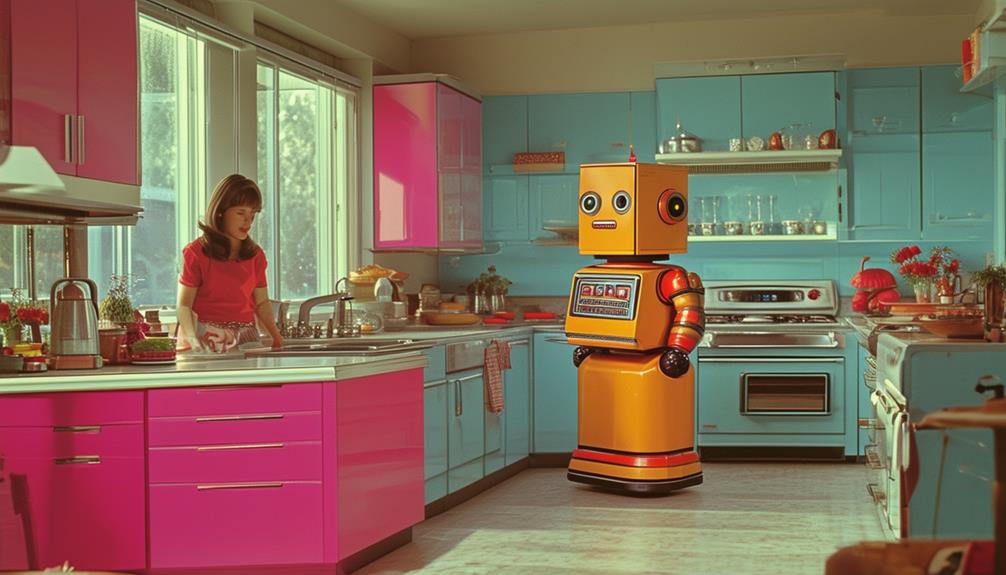
How did the introduction of HERO, HERO 1, and HERO JR in the 1980s set the stage for service robots in domestic environments? These early domestic robots marked the beginning of integrating robotic technology into everyday household settings. This era saw a shift from industrial to domestic robot development, focusing on creating machines that could assist with routine home tasks. HERO, HERO 1, and HERO JR became pioneers in this field, demonstrating that robots could be useful beyond factory floors.
These household robots were more than novelties; they represented a significant movement towards automation in home settings. For example, HERO JR was designed to perform simple tasks like delivering messages or playing music, showcasing the potential for robots to offer convenience and entertainment. Similarly, Topo by Androbot Inc. was another notable 1980s domestic robot that highlighted the period's advancements in household robotics. These developments laid the groundwork for future innovations in the field.
Key Innovations
Building on earlier developments, the 1980s introduced key innovations in domestic service robots that significantly enhanced their functionalities and user interactions. A standout example was the HERO series by Heathkit, including HERO 1 and HERO JR. These robots featured programmable functions, allowing users to customize tasks and interactions, thereby making them more user-friendly and versatile in home settings.
Another notable innovation was Topo by Androbot Inc., which featured a touchscreen interface. This made Topo one of the pioneering domestic service robots to offer interactive tasks, enhancing accessibility and setting the stage for future advancements in user interaction technologies.
The decade also saw significant improvements in mobility and task automation, enabling domestic service robots to perform a broader range of activities, from simple household chores to more complex tasks. These advancements allowed robots to integrate more seamlessly into daily life, laying the groundwork for the smart homes of the future and showcasing their potential to assist with daily activities and improve living standards.
Market Introduction
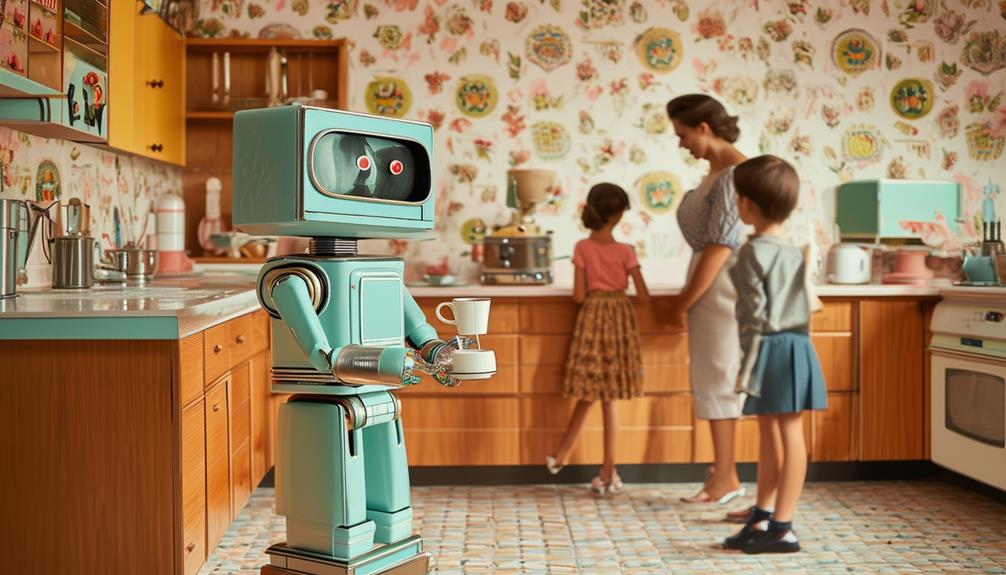
When service robots debuted in the 1980s, early models like Topo and HERO began to capture consumer interest. These pioneering products offered a glimpse into the convenience and novelty that domestic robots could bring to households. Though initial consumer adoption rates were modest, they marked the beginning of a growing trend toward home automation.
Initial Product Offerings
The 1980s marked the advent of household automation with the introduction of domestic service robots such as HERO, HERO 1, HERO JR, and Topo. These early robots were designed to assist with various household tasks, including cleaning, entertainment, and basic communication. Their debut offered a glimpse into the future of home automation and robotics in everyday life.
HERO, HERO 1, and HERO JR were trailblazers, bringing robotic assistance into homes. They could perform a range of tasks and interact with users, offering a novel and captivating experience. Topo, developed by Androbot Inc., distinguished itself with programmable features that allowed consumers to customize its actions and interactions, showcasing the potential of interactive technology.
These initial product offerings did more than introduce new gadgets; they laid the foundation for future advancements in domestic robotics. By integrating robotic technologies into households, the 1980s set the stage for the continued evolution and adoption of more sophisticated service robots, ultimately transforming how we approach everyday chores and home management.
Consumer Adoption Rates
In the 1980s, domestic service robots intrigued many but struggled to gain widespread acceptance due to high costs and limited functionality. The early models lacked the advanced features and reliability that consumers demand today, making it difficult for many to justify the investment.
Nevertheless, a few early adopters were captivated by the novelty and futuristic appeal of these robots. Their enthusiasm helped demonstrate the potential benefits of integrating such machines into home environments. However, for the majority, the prohibitive costs and limited capabilities remained significant barriers.
Over time, consumer adoption rates increased as technological advancements led to more practical and affordable models. Improved robotics technology and a better understanding of their potential uses contributed to the gradual acceptance of domestic service robots. The 1980s, despite its challenges, laid the foundation for the evolution and eventual widespread adoption of these robots in subsequent decades.
Notable Models
When considering pioneering domestic robots from the 1980s, iconic models like HERO, HERO 1, and HERO JR often come to mind. These robots, along with Topo by Androbot Inc., showcased significant technological innovations that garnered consumer interest. They paved the way for integrating robots into everyday household activities.
Pioneering Domestic Robots
In the 1980s, groundbreaking models like HERO, HERO 1, HERO JR, and Topo brought domestic robotics into the spotlight. These pioneering robots marked the beginning of a new era in household innovation. They weren't merely novelties; they were early household assistants that showcased the potential of home robotics technology.
These robots performed tasks that, while basic by today's standards, were groundbreaking at the time. They could entertain, engage in simple communication, and assist with minor household chores. These features laid the groundwork for today's advanced domestic robots.
Here's a quick look at what made these robots stand out:
- HERO: A versatile robot that could be programmed for various tasks, making it popular among tech enthusiasts.
- HERO 1: An enhanced version of HERO with more advanced features and capabilities.
- HERO JR: A smaller, more affordable version designed for home use, making robotics accessible to a broader audience.
- Topo: Created by Androbot Inc., this model demonstrated early advancements in home robotics.
These pioneering models set the stage for the sophisticated household robotic assistants we enjoy today.
Iconic 1980s Models
During the 1980s, iconic domestic robots like HERO, HERO 1, HERO JR, and Topo became household names, revolutionizing the concept of home automation. These robots, developed by companies such as Heathkit and Androbot Inc., marked significant milestones in household robotics, laying the foundation for future innovations.
Heathkit's HERO series included the HERO, HERO 1, and HERO JR, each improving upon the technology and features of its predecessor. HERO 1, for instance, was equipped with advanced sensors and the ability to perform basic tasks, whereas HERO JR offered a more compact design suitable for personal use. Androbot Inc.'s Topo, meanwhile, showcased advanced capabilities for its time, including programmable routines and interactive features.
These models represented not only technological advancements but also a shift in how people perceived automation in their homes, focusing on convenience and offering a glimpse into a future where robots could handle daily chores and tasks.
Here's a quick comparison of these notable models:
| Robot Model | Manufacturer | Key Feature | Year Released |
|---|---|---|---|
| HERO | Heathkit | Basic tasks | Early 1980s |
| HERO 1 | Heathkit | Advanced sensors | Mid 1980s |
| HERO JR | Heathkit | Compact design | Late 1980s |
| Topo | Androbot Inc. | Programmable routines | Mid 1980s |
These domestic robots from the 1980s not only advanced home automation but also inspired future developments in household robotics.
Technological Innovations
The technological innovations of the 1980s' domestic robots, such as HERO and Topo, marked significant advancements in home automation and interactivity. These pioneering models were more than novelties; they represented crucial strides in household robotics. The HERO series, including HERO 1 and HERO Jr., introduced a new level of interactivity and automation into homes, simplifying tasks and enhancing efficiency.
Androbot Inc.'s Topo robot was another notable innovation from the 1980s. It expanded the possibilities of domestic robotics, offering early insights into the potential for robots to perform everyday household tasks. These robots were not merely about convenience; they were foundational in paving the way for future developments in robotics.
Key technological advancements included:
- Programmable interfaces: Allowing users to customize tasks and interactions.
- Sensors: Enabling robots to navigate and interact with their environment more effectively.
- Voice recognition: Providing a natural way for humans to communicate with machines.
- Modular components: Offering flexibility in upgrading and enhancing robot capabilities.
These domestic robots from the 1980s laid the groundwork for the evolution of household robotics, showcasing the immense potential of integrating robotic technology into everyday life.
Technological Challenges
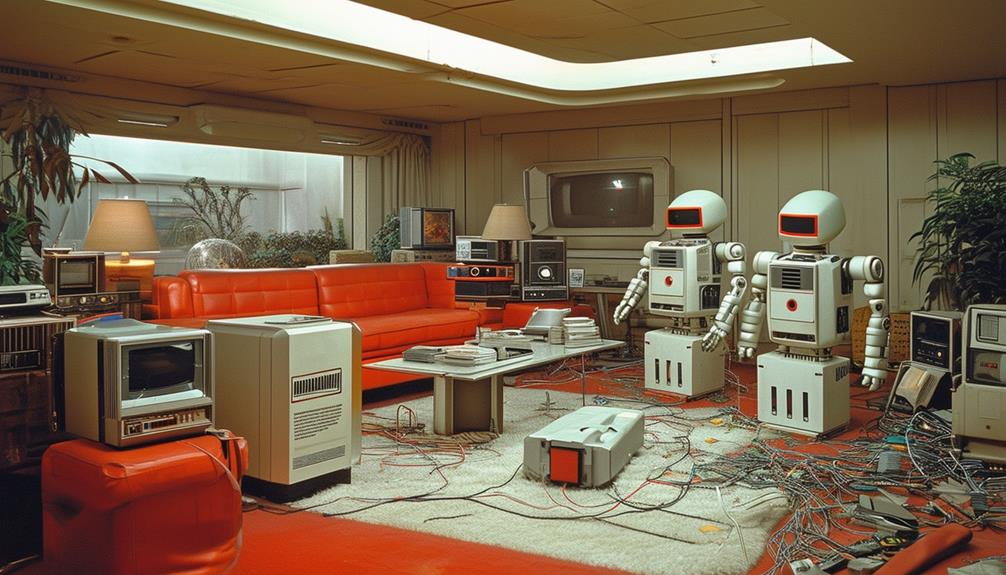
Technological constraints in the 1980s significantly hindered the development of effective domestic service robots. Limited computing power and rudimentary sensor capabilities posed major challenges. These early robots struggled with complex tasks such as object recognition and manipulation, reducing their utility in household settings.
Human-robot interaction was another critical issue. The interfaces of the time provided limited options for intuitive communication, relying heavily on basic commands. This hindered seamless interaction, as robots often failed to understand or accurately respond to human needs.
Navigation systems in 1980s robots were primitive, typically relying on basic sensors and predefined paths. This restricted their ability to move autonomously in dynamic and cluttered domestic environments, often causing them to get stuck or take inefficient routes.
The development of artificial intelligence for these robots was also constrained by the computing capabilities of the period. Implementing sophisticated AI was nearly impossible, preventing robots from learning or adapting to changes in their environment and severely limiting their utility.
Consumer Reception
Consumer reception of domestic service robots in the 1980s was a mix of excitement and skepticism. Early adopters were intrigued by the novelty of having robotic technology in their homes. Products like HERO, HERO 1, and HERO JR generated significant enthusiasm, driven by the prospect of robots performing household tasks. This excitement set the stage for future innovations in domestic robotics.
However, the reception was not universally positive. Several factors contributed to the mixed reactions:
- Functionality Issues: Early robots often struggled to perform tasks reliably, leading to disappointment.
- Affordability Concerns: The high cost made these robots accessible only to a niche market, limiting widespread adoption.
- Skepticism: Many consumers questioned the practical benefits versus the novelty factor, doubting the real value of these machines.
- Fascination: Despite these concerns, the idea of robots in homes fascinated many, gradually shifting public perception.
Human-Robot Interaction
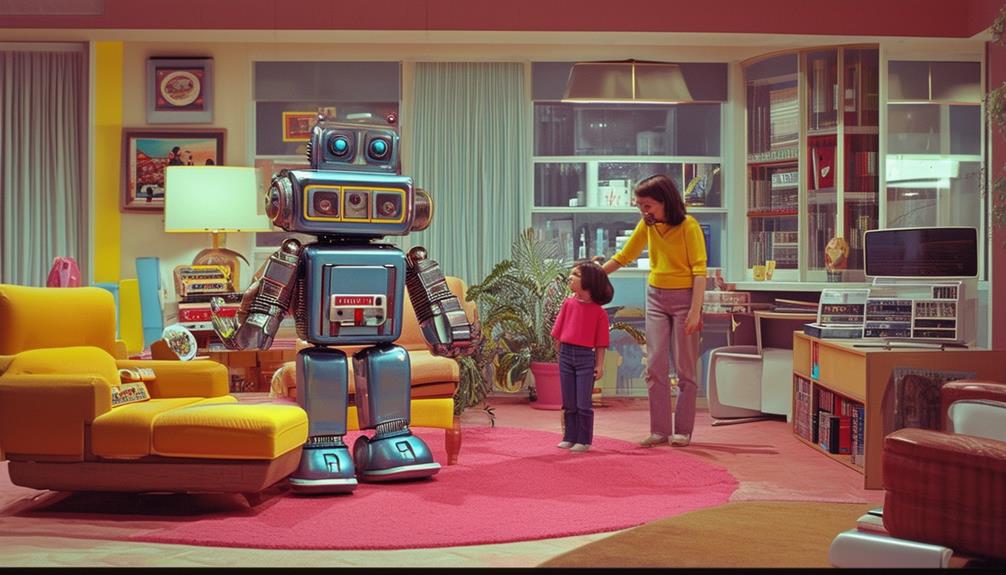
Advancements in the 1980s revolutionized human-robot interaction, making domestic service robots more user-friendly and intuitive. Researchers during this period focused on improving interaction mechanisms to ensure these devices were better integrated into daily life. Understanding human behaviors and needs became crucial for designing effective communication systems between users and robotic helpers.
Ethnographic studies played a key role in this process, offering critical insights into how users perceive and interact with domestic robots, such as the Roomba vacuum cleaner. These studies helped developers recognize the importance of user feedback, which directly influenced the design features of these robots. As a result, simple interfaces and responsive controls became standard, making the robots easier to engage with.
The 1980s also marked a shift in public attitudes towards robotic technology, driven by these advancements in human-robot interaction. As domestic robots became more reliable and user-friendly, public comfort and acceptance of these devices increased. This period laid the groundwork for the seamless integration of robots into modern homes, fundamentally transforming domestic life.
Media Portrayal
In the 1980s, the media painted an exciting picture of domestic robots, showcasing their potential to transform everyday household chores. Popular culture buzzed with the idea of futuristic homes equipped with robotic helpers, largely thanks to iconic TV shows like 'The Jetsons.' This portrayal captured the public's imagination and set high expectations for the role of robots in homes.
Magazines and newspapers brimmed with articles on the latest advancements in domestic robot technology, emphasizing how these innovations could revolutionize tasks such as vacuuming, dishwashing, and even pet care. The fascination with integrating robots into daily life was palpable, driven by:
- TV shows and movies: Vividly illustrated robotic assistants performing household chores.
- Magazine features: Articles discussing groundbreaking technologies and their potential.
- News segments: Coverage on the latest prototypes and their applications.
- Public perception: Media portrayal significantly shaped how people viewed the future of domestic robots.
The sense of anticipation and curiosity about these robotic marvels was inescapable. This media-driven fascination played a crucial role in shaping the 1980s narrative around domestic robots, making them a symbol of a promising, high-tech future.
Legacy and Impact
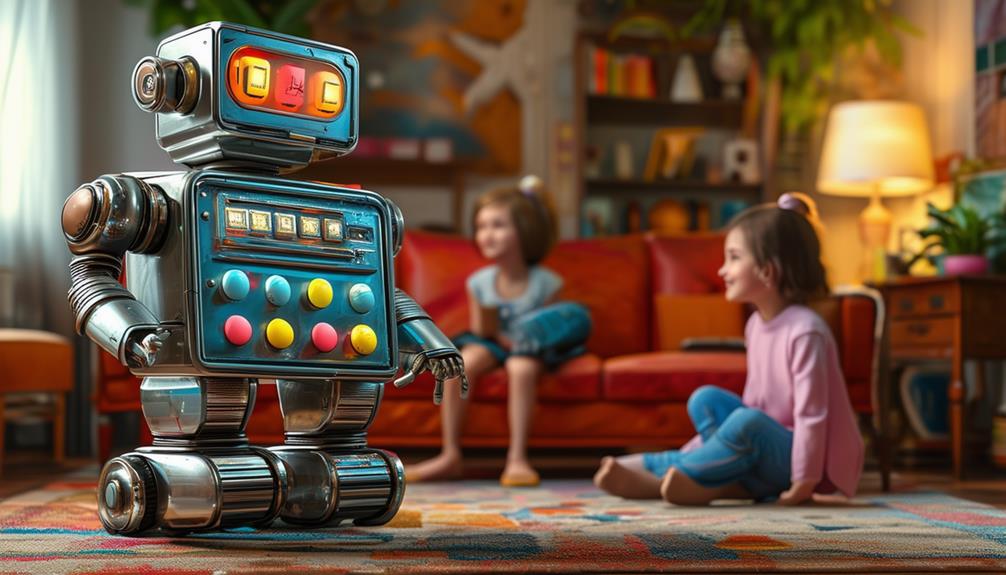
Early domestic robots from the 1980s, such as HERO and Topo, laid the foundation for today's household robotic innovations, seamlessly integrating technology into our daily routines. These pioneering devices demonstrated that robotics could extend beyond industrial applications and enter our homes, transforming how we approach everyday tasks.
The introduction of domestic robots in the 1980s marked a pivotal shift in the robotics landscape. These early machines showed that robots could assist with chores, provide entertainment, and even facilitate communication. This sparked a growing interest and acceptance of robotic helpers in domestic settings.
The impact of these early domestic robots is significant. They paved the way for modern innovations like robotic vacuum cleaners, smart home assistants, and automated home security systems. Today's advanced robots owe a debt to the visionaries of the 1980s who saw the potential for robotics to enrich everyday life.
Every time you use a smart device to control your home environment, you benefit from the legacy of those early domestic robots. They proved that integrating robotics into our daily lives wasn't just possible—it was the future.
Conclusion
In the 1980s, the emergence of service robots in domestic environments was marked by trailblazers such as the HERO series and Topo. Despite facing significant technological challenges, these early models ignited a revolution in home automation and human-robot interaction. Far from being mere novelties, they were the pioneers that laid the groundwork for today's smart homes. Now, we live in an era where robots seamlessly integrate into everyday life, fulfilling the vision set forth by these early innovations.
Related posts