The Development of Teleoperators and Remote Manipulators During the 1950s
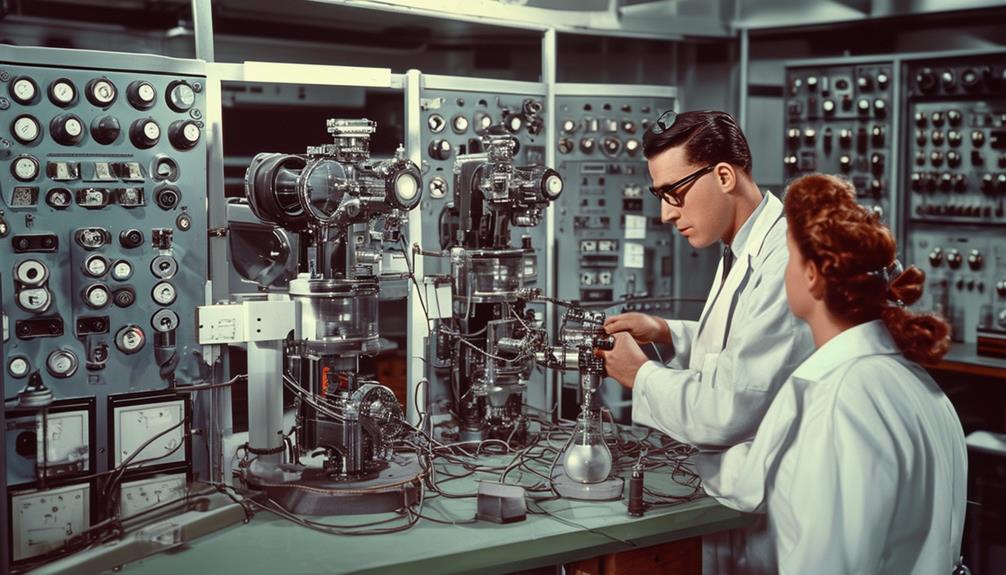
In the 1950s, engineers like Ray Goertz and Ralph Mosher began transforming our interaction with machines. Their innovations, such as the ElectroMechanical Manipulator and Remote Servo-manipulator, introduced pioneering force-feedback systems and precise remote control. These advancements were essential for safely handling hazardous materials across various industries. How did these early developments pave the way for today's advanced robotics? Let's explore the key technologies and notable projects that defined this transformative era.
Early Innovations
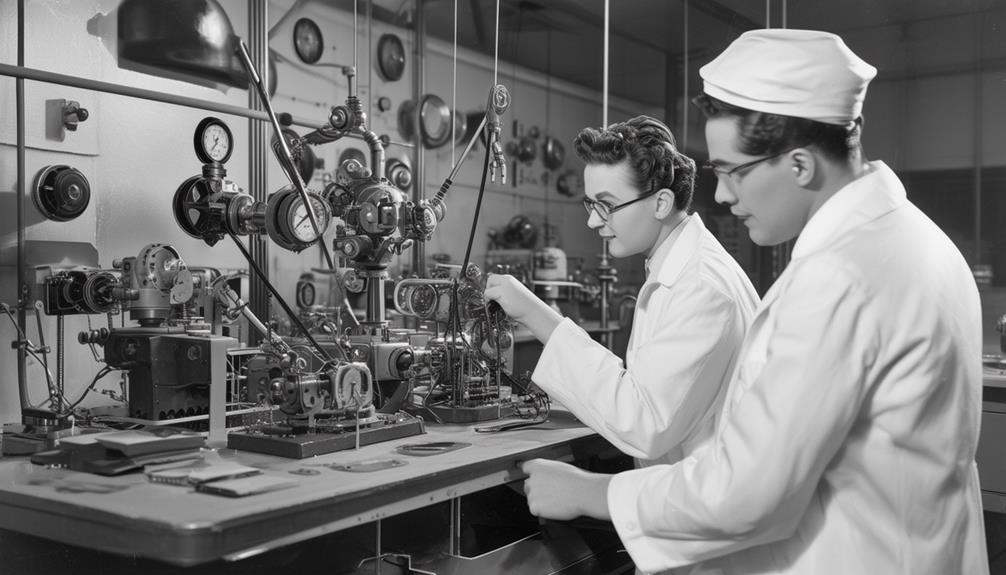
In the early 1950s, Ray Goertz developed the pioneering electronically augmented telemanipulator, marking a groundbreaking advancement in remote manipulation technology. This innovation facilitated the creation of early teleoperators, which allowed humans to control machinery from a distance, revolutionizing industrial operations. Initially designed to handle radioactive materials, these remote manipulators demonstrated significant potential in hazardous environments where direct human involvement was too risky.
During this period, the focus was on enhancing human-machine interaction. The introduction of Goertz's electro-mechanical manipulator in 1954 exemplified this advancement. It was not merely a tool but a significant step towards the future of industrial robots. These early teleoperators enabled safer and more efficient handling of toxic waste, proving invaluable in industries dealing with hazardous substances.
Key Technologies
Advancements in the 1950s, particularly with Ray Goertz's ElectroMechanical Manipulator and the Remote Servo-manipulator, revolutionized remote manipulation technology. These innovations significantly enhanced the efficiency and versatility of remote manipulators. The ElectroMechanical Manipulator, for example, introduced a mechanical arm controlled from a distance, enabling operators to perform precise tasks without direct contact.
A groundbreaking feature of these manipulators was the introduction of force-feedback systems. These systems provided operators with real-time sensory feedback, allowing them to feel resistance and subtle environmental changes, thereby making remote operations more intuitive and effective.
Teleoperated systems also experienced remarkable advancements during this period. These systems allowed operators to control devices from a distance, crucial for applications where direct human intervention was either impossible or risky. The development of these systems laid the groundwork for future innovations in fields such as space exploration and industrial automation.
Notable Projects
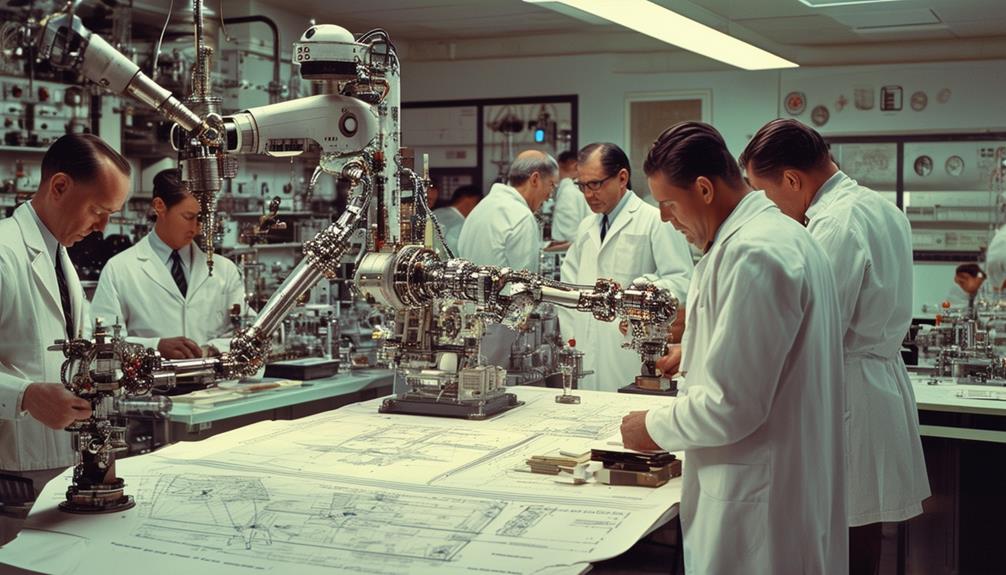
Several groundbreaking projects in the 1950s showcased the transformative potential of teleoperators and remote manipulators. In 1954, Ray Goertz introduced the ElectroMechanical Manipulator, which featured force-feedback technology, significantly enhancing the operator's control over remote devices. By 1955, the Manned Mobile Remote Manipulator demonstrated early applications of teleoperated systems, proving their viability for performing tasks from a distance.
In 1958, Goertz further advanced the field with the development of the Remote Servo-manipulator, which revolutionized teleoperator technology by enabling precise control over robotic systems. Around the same time, Ralph Mosher's GE Handyman (1958-1959) showcased the advanced capabilities of remote manipulators in handling complex tasks.
One of the most fascinating concepts was the Lunar Robot MOBOT in 1959, which hinted at the future potential for teleoperated rovers in extraterrestrial exploration. These projects collectively paved the way for the advanced robotic systems we use today.
| Year | Project Name | Key Contribution |
|---|---|---|
| 1954 | ElectroMechanical Manipulator | Introduced force-feedback technology |
| 1955 | Manned Mobile Remote Manipulator | Early application of teleoperated systems |
| 1958 | Remote Servo-manipulator | Revolutionized teleoperator technology |
| 1958-1959 | GE Handyman | Demonstrated advanced remote manipulation capabilities |
| 1959 | Lunar Robot MOBOT | Pioneered concepts for extraterrestrial teleoperation |
These pioneering efforts underscored the immense possibilities that remote and teleoperated manipulators could achieve in various fields, from industrial applications to space exploration.
Influential Engineers
Pioneering engineers like Ray Goertz and Ralph Mosher were instrumental in advancing teleoperator and remote manipulator technology during the 1950s. Ray Goertz, for instance, developed the ElectroMechanical Manipulator in 1954, marking a significant milestone in remote manipulation technology. This device enabled operators to perform tasks in hazardous environments, revolutionizing industrial approaches to remote operations.
Ralph Mosher introduced another groundbreaking innovation with the GE Handyman in 1958, showcasing the evolution of remote servo-manipulators. Mosher's work emphasized precision and user control, setting new standards for the field.
Both Goertz and Mosher played pivotal roles in transforming teleoperated manipulators from concepts to practical, reliable tools. Their innovations laid the foundation for future advancements, ensuring the continued evolution and improvement of remote manipulation technology. By addressing the real-world needs of industries requiring remote operations, these engineers made significant contributions to the technological landscape.
Their work in the 1950s was not just about creating new gadgets but solving complex problems, making our world safer and more efficient through visionary engineering.
Legacy and Impact
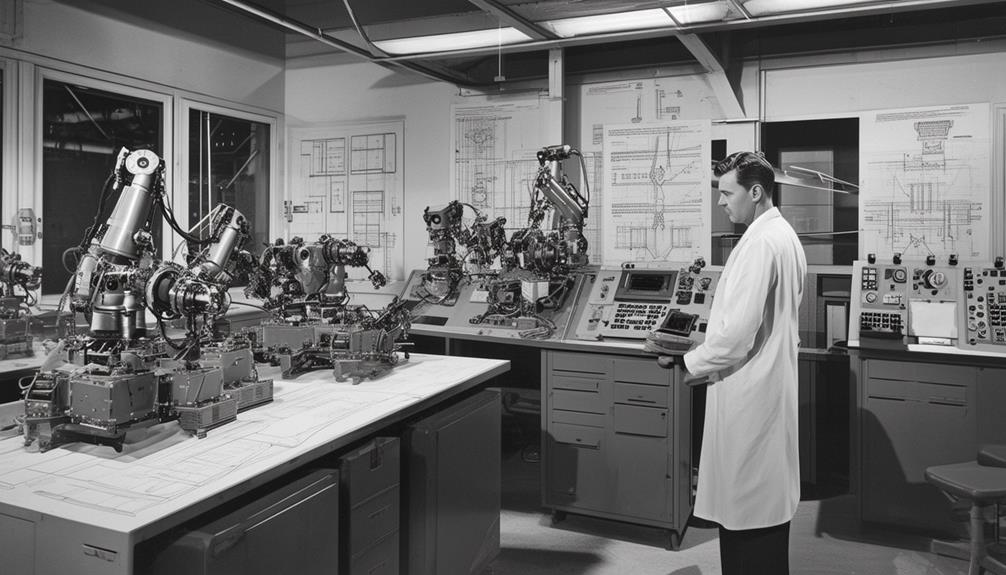
The remote manipulators developed in the 1950s fundamentally transformed how industries manage hazardous and complex tasks, establishing a benchmark that remains influential today. These early innovations revolutionized industrial operations by enabling the safe and efficient handling of radioactive materials, a critical advancement of the era. Their legacy extends well beyond their initial applications, laying the groundwork for modern robotics.
The impact of these early teleoperators is evident in various extreme environments, from space exploration to underwater missions, and nuclear power to military applications. Modern robotics heavily rely on remote manipulators for critical tasks, underscoring their versatility and importance across multiple sectors.
The robotics industry thrives on the foundation built by these pioneering devices, driving ongoing innovation. Today's engineers and scientists build upon this legacy to develop advanced technologies tailored for complex tasks and extreme conditions. The heritage of 1950s remote manipulators is a testament to human ingenuity and the relentless pursuit of progress. Their enduring impact continues to shape how we address some of the most challenging and dangerous tasks today.
Conclusion
The pioneering work on teleoperators and remote manipulators in the 1950s has significantly influenced today's technology. Innovations by engineers like Ray Goertz and Ralph Mosher have enabled industries to handle hazardous tasks more safely and efficiently. Their groundbreaking developments have left a lasting legacy, paving the way for advancements in robotics that continue to impact space exploration, defense, and nuclear industries. The future of human-machine interaction owes much to these early efforts.
Related posts