The Development of ELIZA: The World's First Chatbot
When discussing the origins of chatbots, ELIZA emerges as a pioneering example. Developed in the mid-1960s by Joseph Weizenbaum, ELIZA utilized pattern matching and substitution techniques in the MAD-Slip programming language to simulate human conversation with remarkable simplicity. Inspired by Rogerian psychotherapy, ELIZA's responses felt surprisingly human, despite its lack of genuine understanding. This groundbreaking project not only demonstrated the early potential of natural language processing but also prompted discussions about the future of human-machine interactions. How could a simple script stir such profound implications?
Historical Background

In the mid-1960s, MIT's Joseph Weizenbaum developed ELIZA, one of the pioneering chatbots in the field of natural language processing. ELIZA utilized pattern matching and substitution techniques to simulate conversation, capturing the attention of both students and programmers. Notably, its DOCTOR script imitated a Rogerian psychotherapist, creating an illusion of understanding.
Weizenbaum's approach involved designing a program that responded to user inputs using pre-defined patterns. By matching user statements to a set of templates and substituting key phrases, ELIZA maintained a semblance of coherent dialogue. This method was revolutionary for its time and laid the groundwork for future advancements in human-computer interaction.
Initially written in MAD-Slip, a programming language, ELIZA garnered significant interest from the coding community, leading to modifications and expansions of its capabilities. Despite its simplicity, ELIZA's ability to engage users demonstrated both the potential and limitations of early natural language processing. It marked a significant milestone, showcasing how computers could interact with humans in unprecedented ways.
Concept and Inspiration
Joseph Weizenbaum's creation of ELIZA was inspired by the Rogerian psychotherapist approach, which aims to facilitate non-directive conversation. He sought to explore human-computer communication by designing a system capable of simulating human-like interactions. Weizenbaum's goal was not to demonstrate true intelligence but to create an illusion of understanding.
To achieve this, Weizenbaum employed a crucial concept: pattern matching. ELIZA utilized predefined scripts to identify keywords and phrases in the user's input, responding with pre-programmed replies. This method enabled ELIZA to conduct conversations that appeared natural to users, despite being based on simple substitution rules rather than genuine comprehension.
Consider ELIZA's interaction process through these steps:
- User Input: The user types a sentence or question.
- Pattern Matching: ELIZA detects keywords or patterns in the user's input.
- Scripted Response: ELIZA selects an appropriate reply based on these patterns.
- Illusion of Understanding: The user perceives that ELIZA understands their concerns, even though it is merely following a script.
This innovative approach marked a significant milestone in early natural language processing, highlighting both the potential and limitations of AI in human-computer interaction.
Technical Foundation

ELIZA's technical foundation was built on the MAD-Slip programming language, which facilitated the implementation of its revolutionary pattern matching and substitution techniques. Developed by Joseph Weizenbaum at MIT in the early 1960s, ELIZA aimed to highlight the superficial nature of human-computer communication. Through its matching and substitution methodology, ELIZA could simulate conversations, creating the illusion of understanding without actual comprehension.
Here is an overview of ELIZA's technical elements:
| Component | Description | Purpose |
|---|---|---|
| Programming Language | MAD-Slip | Development environment |
| Core Technique | Pattern matching and substitution | Generate conversational responses |
| Script Example | DOCTOR script | Simulate a Rogerian psychotherapist |
ELIZA's responses were generated using language models that identified key phrases in user input and substituted them with predefined responses. This method allowed the chatbot to reflect users' statements, making it appear as though the machine understood human emotions and queries. The DOCTOR script, one of the most notable implementations, simulated a psychotherapist by echoing the patient's input in its replies.
This pioneering work in Artificial Intelligence provided critical insights into both the potential and limitations of natural language processing, laying the groundwork for future advancements in chatbot technology and human-machine interaction.
Programming Language
Weizenbaum's selection of MAD-SLIP as the programming language for ELIZA profoundly shaped its capacity to simulate dialogue. As one of the first chatterbots, ELIZA operated within the limitations of MAD-SLIP, a language designed for the IBM 7094 computer. This decision had both advantages and drawbacks. While MAD-SLIP enabled Weizenbaum to implement essential pattern matching and substitution techniques for ELIZA's conversational abilities, it lacked a robust framework for maintaining context over multiple exchanges.
To understand the intricacies of programming ELIZA, consider these key components:
- Pattern Matching: ELIZA scanned user input for specific keywords.
- Substitution Methodology: It converted these keywords into predefined responses.
- DOCTOR Script: Simulated a psychotherapist by reflecting patient input.
- Technical Constraints: Limited by MAD-SLIP's contextual capabilities.
Despite these constraints, the choice of MAD-SLIP was pivotal in creating the "ELIZA effect," where users perceived the chatbot as having human-like understanding. By utilizing MAD-SLIP's features, Weizenbaum crafted a seminal work in artificial intelligence, highlighting both the potential and limitations of early programming languages in mimicking human conversation.
Pattern Matching
Pattern matching was crucial for ELIZA's ability to simulate conversations by identifying and responding to specific keywords in user inputs. By analyzing the text you typed, ELIZA could apply transformation rules based on predefined keywords to generate seemingly intelligent replies. This mechanism allowed the program to detect particular phrases or patterns within your messages, creating an illusion of understanding and engagement.
Here's how pattern matching worked in ELIZA:
| Concept | Explanation |
|---|---|
| Pattern Matching | Identified specific keywords in user inputs |
| User Inputs | Analyzed incoming text to find patterns |
| Transformation Rules | Converted recognized patterns into responses |
| Predefined Rules | Guided how keywords were used to generate replies |
Using these techniques, ELIZA could reflect your words back to you or ask questions, making it seem like the program was genuinely engaging in conversation. For instance, if you mentioned feeling sad, ELIZA might identify the keyword 'sad' and respond with, 'Why do you feel sad?' This response was not generated from comprehension but from structured transformation rules that made the interaction feel authentic.
The pattern matching approach enabled ELIZA to maintain a coherent conversation flow, all rooted in the strategic use of keywords and predefined rules. This innovative design was groundbreaking at the time, laying the foundation for future advancements in chatbot technology.
User Interaction
Users were captivated by how ELIZA mirrored their inputs, creating a convincing illusion of understanding. This simple yet effective interaction made the chatbot particularly engaging. ELIZA would reflect your statements back to you, often prompting further conversation. Although its conversational depth was limited by pre-programmed scripts, this simplicity made it accessible and easy to interact with.
ELIZA's design encouraged experimentation, offering a playful way to see how different inputs would generate varied responses. Here are some iconic user interactions:
- Therapeutic Prompts: ELIZA often used prompts like 'How do you feel about that?' to encourage elaboration.
- Reflective Questions: The chatbot would frequently ask, 'Can you explain why you say that?' fostering a sense of being heard.
- Minimal Adjustments: ELIZA would make slight changes to your input, such as turning 'I am sad' into 'Why are you sad?'.
- Keyword Triggers: Specific words in your input would trigger pre-set responses, guiding the conversation naturally.
Though limited by its scripts, ELIZA's interactive design provided a unique sense of engagement and curiosity.
Reception and Impact
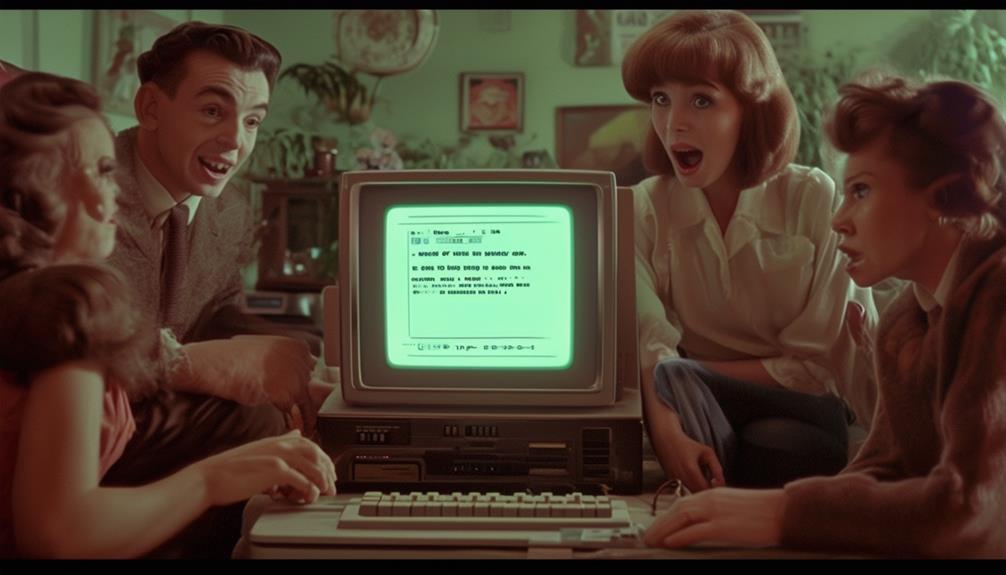
Many early users were surprised to find that ELIZA's simplicity led them to believe they were interacting with a genuinely intelligent system. This misperception underscored both the potential and limitations of AI, spurring further exploration and innovation in the field. ELIZA's technological influence has been significant, paving the way for modern chatbots and inspiring numerous advancements in human-computer interaction.
Public Perception Shift
The debut of ELIZA, created by Joseph Weizenbaum, significantly changed public perception of artificial intelligence, evoking both fascination and concern. ELIZA was a pioneering experiment in human-machine interaction, going beyond a simple chatbot. Many users formed emotional attachments to the program, often believing it genuinely understood them despite its superficial responses. This sometimes led to delusional thinking, as people projected human-like intelligence and emotions onto ELIZA, highlighting our tendency to anthropomorphize machines.
The public's reaction was a blend of awe and apprehension. ELIZA's ability to simulate conversation amazed many, yet it also raised concerns about the implications of such technology. This shift in perception can be summarized in four key points:
- Fascination: ELIZA demonstrated AI's potential to engage in seemingly intelligent dialogue.
- Emotional Attachment: Users often felt understood, leading to strong emotional responses.
- Concern: There was apprehension about the ethical implications of machines mimicking human interaction.
- Milestone: ELIZA marked a significant milestone in AI history, influencing future developments.
Weizenbaum's creation underscored the complexities and psychological impacts of human-machine interaction, setting the stage for the future of AI.
Technological Influence
Building on the fascination and concern sparked by ELIZA, the chatbot's technological influence profoundly shaped the advancement of modern AI and conversational agents. When users initially interacted with ELIZA, they often believed in its intelligence, forming emotional attachments and engaging in intimate conversations. This phenomenon, known as the ELIZA effect, revealed how early interactions with computers could lead humans to project emotions and intentions onto machines.
ELIZA's ability to simulate human-like conversation using simple pattern matching was a significant milestone in human-machine interaction. This early example demonstrated the potential of computers to understand and manipulate language, paving the way for more sophisticated chatbots. The illusion of human-like conversation created by ELIZA laid the groundwork for the development of advanced AI chatbots like ChatGPT, which use complex algorithms and vast datasets to generate more nuanced and context-aware responses.
The impact of ELIZA extends beyond technology, influencing human behaviors and societal norms. As AI continues to evolve, it carries the potential to shape how we interact with machines and each other. The transition from ELIZA's early, simplistic interactions to today's advanced conversational agents underscores the profound and lasting influence of the pioneering chatbot on the field of artificial intelligence.
Limitations and Criticisms
ELIZA's design limitations quickly became evident, as its reliance on pre-programmed scripts and pattern matching restricted it to superficial conversations. These constraints revealed the shallow nature of ELIZA's interactions, emphasizing that its responses were confined to pre-set patterns. Lacking true understanding, ELIZA couldn't grasp the context or meaning behind users' inputs. Consequently, the chatbot could simulate conversation but fell short of demonstrating real intelligence.
Critics were quick to highlight ELIZA's deficiencies. Despite initial enthusiasm, users soon recognized that the chatbot couldn't offer meaningful insights or engage in substantive dialogue. The limitations of ELIZA's design underscored several critical issues:
- Shallow Conversations: ELIZA's responses were formulaic and often repetitive, clearly indicating that it was following predetermined patterns.
- Lack of True Understanding: The chatbot was unable to comprehend context or nuance, exposing the superficiality of its interactions.
- Simplistic Design: ELIZA's rudimentary structure couldn't manage complex queries, leading to user dissatisfaction.
- Need for Advancement: The evident limitations highlighted the necessity for progress in natural language processing and AI to create more sophisticated chatbots.
These criticisms set the stage for future innovations in the field.
Legacy and Influence
ELIZA's inception marked a pivotal moment in artificial intelligence, catalyzing the development of more advanced conversational agents. Initially, you might have been struck by ELIZA's simplicity, but its legacy and influence are undeniable. Despite its limitations in conversational depth, ELIZA made a significant impact on the field of AI, paving the way for the sophisticated chatbots we interact with today.
The table below highlights ELIZA's legacy and influence:
| Aspect | Description | Impact |
|---|---|---|
| Historical Significance | Early example of human-computer interaction | Nostalgic value for early AI enthusiasts |
| Inspiration | Motivated future AI research and developments | Basis for modern conversational agents |
| Resurgence | Renewed interest in 2018 | Highlighted enduring appeal and historical value |
ELIZA's influence extends far beyond its initial creation. It showcased the potential for machines to mimic human conversation, inspiring future AI innovations. Even today, you can interact with ELIZA as a basic chatbot, echoing those early AI experiments. This ongoing interaction underscores its lasting impact and continued relevance in AI history.
Future of Chatbots
As chatbots like ChatGPT and Google Gemini evolve, they're redefining human-computer interaction by becoming increasingly sophisticated AI companions. These advancements are poised to make interactions more seamless and intuitive.
Imagine a world where:
- Smartphones and smart homes: You converse with your devices as naturally as with a friend, receiving personalized and engaging responses.
- Healthcare and therapy: AI companions offer mental health support, providing empathetic and precise advice tailored to individual needs.
- Customer service: Businesses utilize chatbots to efficiently resolve issues, delivering a customer experience that feels human-like.
- Education and learning: Students engage with AI tutors that adapt to their learning styles, providing a personalized educational experience.
These scenarios illustrate how human-like AI interactions can become integral to everyday life. Nonetheless, the development of these advanced chatbots raises important questions about their roles and ethical implications. As you embrace these advancements, you are partaking in an era where the boundaries between human and machine interactions blur, promising a future rich with innovative possibilities.
Conclusion
Understanding ELIZA's evolution reveals how a simple chatbot reshaped our views on AI. Despite its limitations, ELIZA's development showcased the potential of human-machine interactions and laid the groundwork for today's advanced chatbots. As we move forward, it's important to recognize that while chatbots will become more sophisticated, the balance between fascination and concern will continue to shape our relationship with AI. ELIZA's legacy remains a cornerstone in this evolving field.
Related posts