The Development of Early Robots in Ancient Civilizations
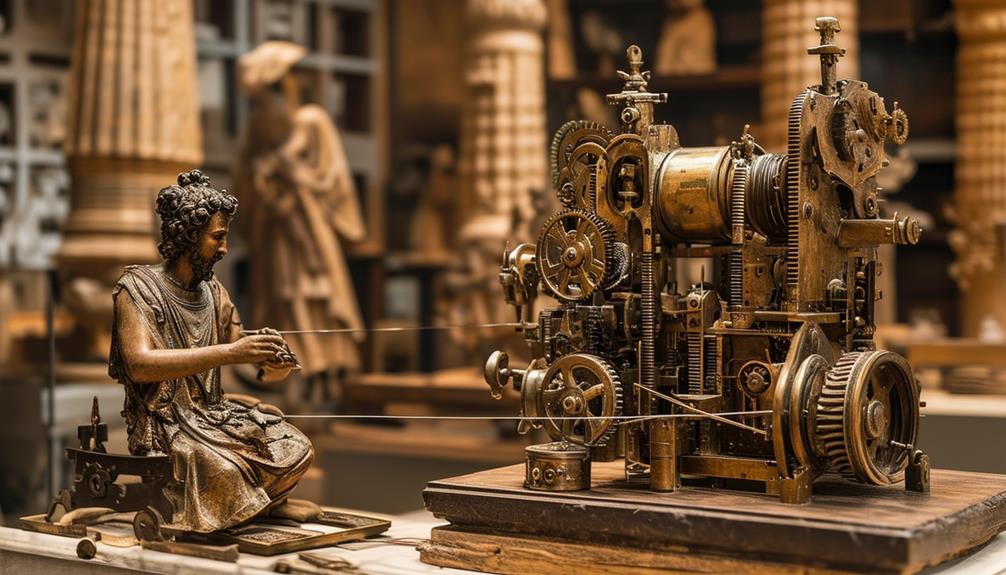
Consider the ingenuity of ancient civilizations such as Egypt, Greece, China, and Rome, who crafted early robots with surprisingly sophisticated technology for their time. While automation might seem like a modern marvel, these societies employed hydraulics, gears, and complex mechanisms to create water clocks, musical instruments, and seismoscopes. For instance, Greek automata were powered by compressed air, and the Chinese developed the South-Pointing Chariot. How did these early innovations shape today's technology? Exploring this historical journey reveals the roots of modern automation, showcasing a legacy that predates the technological era. Are you ready to uncover the impact they left behind?
Early Egyptian Water Clocks
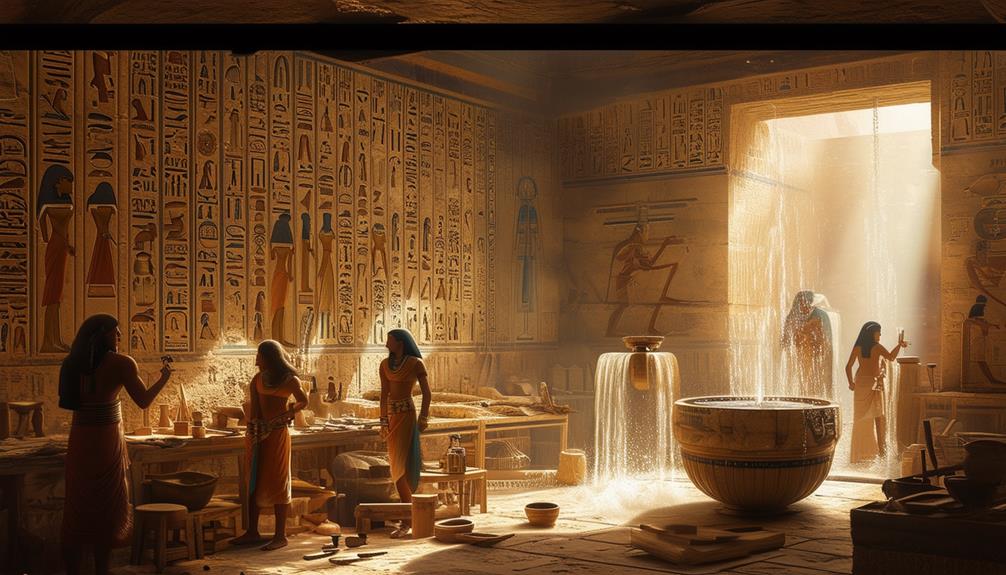
In ancient Egypt, water clocks known as clepsydrae utilized the steady flow of water to mark the passage of time. Dating back to around 3000 B.C., these devices exemplify the Egyptians' engineering prowess. The clepsydrae operated by allowing water to flow at a controlled rate, which then moved mechanisms to display the hours. This innovative approach to timekeeping not only highlighted their technical skills but also their early interest in automation.
These water clocks were more than practical tools; they were predecessors to modern robotics, integrating automation into everyday life. The mechanical figures in the clepsydrae would move, transforming a simple time-telling device into a dynamic and engaging apparatus. The Egyptians' ingenuity in designing clepsydrae laid the foundation for future advancements in automated devices across ancient civilizations.
Greek Automata Innovations
Greek inventors like Hero of Alexandria were pioneers in early robotic devices. His work included intricate automata, such as mechanical birds powered by steam. These innovations were not only technical marvels but also integral to Hellenistic culture, showcasing Greek advancements in hydraulics and mechanics.
Hero of Alexandria
Hero of Alexandria revolutionized ancient engineering with his remarkable automatons powered by compressed air, steam, and hydraulics. His groundbreaking work in mechanical engineering laid the foundation for modern robotic technology, showcasing the potential of early robotic systems.
Hero's most notable contributions include a programmable cart, a vending machine, automatic doors, and a mechanical theater. These inventions demonstrate his mastery of mechanical engineering and automated systems. Hero meticulously documented his work in his treatise 'Pneumatica,' offering insights into the principles behind these early robotic innovations.
| Invention | Power Source | Functionality |
|---|---|---|
| Programmable Cart | Compressed Air | Movement based on pre-set pathways |
| Vending Machine | Coin-Operated | Dispensed holy water |
| Automatic Doors | Steam | Opened and closed temple doors |
| Mechanical Theater | Hydraulics | Simulated scenes with moving figures |
| Self-trimming Lamp | Counterweight | Maintained wick length automatically |
Hero's innovations significantly influenced the development of robotic technology and the understanding of automated systems in ancient civilizations. His work exemplifies the ingenuity and creativity of ancient engineers, providing a glimpse into the early advancements that paved the way for modern robotics.
Mythical Mechanical Birds
Imagine standing in ancient Greece, witnessing mechanical birds spring to life with movements so realistic you'd swear they were genuine. These Greek automata, crafted by ingenious inventors like Ctesibius and Hero of Alexandria, were early robots that amazed and entertained. Using compressed air and hydraulics, they created lifelike movements that mimicked the fluttering and singing of actual birds.
These mechanical birds were not merely toys; they showcased the advanced engineering skills of ancient Greek inventors. The intricate mechanisms involved in their creation highlighted a deep understanding of physics and mechanics. Compressed air systems and hydraulics powered these automata, enabling them to perform fluid, realistic motions that captivated audiences.
Greek automata innovations significantly contributed to the development of future robotic devices. The mechanical birds demonstrated how ancient civilizations could harness technology to create lifelike and functional machines. These early robots were more than just entertainment; they were a testament to the incredible ingenuity and technical prowess of the Greeks.
Ancient Chinese Mechanisms
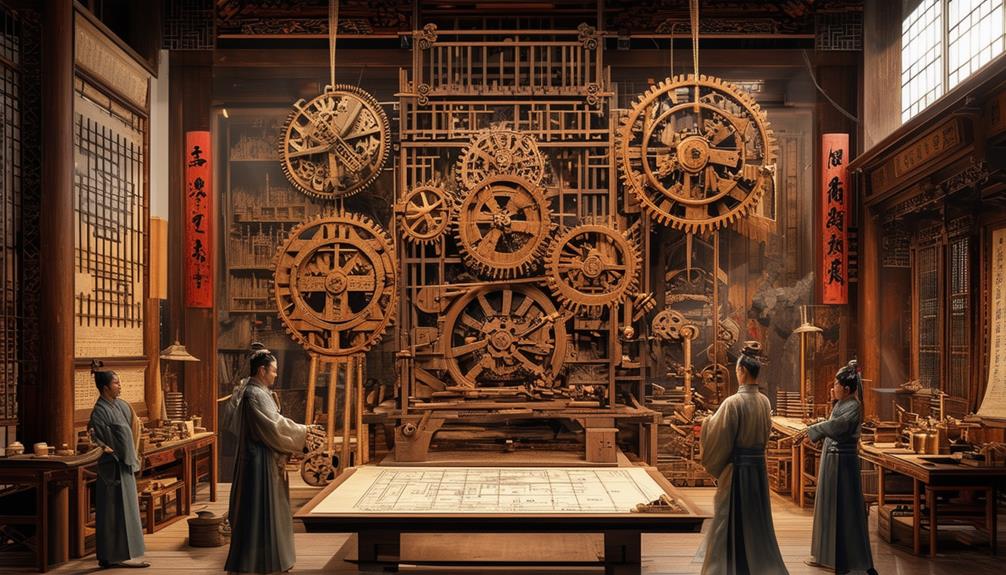
The genius of ancient Chinese mechanisms is exemplified by the works of Zhang Heng, an automaton inventor from the Han Dynasty. Engineers of this era utilized advanced principles to develop remarkable mechanical devices. These innovations not only demonstrated technical prowess but also held significant cultural and ceremonial value in ancient China.
Automaton Inventor Zhang Heng
Zhang Heng, an ingenious inventor of the Han Dynasty, revolutionized early earthquake detection with his innovative seismoscope in 132 AD. This ancient Chinese invention was a marvel of mechanical engineering, utilizing a pendulum mechanism to detect seismic activity. When an earthquake was sensed, the device would release a metal ball from one of eight dragon mouths, indicating the direction of the tremor.
The seismoscope was not just a technological breakthrough; it epitomized Zhang Heng's inventive spirit and expertise in mechanical engineering. The device's intricate gears and levers were meticulously designed, reflecting the advanced understanding of machinery during the Han Dynasty. This invention provided a reliable method for earthquake detection, marking a significant advancement in ancient technology.
Han Dynasty Innovations
The Han Dynasty showcased remarkable mechanical ingenuity through the creation of automated puppet theaters, wine-serving figures, and musical robots, reflecting the advanced engineering skills of the period. These puppet theaters featured intricately designed figures that moved seamlessly, not only serving as entertainment but also demonstrating sophisticated craftsmanship.
Automated wine-serving figures at banquets poured drinks with notable precision, symbolizing the era's technological prowess. Equally impressive were the mechanical musicians who played instruments, merging art and engineering in a captivating display.
Among the most remarkable innovations was the South-Pointing Chariot, an early compass-driven device that always pointed south, illustrating advanced understanding of automation and navigation. Additionally, the invention of water-powered escapements for timekeeping showcased mastery over hydraulic mechanisms.
The Dragon Robe-Clad Automaton, a mechanical figure dressed in elaborate robes, further exemplified the Han Dynasty's expertise in creating lifelike robotic figures. These innovations not only highlight the mechanical skills of the period but also reflect the creative spirit that drove ancient Chinese inventors to push the boundaries of what was possible.
Mechanical Engineering Principles
Exploring ancient China's mechanical engineering principles reveals how their innovative use of hydraulics, gears, and intricate mechanisms laid the foundation for remarkable technological achievements. Engineers like Su Song were trailblazers in precision engineering and automata design, as evidenced by Su Song's Cosmic Engine in 1088 CE. This pioneering clock tower in Kaifeng featured mechanical mannequins that chimed the hours, showcasing sophisticated mechanical systems.
Chinese automata were not merely decorative; they had practical applications, particularly in timekeeping. The accuracy and complexity of these devices emphasized the advanced engineering skills of the era. Hydraulics were crucial, providing seamless power to the gears and automata.
Key components of these ancient mechanical systems included:
| Component | Function |
|---|---|
| Hydraulics | Powered the movements of gears and automata |
| Gears | Transmitted motion and force |
| Automata | Mechanical figures for timekeeping |
These advancements in mechanical engineering paved the way for future innovations. Ancient Chinese engineers demonstrated that with precision and a deep understanding of mechanical systems, it's possible to create devices of remarkable accuracy and functionality. Their legacy continues to inspire modern engineering marvels.
Roman Hydraulic Engineering
Building on a foundation of advanced hydraulic engineering, the Romans revolutionized urban infrastructure with aqueducts, fountains, and public baths. Their mastery over hydraulic engineering extended to developing intricate water distribution systems, crucial for sustaining their growing cities. Visionary engineers like Vitruvius documented these principles, ensuring their innovations could be replicated and understood for generations.
The Romans were pioneers in creating water-powered devices that automated various tasks. Water clocks, for example, utilized the steady flow of water to measure time accurately, marking a significant advancement in temporal management. Water-powered mills ground grain more efficiently, supporting the empire's vast population. Additionally, hydraulic mining equipment harnessed water pressure to extract valuable resources, demonstrating their practical application of hydraulic principles.
Indian Mechanical Wonders

India's rich history boasts remarkable mechanical wonders, such as Maharaja Jai Singh II's Yantra Sarvasva, which dazzled with its complexity and precision. This remarkable creation stands out not just as an astronomical instrument but also as a testament to the advanced engineering skills of the 18th century.
Designed by Maharaja Jai Singh II, who had a profound interest in astronomy and engineering, Yantra Sarvasva featured multiple mechanical components, including sophisticated gearing systems and celestial spheres. These elements worked together seamlessly to facilitate accurate celestial observations, showcasing precision mechanisms that allowed for detailed astronomical calculations ahead of their time.
Yantra Sarvasva was not merely a tool; it was a marvel that united art, science, and technology. It also highlighted the extensive astronomical knowledge of ancient Indian civilizations, serving as a bridge between observational astronomy and mechanical ingenuity. When examining Indian mechanical wonders, one sees how creativity and scientific rigor combined to produce exceptional automata like the Yantra Sarvasva.
Medieval Islamic Automata
Medieval Islamic engineers like Al-Jazari created intricate automata that were both ingenious and practical. Al-Jazari, a key figure of this era, developed programmable robots and automated devices powered by hydropower. His notable inventions included a waitress automaton, a hand-washing automaton, and a robotic musical band, all demonstrating advanced knowledge in robotic design and hydraulics.
Al-Jazari meticulously documented his work in treatises, detailing the construction and operation of his automata. These writings significantly influenced the development of robotic design in medieval Islamic culture and inspired future engineers.
The impact of medieval Islamic automata extended beyond the Islamic world, influencing European clock designs and automata production. Engineers like Al-Jazari, along with the Banu Musa brothers, played crucial roles in advancing automata technology. Their contributions crossed cultural and geographical boundaries, shaping the evolution of mechanical engineering in Europe. When observing sophisticated clocks or automata today, one can trace their roots back to these medieval Islamic innovations.
Influence of Myth and Legend
Myth and legend have profoundly shaped humanity's fascination with creating artificial beings, influencing early concepts of robotics across various cultures. In Greek mythology, stories of Hephaestus crafting the Golden Maidens and Talos, the giant bronze automaton that patrolled Crete, not only captured imaginations but also laid foundational ideas for envisioning intelligent machines.
Similarly, Buddhist legends described armies of mechanical automata guarding sacred relics, suggesting that lifelike machines could serve divine or protective purposes. Texts from Chinese, Sanskrit, Hindu, and Tibetan cultures also depicted mechanical automata, embedding the idea of creating lifelike machines in the collective consciousness.
During the Hellenistic period in Alexandria, engineers and inventors, inspired by these myths, wrote treatises on automaton-making. They explored ways to bring intelligent machines from legend into reality, influencing cultural perceptions of what machines could be. Hence, the influence of myth and legend was pivotal in the early development of robotic concepts.
Legacy of Ancient Robotics
The myths and legends that inspired early concepts of robotics laid the foundation for significant advancements in ancient civilizations, where inventors and engineers began creating sophisticated mechanical devices. In these ancient societies, the development of early robotics was remarkable. Greek inventors like Ctesibius and Hero of Alexandria led the way during the Hellenistic period, designing intricate automata using hydraulic systems and mechanical devices.
During the Islamic Golden Era, Al-Jazari greatly advanced early robotics with his designs of programmable robots and complex machinery, demonstrating the principles of automation. These ancient engineers applied automation principles to practical tasks; for example, automata were crafted to serve drinks or tell time, illustrating an impressive understanding of engineering.
The legacy of these ancient robotic innovations is profound. The mechanical devices and automata from these early periods influenced modern robotic concepts and engineering practices. By exploring these ancient contributions to early robotics, one gains insight into the timeless quest for automation and mechanical ingenuity that continues to shape our world.
Conclusion
You've just explored the captivating history of early robots in ancient civilizations. These innovative creations, from Egyptian water clocks to Greek automata and Chinese seismoscopes, laid the foundation for today's automated wonders. Utilizing hydraulics, gears, and various mechanisms, our ancestors developed devices that continue to influence modern engineering. So, the next time you admire a piece of technology, remember—you are witnessing a legacy thousands of years in the making.